

The Coronini Cronberg Palace, which became the seat of the homonymous Foundation by the will of its last owner, Count Guglielmo Coronini Cronberg (1905-1990), is a historic residence dating back to the late sixteenth century. Walking through the fifteen rooms that make up the museum route, including the room where in 1836 the last King of France Charles X of Bourbon stayed and died, the visitor is magically transported back in time, thanks to the warm and evocative atmosphere of the rooms with 16th- and 17th-century furnishings on the ground floor, the sumptuous 18th-century lounges, the Empire-style rooms, and the 19th-century environments of the noble floor. Decorative objects, silverware, porcelain, crystal, photographs, portraits, and everyday items recreate the atmosphere of a truly lived-in home, allowing one to feel the presence of the former owners in every room.
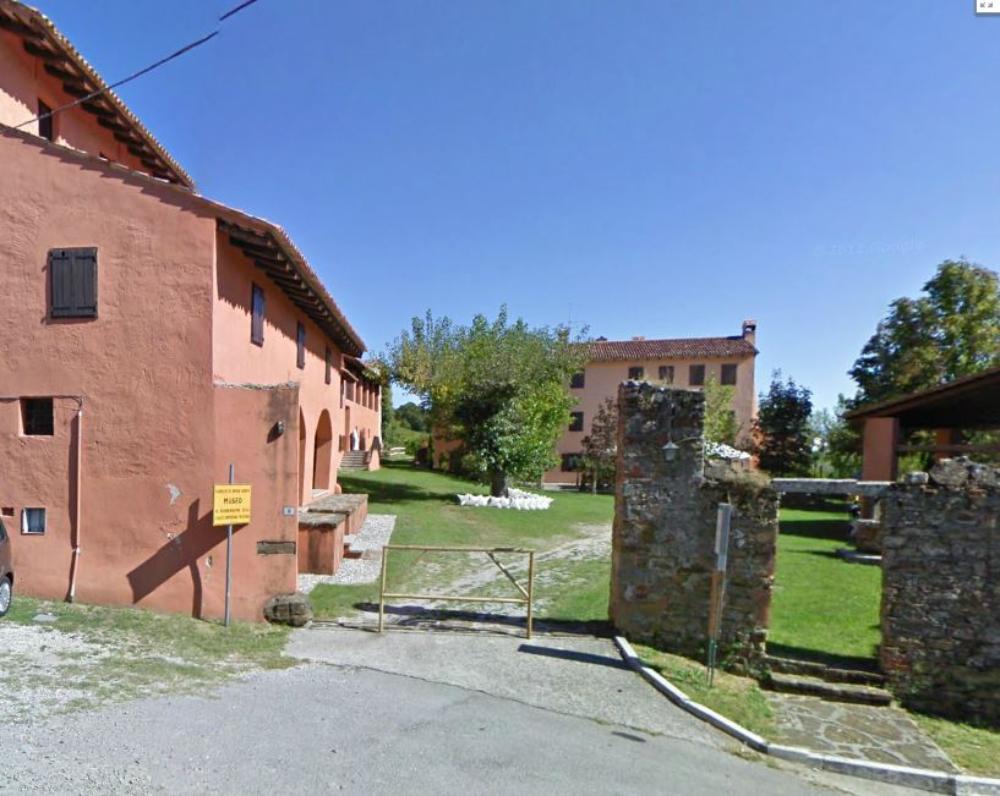
Among memories and family heirlooms, you can admire works of extraordinary value: paintings attributed to Bernardo Strozzi and Rubens, canvases by Alessandro Magnasco, Giambattista Langetti, Giuseppe Tominz, Vladimir L. Borovikovsky, sculptures by Bertel Thorvaldsen, Giuseppe Ceracchi, and Franz Xaver Messerschmidt. The villa is surrounded by a splendid five-hectare English-style park, in which important Aquileian archaeological finds are discovered, an elegant Liberty-style temple, rare and precious plants: ashes, lindens, Himalayan cedars, exotic plants such as palms, Japanese medlars, bamboo, and a centuries-old cork oak.
The Will
The historical and artistic heritage gathered over the centuries by my Family, completed and restored under my care, must not be dispersed but serve the public enjoyment and cultural education of the community.
Thus begins the holographic will of Guglielmo Coronini, dated December 8, 1967, and continues: The Coronini Cronberg Palace with the attached private Chapel (…) with all the furnishings, furniture, paintings, sculptures, archive, library and various collections of my property (…) together with the park (…) will constitute a museum complex that is intangible and unalterable, accessible to the public in perpetual memory of my Family and as an ornament and attraction of my city.
The will of Count Coronini, published in the local press on October 17, 1990, is a document of utmost interest; in the ten handwritten pages, comprising twelve articles marked with Roman numerals, the idea emerges – also shared by his sister Nicoletta – of creating a privately managed Foundation, intended to administer the family properties and transform them into a heritage for his city. The document, which became the Statute of the Coronini Foundation, regulates both the administrative and accounting part as well as the purely museum aspect. It clearly expresses the desire to preserve the current character of a grand noble residence in its lively unity of architecture, furnishings, and park, keeping the environmental complexes unchanged.
Nothing is underestimated or left to chance; the uses of the palace and park are extremely precise, as well as the methods of conservation and exhibition of the collections. In particular, the library is freely accessible while the numismatic and graphic collections, as well as archival material, manuscripts, and rare books, will be exhibited under supervised consultation only to scholars of recognized seriousness (…). The temporary loan of artworks to national or foreign exhibitions will be limited to events of particular cultural importance, which offer all guarantees for the safety of the requested works.
The financial administration and the management of the properties themselves are aimed at safeguarding the palace and its assets, at correct museum management, at the conservation and organic integration of the collections with priority given to completing and updating the local and regional bibliographic, archival, and numismatic collections.
Information on Coronini Cronberg Palace Foundation
Viale XX Settembre, 14
34170 Gorizia (Gorizia)
0481533485
info@coronini.it
https://www.coronini.it
Source: MIBACT