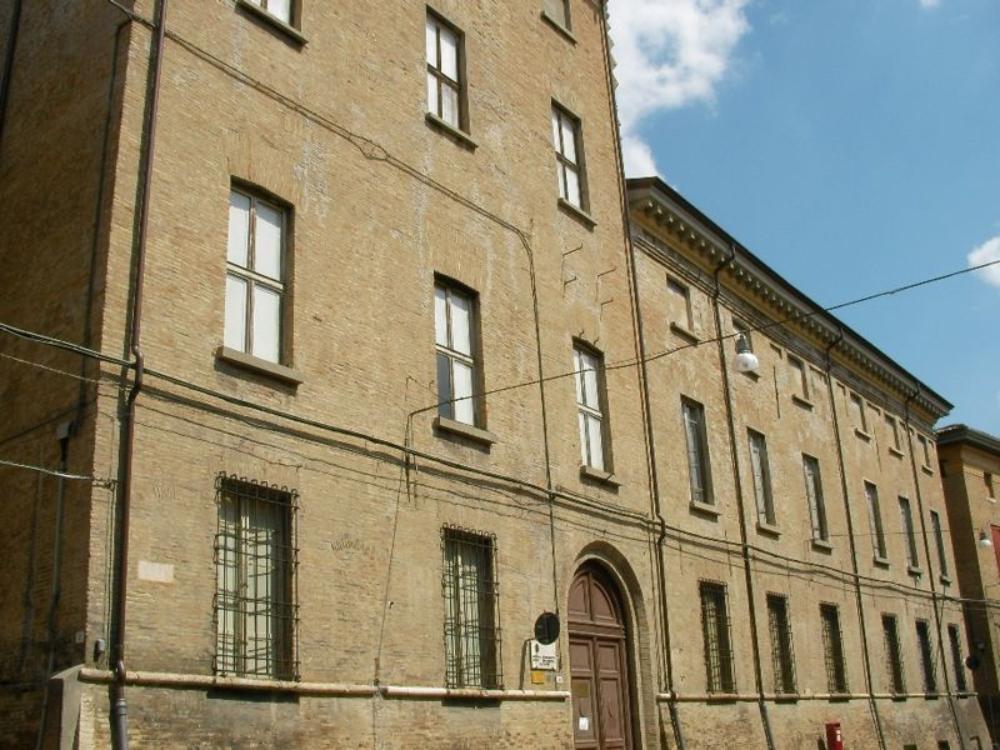


The Museum, inaugurated in 2000, is divided into two sections: the first inside the Bishop’s Palace, the second inside the Cathedral in the North Matroneum. Valuable historical-artistic and liturgical objects and artifacts are preserved and exhibited. The collection, formed over time thanks to precious gifts that illustrious figures and pilgrims left at the Cathedral after stopping to venerate the tomb of the martyr St. Donnino, consists of furnishings, vessels, goldsmith work, and sacred vestments. Among the many testimonies, there is a medieval cup called the ‘Chalice of St. Donnino,’ a Rhenish goldsmith work from the 12th-13th century, a bronze dove, an 18th-century monstrance, and a Madonna enthroned with Child, considered the masterpiece of Benedetto Antelami (ca. 1150-1230). The Treasure Room houses the oldest assets, a seemingly heterogeneous core of items related to the veneration of the patron saint or the furnishing of his sanctuary: archaeological artifacts, architectural fragments, furnishings and stone sculptures, paintings, and liturgical objects. These span about six centuries, from the 11th to the 16th, attesting to the importance of the church of St. Donnino in the first three centuries after the year 1000. Among these, the Marian Majesty, carved by Benedetto Antelami (late 12th century), represents the most important masterpiece from the Cathedral. Also displayed in the showcases are numerous liturgical items and sacred furnishings made after the elevation of the Cathedral to diocesan Cathedral status (1601). Surrounding the treasure, many paintings from the Cathedral and the Bishop’s palace hang on the walls. In the north Matroneum, accessed from inside the Cathedral, is the medieval chest where the Chapter of St. Donnino kept the parchments of privileges and church properties. Placed on supports are some of the Cathedral’s wooden sets: Bust reliquaries (17th century) used for the Saints’ feast; series of altar sets (candelabras, crosses, and tabernacles – 17th-19th centuries); the Baroque processional throne of Our Lady of Mount Carmel. This section concludes with a 19th-century wooden frontal fixed to the back wall. The last room is occupied by the large organ built in 1910 by the Tamburini company of Crema, whose old bellows operated manually are visible.
Information about Cathedral Museum of Fidenza
Via Don Minzoni, 10/a,
43036 Fidenza (Parma)
0524514883
[email protected]
Source: MIBACT