


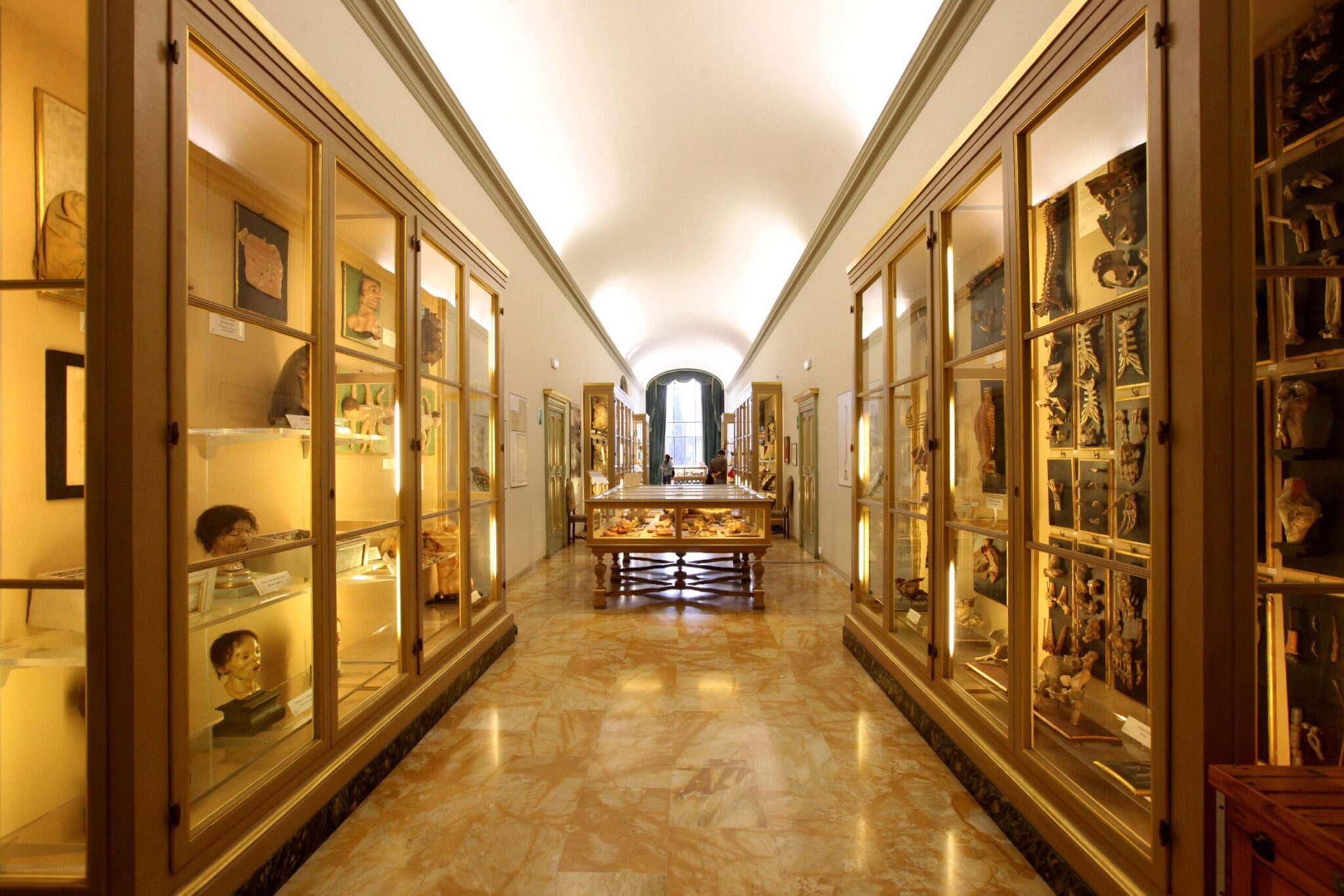

The Luigi Cattaneo Anatomical Museum of Bologna, popularly called the “anatomical wax museum” or “Bologna anatomy museum,” because it displays models depicting parts of the human body created to facilitate medical anatomical study, houses the collections of the Normal Anatomical Museum and the Pathological Museum, formed between 1742 and 1790 for the first, and between 1804 and 1893 for the second.
The Anatomical Wax Museum is dedicated to Luigi Cattaneo, professor of Anatomy at the University, who is credited with the rediscovery and restoration in the 1970s of the original Human Anatomy collections, severely damaged by bombing in the last world war.
The Anatomical Museum of Bologna preserves the collection of the Anatomy Cabinet of the Institute of Sciences, founded in 1742 by Benedict XIV, who commissioned the pieces from the anatomist Ercole Lelli (1702-1766).
What to see in the Anatomical Wax Museum of Bologna
Among the sculptures on display, accompanied by their respective preparatory panels, noteworthy are:
- the eight life-size Flayed Figures, aimed at studying the superficial and deep muscles of the human body;
- Adam and Eve, created in collaboration with Domenico Piò and Ottavio Toselli;
- Anna Morandi Manzolini, the famous series of hands;
- the Self-portrait and the Bust of Giovanni Manzolini;
- creator of the Fetus with umbilical cord and placenta.
Also of fine craftsmanship is the core of nineteenth-century waxes by Clemente Susini and Giuseppe Astorri. Attached to the museum is the collection of Luigi Calori, founded in 1860, consisting of over fifteen hundred human skulls, including the supposed skull of Atalaric, found in 1838 at Barbianello on the Bologna hill, and the collection of wax models and dry preparations from the former “Cesare Taruffi” Museum of Pathological Anatomy.



