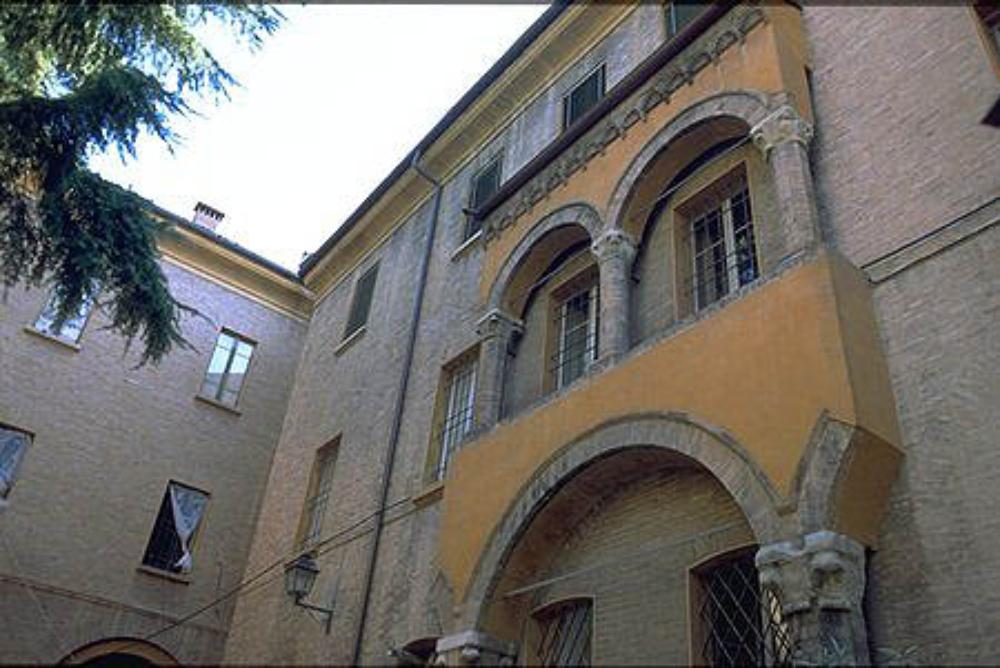
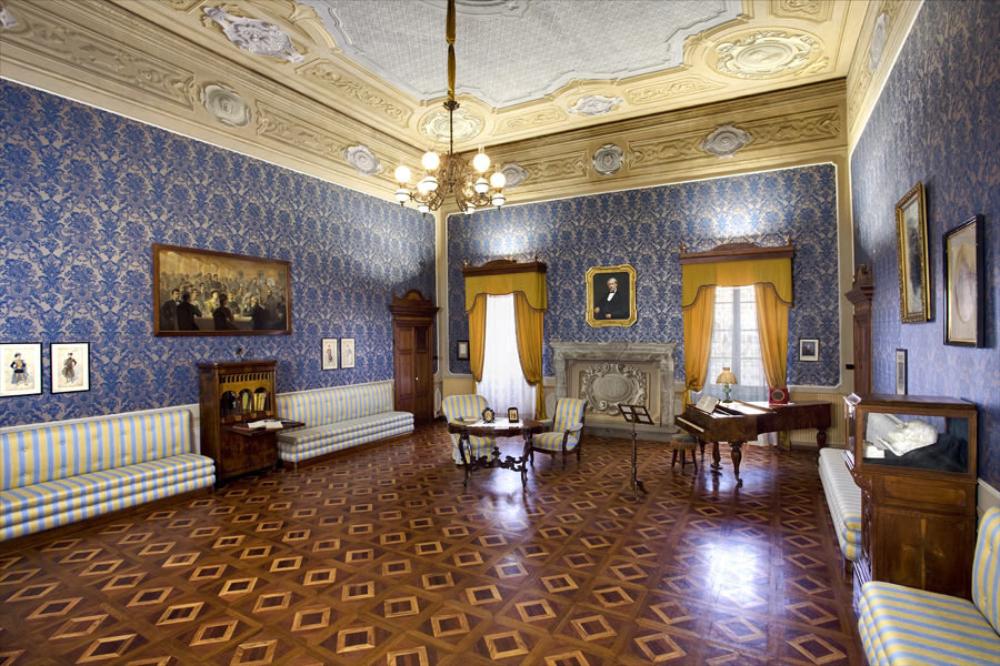
The two collections are housed in the Bargellini Palace, established in 1926 under an agreement still in force today. The Davia Bargellini gallery was combined on the ground floor of the palace together with the materials from the Civic Museum of Industrial Art, founded in 1919 to gather evidence of Bolognese craftsmanship. These were curated by the Superintendent, Count Francesco Malaguzzi Valeri, modeled on art and industry museums that emerged in Europe during the 19th century. Created for educational purposes and as a repertoire of models for craftsmanship, the applied art collections are displayed alongside the gallery’s paintings, evoking the atmosphere of an 18th-century noble residence and revealing, in their largely original setup, Malaguzzi Valeri’s museographic principles.
In 1926, the Municipal Administration made an agreement with the Opera Pia that still regulates the coexistence of the two museum cores. The materials included in the collections come from various sources. Much of it consists of acquisitions made around the 1920s on the antiques market, but also include deposits from Bolognese charitable foundations, bequests to the Municipality, and donations. Among the most notable paintings in the gallery are the famous ‘Madonna dei denti’ by Vitale da Bologna (1345), a panel by Antonio Vivarini, the ‘Portrait of a Gentlewoman’ by Prospero Fontana, the ‘Portrait of Virgilio Bargellini’ by Bartolomeo Passerotti, the “in situ” paintings by Marcantonio Franceschini as well as works by Cantarini, Giuseppe Maria and Luigi Crespi, Brill, Magnasco, and Felice Torelli.
The museum rooms are also furnished with works of Bolognese sculpture, such as the ‘Bust of Virgilio Bargellini’ by Vincenzo Onofri (15th century) and 18th-century terracottas by Giuseppe Maria Mazza and Angelo Piò. Important decorative arts pieces include the Bentivoglio cassone (15th century), Renaissance graffito ceramics, Baroque furnishings, miniature cabinetmaking furniture like the furnished model of a small mansion, finely carved and gilded frames, and a dollhouse. Also part of the path are the impressive gala carriage of Legato Angelelli (late 18th century) and more recent works such as the floral gate by Giuseppe Da Col and the 20th-century wrought iron sign of Sante Mingazzi’s workshop. The museum preserves a very rare and precious 18th-century marionette theater, despite it not being a homogeneous work. The theater itself is made of wood and painted canvas in tempera. The frontispiece bears the coat of arms of the Albicini family from Forlì. It is therefore a private theater likely set up in the family’s city or country palace, known for their passion for music. The theater is accompanied by five backdrops with two rows of wings from different periods—from the second half of the 18th century to the mid-19th century—depicting various settings, along with other scenic elements. The oldest parts of the theater—the scenic arch or proscenium and two backdrops—are attributed to pupils and collaborators of Antonio Bibiena active in Forlì since the 1770s. The theater includes 74 marionettes, 9 horses, and a monkey. The marionettes, of Venetian make and various sizes, do not all belong to the same set. They are, however, extremely refined, with silk costumes richly embroidered. Of extraordinary importance are some transformation marionettes (clowns that double their height, ladies that transform into dwarfs). This is the only 18th-century theater that has preserved the operating rods of the marionettes.
Information about Civic Museums of Ancient Art: ‘Davia Bargellini’ Industrial Art Museum
Strada Maggiore, 44,
40121 Bologna (Bologna)
051236708
[email protected]
https://www.comune.bologna.it/iperbole/museicivici
Source: MIBACT