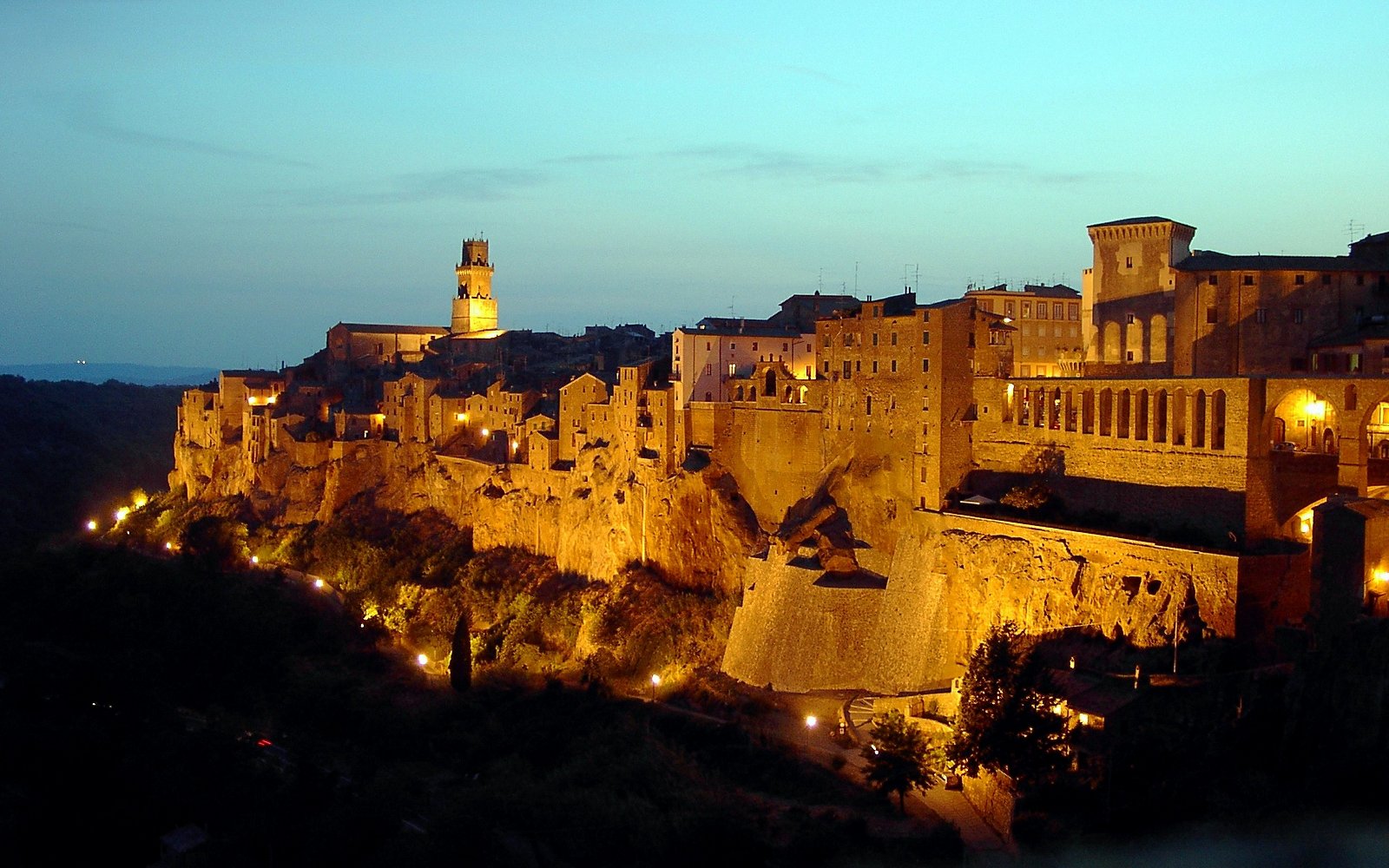


Cosa vedere a Parma, città che conta poco meno di 200 mila abitanti. La città di Parma si colloca tra quelle “livable” grazie anche all’ottima cucina, alle bellezze artistiche e alla tradizione musicale. E’ la seconda città, dopo Bologna, per numero di abitanti in Emilia Romagna.
- Parma city places of interest
- 1 The Cathedral, the Baptistery and Cathedral Square
- Things to see in Parma
- 2 Church of the Madonna della Steccata
- 3 Church of San Giovanni Evangelista
- Parma places of interest not to be missed
- 4 Apothecary of San Giovanni Evangelista
- 5 Room of Correggio or Room of San Paolo
- Parma tourism what to see
- 6 Cell of Santa Caterina
- 7 Giuseppe Stuard Art Gallery
- 8 Piazza Garibaldi Parma
- Visiting Parma
- 9 Palazzo della Pilotta
- 10 National Archaeological Museum Parma
- What to visit in Parma
- 11 National Gallery of Parma
- Parma kulturelle Denkmäler
- 12 Teatro Farnese
- 13 Teatro Regio
- 14 Mineralogisches Museum von Parma
- What to do in Parma
- 15 Where to eat in Parma
- 16 Where to sleep in Parma
La storia della città ha lasciato ricordi ancora ben evidenti grazie ai numerosi monumenti d’arte lasciati anche da grandi artisti come il Parmigianino e il Correggio. E’ stata la capitale del Ducato di Parma e Piacenza (1545-1859). Nel dicembre 2015 ha ricevuto il riconoscimento di “UNESCO Creative City for Gastronomy”. Parma is rich in museums e nel 2020 è stata “Italian Capital of Culture”.
Parma city places of interest
Let’s take a tour of the city to get to know Parma in one day by following the points in this guide, or use the various points of interest to get to know more closely the things to see in Parma, monuments and points of interest of the Emilian city.
1 The Cathedral, the Baptistery and Cathedral Square
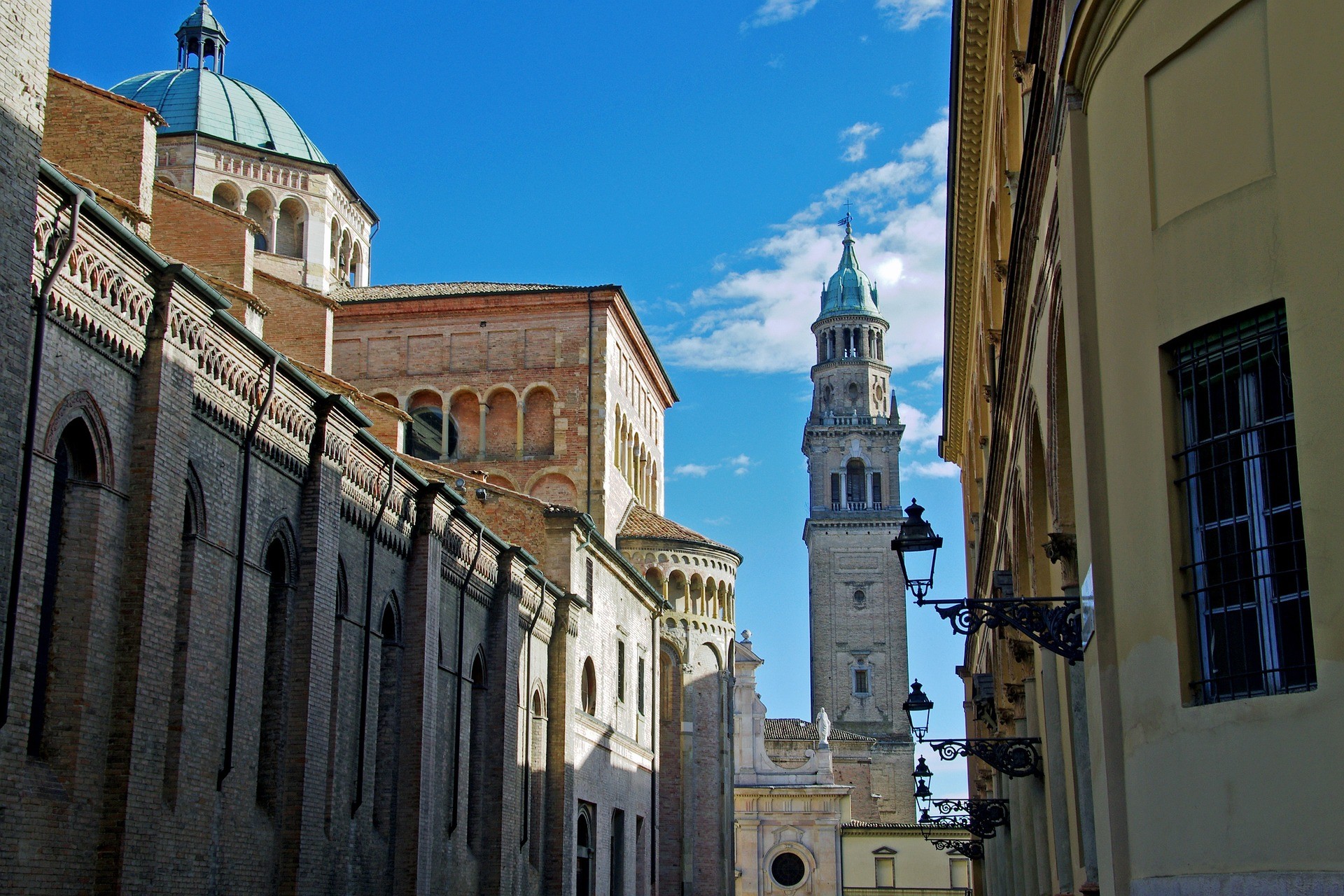
The Parma Cathedral is in Romanesque-Lombard style and represents the most popular place of worship in the city. It was built in the year 1000 and next to it shows a bell tower from the late 1200s. Parma Cathedral is dedicated to the Assumption of the Virgin Mary and features frescoes by Correggio among which the famous “Assumption of the Virgin“. The nave presents works by Correggio’s pupils.
Next to the Cathedral is the Baptistery which was built on an octagonal plan. The Baptistery is certainly among the things to visit in Parma and consists of a series of overlapping loggias and features Byzantine-style frescoes in various areas, including the lunettes and the dome. A double immersion basin and a fountain are placed in the center. There are reliefs representing the months of the year in the Baptistery.
The Cathedral Square is of medieval origin. Here, besides the Cathedral and the Baptistery, rises the Episcopal Palace. It is among the first attractions in Parma to see.

Things to see in Parma
2 Church of the Madonna della Steccata
On Via Dante is the Church of the Madonna della Steccata which contains frescoes by Parmigianino, a student of Correggio. The church is Renaissance and owes its name to the fence that was erected to protect an image of the Madonna, greatly venerated by the faithful. The church has a Greek cross plan (the nave and transept are the same length and intersect at their midpoint) and features frescoes from the sixteenth century, of the Parma school. The sacristy, dating back to the seventeenth century, is the access point to the chapel where the dukes of Parma are buried.

3 Church of San Giovanni Evangelista
The Church of San Giovanni Evangelista in Parma is located to the right of the Cathedral. The church we see today was rebuilt during the Renaissance. The facade is later and dates back to the seventeenth century. The Church of San Giovanni houses important frescoes by Correggio such as the Transit of Saint John on the dome. Parmigianino, a pupil of Correggio, is the author of several frescoes of the Saints placed on the arches of some domes on the left side of the church. The Church of San Giovanni undoubtedly represents a tourist attraction in Parma to visit.
Parma places of interest not to be missed
4 Apothecary of San Giovanni Evangelista
In Parma, visiting the Apothecary of San Giovanni is a must. It is an ancient pharmacy of the Benedictine monks open from 1201 until 1766. Inside the Apothecary of San Giovanni in Parma the 16th-century furniture containing the tools, jars, and jugs of the apothecary are still intact. The entrance is at Via Borgo Pipa, 1 from 9:00 AM to 2:00 PM.

5 Room of Correggio or Room of San Paolo
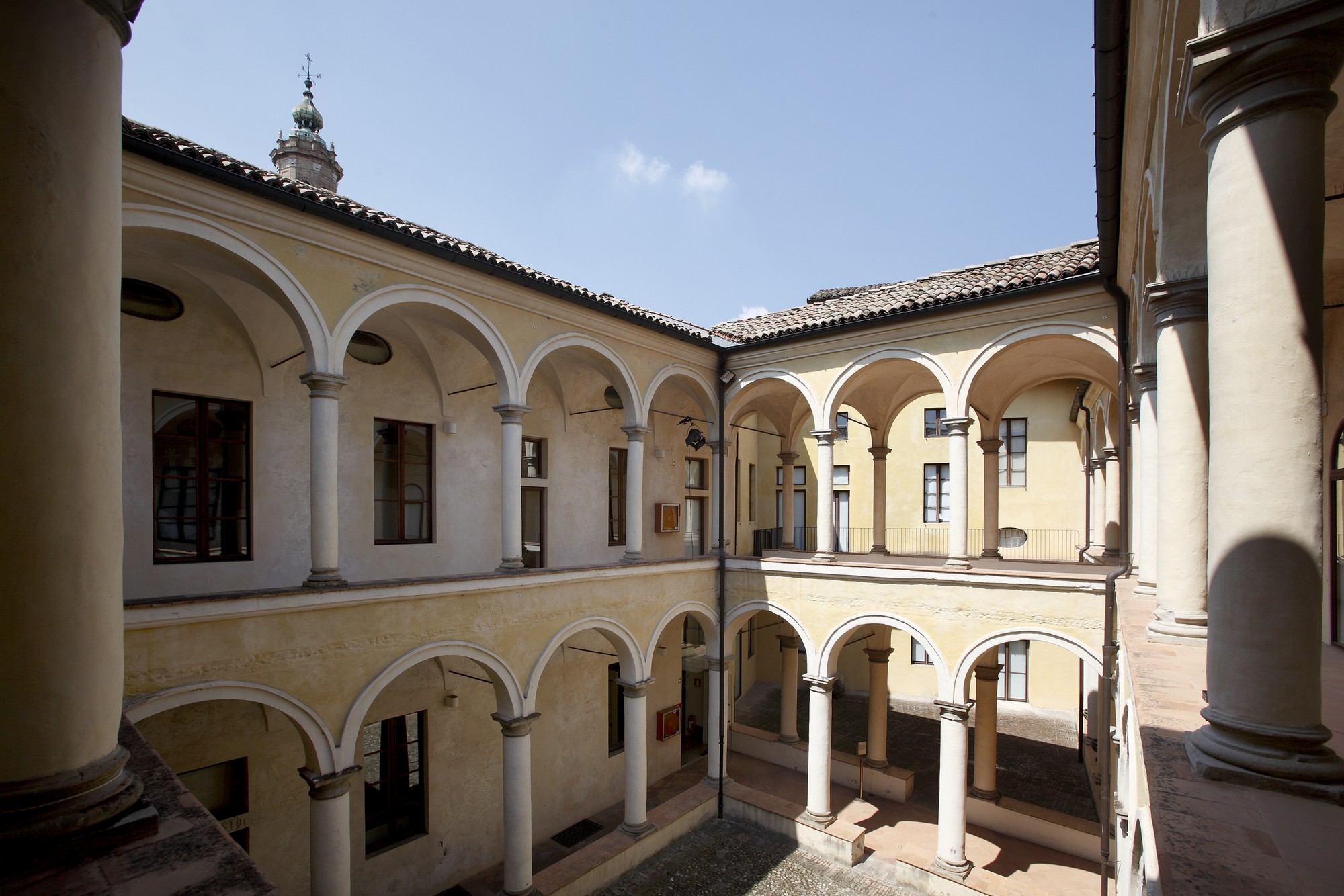
The Room of Correggio in Parma is also called the Room of San Paolo. Commissioned by the abbess Giovanna da Piacenza, of the Benedictines of San Paolo, the current Room of Correggio was her private apartment. Largely frescoed by Correggio at the beginning of the 1500s, it contains true masterpieces of the painter. The current museum path of the Room of San Paolo reconstructs the rooms of the abbess Giovanna da Piacenza‘s private apartment, inside the ancient female Benedictine monastery of San Paolo, which at the beginning of the sixteenth century was one of the most significant cultural centers of the city. After passing through some spaces, you reach an almost perfectly square room, whose ceiling was frescoed in 1514 by the Parma painter Alessandro Araldi with a rich decoration of grotesques and painted candelabras, in which sacred scenes and profane images are inserted. Updated to an already fully Renaissance language is instead the room frescoed by Antonio Allegri called il Correggio in 1519 with an illusionistic decoration of vegetal branches with fake ovals and putti, completed below by a series of fake monochrome niches with mythological subjects. On the fireplace is represented Diana, an obvious reference to the Abbess Giovanna da Piacenza, commissioner of the work, whose heraldic emblem is in the center of the ceiling. Opening hours: Tuesday to Friday 8:30 AM – 2:00 PM; Saturday 8:30 AM – 6:00 PM; the first Sunday of every month 8:30 AM – 2:00 PM; closed on other Sundays. Ticket: € 2.00.

Parma tourism what to see
6 Cell of Santa Caterina
The Cell of Santa Caterina, in Parma, is a small room located at the edge of the garden of the former convent of the Benedictine nuns of San Paolo. On the two walls Alessandro Araldi (around 1460 – 1528), one of the most active masters in Parma at the turn of the 15th and 16th centuries, before the rise of the great Correggio, frescoed around 1514 two scenes from the Life of Saint Catherine of Alexandria, namely, “The dispute of Caterina before Emperor Maximinus” and “Saint Catherine and Saint Jerome”. Araldi’s style here seems to particularly betray the knowledge of central Italian models, in particular the works of Perugino and Pinturicchio, to which the classical composure of the figures and the atmosphere of elegant sobriety characterizing both frescoes refer. Opening on request during visiting hours at the Camera di San Paolo.
Free visit to the Giardino di San Paolo.
7 Giuseppe Stuard Art Gallery
The Giuseppe Stuard Art Gallery houses more than 270 private works. It is named after the collector, a member of the congregation of San Filippo Neri. There are paintings, memorabilia, tapestries, and testimonies documenting the history of the city of Parma and the Stuard family, along with medieval archaeological finds discovered during the restoration works of the building. The collection includes over three hundred pictorial and graphic works, a considerable number of furnishings from the 17th to the 19th century, and some art and craft objects. Hours: Tuesday and Wednesday from 10:00 to 15:00.
8 Piazza Garibaldi Parma
Piazza Garibaldi in Parma is one of the most famous in the city. Over the centuries it has undergone a considerable number of transformations, and today’s square features a neoclassical layout. In the square is the Palazzo del Governatore, dating back to the 13th century, refurbished during the 1700s. On the same square but on the opposite side, there is the Palazzo del Comune (17th century) and the Palazzo del Capitano del Popolo, from the 13th century. Dominating the square is the statue of Giuseppe Garibaldi, which is among the major open-air monuments to see in Parma.

Visiting Parma
9 Palazzo della Pilotta
The Palazzo della Pilotta was built for the Farnese family in the 16th century and later rebuilt following the bombings of the Second World War. The name Pilotta comes from the game of “pelota basca” played at the time of its construction. Inside is the Teatro Farnese, the National Archaeological Museum, the National Gallery, and the Palatina Library. For some years it has been possible to visit the entire Pilotta Complex with a single ticket.

10 National Archaeological Museum Parma
The National Archaeological Museum of Parma dates back to 1760. Founded by Philip I of Bourbon, it was created to collect Roman artifacts found in the surroundings. On the ground floor are the finds from the Etruscan necropolises Velleia and the prehistoric sites in the area. The lower floor holds artifacts dating back to the Bronze and Iron Ages. The museum is open every day except Monday. It is possible to purchase a single cumulative ticket for all the Museums of the Pilotta Monumental Complex which allows visiting with one ticket the Teatro Farnese, National Gallery, and Archaeological Museum. The single ticket office for all the museums of the Pilotta is located at the ticket office of the National Gallery.

What to visit in Parma
11 National Gallery of Parma
The National Gallery of Parma houses works by Beato Angelico, Parmigianino, Correggio, El Greco, and Bronzino. The gallery is accessed from the Farnese Theater. It is a true treasure chest containing artworks from various places. The seventeenth-century section dedicated to Emilian painting is particularly interesting. The visit to the National Gallery of Parma follows two distinct itineraries, starting from the Farnese Theater, including works by Benedetto Antelami, Agnolo Gaddi, Beato Angelico, Cima da Conegliano, Francesco Francia, Leonardo, Correggio, Parmigianino, Dosso Dossi, Holbein, El Greco, Annibale, Ludovico and Agostino Carracci, Schedoni, Guercino, Nuvolone, G.M.Crespi, Tiepolo, Piazzetta, Pittoni, Canaletto, Bellotto, and Sebastiano Ricci. The route of the National Gallery of Parma continues in the nineteenth-century salons with exhibitions of Academy works and portraits from the Bourbon era and Maria Luigia, concluding in the rooms of the ancient Rocchetta, where works of the Parma School of the sixteenth century are hosted, especially those by Correggio and Parmigianino, protagonists in Parma’s Renaissance period.

Parma kulturelle Denkmäler
12 Teatro Farnese
Das Teatro Farnese, im ersten Stock des Palazzo della Pilotta gelegen, wurde zwischen 1617 und 1618 in der ehemaligen “Sala d’arme” des Hofes nach dem Entwurf des ferraresischen Architekten Giovan Battista Aleotti, genannt Argenta, erbaut. Das Theater wurde aus typischen Materialien für flüchtige Bauten wie Holz und Stuck gefertigt, die so bemalt waren, dass sie Marmor und Edelmetalle simulierten. Es entstand auf Wunsch des Herzogs von Parma und Piacenza, Ranuccio I. Farnese (1593-1622), der den Besuch des Großherzogs der Toskana, Cosimo II. de’ Medici, in Parma auf dem Weg nach Mailand zur Vereinbarung einer Heirat zwischen den beiden Familien prächtig feiern wollte. Da die Reise von Cosimo ausfiel, erfolgte die Eröffnung erst 1628 anlässlich der Hochzeit zwischen Margherita de’ Medici und Herzog Odoardo mit dem Turnierstück “Mercurio e Marte” (Text von Claudio Achillini und Musik von Claudio Monteverdi), das in einer spektakulären Naumachie gipfelte. Aufgrund der Komplexität der Bühnenbilder und ihrer äußerst hohen Kosten wurde das Theater nur neunmal genutzt, für herzogliche Hochzeiten oder wichtige Staatsbesuche. Das Theater wurde im Mai 1944 fast vollständig durch einen alliierten Luftangriff zerstört und ab 1956 originalgetreu wiederaufgebaut. Seit 1986 dient es als eindrucksvoller Zugang zu den Ausstellungsräumen des Museums.

13 Teatro Regio
Das Teatro Regio di Parma wurde von Maria Luigia von Österreich in Auftrag gegeben und zwischen 1821 und 1829 erbaut. Das Neue Theater wurde später Regio genannt und stellt immer noch ein bedeutendes Beispiel für zahlreiche und imposante öffentliche Bauvorhaben dar, die die Herzogin in Parma realisierte.

14 Mineralogisches Museum von Parma
Die mineralogische und petrographische Sammlung der Universität umfasst etwa 5.000 Proben, von denen tausend ausgestellt sind, hauptsächlich aus den Sammlungen Linati, Piroli, Cavezzali und Guidotti, die Anfang des 19. Jahrhunderts gespendet wurden. Die Mineralien der vier Sammlungen sind in einem handschriftlichen Katalog verzeichnet, der vom Professor Girolamo Cocconi 1866-67 erstellt wurde. Hinzu kamen weitere, die von der Sparkasse von Parma und Piacenza gestiftet wurden sowie jüngste Erwerbungen. Es sind zahlreiche Proben von großem historischem, wissenschaftlichem und systematischem Interesse aus Orten weltweit zu sehen. Zu den im weitläufigen Eingangsbereich des Fachbereichs Geowissenschaften ausgestellten Stücken gehören die Sammlung von Baryt aus Vernasca in der Provinz Piacenza, Ilvait-Proben von der Insel Elba, Quarze aus den Westalpen sowie Sulfide aus Rumänien. Viale G.P.Usberti, 157/a (im Fachbereich Geowissenschaften). Tel. 0521 905326.
What to do in Parma
15 Where to eat in Parma
In the heart of Emilia, there is an excellent cuisine with equally succulent ingredients. We are in the homeland of Parmigiano Reggiano but also of Prosciutto Crudo di Parma, ingredients used by local, national, and international dining. Therefore, typical trattorias, taverns, as well as places with Michelin-starred chefs, are all worth considering, depending on your budget. An excellent dinner with traditional local products cannot be missed on your itinerary in Parma.

16 Where to sleep in Parma
Hotels in Parma have fluctuating prices depending on the type and category. They range from more affordable B&Bs to luxury 5-star hotels. Again, everything depends on your budget. If you plan to visit Parma and the surrounding area and stay overnight but not in the center, you are more likely to find affordable accommodations.