

What to see in Parma, a city with just under 200 thousand inhabitants. The city of Parma is among the “livable” ones thanks also to its excellent cuisine, artistic beauties, and musical tradition. It is the second city, after Bologna, in terms of population in Emilia Romagna.
- Parma city places of interest
- 1 The Cathedral, the Baptistery and Cathedral Square
- Parma places to see
- 2 Church of the Madonna della Steccata
- 3 Church of San Giovanni Evangelista
- Parma places of interest not to be missed
- 4 Apothecary of San Giovanni Evangelista
- 5 Chamber of Correggio or Chamber of San Paolo
- What to see in Parma tourism
- 6 Cell of Saint Catherine
- 7 Giuseppe Stuard Art Gallery
- 8 Garibaldi Square Parma
- Visiting Parma
- 9 Palazzo della Pilotta
- 10 National Archaeological Museum of Parma
- What to visit in Parma
- 11 National Gallery Parma
- Parma cultural monuments
- 12 Farnese Theatre
- 13 Regio Theatre
- 14 Parma Mineralogy Museum
- What to do in Parma
- 15 Where to eat in Parma
- 16 Where to sleep in Parma
The history of the city has left still very evident memories thanks to the numerous art monuments left also by great artists such as Parmigianino and Correggio. It was the capital of the Duchy of Parma and Piacenza (1545-1859). In December 2015 it received the recognition of “UNESCO Creative City for Gastronomy.” Parma is rich in museums and in 2020 it was the “Italian Capital of Culture.”
Parma city places of interest
Let’s take a tour of the city to get to know and visit Parma in one day following the points of this guide, or use the various points of interest to get to know more closely the things to see in Parma, monuments and points of interest of the Emilian city.
1 The Cathedral, the Baptistery and Cathedral Square
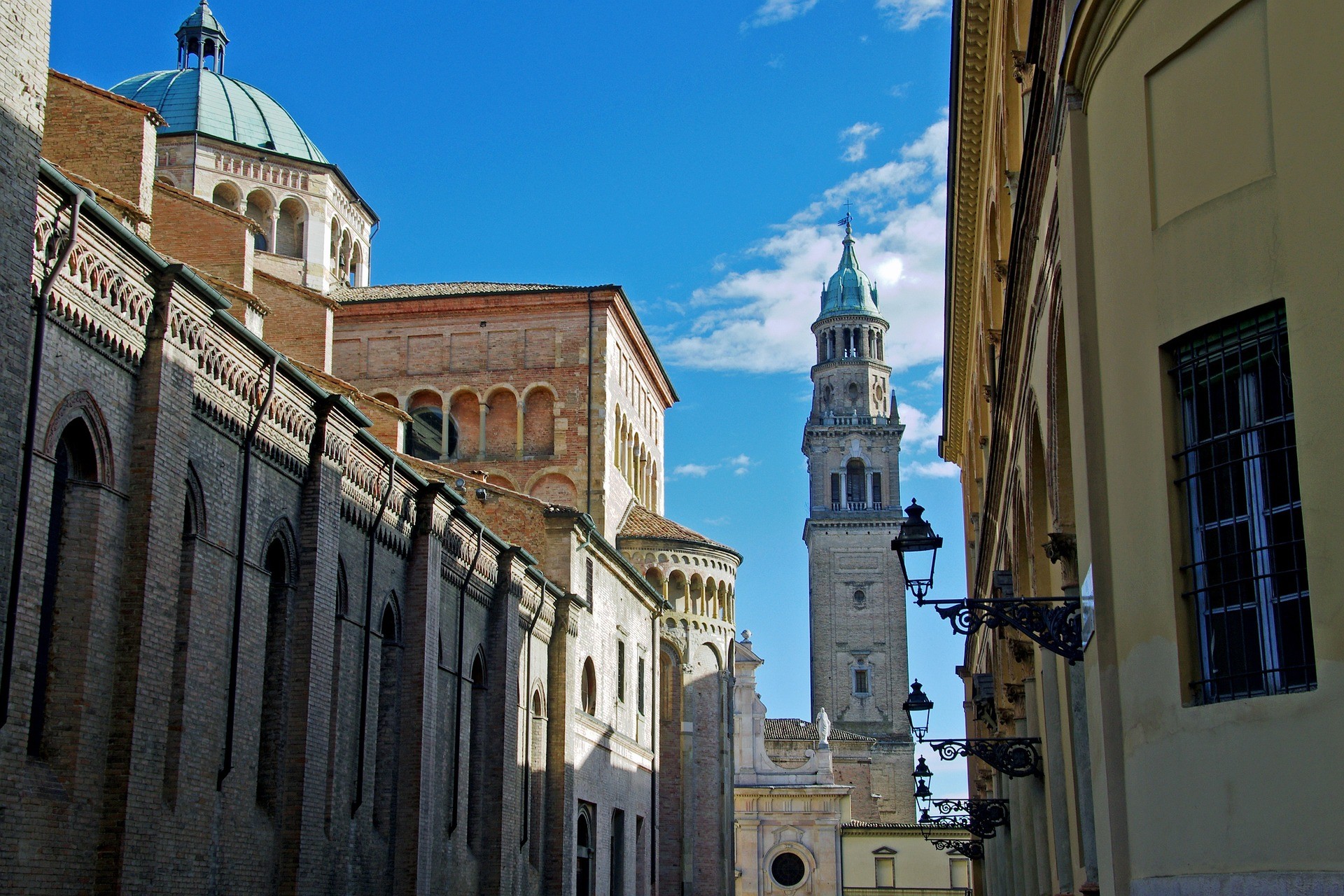
The Parma Cathedral is in Romanesque-Lombard style and represents the most popular place of worship in the city. It was built in the year 1000 and next to it shows a bell tower from the late 1200s. Parma Cathedral is dedicated to the Assumption of the Virgin Mary and features frescoes by Correggio including the famous “Assumption of the Virgin“. The nave presents works by Correggio’s pupils.
Next to the Cathedral is the Baptistery which was built on an octagonal plan. The Baptistery is certainly among the things to visit in Parma and is composed of a series of overlapping loggias and features in various points, including the lunettes and the dome, frescoes in Byzantine style. A double immersion basin and a font are placed in the center. In the Baptistery there are reliefs representing the months of the year.
The Cathedral Square is of medieval origin. Here, besides the Cathedral and the Baptistery, stands the Episcopal Palace. It is among the first attractions of Parma to see.

Parma places to see
2 Church of the Madonna della Steccata
On Via Dante is the Church of the Madonna della Steccata which contains frescoes by Parmigianino, a pupil of Correggio. The church is Renaissance and is named after the fence that was erected to protect an image of the Madonna, greatly revered by the faithful. The church has a Greek cross plan (nave and transept have the same length and intersect at their midpoint) and features frescoes from the sixteenth century, from the Parma school. The sacristy, dating from the seventeenth century, is the access point to the chapel where the dukes of Parma are buried.

3 Church of San Giovanni Evangelista
The Church of San Giovanni Evangelista in Parma is located to the right of the Duomo. The church we see today was rebuilt during the Renaissance. The facade is later and dates from the seventeenth century. The Church of San Giovanni houses important frescoes by Correggio such as the Transit of St. John placed on the dome. The Parmigianino, a pupil of Correggio, is the author of several frescoes of the Saints placed on the arches of some domes on the left side of the church. The Church of San Giovanni without doubt represents a tourist attraction in Parma to visit.
Parma places of interest not to be missed
4 Apothecary of San Giovanni Evangelista
In Parma, visiting the Apothecary of San Giovanni is a must. It is an ancient pharmacy of the Benedictine monks open from 1201 until 1766. Inside the Apothecary of San Giovanni in Parma, the 16th-century furniture containing the tools, jars, and bottles of the apothecary are still intact. The entrance is at Via Borgo Pipa, 1 from 9:00 a.m. to 2:00 p.m.

5 Chamber of Correggio or Chamber of San Paolo
The Chamber of Correggio in Parma is also called the Chamber of San Paolo. Commissioned by the abbess Giovanna da Piacenza, of the Benedictines of San Paolo, the current Chamber of Correggio was her private apartment. Mostly frescoed by Correggio at the beginning of the 1500s, it houses true masterpieces of the painter. The current museum route of the Chamber of San Paolo reconstructs the private apartment spaces of the abbess Giovanna da Piacenza, inside the ancient female Benedictine monastery of San Paolo, which at the beginning of the sixteenth century was one of the most significant cultural centers of the city. After passing through some rooms, you reach an almost perfectly square room, whose ceiling was frescoed in 1514 by the Parma painter Alessandro Araldi with a rich ornamentation of grotesques and painted candelabra, incorporating sacred scenes and profane images. Updated to a fully Renaissance language is the room frescoed by Antonio Allegri called il Correggio in 1519 with an illusionistic decoration of vegetal tendrils where fake ovals with cherubs open, completed in the lower part by a series of fake monochrome niches with mythological subjects. On the fireplace is depicted Diana, an evident reference to Abbess Giovanna da Piacenza, commissioner of the work, whose heraldic emblem is at the center of the ceiling. Hours: Tuesday to Friday 8:30 a.m. – 2:00 p.m.; Saturday 8:30 a.m. – 6:00 p.m.; every first Sunday of the month 8:30 a.m. – 2:00 p.m.; closed on other Sundays. Ticket: €2.00.

What to see in Parma tourism
6 Cell of Saint Catherine
The Cell of Saint Catherine, in Parma, is a small room located on the edge of the garden of the former convent of the Benedictine nuns of San Paolo. On the two walls Alessandro Araldi (circa 1460 – 1528), one of the most active masters in Parma between the 15th and 16th centuries, before the rise of the great Correggio, frescoed around 1514 two scenes from the Life of Saint Catherine of Alexandria, namely, “The dispute of Catherine before Emperor Maximinus” and “Saint Catherine and Saint Jerome.” Araldi’s style here seems to particularly betray the knowledge of central Italian models, especially the works of Perugino and Pinturicchio, to which the classical composure of the figures and the atmosphere of elegant sobriety that characterize both frescoes refer. Opening upon request during visiting hours to the Chamber of San Paolo.
Free visit to the Garden of San Paolo.
7 Giuseppe Stuard Art Gallery
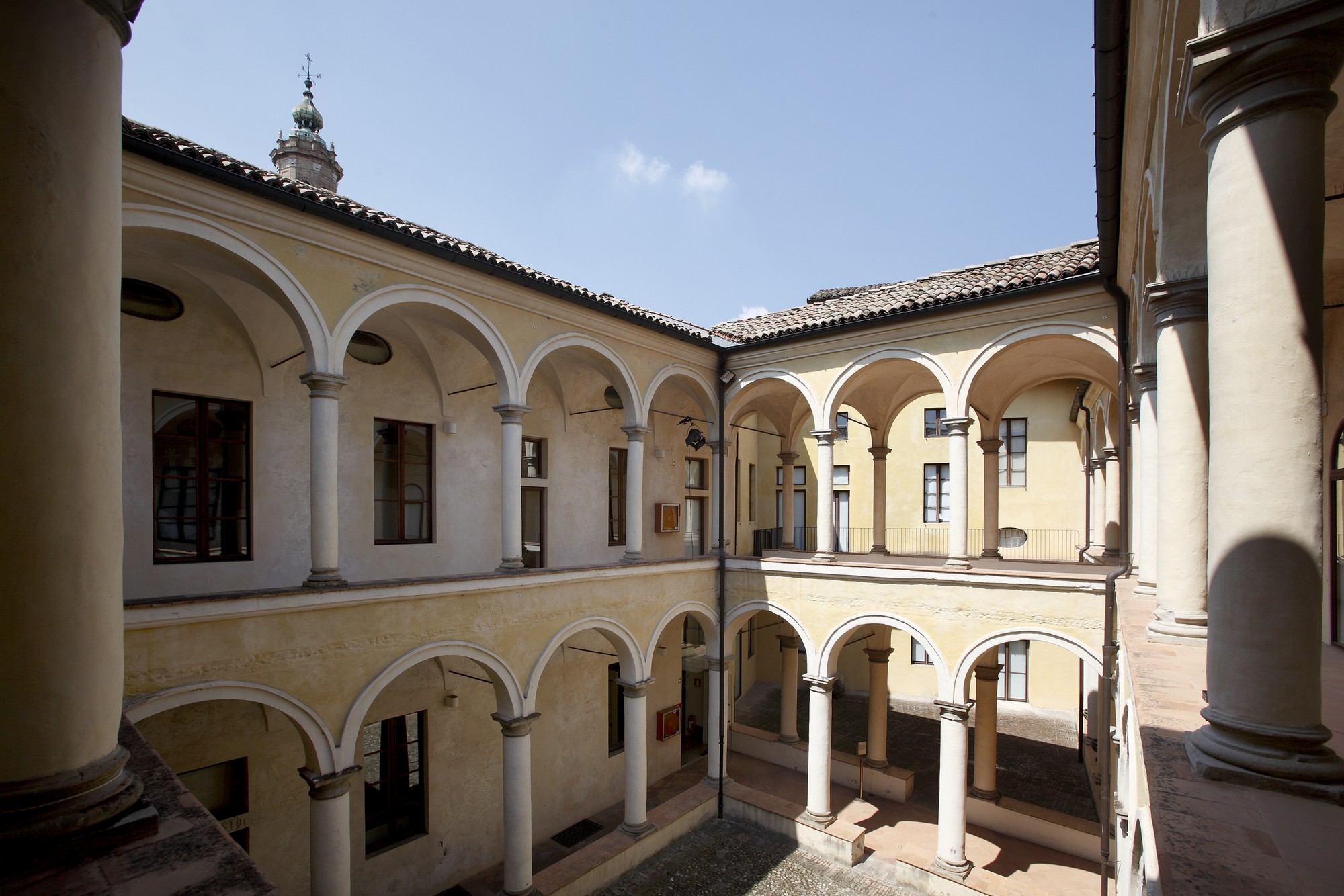
The Giuseppe Stuard Art Gallery houses over 270 private works. It is named after the collector, who belonged to the congregation of San Filippo Neri. There are paintings, memorabilia, tapestries, and testimonies that document the history of the city of Parma and the Stuard family, along with medieval archaeological artifacts found during the restoration works of the building. The collection includes over three hundred pictorial and graphic works, a considerable number of furnishings from the 17th to the 19th century, and some art and craft objects. Hours: Tuesday and Wednesday from 10:00 AM to 3:00 PM.
8 Garibaldi Square Parma
Garibaldi Square in Parma is one of the city’s most famous squares. Over the centuries it has undergone a considerable number of transformations, and today’s square features a neoclassical layout. Located in the square is the Governor’s Palace, which dates back to the 13th century and was refurbished during the 1700s. On the same square but on the opposite side, there is the Town Hall (17th century) and the Captain of the People’s Palace, from the 13th century. The statue of Giuseppe Garibaldi dominates the square and is among the major outdoor monuments to see in Parma.

Visiting Parma
9 Palazzo della Pilotta
The Palazzo della Pilotta was built for the Farnese family in the 1500s and later rebuilt following the bombings of the Second World War. The name Pilotta comes from the game “Basque pelota” played at the time of its construction. Inside you will find the Farnese Theatre, the National Archaeological Museum, the National Gallery, and the Palatina Library. For some years now it has been possible to visit the entire Pilotta Complex with a single ticket.

10 National Archaeological Museum of Parma
The National Archaeological Museum of Parma dates back to 1760. Commissioned by Philip I of Bourbon, it was created to collect Roman artifacts found in the surrounding area. On the ground floor, there are relics from the Etruscan necropolises of Velleia and prehistoric sites in the district. The lower floor houses artifacts dating back to the Bronze and Iron Ages. The Museum is open every day except Monday. It is possible to purchase a single combined ticket for all the Museums of the Monumental Complex of the Pilotta, allowing you to visit the Farnese Theatre, National Gallery, and Archaeological Museum with a single ticket. The unified ticket office for all the museums of the Pilotta is located at the ticket office of the National Gallery.

What to visit in Parma
11 National Gallery Parma
The National Gallery of Parma houses works by Beato Angelico, Parmigianino, Correggio, El Greco, and Bronzino. The Gallery is accessed from the Farnese Theatre. It is a true treasure chest containing artworks from various locations. The seventeenth-century section dedicated to Emilian painting is interesting. The visit to the National Gallery of Parma is carried out according to two distinct itineraries, starting from the Farnese Theatre, including works by Benedetto Antelami, Agnolo Gaddi, Beato Angelico, Cima da Conegliano, Francesco Francia, Leonardo, Correggio, Parmigianino, Dosso Dossi, Holbein, El Greco, Annibale, Ludovico and Agostino Carracci, Schedoni, Guercino, Nuvolone, G.M. Crespi, Tiepolo, Piazzetta, Pittoni, Canaletto, Bellotto and Sebastiano Ricci. The National Gallery of Parma’s path continues in the nineteenth-century salons with the exhibition of works from the Academy and portraits from the Bourbon era and Maria Luigia, ending in the halls of the ancient Rocchetta, where works of the Parma School of the sixteenth century are hosted, particularly those of Correggio and Parmigianino, protagonists of the Renaissance period in Parma.

Parma cultural monuments
12 Farnese Theatre
The Farnese Theatre, located on the first floor of the Palazzo della Pilotta, was built in the ancient “Armory Hall” of the court between 1617 and 1618, designed by the Ferrarese architect Giovan Battista Aleotti, known as l’Argenta. Made with typical ephemeral apparatus materials, such as wood and stucco painted to simulate marble and precious metals, the theatre was created by the will of the Duke of Parma and Piacenza Ranuccio I Farnese (1593-1622), who intended to lavishly celebrate the stay in Parma of the Grand Duke of Tuscany Cosimo II de’ Medici, traveling to Milan to conclude a marriage agreement between the two families. When Cosimo’s journey was canceled, the inauguration took place only in 1628, for the wedding between Margherita de’ Medici and Duke Odoardo, with the tournament opera “Mercury and Mars” (text by Claudio Achillini and music by Claudio Monteverdi) culminating in a spectacular naumachia. Due to the complexity of the scenic setups and their very high costs, the theatre was used only nine times, for ducal weddings or important state visits. Almost completely destroyed by an Allied air raid in May 1944, the theatre, rebuilt from 1956 according to the original design, has been the scenic entrance to the museum’s exhibition rooms since 1986.

13 Regio Theatre
The Regio Theatre of Parma was commissioned by Maria Luigia of Austria and was built between 1821 and 1829. The New Theatre was later named Regio and still represents a significant example of the numerous and impressive public works carried out by the Duchess in Parma.

14 Parma Mineralogy Museum
The mineralogical and petrographic collection of the University comprises about 5,000 samples, of which one thousand are exhibited, mostly coming from the Linati, Piroli, Cavezzali, and Guidotti collections donated at the beginning of the nineteenth century. The minerals from the four collections are listed in a handwritten catalog compiled by Professor Girolamo Cocconi in 1866-67. Others have been added, donated by the Savings Bank of Parma and Piacenza and resulting from recent acquisitions. Numerous samples of great historical, scientific, and systematic interest from locations around the world can be observed. Among the pieces exhibited in the vast entrance of the Department of Earth Sciences are to be remembered the collection of barite from Vernasca, in the province of Piacenza, the ilvaite samples from the Island of Elba, the quartz from the Western Alps, and the sulfides from Romania. Viale G.P. Usberti, 157/a (c/o Dept. of Earth Sciences). Tel. 0521 905326.
What to do in Parma
15 Where to eat in Parma
In the heart of Emilia, there is an excellent cuisine with equally delicious ingredients. We are in the homeland of Parmigiano Reggiano but also of Prosciutto Crudo di Parma, ingredients used by local, national, and international restaurants. Therefore, typical trattorias, taverns, as well as places with Michelin-starred chefs, are all worth considering, depending on your budget. An excellent dinner with typical traditional products cannot be missed on your itinerary in Parma.

16 Where to sleep in Parma
The hotels in Parma have fluctuating prices depending on type and category. They range from economical B&Bs to luxurious 5-star hotels. Again, it all depends on your budget. If you plan to visit Parma and its surroundings and stay overnight in the area but not in the center, you have a better chance of finding affordable accommodations.