

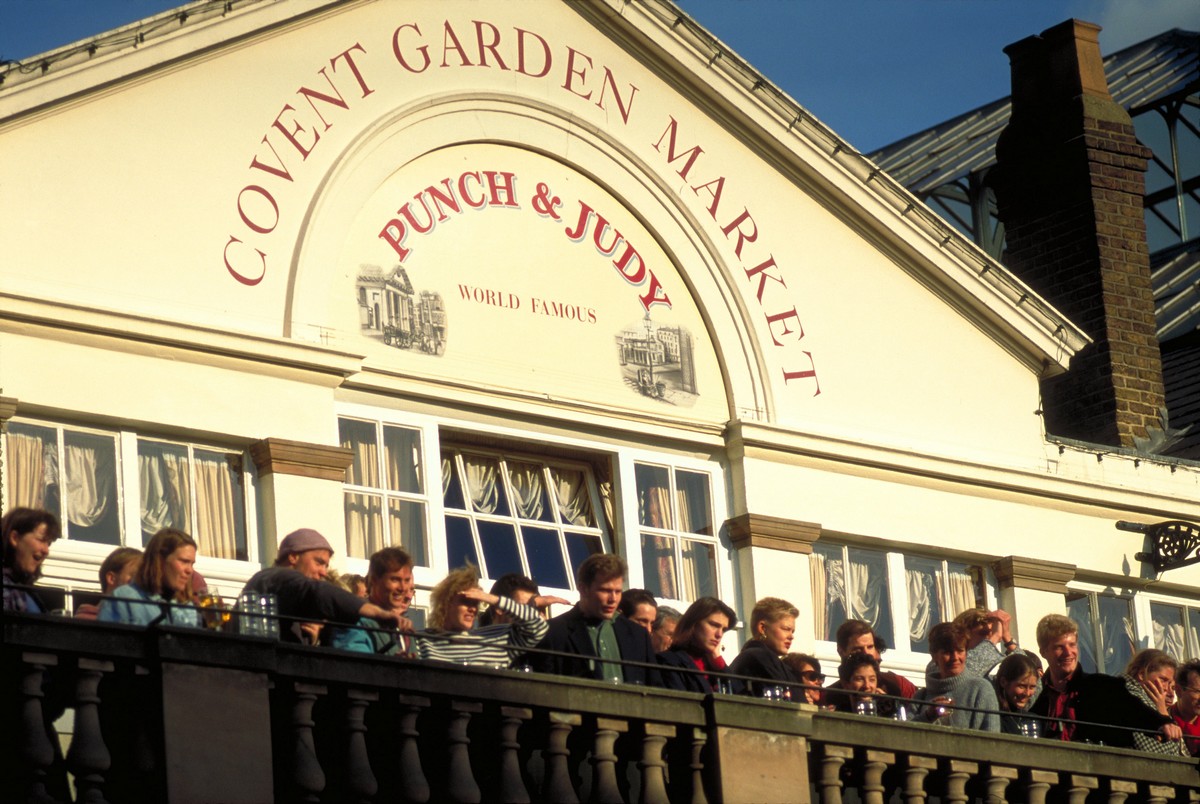


Covent Garden, in London, is a place where activity and spectacle are the daily bread, and where the theater reigns supreme, with the prestigious Royal Opera House, one of the most important opera houses in the world, followed closely by many others. To the east of Soho and Piccadilly, Covent Garden remains one of the main attractions for tourists and Londoners alike, excellently served by the underground (stations Covent Garden, Charing Cross, Leicester Square or Piccadilly, for those who want to take a stroll) and other public transport.
Covent Garden offers daily the spectacle of the former covered market, which from the mid-16th century until 1974 was the site of an important fruit and vegetable market, of which the beautiful structure remains, driven by a system of Palladian-style arches. The Londoners, instead of razing the old markets to the ground to build new ones in the form of shopping malls, as the Parisians did with Les Halles, preferred to preserve this important piece of history and culture, filling it with new energy, a galaxy of venues, pubs, small restaurants, highly specialized shops, stalls and little boutiques with incredible goods.
In addition to the external square, also bustling with life, the neighborhood’s small streets are also characteristic: James Street, Long Acre, Neil Street, where shops, small workshops of craftsmen and designers abound. There are also museums, such as the London’s Transport Museum housed in the former flower market, in a beautiful Victorian-style complex.
And then there is St. Paul Church, the actors’ church (1633), the first Anglican church built after the Protestant Reformation. Besides the daily entertainment offered by musicians, jugglers and unimaginable street artists, Covent Garden also offers festivals and fixed events throughout the year, such as the Flower Festival in June or the Street Theatre Festival in September.