


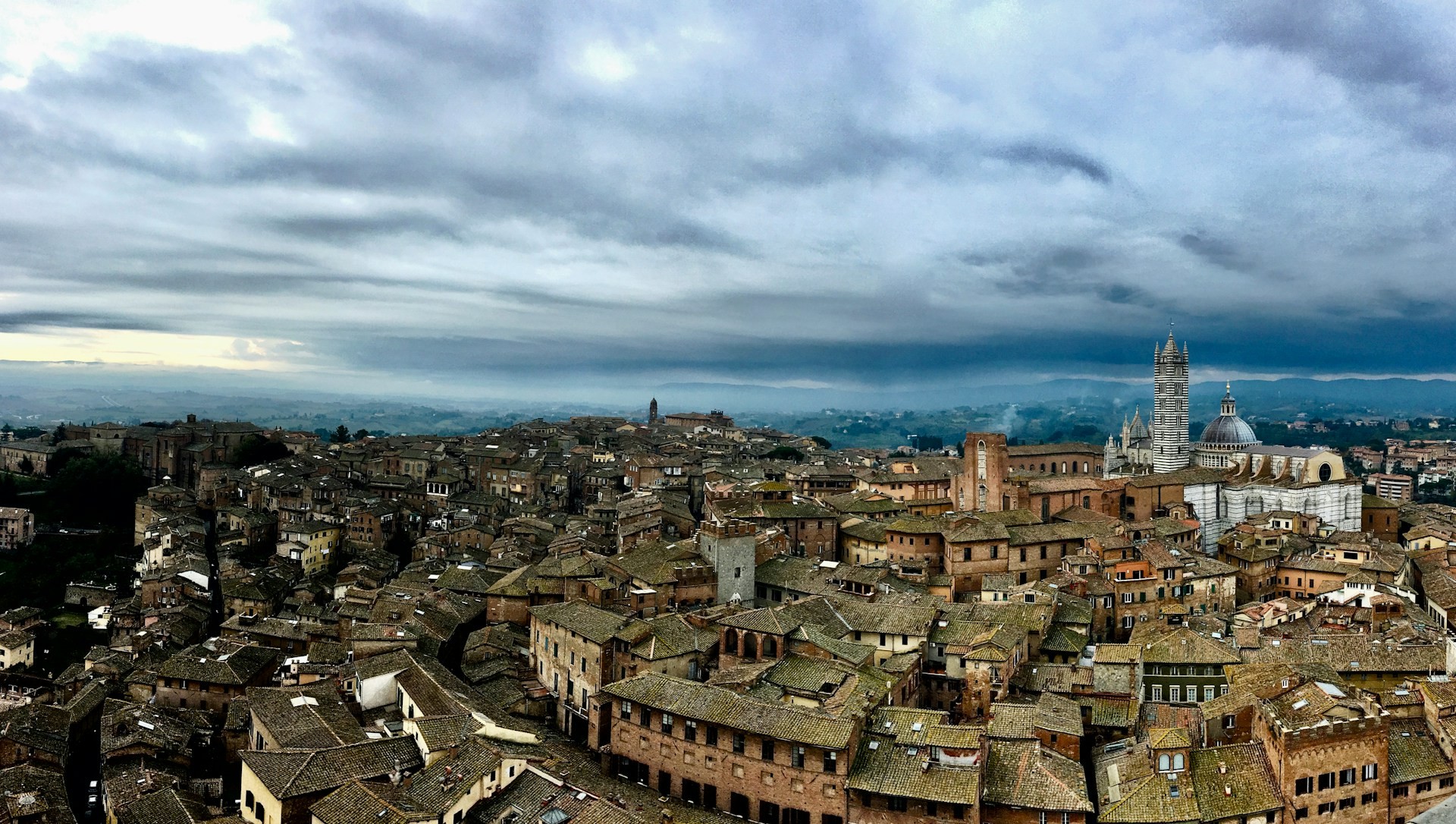

Siena is not a city to simply “check off” on a list. It is a city with a distinct character, a compact, almost proud identity, and a historic center that seems built to make you slow down. The alleys narrow, the climbs change your breath, and then suddenly a perfect square opens up, as if it had been drawn with a compass. In one day you can see a lot, but above all you can understand what makes Siena different: its idea of community (the contrade), the relationship between civil and religious power, and a medieval aesthetic that remains authentic.
- Before you start: how to get to and get around Siena
- Siena Itinerary 1 Day: The Perfect Day, Hour by Hour
- Morning: Piazza del Campo, the civil heart of Siena
- Piazza del Campo
- The Palio: why Siena is different
- Palazzo Pubblico and Civic Museum
- Torre del Mangia: the view that changes perspective
- Between alleys and districts: the walk that makes you “feel” Siena
- Lunch in Siena: what to eat (and how to choose well)
- What to order at least once
- Afternoon: the Siena Cathedral, an absolute priority
- Siena Cathedral
- Piccolomini Library
- Santa Caterina and San Domenico: the spiritual Siena
- Santuario di Santa Caterina
- Basilica di San Domenico
- National Art Gallery (optional): when it’s worth it
- Sunset in Siena: how to end the day
- Where to stay in Siena
- If You Have a Second Day: Val d’Orcia UNESCO Heritage
- Quick FAQ: common questions about Siena in one day
- Is one day enough to see Siena?
- What should you absolutely not miss?
- How to get around if I arrive by train?
- What is the best time to visit?
- Conclusion
This guide offers you a one-day itinerary in Siena organized logically: we start from the civil heart, climb towards the Duomo, take a real gastronomic break, and finish with spirituality, art, and sunset. Additionally, you will find practical advice on how to get around, what to book, and how to extend the trip if you have a second day available.
Before you start: how to get to and get around Siena
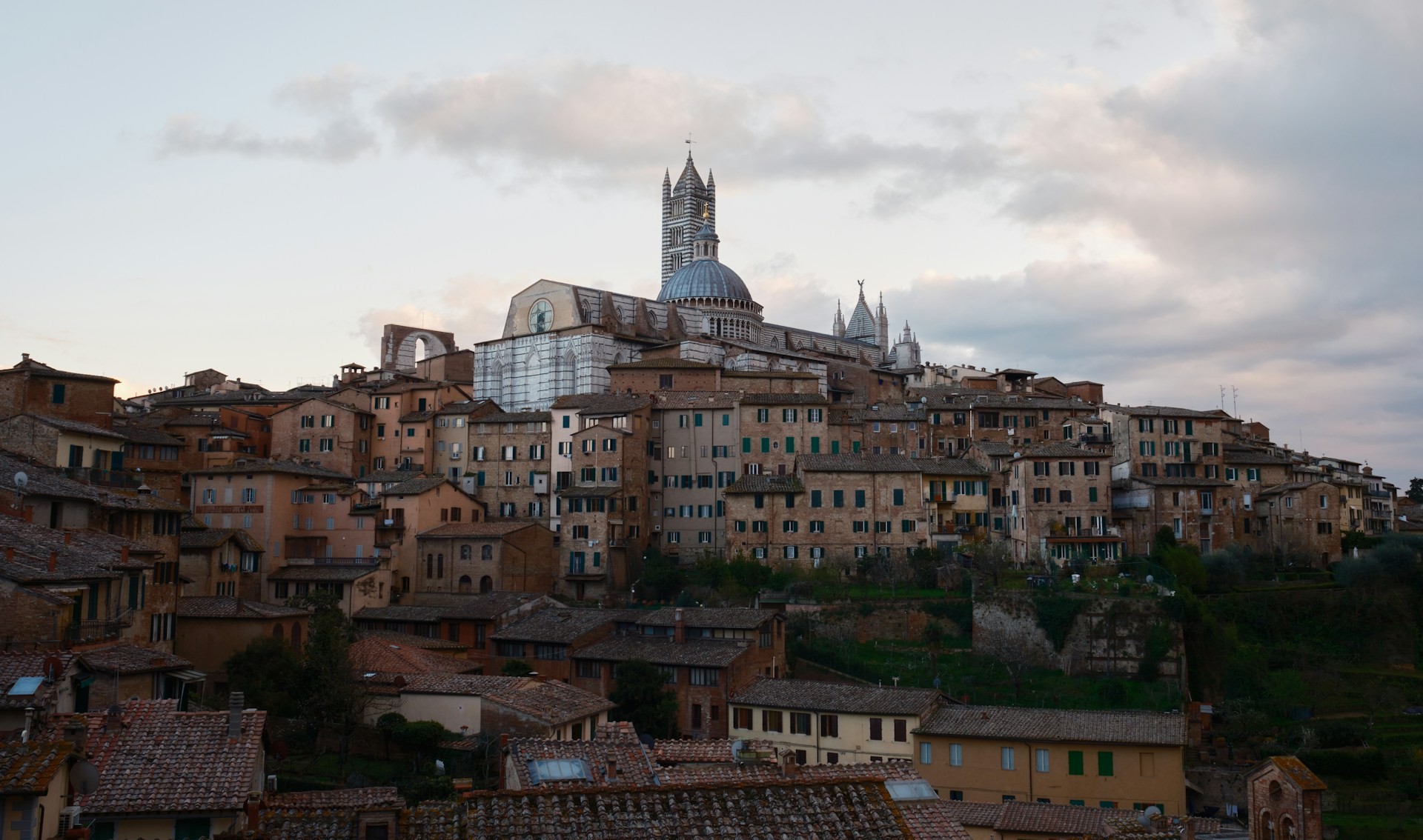
The historic center of Siena is pedestrian and is perfect for visiting on foot, but it is a “vertical” city: the climbs are constant and if you arrive by train or bus, you will find yourself at the lower part. The most important thing is to avoid unnecessary back and forth: with a circular route, the day becomes smooth and pleasant.
If you want a practical overview (station, connections, buses, escalators, areas to enter the city center), we recommend the complete guide: visit Siena on foot or by bus.
Quick tip: if you have little time, enter the historic center immediately and build the day “from the top,” avoiding going down too early toward the outskirts. Siena is small, but the slope wastes valuable minutes.
Siena Itinerary 1 Day: The Perfect Day, Hour by Hour
Here you find a realistic pace, designed to see a lot without turning the day into a rush. Naturally, you can adapt it (museums yes/no, climbs yes/no, long or short break).
- 09:00 – 10:30 Piazza del Campo + Palazzo Pubblico (outside) + Fonte Gaia
- 10:30 – 11:30 Palazzo Pubblico and Civic Museum (inside, if you’re interested)
- 11:30 – 12:15 Torre del Mangia (if you want the view from above)
- 12:15 – 13:15 Walk through alleys, contrade, smaller squares
- 13:15 – 14:30 Typical Sienese lunch
- 14:30 – 16:30 Cathedral + Piccolomini Library (top priority)
- 16:30 – 17:30 Santa Caterina + San Domenico
- 17:30 – 19:00 Art Gallery (optional) or panoramic walk + sunset
- 19:00 – 21:00 Aperitif/dinner and evening stroll in the center
Morning: Piazza del Campo, the civil heart of Siena
Piazza del Campo
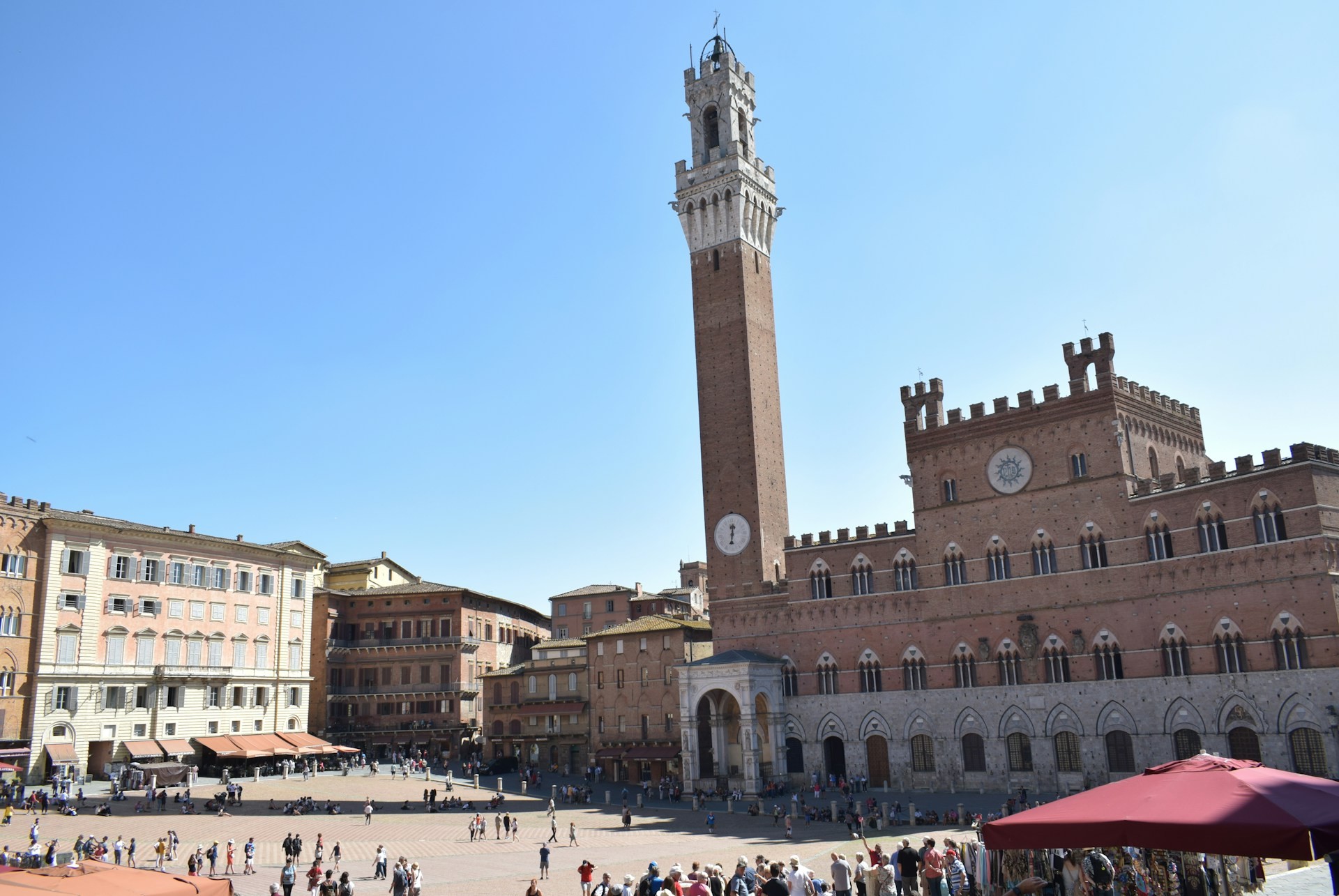
We start from the most iconic place. Piazza del Campo is among the most beautiful medieval squares in Europe: it has a shell shape, a gentle slope converging towards the Palazzo Pubblico, and a very rare architectural coherence. Here Siena immediately tells who it is: a city that has built its greatness on civil power, organization, and a strong sense of identity.
The detail that often goes unnoticed is that the square is not “just beautiful”: it is functional. Over the centuries it was a place of market, assemblies, and representation of power. Today it is the emotional center of the city and, during the Palio, it becomes the stage of one of the most intense traditions in Italy.
The Palio: why Siena is different
The Palio di Siena is not a historical reenactment staged for tourists. It is an identity event that deeply involves the city. The contrade are not folkloric neighborhoods: they are real communities, with rules, symbols, and belonging. The Palio is run twice a year, on July 2 and August 16, and the atmosphere you feel in the city changes already weeks before: trials, blessings, rivalries, strategies, tensions.
If you come on the days of the Palio, the visit must be reconsidered: Siena is more crowded, costs rise, and some spaces become difficult to manage. But if you love genuine traditions, it can be a unique experience (to be lived with respect, without turning it into a “show”).
Palazzo Pubblico and Civic Museum
The Palazzo Pubblico dominates the square with its brick Gothic architecture. It is still the town hall, but also houses the Civic Museum, where you can see one of the most important medieval painting cycles: the Allegory of Good and Bad Government by Ambrogio Lorenzetti. It is art that speaks of politics, ethics, collective responsibility. And it says a lot about historical Siena: a city proud of its autonomy and civic culture.
If you want to optimize your time, consider a reserved entrance or a guided tour. Here you can find options, tours, and tickets: Guided tours and tickets in Siena on GetYourGuide
Torre del Mangia: the view that changes perspective
The Torre del Mangia exceeds 100 meters and offers a spectacular view over the city roofs and Tuscan hills. The climb is challenging, but if it is a clear day the panorama is one of those that make you understand why Siena has been (and remains) a strategic point: it controls the territory from above, like an elegant fortress-city.
Practical advice: if you know you don’t want to climb, don’t feel guilty. Siena is full of natural viewpoints and high spots. If you do climb, do it in the morning: the light is clearer and the city is less crowded.
Between alleys and districts: the walk that makes you “feel” Siena
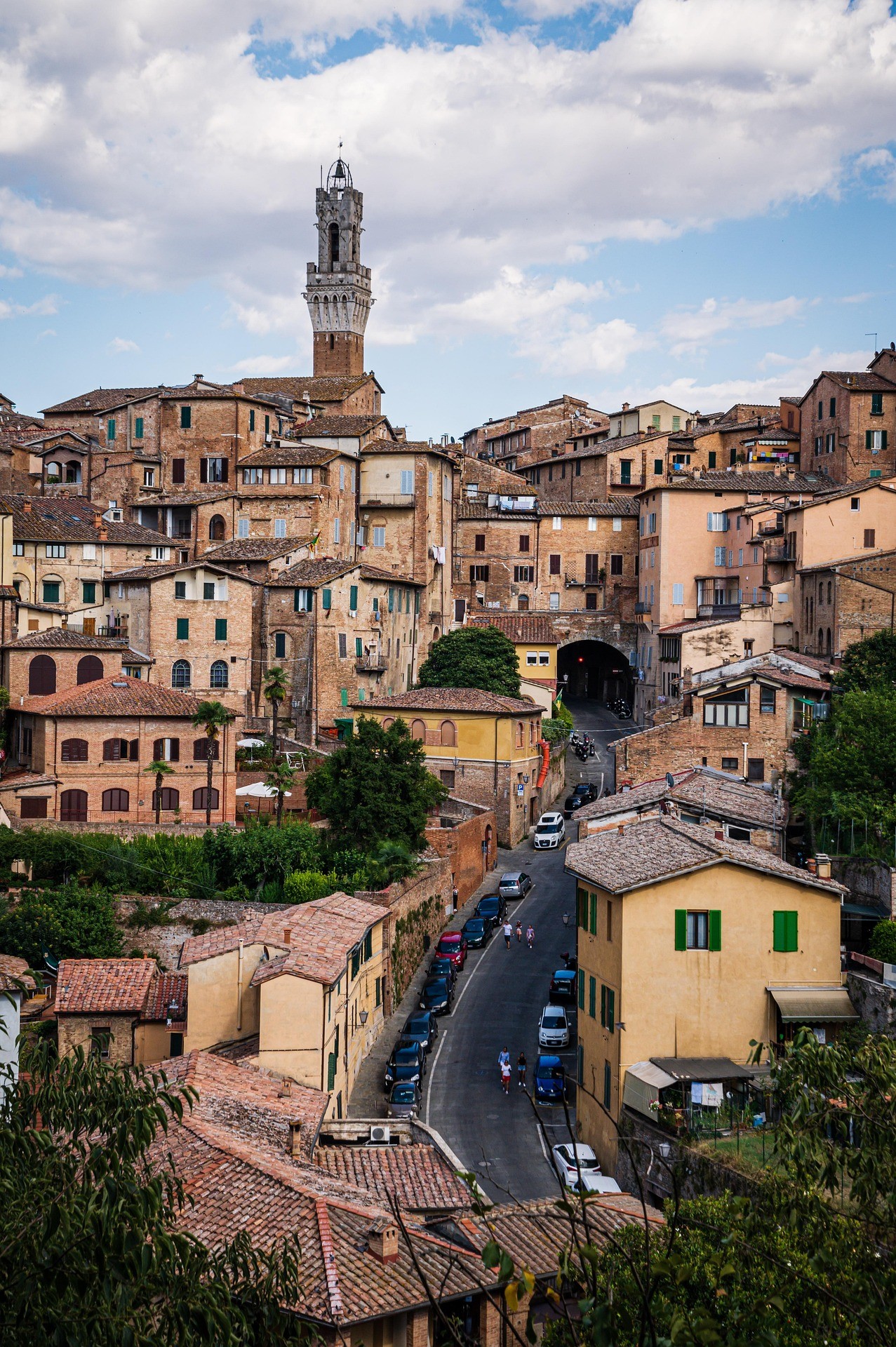
After the square, don’t rush straight to the Cathedral. Spend at least 30–40 minutes walking leisurely through the alleys of the center. Siena is made up of narrow passages, staircases, arches, and sudden openings onto smaller squares. It is here that you perceive the city: not in a single monument, but in its medieval continuity.
Look at the coats of arms, flags, and small fountains with animal symbols. Every detail refers to a district. In many areas, you will feel like you are walking inside a “city within the city”: and it is so. The community dimension of Siena is still strong.
If you want to give a gastronomic meaning to this part of the day, know that Siena is also an excellent starting point to discover the territory’s identity products. We have dedicated a specific guide to this topic: gastronomic itineraries dedicated to the Cinta Senese.
Lunch in Siena: what to eat (and how to choose well)
La cucina senese è fatta di sapori decisi, ingredienti della campagna e tradizioni antiche. Non è una cucina “leggera”, ma è una cucina autentica: pici, carni, legumi, dolci densi e speziati. Se hai un solo giorno, il pranzo è un momento chiave: ti rimette energia e ti fa vivere Siena anche attraverso il gusto.
What to order at least once
- Pici (spesso con ragù di cinghiale o sugo all’aglione)
- Black crostini Toscani
- Ribollita or rustic seasonal soups
- Platters with cold cuts and pecorini (here comes into play the Cinta Senese)
- Panforte and ricciarelli to finish
If you really want to deepen the subject, don’t limit yourself to the “dish tasting”: discover the product in the territory. The gastronomic itineraries of the Cinta Senese help to connect Siena to its countryside, to the farms, to the traditions that make these flavors so recognizable.
Afternoon: the Siena Cathedral, an absolute priority
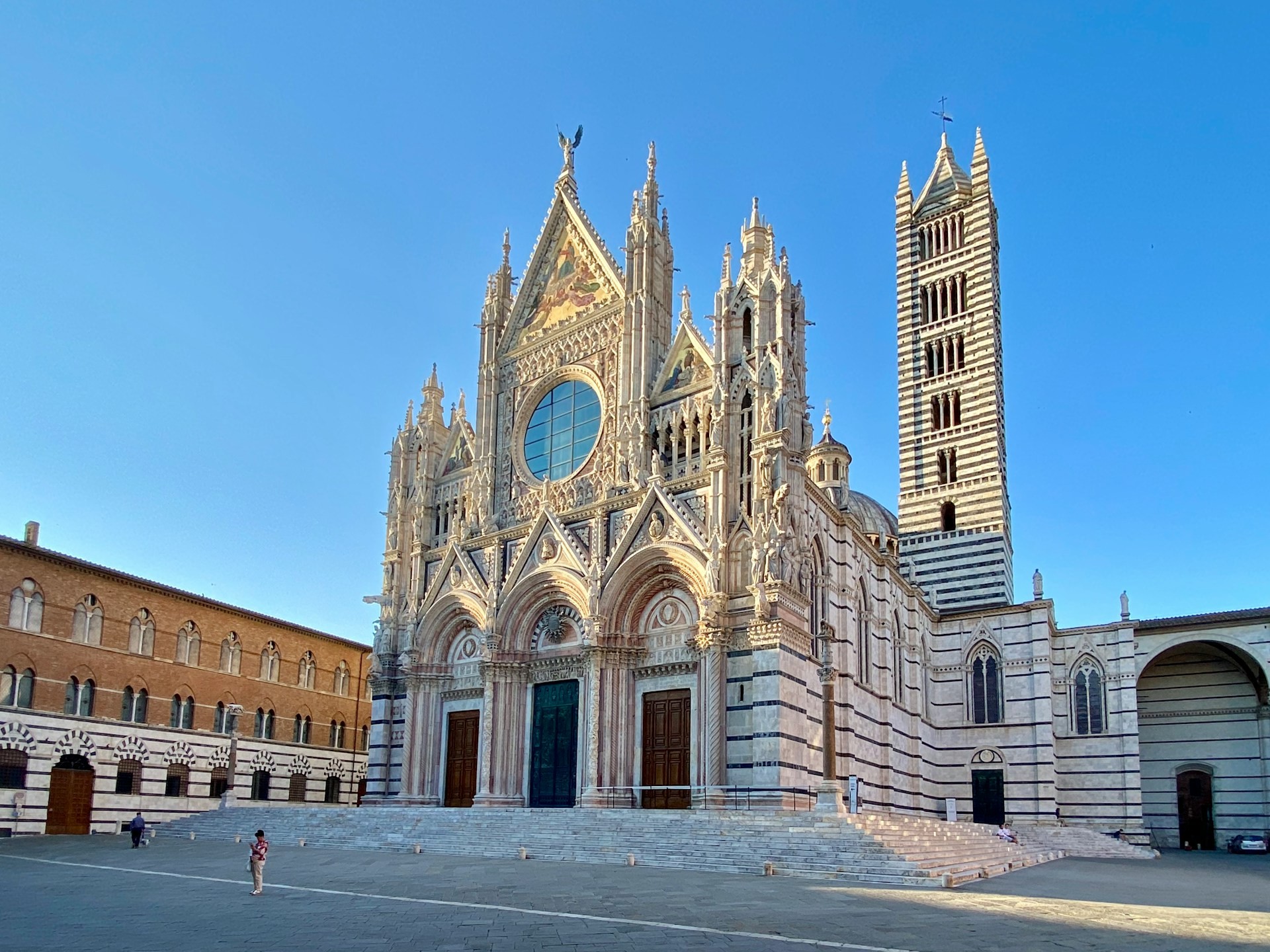
If you have to choose a single “monumental” visit, choose the Siena Cathedral. It is one of the most extraordinary Gothic complexes in Italy and gives you, in one place, the great artistic and spiritual ambition of the city.
Siena Cathedral
The façade is a marble manifesto: white, green, details that change with the light. The interior is surprising: columns with white and black stripes (symbolic Sienese colors), decorations everywhere, and above all the inlaid floor, considered among the most beautiful in the world. In some periods of the year it is uncovered and becomes a central part of the visit.
Practical advice: in high season, without a booked ticket you risk long queues. Here you find options for tickets and skip-the-line:
Tickets and skip-the-line for the Siena Cathedral on GetYourGuide
Piccolomini Library
Inside the Cathedral complex, the Piccolomini Library is an explosion of colors and storytelling. It is one of those places where you stop and look: not to “take a photo and leave,” but because you realize that art here had a function of prestige and power. The frescoes narrate the life of Pope Pius II and are among the most fascinating Renaissance environments in Tuscany.
Santa Caterina and San Domenico: the spiritual Siena
After the Duomo, the pace changes. Siena has an intense religious dimension, especially linked to Santa Caterina. Even if you are not a believer, these places are important to understand the city: they tell of a spiritual, gathered, quieter Siena.
Santuario di Santa Caterina
The Sanctuary is connected to the saint’s birthplace and is a place that preserves an intimate dimension. It is a visit that works well in the afternoon, when the city is fuller: here you find a different breath.
Basilica di San Domenico
The Basilica of San Domenico is austere, almost severe. But it is precisely for this reason that it strikes: it does not try to “impress” with ornamentation, but with presence. It is one of the key points for those who want to understand the link between Siena and Santa Caterina.
National Art Gallery (optional): when it’s worth it
If you really love art, the National Art Gallery is a great choice. Here you find the Sienese school: a different way of understanding painting compared to Florence, with a refined use of gold, a visual spirituality, a formal elegance that tells a story of an era.
If you’re not a museum type, you can replace the Art Gallery with a scenic walk or a “slow” moment in the city center: Siena is perfectly enjoyable even without filling every minute.
Sunset in Siena: how to end the day
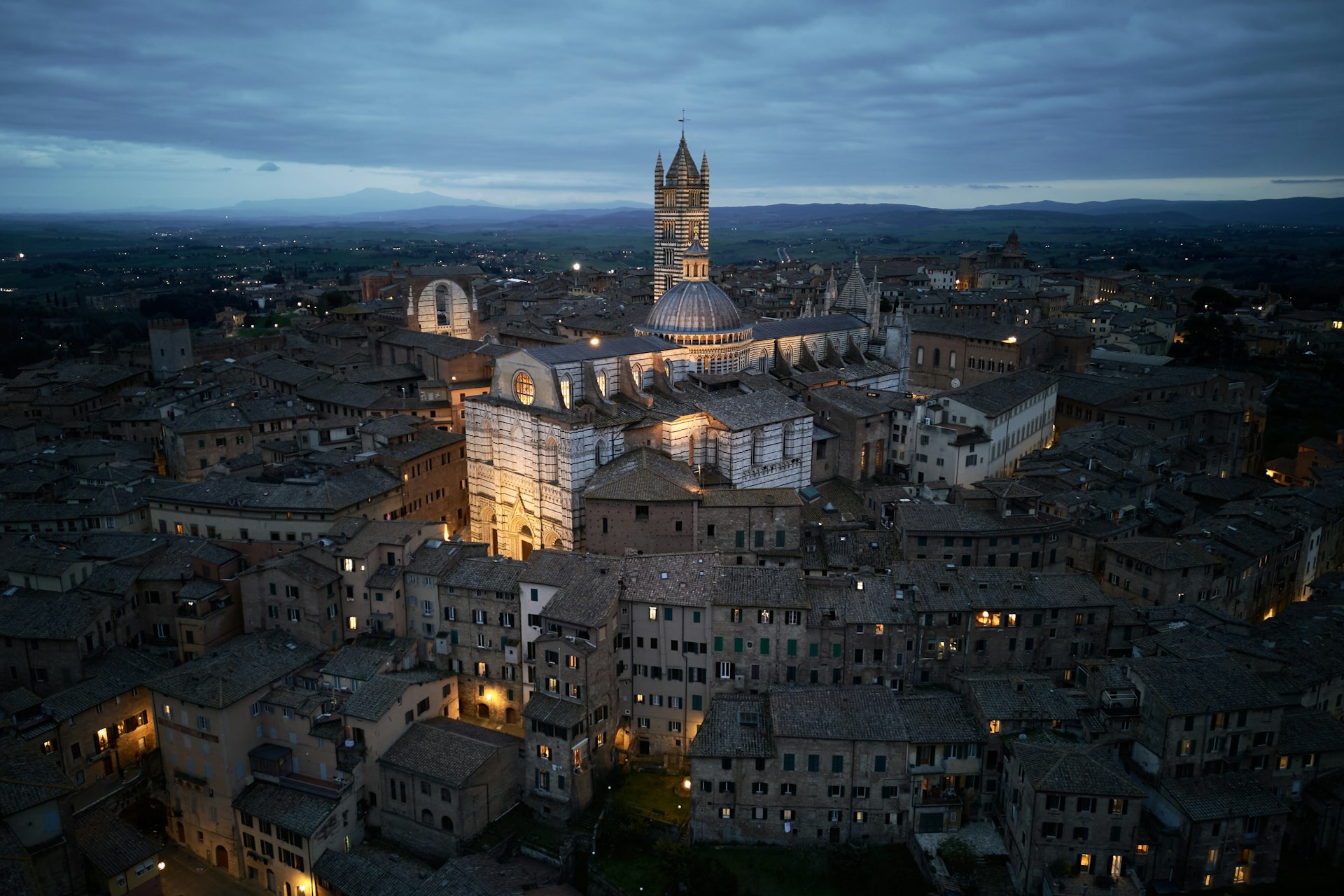
The sunset is the perfect moment to say goodbye to Siena. The bricks warm up, shadows stretch along the alleys, and the city becomes calmer. You can choose a high spot or simply walk: Siena has the ability to offer views effortlessly, you just have to be present.
If you want a “travel-like” ending, choose an aperitif in the center and then a slow walk towards Piazza del Campo: the square changes its face in the evening, becoming more intimate and more genuine.
Where to stay in Siena
If you can stay for a night, do it. Sleeping within the walls allows you to see Siena when day visitors leave, and the city becomes “its own”. The historic center is the best choice to optimize travel and enjoy the evening without worries. To compare availability and prices (especially in high season), you can check here: Hotels and accommodations in Siena on our Booking
If You Have a Second Day: Val d’Orcia UNESCO Heritage
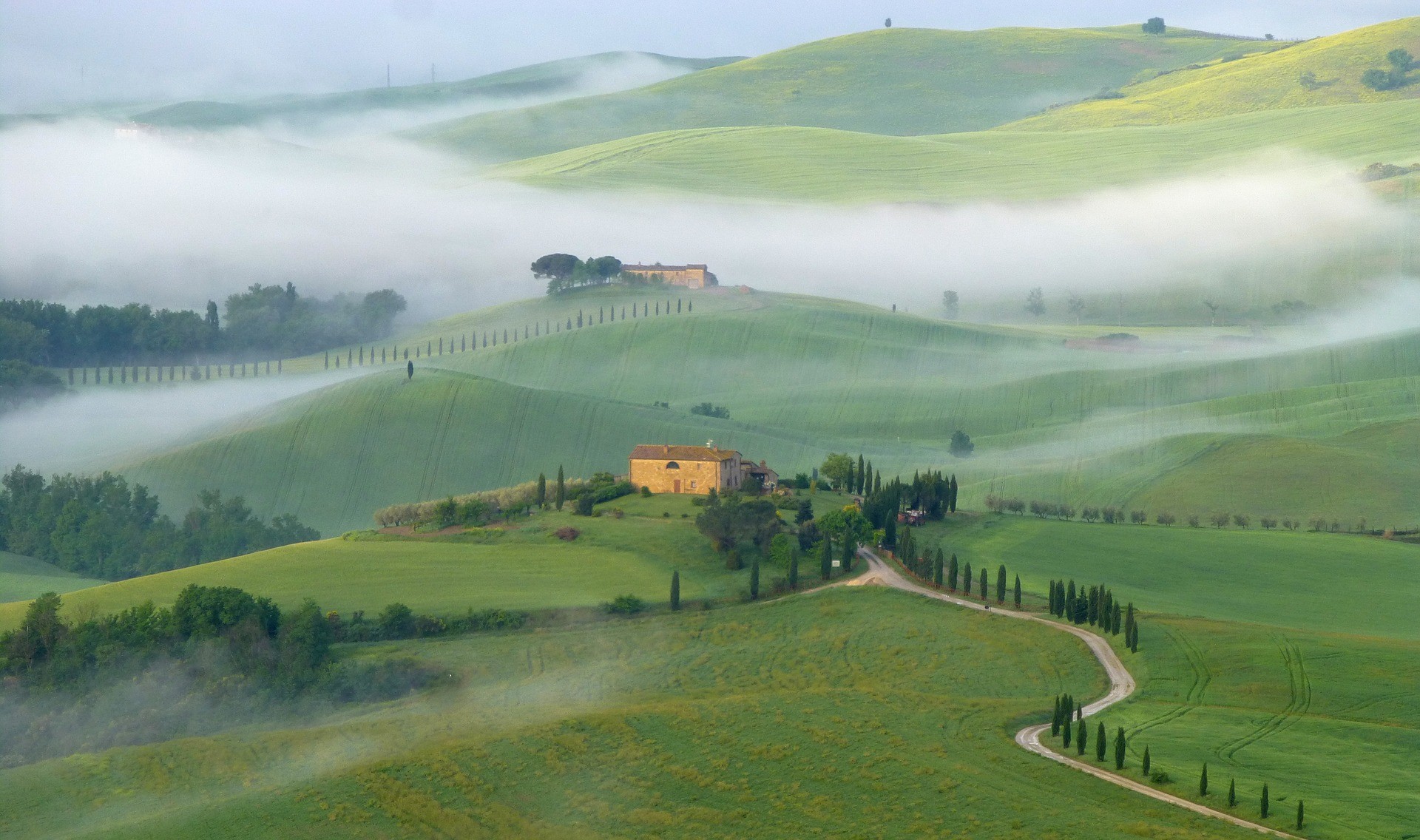
Siena is also a natural gateway to the most iconic countryside of Tuscany. If you have a second day (or even just a few extra hours), the most scenic choice is Val d’Orcia: rolling hills, cypress trees, villages, and postcard-perfect roads. On FullTravel you’ll find a complete itinerary to follow: itinerary among the treasures of Val d’Orcia UNESCO heritage and VerdeGusto suggests where to eat well in Val d’Orcia for less.
It’s the perfect way to transition from medieval Siena to the scenic Tuscany we often imagine when we think of the region.
Quick FAQ: common questions about Siena in one day
Is one day enough to see Siena?
Yes. Siena is compact and the main attractions are close to each other. With a well-organized itinerary you can see Piazza del Campo, the Duomo, contrade, and at least a couple of places related to Saint Catherine. If you want museums and long breaks, it’s better to add one night.
What should you absolutely not miss?
Piazza del Campo and the Duomo are the top two priorities. If you have time, add Torre del Mangia for the view and San Domenico for spiritual Siena.
How to get around if I arrive by train?
From the lower part you can go up by city buses or escalators. For practical details read: visit Siena on foot or by bus.
What is the best time to visit?
Spring and autumn are ideal for climate and crowd levels. Summer is busier and more expensive, but it’s perfect if you want to experience the Palio atmosphere (knowing that the city changes completely during those days).
Conclusion
Siena in one day is not a “reduced version” of Siena: it is a complete experience if you know what to focus on. Piazza del Campo tells you about the civic power and collective identity, the Duomo shows you the city’s great artistic ambition, the contrade and alleyways make you feel everyday Siena, the one that doesn’t need spectacle to be memorable. And the food brings you back to the land, to the countryside, to the territory all around.
If you then want to extend the trip, you have two perfect options: the Tuscany of flavors (with the Cinta Senese) or the Tuscany of landscapes (with the Val d’Orcia UNESCO). Siena, in any case, remains there: compact, proud, elegant. And you hardly ever forget it.