

The museums of Boston are numerous, rich, and absolutely not to be missed. Many museums are spread throughout the capital of Massachusetts, in the United States. Several museums for children and families are present throughout the city.
- 1 Museum of Fine Arts Boston
- 2 Isabella Stewart Gardner Museum Boston
- 3 Harvard University Art Museums, Cambridge
- 4 Harvard Museum of Natural History
- 5 Boston Science Museum
- 6 Boston Tea Party Ships & Museum
- 7 John Kennedy Library and Museum, Boston
- 8 Dreamland Wax Museum
- 9 Boston Children’s Museum
- 10 Boston Immigrant Walking Trail
- 11 Edward M.Kennedy Institute for The United States Senate
- 12 New England Aquarium, Boston
- 13 Carpenter Center for the Visual Arts (CCVA)
- 14 MIT Museum, Cambridge
- 15 Institute of Contemporary Art, Boston
- Other Museums in Boston Not to Miss
- 16 Davis Museum & Cultural Center: Wellesley
- 17 Longyear Museum, Chestnut Hill
- 18 Mass General Hospital Museum of Medical History and Innovation, Boston
- 19 Museum of Afro-American History, Boston
- 20 Nichols House Museum, Boston
- 21 Old South Meeting House, Boston
- 22 Old State House Museum, Boston
- 23 Otis House Museum, Boston
- 24 Paul Revere House, Boston
- 25 Spellman Museum of Stamps & Postal History, Weston
- 26 Sportsmuseum, Boston
- 27 The Commonwealth Museum, Boston
- 28 The Mary Baker Eddy Library, Boston
- 29 The Newton History Museum at The Jackson Homestead
- 30 USS Constitution Museum, Boston
Here is a brief overview of the museums of Boston not to miss with useful information for your visit.
1 Museum of Fine Arts Boston
The Museum of Fine Arts (MFA) in Boston features temporary painting exhibitions and the finest art displays from around the world. Famous is the gallery of paintings by Monet, as well as the American Impressionists, the Italian Renaissance, the Ancient Egypt and Nubia, and the collections of Japanese art. Since 2011, the Art of the Americas hall has showcased twice the works of the museum’s collection, including many large and multiple pieces that have not been shown to the public for decades. It was designed by the London Firm Foster + Partners, better known for completing the apex of the Berlin Reichstag with a glass dome. The same emphasis and transparency was used for the MFA: the glass walls helped dismantle the barrier between the hall and the sidewalk. The Museum of Fine Arts displays works divided by geographic areas spread over four floors:
- Precolonial art;
- Colonial art;
- European art, ancient world, and Asian art;
- Modern American art.
In the gallery 252 on the floor dedicated to European art, there are 37 works by Monet, the largest collection outside of Paris. Particularly interesting is the one dedicated to the water lilies. Contemporary art, on the other hand, has its own separate spaces. The museum shop offers unique gift items related to the temporary and permanent exhibitions of the Museum of Fine Arts. The catalog includes print reproductions or on other materials of the artworks housed in the museum galleries, educational and informative publications on the fine arts, including essays, biographies, catalogs, and books by ancient and contemporary authors. Finally, there is a section dedicated to children with fun and educational products designed to stimulate the imagination and creativity of the little ones. The museum is open from Saturday to Tuesday (10:00 AM to 5:00 PM) and from Wednesday to Friday (10:00 AM to 10:00 PM). From April to October, the Japanese garden is open. Admission is charged.

2 Isabella Stewart Gardner Museum Boston
The Isabella Stewart Gardner Museum, Boston offers traveling exhibitions throughout the year. The beautiful house-museum located at Fenway Court was designed by Isabella, a Boston magnate and billionaire, who collected precious works during several years of travels in Europe. The Venetian Renaissance-style residence, achieved by dismantling a palace in Venice and reassembling it here, preserves paintings by El Greco, Titian, Vermeer, Sargent, just to name a few painters. More than 2,500 art pieces, including the first painting by Matisse acquired by an American museum. Gardner was a controversial and multifaceted figure in late 19th and early 20th century Boston, as she associated with enlightened figures and eccentric artists. She was a muse and patron, as well as the host of a “non-Puritan” salon. In 2012, the new wing of the Isabella Stewart Gardner Museum in Boston was opened, designed by the Italian architect Renzo Piano. The museum also has a greenhouse with flowering plants, revitalized by the noted Italian architect. This museum is to be visited along with the Museum of Fine Arts, which is located not far away, in the same neighborhood of the Boston Fenway Cultural District. Visiting hours are from 11:00 AM to 5:00 PM. Closed on Tuesdays. Entrance is paid.

3 Harvard University Art Museums, Cambridge
Located across the Charles River which divides Boston from the university town, the Harvard University Art Museums of Cambridge belong to Harvard University. It is a real treasure trove of art and rare collections. It consists of three distinct museums and was completely renovated in 2014 by architect Renzo Piano. Since their foundation over one hundred years ago, the Harvard Art Museums (Fogg Museum, Busch-Reisinger Museum and Arthur M. Sackler Museum) have been dedicated to the growth and support of education at Harvard University, both within the local communities and worldwide. Indeed, the museums have played a role in the development of art history, conservation, related sciences, and the evolution of the art museum institution. Through research, teaching, professional training, and public education, the museums aim to advance the understanding and appreciation of art. The overall collection of the Harvard Art Museums boasts over 250,000 pieces across a vast range of classifications: accessories, albums, amulets, architectural elements, archival materials, weapons, artists’ tools, books, boxes, molds, cameos, coins, sketches, fetishes, fragments, furniture, gems, graphic designs, inscriptions, jewelry, illumination, lamps, manuscripts, measuring instruments, medals and medallions, mirrors, mosaics, musical instruments, paintings, objects, photographs, plaques, prints, equestrian equipment, sculptures, seals, stained glass, panels, texts, textile art from around the world, spanning from the 6th millennium BCE to the 21st century. All artworks of the Harvard Museums relate to multiple world cultures and each exhibition section of the Museum is divided into geographical zones and periods.
- The Arthur M. Sackler Museum: collections of ancient art with coins, pottery and sculptures from the Greek and Roman eras; examples of Islamic and Indian art, paintings, drawings, metal objects, Iranian, Indian and Turkish calligraphy; an Asian gallery exhibiting ceramics, jade, bronzes, paintings, sculptures and lacquers from China, Korea and Japan.
- The Fogg Art Museum: European painting, sculpture and decorative art, with an excellent 19th century French collection; the Italian Renaissance; studies of Bernini in terracotta, 16th century Dutch paintings and 17th century French paintings; a gallery of American paintings: Sargent, Homer and Hopper. A modern art collection with works by Jackson Pollock and Mark Rothko. The Wertheim Collection with a superb group of Impressionist and Post-Impressionist works.
- The Bush-Reisinger Museum: a collection of examples of German Expressionism, the Vienna Secession, 1920s Abstract art, as well as contemporary art.
The Harvard Art Museums are open daily, except for U.S. holidays, from 10 a.m. to 5 p.m. They are accessible to people with disabilities. They can be reached by subway, MBTA Red Line Harvard Square station, a 5-minute walk from the station entering through any entrance of the famous College and walking directly through the center of the Harvard Yard, between the Widener Library and the Memorial Church, exiting at the access located on Quincy Street.

4 Harvard Museum of Natural History
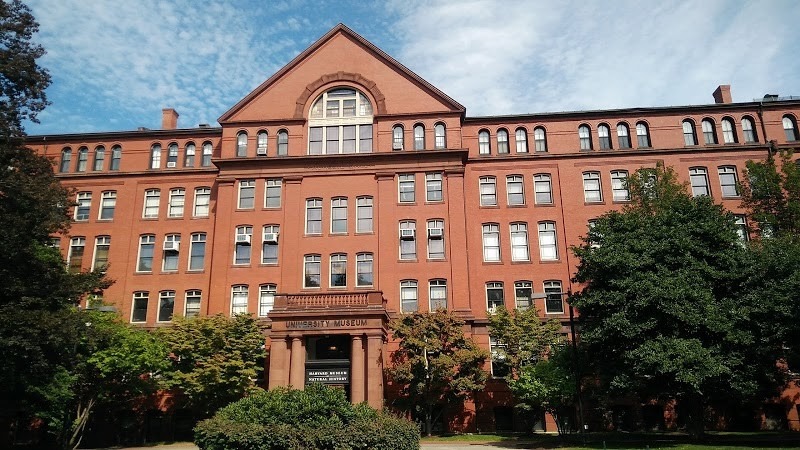
The Harvard Museum of Natural History (Harvard Museum of Natural History, Cambridge) presents collections resulting from research and discoveries in the field of Natural History at Harvard University. The historic Glass Flowers Gallery displays 25-30 of the most wonderful and famous glass flower models. Among the flowers, the famous irises and red maple leaves are the favorites. Each model includes between 8 to 10 pieces in the exhibit. For the first time, visitors can have a close-up view of each individual specimen on display and see it in a new way. Additionally, the Sea Creatures in Glass is exhibited in the Marine Life Gallery, a gallery opened in 2015 that features flooring and a ceiling recreating the coastal waters life of New England. The museum is part of the Boston CITY PASS.
5 Boston Science Museum
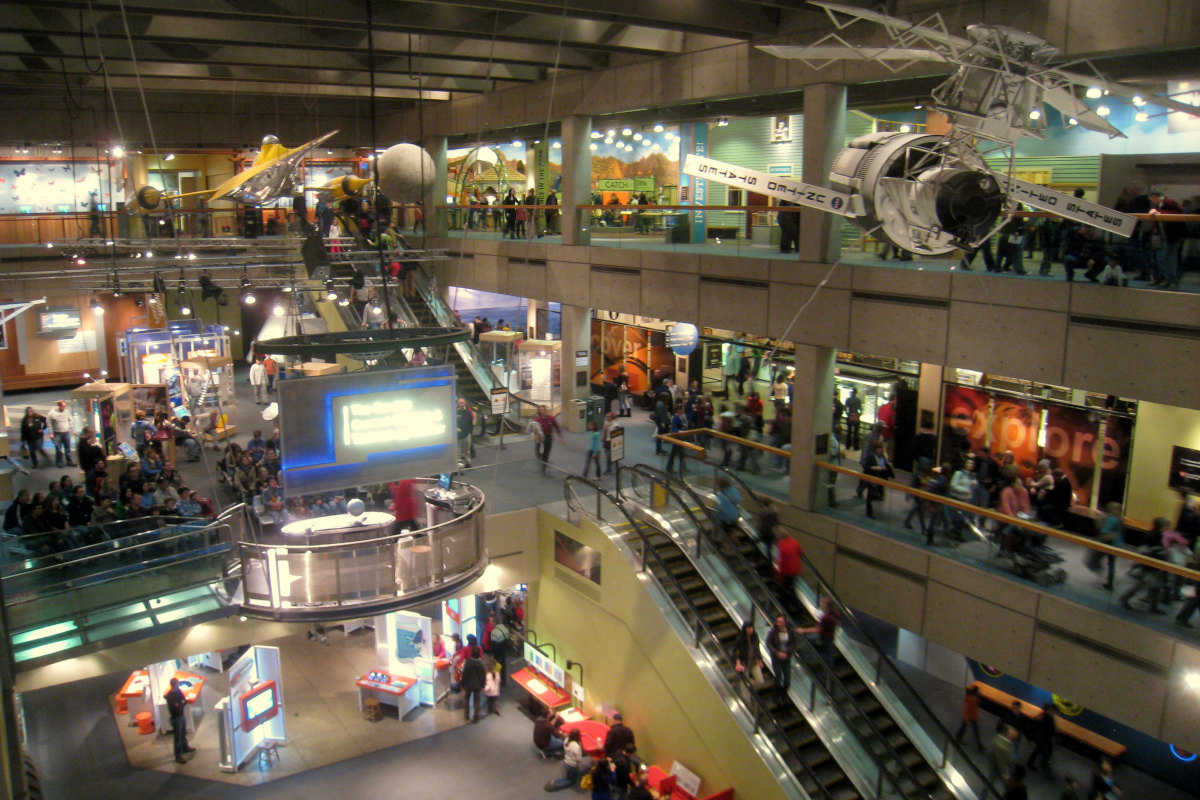
The Boston Science Museum (Museum of Science, Boston) is one of the most famous in the world. A “living wall” features a lush two-story vertical garden and a waterfall over 9 meters high. The Boston Science Museum received a $50 million donation in 2016 from Michael Bloomberg (former New York mayor born in Medford, a town near Boston), through his foundation, in recognition of his years of education. Bloomberg owes much to the Boston Science Museum which helped make him who he became. Every Saturday, at the age of 10, Bloomberg attended courses organized by the famous Boston museum. The museum institution showed him the opportunities and everything that exists in a different way from school. Among the various exhibits in the museum, a gigantic 2000-year-old sequoia. The educational division of the Boston Science Museum is called the William and Charlotte Bloomberg Science Education Center, in honor of Bloomberg‘s parents with a plaque outside the museum’s main entrance. The museum is part of the Boston CITY PASS. The ticket price is just over 25 euros. You can skip the line by purchasing it online.
6 Boston Tea Party Ships & Museum
The Boston Tea Party Ships & Museum is located on the Boston Harbor Walk, opposite the Intercontinental Hotel in Boston, Congress St.Bridge on the Fort Point Channel. The museum celebrates the Tea Party, a historic event of December 16, 1773. It is interactive and recreates the event and its consequences with unparalleled realism, using state-of-the-art technology and actor performers, which only a few museums worldwide employ. The tour is a true multi-sensory documentary, lasts 1 hour, and takes place every 30 minutes. Historical accuracy is guaranteed by the authority of professor Benjamin Carp of the History department at Tufts University, a researcher specialized in the American Revolution. The stories presented are narrated by Musion Eyeliner technology which creates the illusion of real people, not on a screen but in an open space, and makes these virtual images interact with each other and with the live performers. The aim is to immerse the visitor in the event that was the most important in leading to the American Revolution. Three are the restored historic vessels, replicas of the Beaver, Eleanor, and the third available in 2014, Dartmouth, curated by the “Master Shipwright” Leon Poindexter, specialized in historic vessels and maritime museum consultant. The museum also has a Tea Room that hosts up to 106 people -Abigail Tea Room- and serves a selection of hot or cold teas with pastries. The patriot women in this Tea Room teach how to prepare tea and tell anecdotes about Boston in 1773. There is also a shop.

See also: Boston, what to see
7 John Kennedy Library and Museum, Boston
The John Kennedy Library (JFK Library & Museum, Boston) is truly one of the most engaging museums and archives about the “American Dream” of the 1960s and the three years of John F.Kennedy‘s Presidency. Interactive exhibits, films, memorabilia, themed displays, JFK’s boat, historical testimonies, and portraits within the splendid futuristic architecture of I.M.Pei, a Chinese-American architect who gifted Boston with magnificent works. The Library is located at Columbia Point, in the southern part of the city, easily reachable also by subway. View of the Boston Skyline and the bay. In the early months of 2015, the exhibition spaces were completely renovated, updating technologies and design.
8 Dreamland Wax Museum
The Dreamland Wax Museum is located opposite the Boston City Hall (the town hall) and opened in 2017 with its own exhibition dedicated to US Presidents, world and local politicians, sports figures, and celebrities both living and deceased. Half of the 100 figures at the Boston museum are historical, including US presidents, as well as world leaders such as the British royal family, the pope, and the Dalai Lama. The Hollywood stars of the past and present, along with sports celebrities, make up the other half of the exhibition. The museum plans to add an additional 3-4 figures of well-known personalities from the city of Boston each year. The figures are not cordoned off, allowing visitors to get close and freely take photos or selfies.

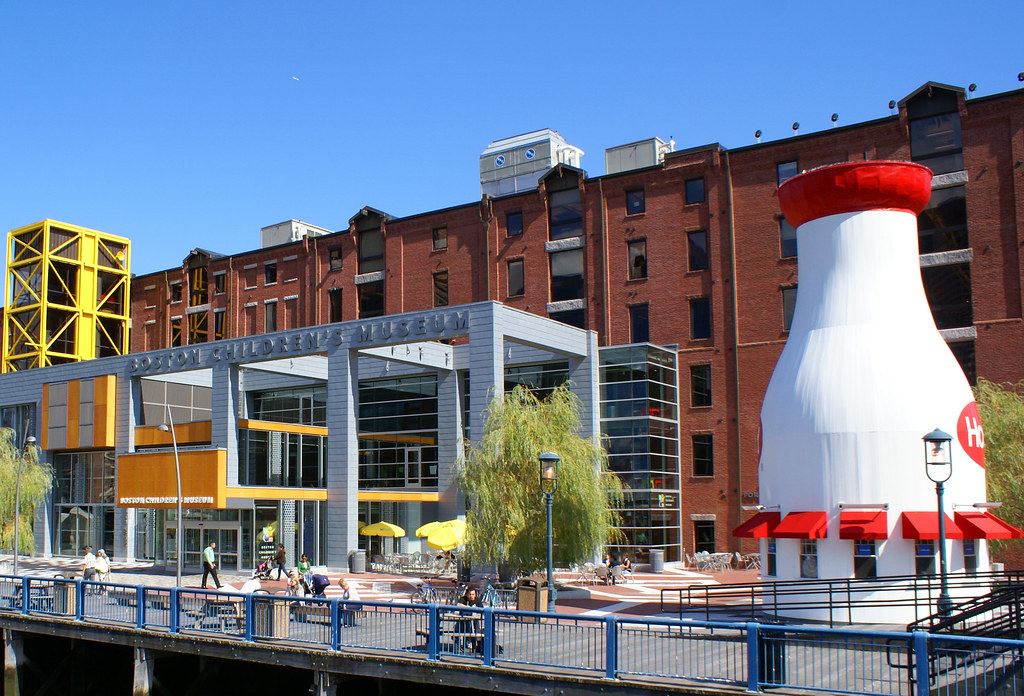
9 Boston Children’s Museum
The Boston Children’s Museum is the perfect place for children. An interactive museum entirely dedicated to them, where they can learn through play. In 2007, the museum received LEED certification, the first museum in Boston ever to receive this Green recognition.
10 Boston Immigrant Walking Trail
The Boston Immigrant Walking Trail is the Immigrant Trail that includes various places dedicated to the memory of events such as: the Irish Famine, the Holocaust, the Museum of African American History in Beacon Hill, “Ping On Alley” (the alley of chimes) in Chinatown, and the statue of the “father of public education in South America,” the Argentine Domingo Sarmiento.

11 Edward M.Kennedy Institute for The United States Senate
Dynamic “laboratory of democracy” that emphasizes civic education and offers educational programs on history and public procedures, as well as insights into the United States Senate, its history, its role, customs, and personalities. Inside it also features a life-size representation of the Senate Chamber at Capitol Hill. The EMK Institute is a dynamic non-partisan center for learning and engagement that uses innovative technology to offer visitors rich information and a personalized experience that brings important current and historical debates to life. Located at Columbia Point, on the southern slope of Boston, the institute occupies over 6,000 square meters with a building situated on the campus of the University of Massachusetts Boston (UMass Boston) and adjacent to the John F. Kennedy Presidential Library. The proximity of the two buildings invites visitors to explore both.

12 New England Aquarium, Boston
The New England Aquarium, Boston is one of the largest and most spectacular aquariums in the world. It houses more than 2000 species including exotic fish, sharks, turtles, penguins, and seals. Very beautiful is the exhibition of Caribbean corals which gathers at least 2000 specimens. The central tank – Giant Ocean Tank – offers clear views of giant sharks, turtles, rays, and thousands of tropical fish. The adventure in the Aquarium also includes the penguin colony, joyful seals, and the soft skin of a ray’s nose gliding through your hands. The trip is completed with a 3D IMAX film. The Aquarium is a treasure ready to explore and suitable for families and sea lovers, located right in the city center. It is situated along Boston’s Waterfront. The New England Aquarium is part of the Boston CITY PASS.

13 Carpenter Center for the Visual Arts (CCVA)
The Carpenter Center for the Visual Arts (CCVA) – Harvard University, Cambridge is the only building by Le Corbusier in all of North America, and one of the last to be completed during the architect’s lifetime. Probably a gift from Alfred St.Vrain Carperter, completed in 1963 with the intention of hosting the art programs of the Harvard College under one roof as a symbol of the University’s visible recognition of the importance of all contemporary art. Every Thursday, a series of evening readings gather important contemporary artists who talk about their work.

14 MIT Museum, Cambridge
The MIT Museum in Cambridge displays, in ever-changing exhibitions, the most astonishing discoveries and the most advanced research of the Massachusetts Institute of Technology: holography, robots, high engineering works, high tech design, and futuristic kinetic sculptures. This is where the computer was born.

See also: Boston Guide, what to see and do in the capital of Massachusetts
15 Institute of Contemporary Art, Boston
The museum presents provocative programs and exhibitions of national and international artists, exploring ideas, themes, and images of our time. The Institute was the first to exhibit works by many of the most innovative artists worldwide, from Picasso to Warhol to Cindy Sherman to Bill Viola. A new location is planned soon for the museum: a futuristic building that will open in 2006 and become an important presence on Boston’s waterfront.

Other Museums in Boston Not to Miss
16 Davis Museum & Cultural Center: Wellesley
The museum is located within Wellesley College. It boasts a large collection of works covering 3000 years of art history. Free entry.

17 Longyear Museum, Chestnut Hill
Exhibitions, programs, and events about the life of one of America’s most well-known women: Mary Baker Eddy, the founder of a religious movement known as Christian Science. From 1866, Mrs. Eddy spent more than 40 years of her life trying to spread her ideas through writing, teaching, and medical care. A guided tour of the six historic buildings where M. B. Eddy lived is available. Admission to the museum is free.

18 Mass General Hospital Museum of Medical History and Innovation, Boston
Showcases the evolution of medicine, surgery, and research at the hospital.

19 Museum of Afro-American History, Boston
It is the largest museum in New England dedicated to preserving, conserving, and interpreting the history of African Americans.

20 Nichols House Museum, Boston
A look at Boston domestic life between the late 1800s and early 1900s. Located on the historic Beacon Hill, the house was built in 1804 by architect Charles Bulfinch. Inside are furniture and furnishings belonging to the Nichols family.

21 Old South Meeting House, Boston
It is the place where the American Revolution began. Within its walls gathered the colonists who decided to oppose the tea tax. It was the spark that ignited the revolt.

22 Old State House Museum, Boston
Dating back to 1713, it is Boston’s oldest surviving public building. Former seat of the colonial government, during the American Revolution it became the headquarters of the insurgents. Inside, there are artifacts and relics from the period, as well as permanent and temporary exhibitions on the city’s history from its founding to the present day.

23 Otis House Museum, Boston
It is the ideal place to discover what life was like in Boston immediately after the American Revolution. It was the elegant home of Harry Otis, an entrepreneur and member of Congress, and his wife Sally. It is now the headquarters of Historic New England, the oldest and largest regional organization in the United States for the preservation of historical assets.

24 Paul Revere House, Boston
It is the oldest building in downtown Boston. Built in the 1680s, it was the home of the patriot Paul Revere between 1770 and 1800. Inside, furniture and furnishings from the 17th and 18th centuries.

25 Spellman Museum of Stamps & Postal History, Weston
The Spellman Museum of Stamps & Postal History, Weston is a paradise for stamp enthusiasts.

26 Sportsmuseum, Boston
The history of basketball, hockey, baseball, and American football in the region where the passion for sports is strongest and the tradition deepest than anywhere else in the United States.

27 The Commonwealth Museum, Boston
It is the state museum of Massachusetts history. It is located just opposite the JFK Library.

28 The Mary Baker Eddy Library, Boston
It is particularly famous for the Mapparium, an amazing glass globe that represents the world as it was in 1935. Inside, there are also other interactive exhibits, whose inspiring theme is to emphasize the importance of ideas in human history.

29 The Newton History Museum at The Jackson Homestead
It is one of the few small museums in the United States that has received national recognition. It is the main source of information on the history of Newton. The institution’s approach is to place Newton’s historical story within the broader regional context of New England. The museum hosts temporary and permanent exhibitions on themes ranging from the colonial period to the present day.

30 USS Constitution Museum, Boston
Located near the historic warship, the museum is dedicated to the story of the USS Constitution, the lives of its sailors and those who built it. Historical artifacts and computer simulations take visitors on an interactive journey aboard the ship.

Thanks to the Massachusetts Office of Tourism in Italy for the valuable contribution.