


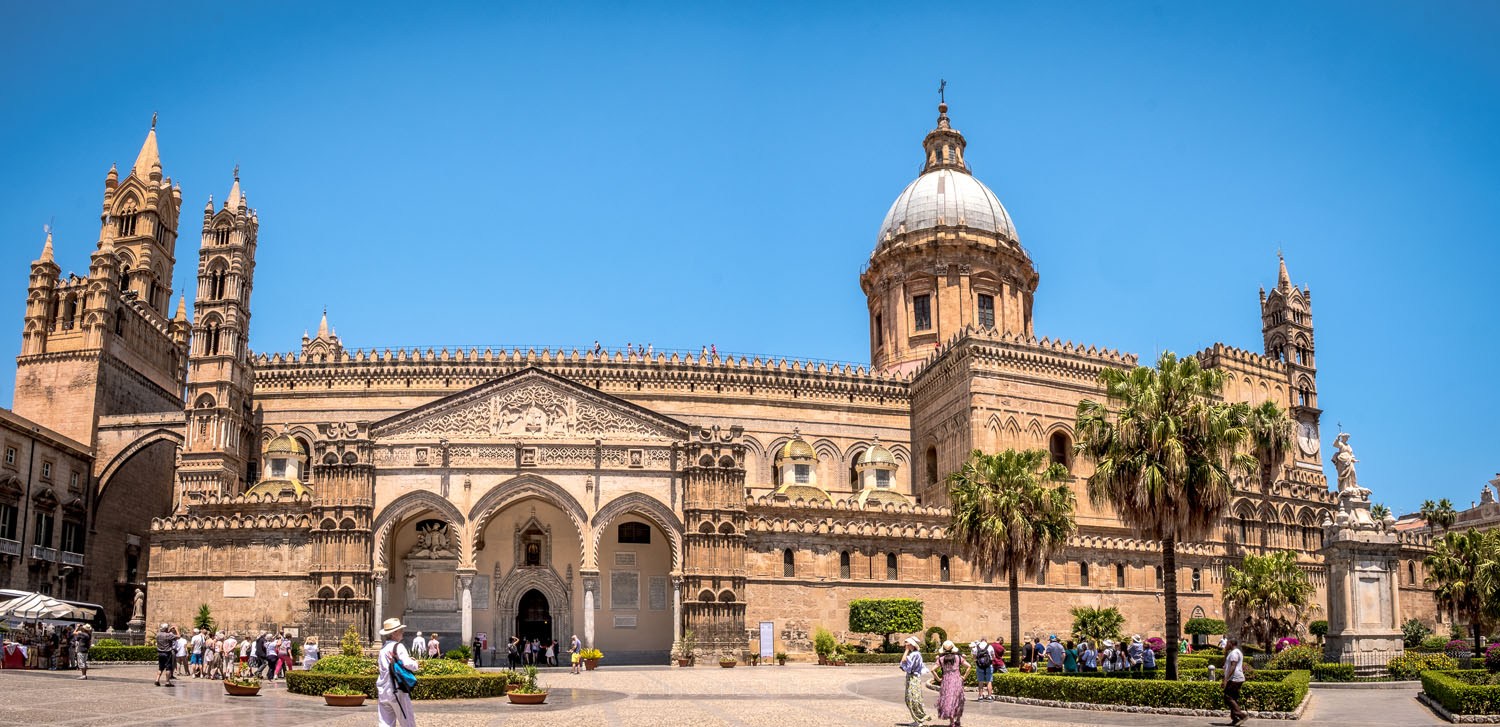

Palermo, Capital of Culture 2018, is undoubtedly a splendid city. There are many beauties to admire: that’s why we created this guide to help you better organize your trip, advising you what to see in Palermo and what to do.
- 1 Church of the Martorana
- 2 Palermo Cathedral
- 3 Palazzo dei Normanni
- 4 Four Corners
- 5 Chiaramonte Palace
- 6 Church of the Gesù
- 7 Teatro Massimo
- 8 Capuchin Catacombs, Palermo
- 9 Craft Market in Palermo: Artisans at the Palace
- 10 Florio Villa and Garden
- Museums of Palermo
- 11 “Raffaello Piraino” Costume Museum, Palermo
- 12 Monumental Archaeological Area of Castello a Mare
- Palermo in brief: how to get there, how to get around, where to sleep, what to eat
- 13 How to get to Palermo
- 14 How to get around Palermo
- 15 Where to eat in Palermo
- 16 Where to sleep in Palermo
What to visit in Palermo: places of interest
The places to visit in Palermo are many, but we want to suggest some attractions in particular that you simply cannot miss. If you also love biking, there is a itinerary in Palermo for that as well.
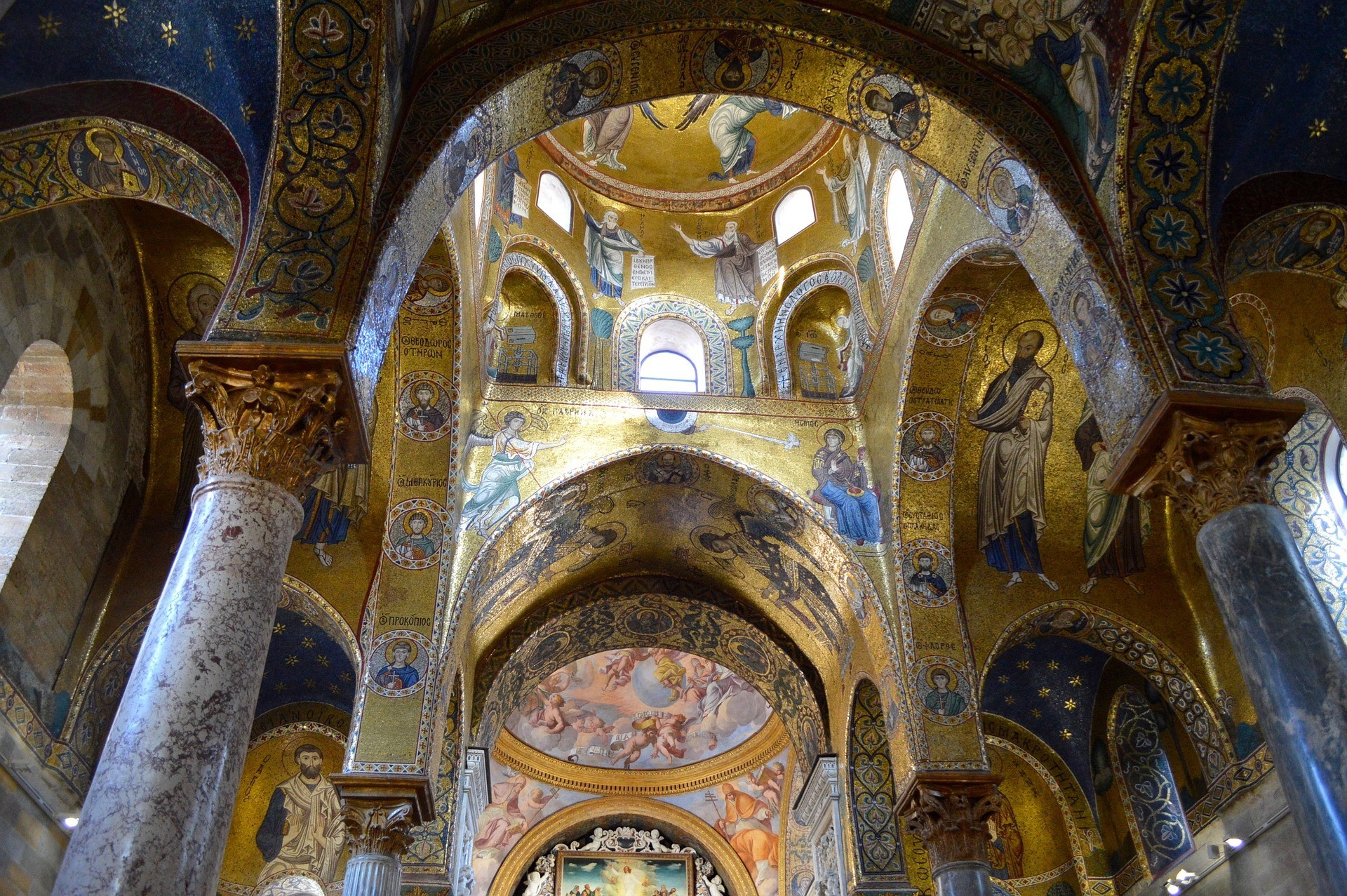
1 Church of the Martorana
The interiors of this Church will leave you speechless. Byzantine mosaics, considered the oldest in Sicily, frescoes and domes make it truly unique.
2 Palermo Cathedral
This is a Gothic-style Cathedral, inside which are the tombs of the kings of Sicily and those of Saint Rosalia, Patroness of Palermo. To be included in the list “Palermo: what to see“.

3 Palazzo dei Normanni
It is one of the most famous monuments in Palermo, with its magnificent Byzantine mosaics. Just a few meters away you will also find the Archbishop’s Palace and the Church of San Giovanni degli Eremiti.

4 Four Corners
A square enclosed by four facades on which dedications to four sovereigns, four patron saints, and four seasons are displayed. Nearby you will find another important square of Palermo, Piazza Pretoria, recognizable by the nude statues. Precisely because of this characteristic, it also takes the name Square of Shame. These are the main meeting points of the inhabitants of Palermo.

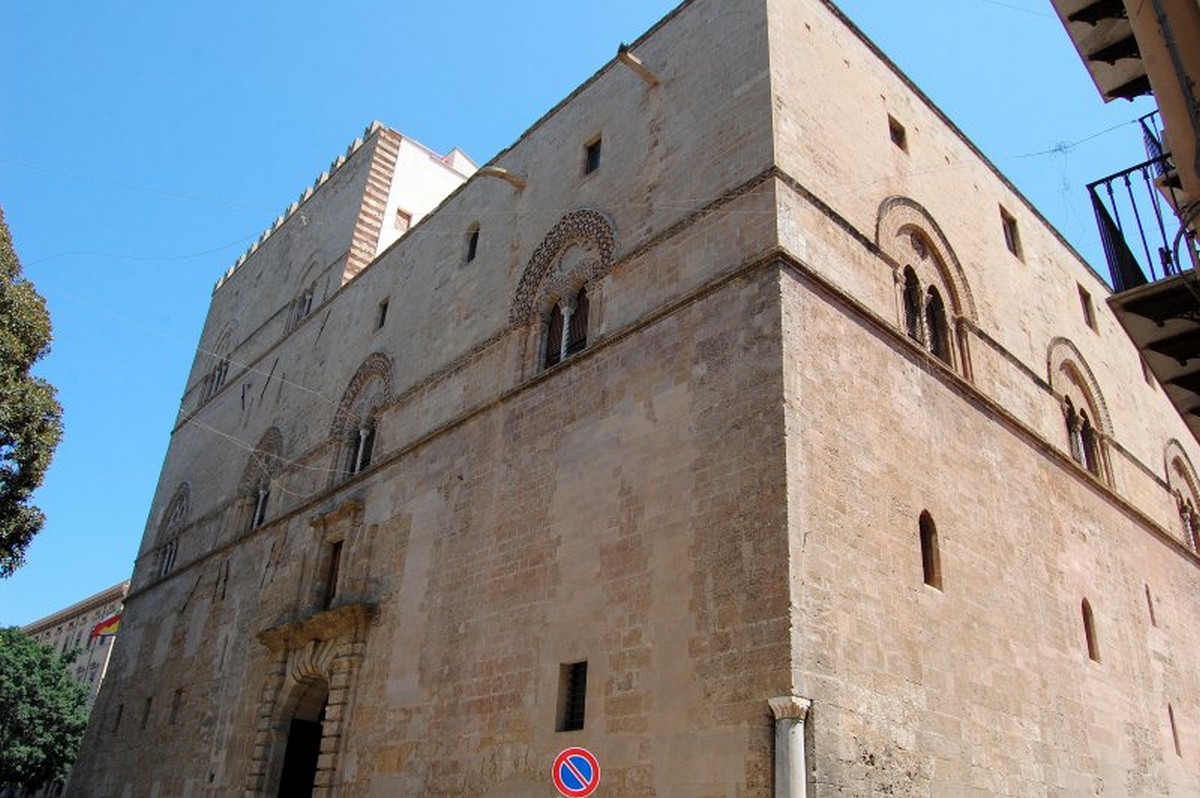
5 Chiaramonte Palace
Majestic and imposing, more like a real castle. It currently houses the University of Palermo, but you can still visit it and admire the famous painting La Vucciria by Renato Gattuso kept inside.
6 Church of the Gesù
The Church of the Gesù is one of the most important Baroque churches in all of Sicily. A visit to this sacred place should be added to your “Things to do in Palermo” list.

Among other important churches in Palermo, we remind you of the Basilica of St. Francis of Assisi, the Church of Santa Maria della Catena, and the Church of San Cataldo.
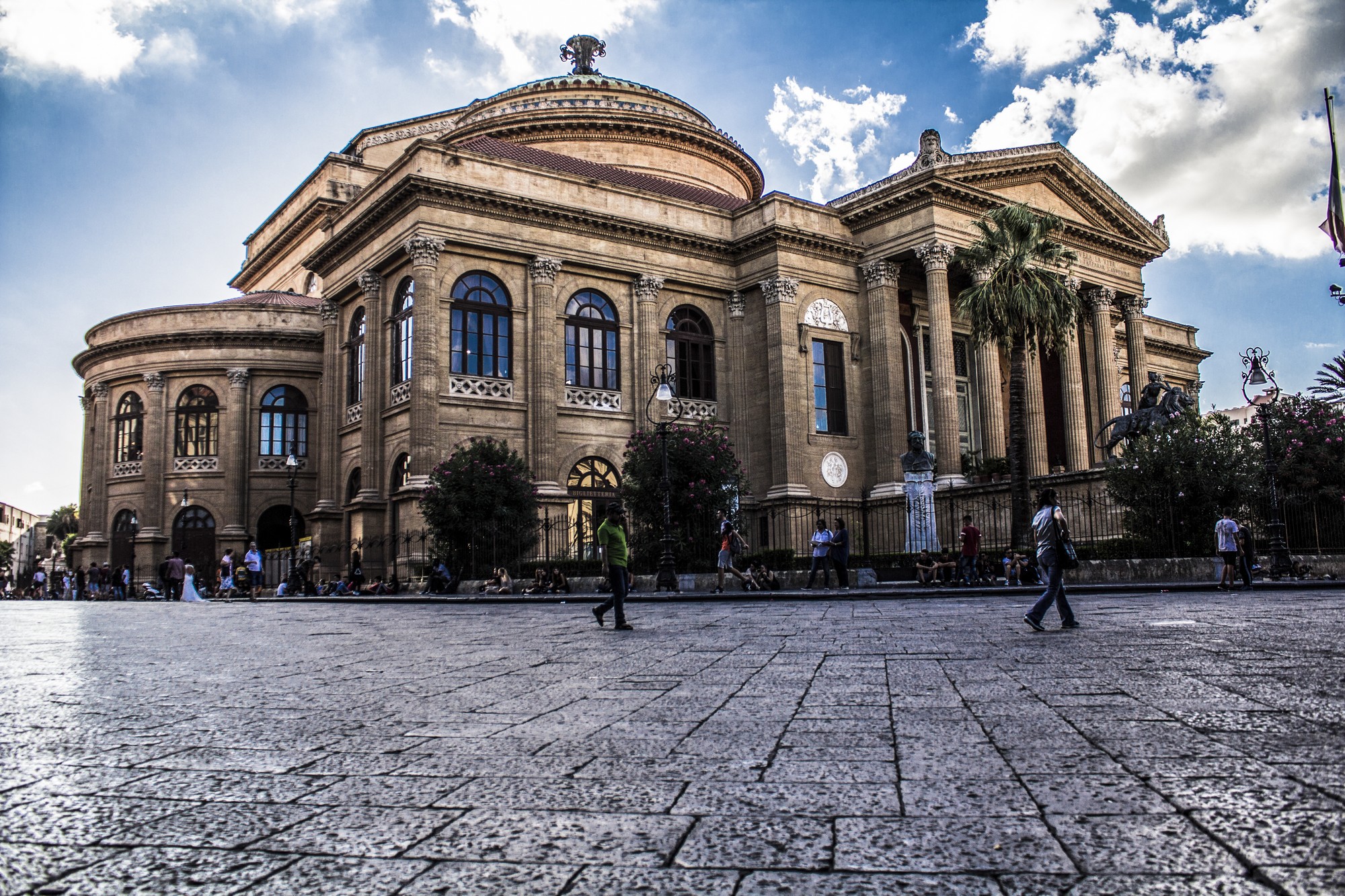
7 Teatro Massimo
Il Teatro Massimo is the largest opera house in Italy and the third largest in Europe.
In the list “What to do in Palermo” you should not miss:
- a visit to the botanical garden, which is among the most interesting in all of Europe;
- a visit to the Puppet Museum, an international museum dedicated to puppets and marionettes that tells the Palermo tradition;
- a visit to the Archaeological Museum, where you will find many artifacts preserved over the centuries.
8 Capuchin Catacombs, Palermo
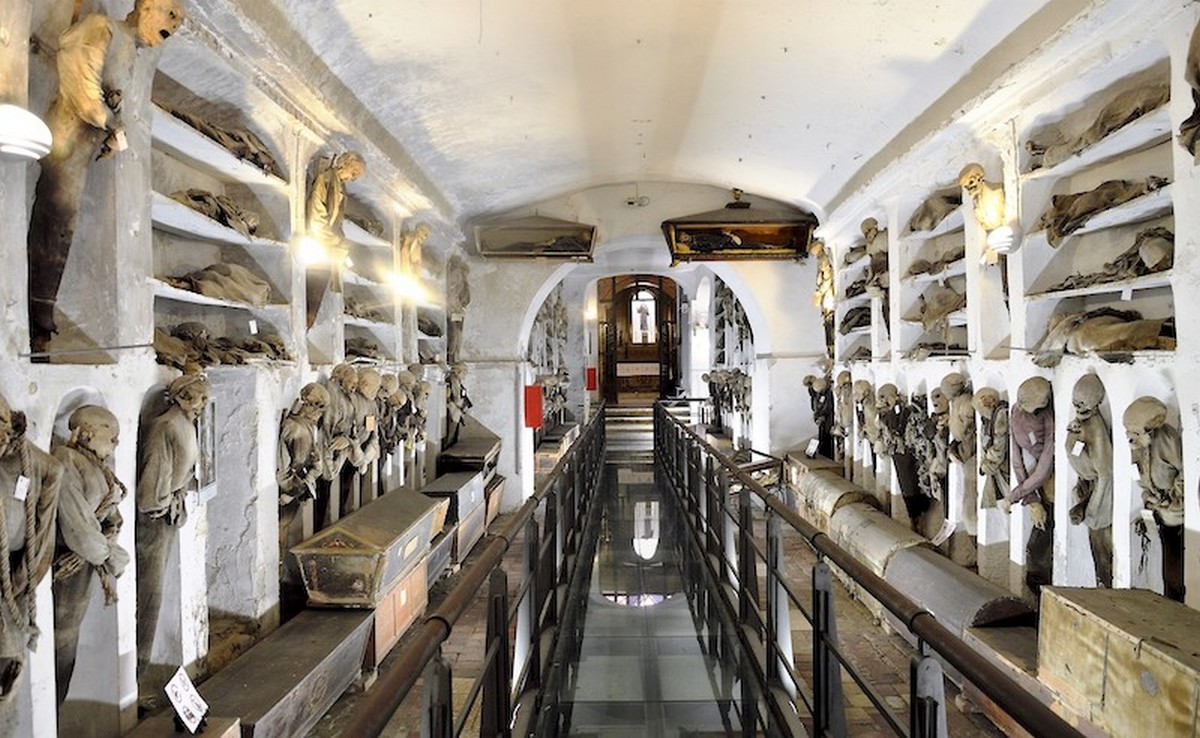
The Capuchin Convent of Palermo is known worldwide for the presence of a vast cemetery in its underground passages. The galleries were excavated at the end of the 16th century and form a large rectangular cemetery. The bodies present have never been inventoried, but it is estimated that there are up to 8,000. The mummies, standing or lying down, dressed to the nines, are divided by sex and social category, although most belong to the upper classes, since the embalming process was expensive. In the various sectors you can recognize: prelates; merchants and bourgeois in their “Sunday best” clothes; army officers in full dress uniform; young virgin women, deceased before they could marry, dressed in their wedding gowns. Family groups arranged standing on high shelves, delimited by thin railings similar to balconies; children. From late October to late March the catacombs are not open for visits on Sunday afternoons.
9 Craft Market in Palermo: Artisans at the Palace
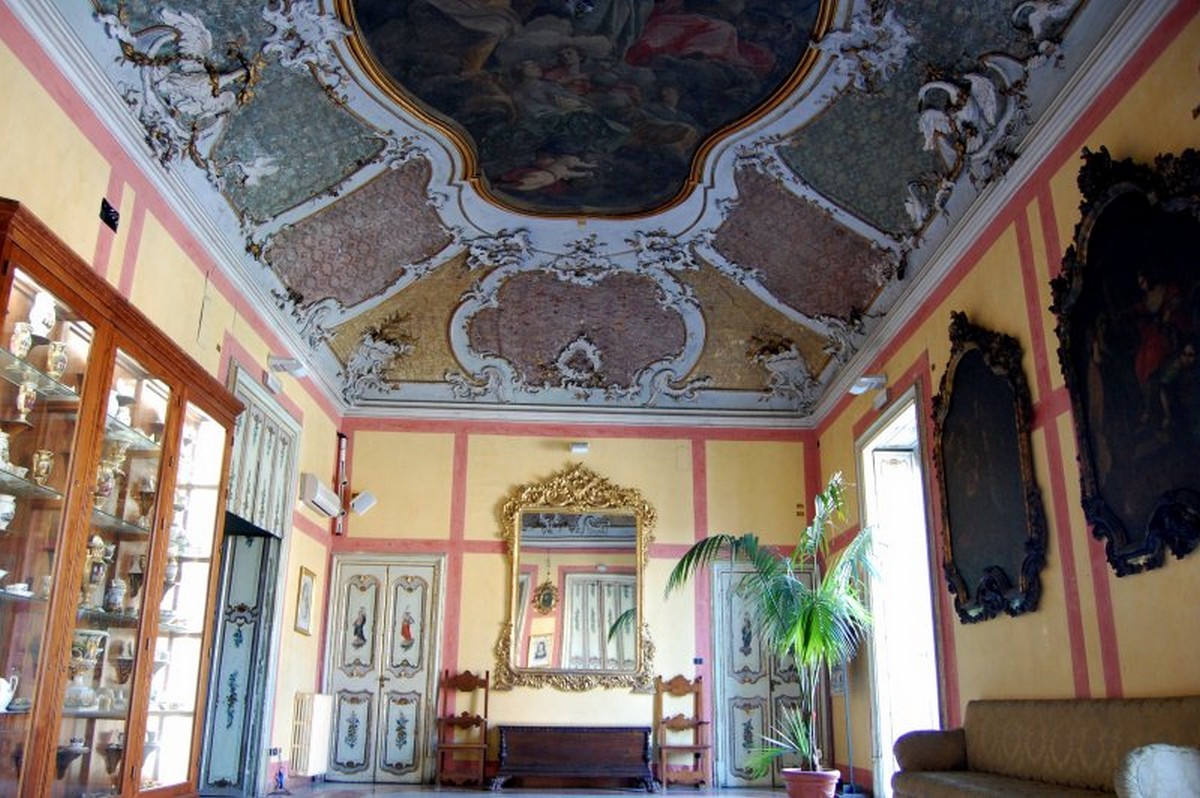
In the splendid location of Palazzo Asmundo in Palermo, the craft market takes place every first Sunday of the month. The building, constructed in 1615, is located in the very historic center of the Sicilian capital. The market is open all day, from 10:00 AM to 9:00 PM, giving visitors the opportunity to fully discover the craft works and collectible pieces offered at the stalls. Thanks to its prestige, the Palermo market welcomes thousands of enthusiasts every month eager to secure rarities of all kinds.
10 Florio Villa and Garden
In the large park of the Princes of Butera, the Florios wanted to build, in 1899, a villa in the style of the times and commissioned it to Ernesto Basile. Of the large park, in which it was located, only a small garden remains, surrounded by an imposing fence. The building is notable for the imaginative, asymmetrical distribution of spaces and for the varied and irregular play of volumes, with the lively external double-flight staircase and the turrets, pediments, eaves, and columns. Symbolic work of European fin de siècle taste, an expression of Italian modernism, during the Belle Époque the villa hosted the best society, the jet set of the time. The villa later experienced periods of decline, as did the Florio family. There are three main levels: the ground floor called “recreation” with the billiard room and game room; the first floor called “representative,” with the large hall, accessed directly from the external staircase, and the dining room; and finally the floor called “residence,” whose access from the representative staircase led to the living room and the bedroom.

Museums of Palermo
11 “Raffaello Piraino” Costume Museum, Palermo
The Museum exhibits the collection composed of more than three thousand pieces, ranging from clothing to accessories, whose main core is the collection of Raffaele Piraino, painter and professor of Costume History. Examples of ecclesiastical clothing, children’s, military and gala attire are exhibited, as well as traditional costumes from Mediterranean countries and wedding trousseaux. The collection gathers material dating from the eighteenth century to the first half of the twentieth century, mainly of Sicilian origin.
12 Monumental Archaeological Area of Castello a Mare
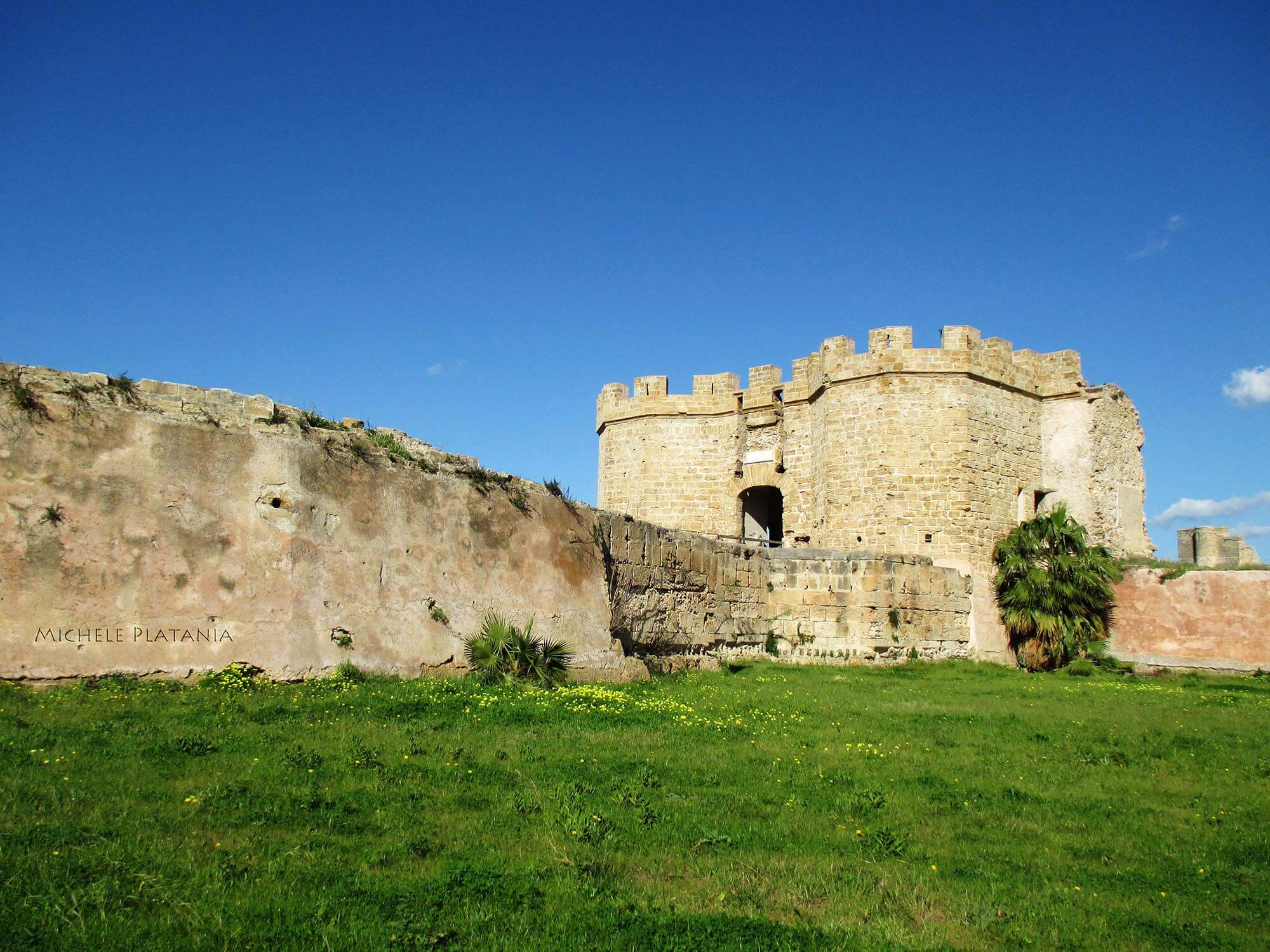
The area once occupied by the fortress of Castellammare now makes up more than half of the Trapezoidal pier of the port of Palermo. Inside the fortress, two main areas can be visited: the so-called Torre Mastra, surrounded by a buffer zone, and a large archaeological area with a rather heterogeneous set of buildings. Castello a Mare is located in the Archaeological Park of Castellammare, near the Cala, in the La Loggia district, north of the port of Palermo. It was the most important defensive bulwark of the port of Palermo until the 20th century. Until 1923, the fortress featured a quadrangular surrounding wall washed by the sea on two sides, enclosing a huge architectural complex. Anciently, the castle was composed of a large keep from the Arab era, some Norman parts (such as the Cappella della Bagnara), bastions and a 15th-century entrance area, a Renaissance palace, a 16th-century church (the Madonna di Piedigrotta, built on an ancient Arab mosque), two low hexagonal towers, and many other structures and buildings from more recent times. Of the ancient buildings, part of the Torre Mastra, the cylindrical tower, and the entrance body remain.
Palermo in brief: how to get there, how to get around, where to sleep, what to eat
13 How to get to Palermo
You can easily reach Palermo by the Naples – Palermo ferry or by plane. The Palermo airport, the Palermo Airport Falcone e Borsellino, is about 35 km from the city center and is well connected by the subway line, buses, shuttles, and taxis.
14 How to get around Palermo
Palermo, how to get around: the best way to get around Palermo is on foot. Alternatively, you can use the metro line, which is efficient and functional, or the urban bus lines.

15 Where to eat in Palermo
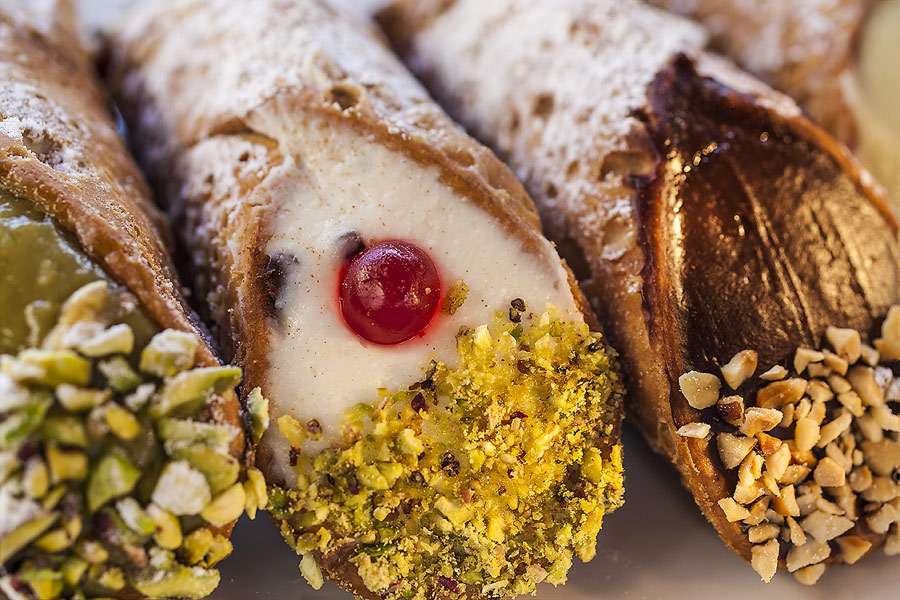
Where to eat in Palermo: one of the easiest things in Palermo is to eat well. From street food to typical places, you will really have a wide choice. We definitely recommend trying the famous arancini, the baked cassatina, and the Sicilian cannoli.
16 Where to sleep in Palermo
Where to sleep in Palermo: for your search of a hotel in Palermo we suggest focusing on the central areas, so you can move on foot to visit all the beauties that Palermo offers.