


In 1968, the villa was donated to the Italian State by Galliano Boldrini; having become part of the Special Superintendence for the Florentine Museum Hub in 2006, the villa has housed since the late 1980s a storage of archaeological finds from the Archaeological Superintendence of Tuscany, originally placed in the rooms of Palazzo della Crocetta, from where they were removed following the restructuring of the museum route carried out after the 1966 flood.
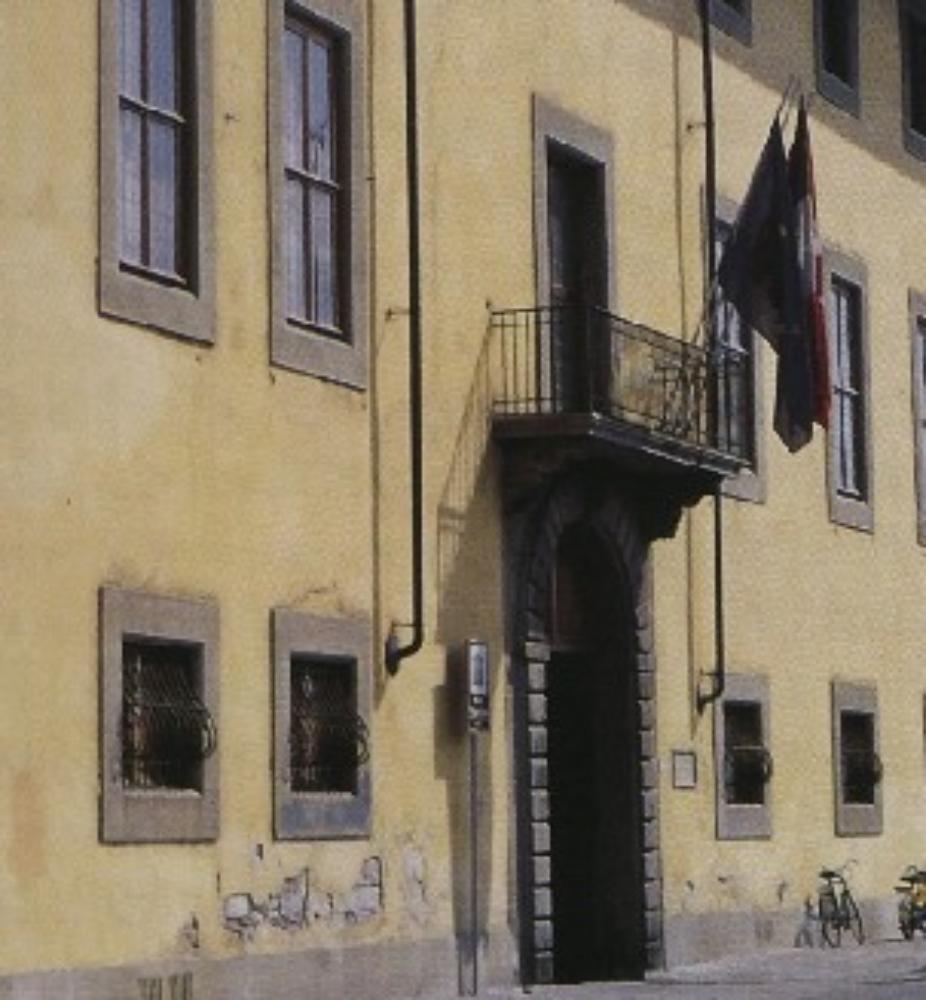
The structure underwent a restoration campaign directed by the Superintendence for Environmental and Architectural Heritage of Florence, begun in 2000 with the large hall and the inner courtyard. Thanks to the constant contribution of the Ente Cassa di Risparmio di Firenze, the restoration project of the ancient Baroque complex was finally completed in 2010, with the refurbishment of the façade and much of the interior spaces.
In the hall, some of the most significant marbles from the collection of the Archaeological Museum have been placed, among which stand out the porphyry statue of the Emperor Hadrian, unique of its kind, and that of the Peplophoros from Palazzo Cepparello, a splendid Roman age replica of a Greek original from the 5th century B.C.
Along the walls of the courtyard, instead, numerous Etruscan sarcophagi in nenfro from Tuscania have been placed, coming from the noble tomb of the Statlans, datable from the late 4th to the 2nd century B.C., as well as a very fine female sarcophagus from Tarquinia, decorated in bas-relief with figurative scenes full of symbolic meanings that allude to rites and salvific cults.
In other rooms on the ground floor, on the other hand, part of the sumptuous decoration of ancient marbles once in the “Ricetto delle Iscrizioni” of the Uffizi was recovered, set up by Foggini for Cosimo III as a majestic entrance to the Gallery and dismantled by 1920, after various exhibition phases.
On the first floor, visitors can retrace the millennial history of the Florentine plain through a permanent exhibition of finds discovered in the territory. Among them stand out the remains of the equipment of the “Tomb of the Mule” (late 7th century B.C.) and funerary sculptures from archaic Fiesolan workshops, among which the exceptional “Settimello Stele” (mid 6th century B.C.). It is important to remember that the exhibition also includes finds from the Etruscan city of Gonfienti, discovered over ten years ago not far from Calenzano.
The exhibition is aimed not so much at creating a museum setup in the traditional sense of the term, but at restoring the visibility of works preserved in this villa, which for years has served as storage for the stone materials of the National Archaeological Museum of Florence.
OPENING HOURS
From April to September:
1st-3rd Friday and every Saturday of each month from 2:00 PM to 6:00 PM
2nd and 4th Sunday of each month from 9:00 AM to 2:00 PM
From October to March:
2nd and 4th Sunday of each month from 9:00 AM to 2:00 PM
Villa Corsini a Castello
Via della Petraia, 38 50141 Florence


, architetto e scultore granducale, oltre che direttore delle manifatture di corte.)