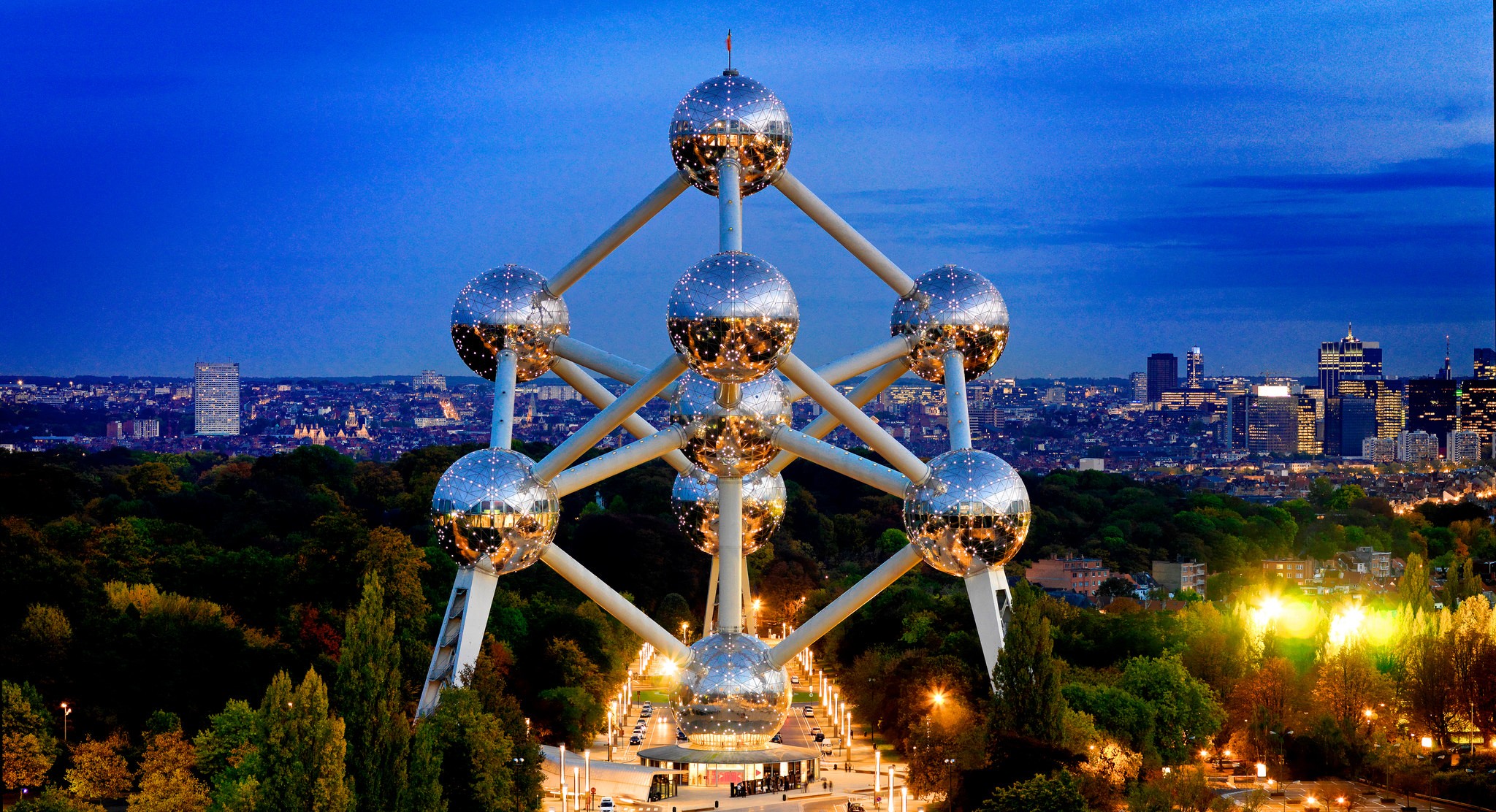


If stereotypes often represent an effective vehicle for getting to know a place, then welcome those of Brussels, the capital of Belgium and home of the European Union. The city is shaped like a pentagon and is divided into an upper part and a lower one, where the Grand Place is located. Here are some tips for visiting Brussels.
- 1 Brussels today
- What to see in Brussels
- 2 Brussels places of interest
- 3 Grand Place Brussels
- 4 Îlot Sacré
- 5 Manneken Pis
- 6 Royal Palace of Brussels
- 7 Musée des Beaux-Arts et d’Art Moderne
- Que faire à Bruxelles
- 8 Brussels Comic Strip Center
- 9 Museum of Musical Instruments
- 10 Brussels Flea Market
- 11 European Quarter
- 12 How to get to Brussels and get around
- 13 Where to eat in Brussels
- 14 Where to stay in Brussels
1 Brussels today
Brussels is famous for lace, Brussels sprouts, the Smurfs, Tintin; for the master chocolatiers; for the warm voice of Jacques Brel; for the paintings of Magritte. All very true things, to discover, admire, try, taste during a stay or a short holiday in Brussels. One of those city breaks that allow you to understand its hospitable and far from cold character, open to many cultures, many influences. Because, in the end, history and its position as a crossroads between northern and southern Europe have shaped Brussels this way. Its region, the Flanders, is one of the richest and most picturesque in the Old Continent, surrounded by countries like France, Germany, Netherlands; by cities like Paris, Berlin, Amsterdam. Thus it was inevitable that Brussels (Brussels) would take the best from all.
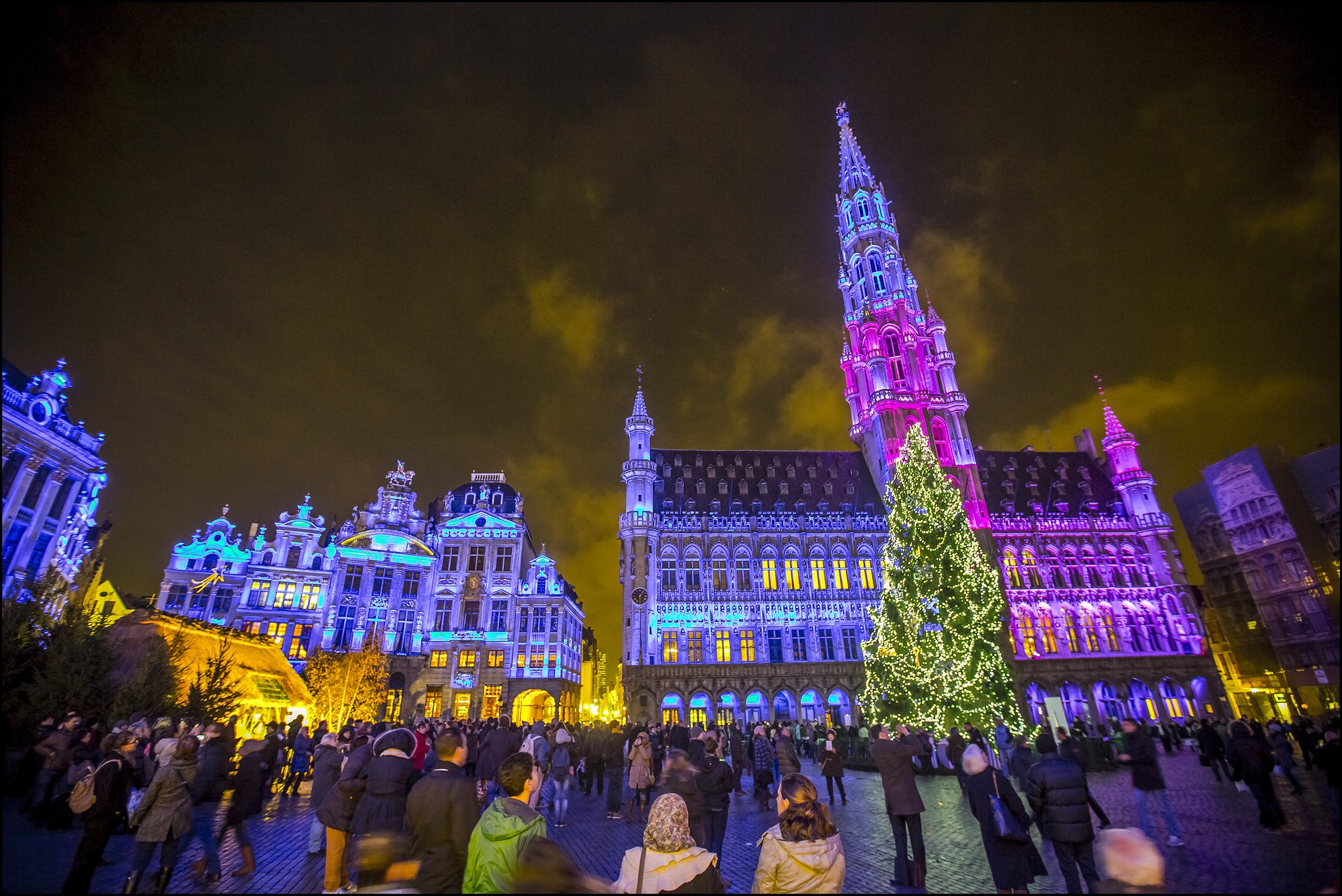
At Christmas, like many northern cities, Brussels fills with colors. It is one of the recommended times to visit Brussels, the capital of Belgium and queen of the country.
What to see in Brussels
2 Brussels places of interest
A classic starting point for visiting Brussels in one day is the Grand Place, a magnificent square with its 15th-century layout, with a row of buildings so richly decorated that they leave you speechless. The most striking is the town hall with spectacular Gothic lines.
But also beautiful is the cathedral of 13th-century origins, but with a façade that reflects the whole spirit of the 15th century. What makes it so imposing are especially the towers, which on sunny days seem to touch the blue sky. Not to be missed are also the Royal Palace, residence of the current monarchs, and the array of wonderful Art Nouveau buildings, many of which bear the signature of a master like Victor Horta, whose house the city preserves.
Other highlights are the St. Huber Gallery, lively with its bookstores, venues, boutiques, cafés, and praline shops that uphold the reputation of the Belgian master chocolatiers. The Sablon, a small mecca for antiques dealers, characterful shops, irresistible markets, and the areas of Rue de Namur, Avenue Louise, Boulevard de Waterloo, or the Galerie de la Toison.

3 Grand Place Brussels
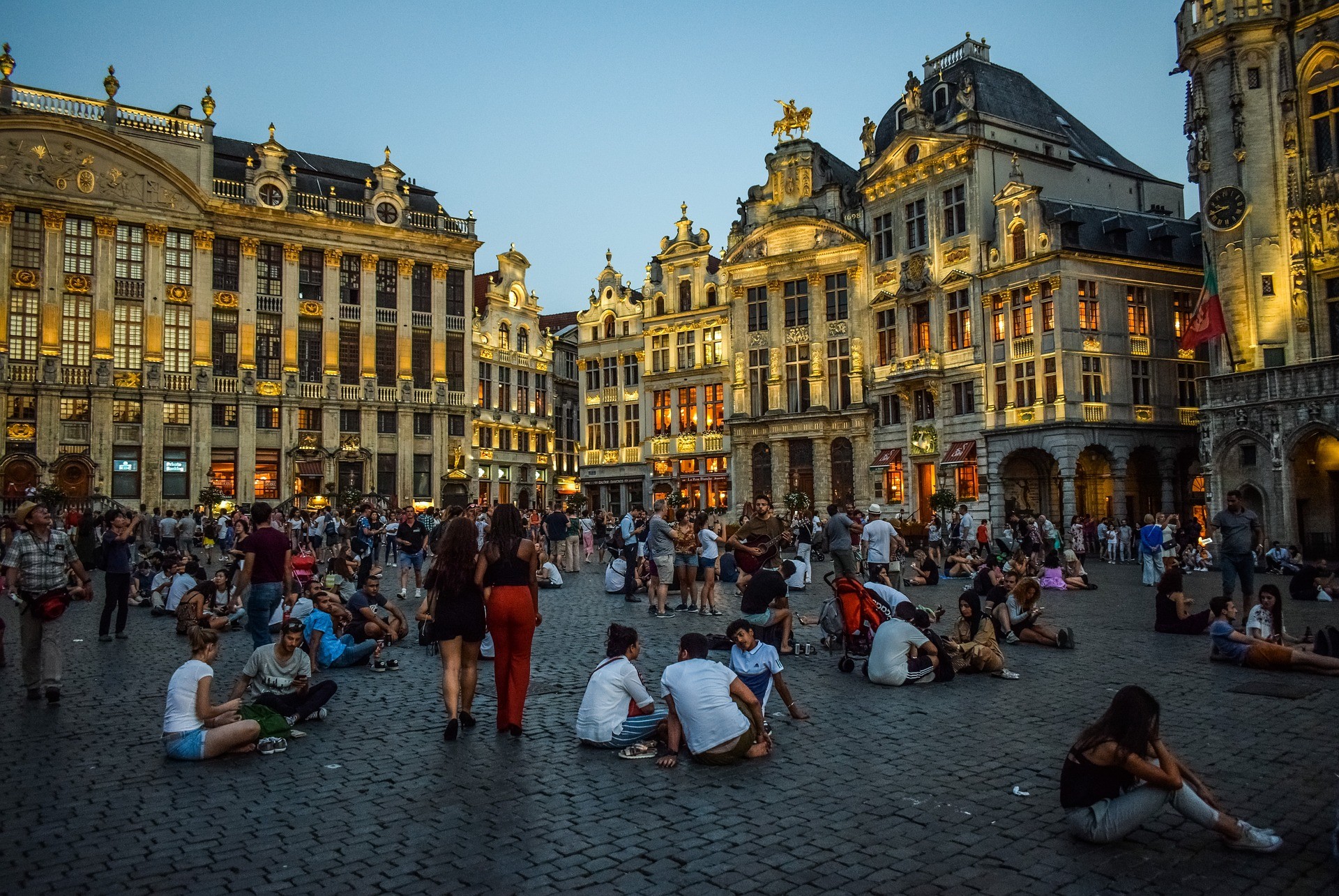
The Grand Place in Brussels is certainly one of the major attractions of the Belgian capital. The square, very large, is rich in Palaces and attractions. It is on this square that the Brussels Town Hall faces, which is characterized by a Gothic style. In this square there is also the Guildhalls, in Baroque style. The Grand Place also suffered severe damage during the reign of Louis XIV who completely destroyed the palaces in the square with artillery barrages in 1695. However, the citizens managed to rebuild it completely in just four years and today we all look up, admiring the architectural beauty of this space in Brussels.
4 Îlot Sacré
Tout autour de la Grand-Place, de petites ruelles se croisent et courent parallèlement. Nous sommes dans l’Îlot Sacré et ici les ruelles portent les noms de Rue des Bouchers, Rue de l’Ecuyer, Rue des Maréchaux. Un témoignage authentique du centre commercial de la ville. C’est ici que vous trouverez un grand nombre de cafés, boutiques, restaurants et activités de toutes sortes. Nous sommes dans la zone commerciale, pas vraiment bon marché (il y a mieux et moins cher ailleurs dans la ville). C’est ici que se trouve la Galerie St. Hubert, un centre commercial réputé qui abrite aussi un café, un cinéma, des restaurants et un théâtre.

5 Manneken Pis
Let’s say it out loud: a tour of the Belgian capital cannot ignore the visit to the most famous monument in Brussels worldwide: the Manneken Pis. It is a small statue of a boy urinating. The reason for such success is unclear, yet the Manneken Pis is one of the city’s main attractions. Located in one of the little streets branching off from the Grand Place, this monument is among the most photographed in the Belgian capital. If kitsch doesn’t scare you, a selfie here is a must.

6 Royal Palace of Brussels
The Royal Palace of Brussels still houses the Belgian Royal family today, although they do not live here daily as their official residence is the Castle of Laeken, in the surroundings of Brussels. However, the Royal Palace is where official visits by the Belgian royals take place. The structure of the Royal Palace, as we admire it today, dates back to the late 18th century, in the style of King Louis XVI at the behest of Leopold II, but over the centuries it has been rebuilt and completed. The palace can be visited by appointment and is accompanied by a large park featuring several points of interest. It is opened to the public during the Belgian National Day period and remains visitable for about two months and throughout the summer.

7 Musée des Beaux-Arts et d’Art Moderne
À l’intérieur du même bâtiment que Place Royale se trouvent deux lieux culturels de Bruxelles : le Musée des Beaux-Arts et le Musée d’Art Moderne. Dans le premier musée, on trouve des peintures de Rubens et d’artistes flamands des débuts. Dans le Musée d’Art Moderne, se trouve la collection de René Magritte, des œuvres de Dalì, Picasso, Matisse, Bacon et de plusieurs artistes locaux. Les musées sont ouverts tous les jours sauf le lundi, de 10h à 17h. Le prix du billet d’entrée est assez modéré.

Que faire à Bruxelles
8 Brussels Comic Strip Center
Staying on the topic of things to see in Brussels, we also find the Comic Strip Center, for fans of the genre. The appointment is at Rue des Sables, number 20, from Tuesday to Sunday (entrance hours from 10:00 AM to 6:00 PM). The Museum is housed inside an old warehouse and it is here that you can discover the origins of the Smurfs and the adventures of Tintin.

9 Museum of Musical Instruments
If you are still wondering what to see in Brussels, another interesting venue is the Museum of Musical Instruments. In this museum, you can find fine pianos but also rather unconventional instruments, often the result of folk artists’ imagination. On the top floor of the Museum of Musical Instruments, you can stop for lunch or dinner at the restaurant that offers a great panoramic view of Brussels. Located on Rue Montagne de la Cour at number 2, this museum is open (like most of the Belgian capital) from Tuesday to Sunday (closed on Mondays). The entrance fee is quite affordable and includes an audio guide.
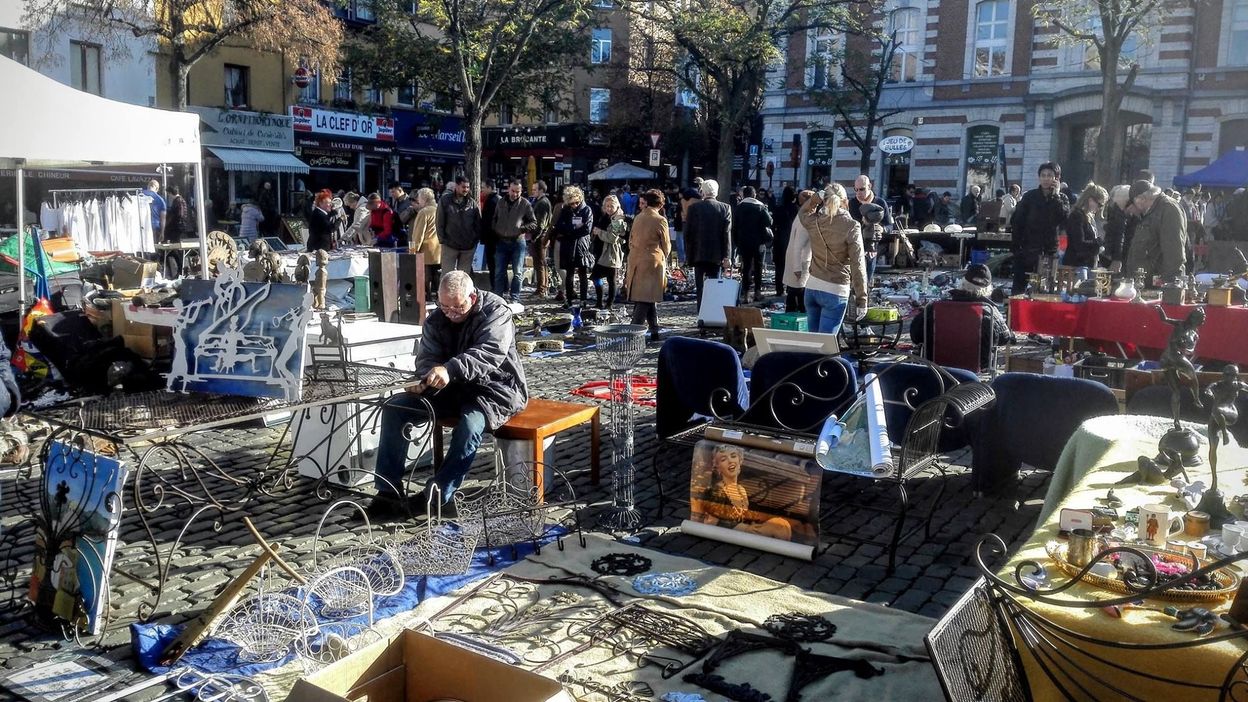
10 Brussels Flea Market
The Brussels Flea Market is located inside the Place du Jeu de Balle and is open every day from early morning (7:00 AM) until early afternoon (2:00 PM). Inside the market, you can find everything. You need a bit of luck to find rare or incredibly unique pieces.
11 European Quarter
Within the European Quarter of Brussels are located the Council of Europe Commission and the European Parliament, as well as many other European bodies and lobby offices. The district features modern buildings with classic and sober architecture. During working days, the district is very populous, unlike the days when the offices are closed and the area becomes deserted. The district is certainly not synonymous with architectural beauty but it is very efficient and functional.

12 How to get to Brussels and get around
The Belgian capital is well connected with international trains (Eurostar). Brussels is connected to London in just over 2 hours and similarly quickly to other major European cities like Paris, Amsterdam, Cologne. The main Brussels airport (Brussels International) has a very efficient railway line. It is from here that 4 trains depart which, with travel times ranging from 20 minutes to about an hour, connect the airport to 4 railway stations. The Brussels South is a service reserved for low-cost airlines, while taxis have an average cost. The city, however, is walkable. And this is how we recommend visiting Brussels with the help of the Brussels City Card available at infopoints, hotels, and museums.
13 Where to eat in Brussels
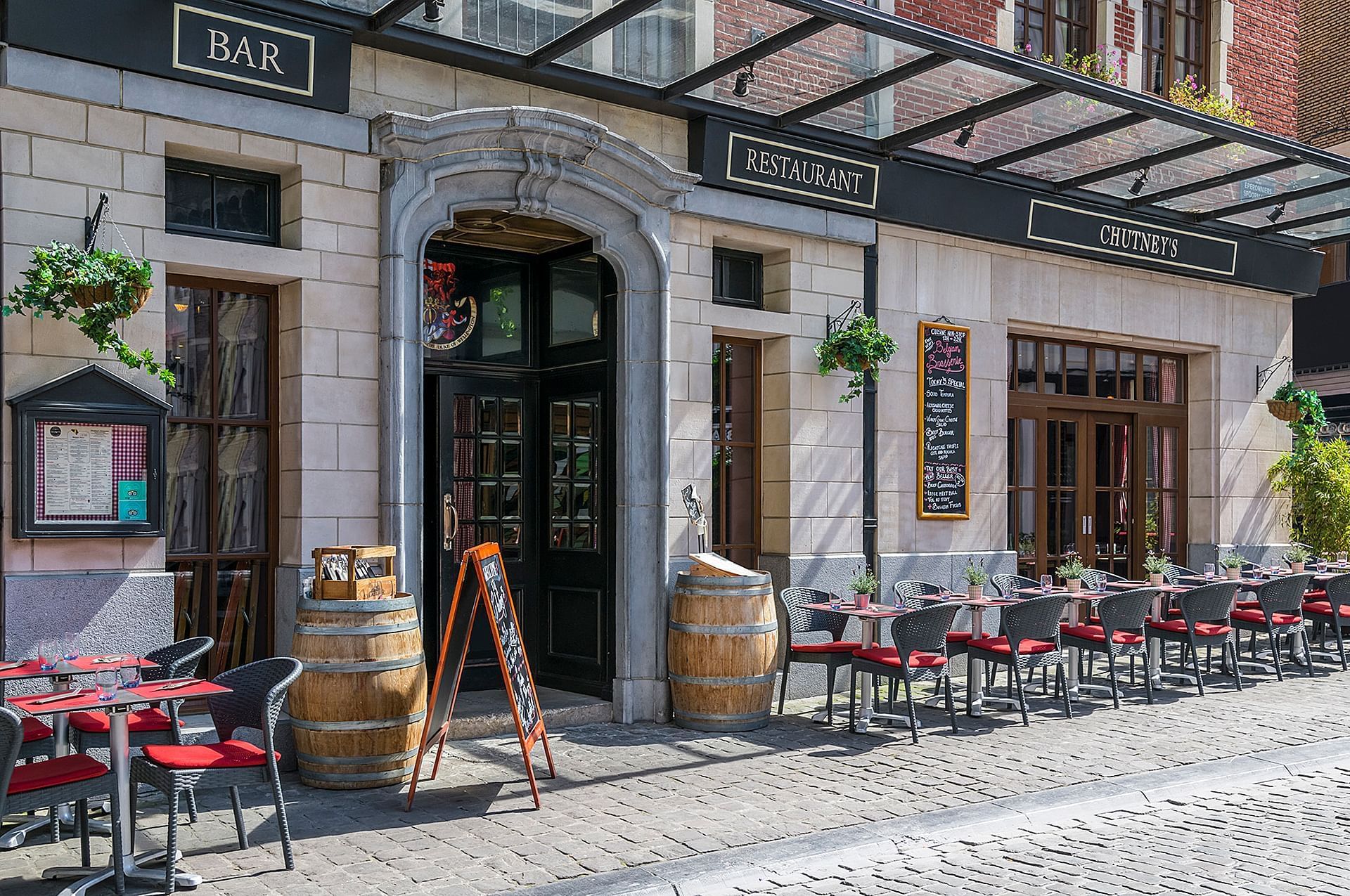
Let’s start by saying what to drink in Brussels. And here the answer is quite obvious: Belgian beer. The variety of Belgian craft beers competing with those of equally prestigious German and Czech beers is undoubtedly a strong point. Places like pubs and bars in the Old Town are preferred over the more prestigious ones for locals in the European quarter. Around the Grand Place, the streets are full of venues where you can taste a good Belgian craft beer but also eat local delicacies. You will certainly find a good beer at Chez Moeder Lambic in St. Gilles, and it is open until late at night. For good food, brasseries are recommended, while for a light lunch or dinner, cafés offering good prices for not-so-concentrated portions are also fine.
14 Where to stay in Brussels
Brussels is a city with many accommodations for business people who travel to the Belgian capital for work. This suggests that, especially on weekends, hotels are more available and offer better value. The hotels in Brussels are of various categories with a diverse offer, but also non-hotel accommodations, such as Bed and Breakfasts, are of decent quality.