


Visiting Venice is a dream shared by millions of travelers around the world. Famous for its millenary history, for the art and culture permeating every corner, for the Carnival most famous in Italy and the glass-making tradition of Murano, Venice is simply unique. A weave of canals, bridges, and poetic glimpses that remain in the heart. In this guide, you will find what to see in Venice, the main places of interest, and many ideas on what to do during your stay.
You will discover the most fascinating places in the city and what makes Venice so unforgettable.
- Discover Venice on Video
- The 12 Most Famous Attractions in Venice
- St. Mark’s Square
- Basilica di San Marco
- Doge’s Palace
- Rialto Bridge
- Grand Canal
- Bridge of Sighs
- La Fenice Theatre
- Gallerie dell’Accademia
- Murano
- Burano
- Biennale Gardens
- Scala Contarini del Bovolo
- 1 St. Mark’s Square
- 2 Doge’s Palace
- 3 Grand Canal
- 4 Academy Gallery
- 5 Rialto Bridge
- 6 Basilica of Santa Maria Gloriosa dei Frari
- 7 Church of Santa Maria Maggiore in Venice
- 8 Palace of Prisons
- 9 Palazzo Mocenigo, Venice
- 10 Carlo Goldoni’s House
- 11 Ca’ Rezzonico
- 12 New Procuracies, former Royal Palace
- 13 Venice Arsenal
- 14 Fortuny Museum
- 15 Venice Glass Museum
- 16 Caffè Florian
- Hidden Venice: what to see away from the crowds
- Quick information about Venice: how to get there, where to sleep, what to eat
- 17 How to get to Venice
- 18 Where to eat in Venice
- 19 Where to Stay in Venice: Strategic Solutions and Recommended Areas
- Frequently Asked Questions about What to See in Venice
Discover Venice on Video
An exciting journey through alleys, canals, and legendary squares: see Venice like you’ve never seen it before.
What to Visit in Venice: Places of Interest
There are many extraordinary places to see in Venice, but you don’t need a whole week to enjoy it. In this guide, we help you understand what to see in Venice in one day, or to build a longer itinerary with all the must-see attractions.
The 12 Most Famous Attractions in Venice
Venice is an open-air museum city, where every bridge and every square tells centuries of history. Here are the 12 must-see attractions to start exploring the lagoon city.
St. Mark’s Square
Area: San Marco
Type: Monumental / Historical
Basilica di San Marco
Area: San Marco
Type: Religious / Artistic
Doge’s Palace
Area: San Marco
Type: Historical / Museum
Rialto Bridge
Area: Rialto
Type: Iconic / Historical
Grand Canal
Area: Crosses the city
Type: Panoramic / Navigable
Bridge of Sighs
Area: Doge’s Palace
Type: Historical / Photographic
La Fenice Theatre
Area: San Marco
Type: Cultural / Historical
Gallerie dell’Accademia
Area: Dorsoduro
Type: Museum
Murano
Area: Island
Type: Craftsmanship / Glass
Burano
Area: Island
Type: Photogenic / Traditional
Biennale Gardens
Area: Castello
Type: Art / Events
Scala Contarini del Bovolo
Area: San Marco
Type: Architectural / Panoramic
1 St. Mark’s Square
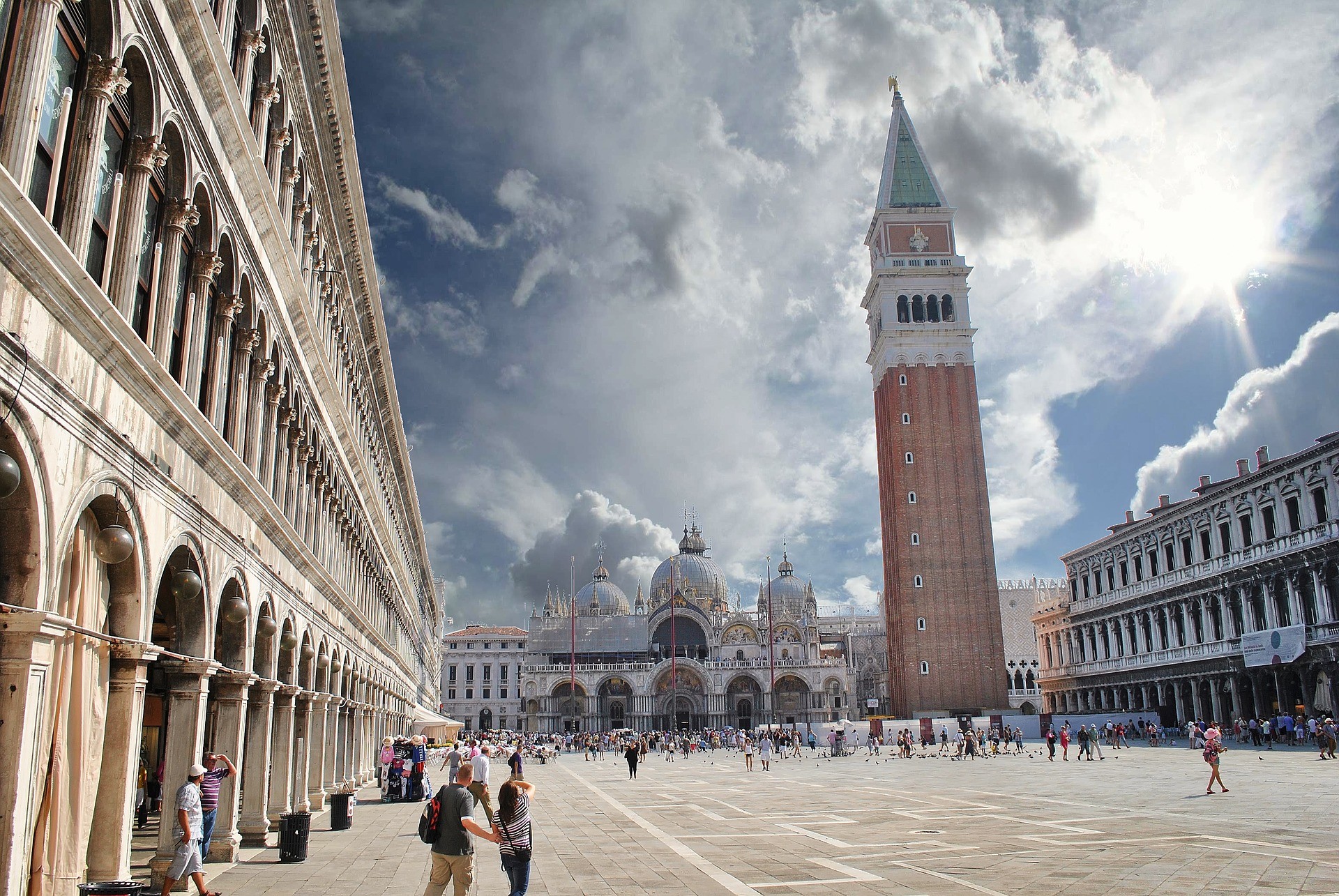
St. Mark’s Square is the symbolic place of the city and the heart of Venice. At the center stands the majestic St. Mark’s Campanile, famous worldwide. A meeting place for tourists and Venetian citizens, it is full of bars and restaurants. It is one of the first places to visit in Venice to immerse yourself in the city’s atmosphere.
2 Doge’s Palace
Il Doge’s Palace encapsulates the entire history of Venice and its inhabitants are very attached to its figure. The interiors host paintings, sculptures, and frescoed ceilings. Crossing the famous Bridge of Sighs, you can reach the New Prisons where you will also find Casanova. The Doge’s Palace is one of the main attractions in Venice not to be missed.

3 Grand Canal
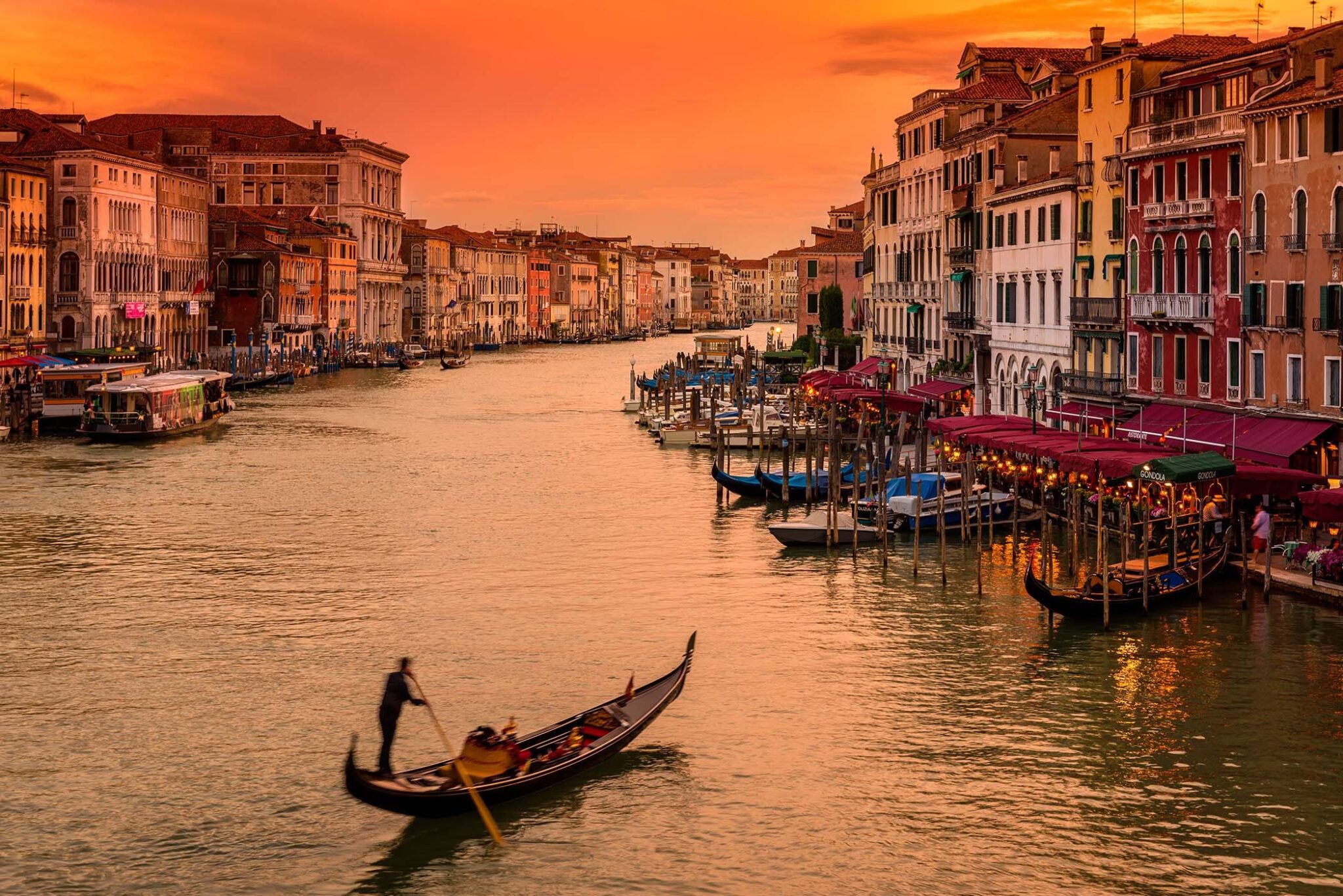
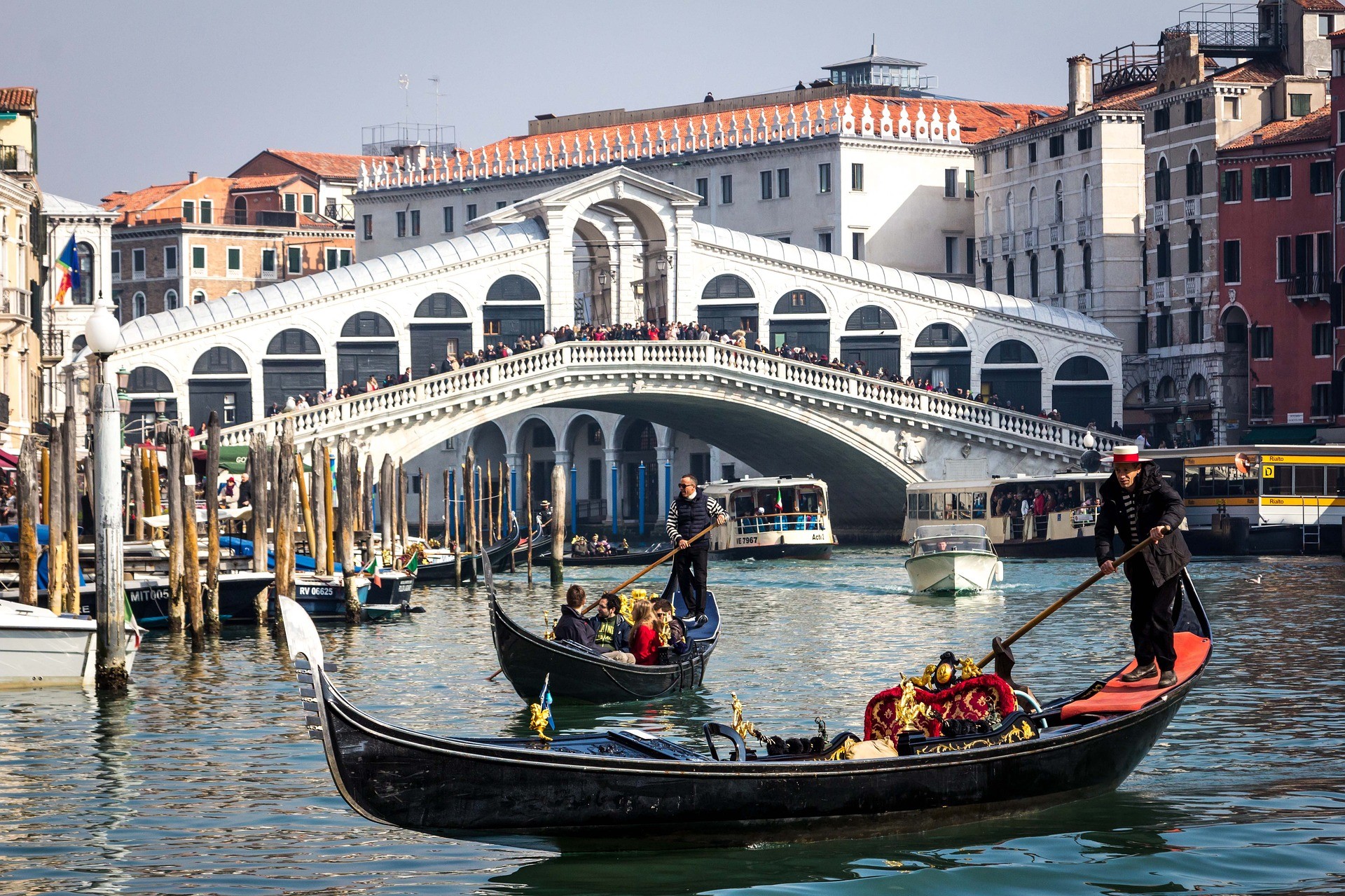
The Grand Canal is the most famous of the more than 150 canals in Venice; taking a ride on the vaporetto will allow you to see some of the city’s most beautiful monuments. Alternatively, you can cross the Grand Canal and the other Venetian canals by gondola. Perhaps not the most economical choice, but certainly full of charm! Definitely to be included in the “Things to do in Venice” list. A gondola ride is a unique experience to admire the city from a different perspective.

4 Academy Gallery
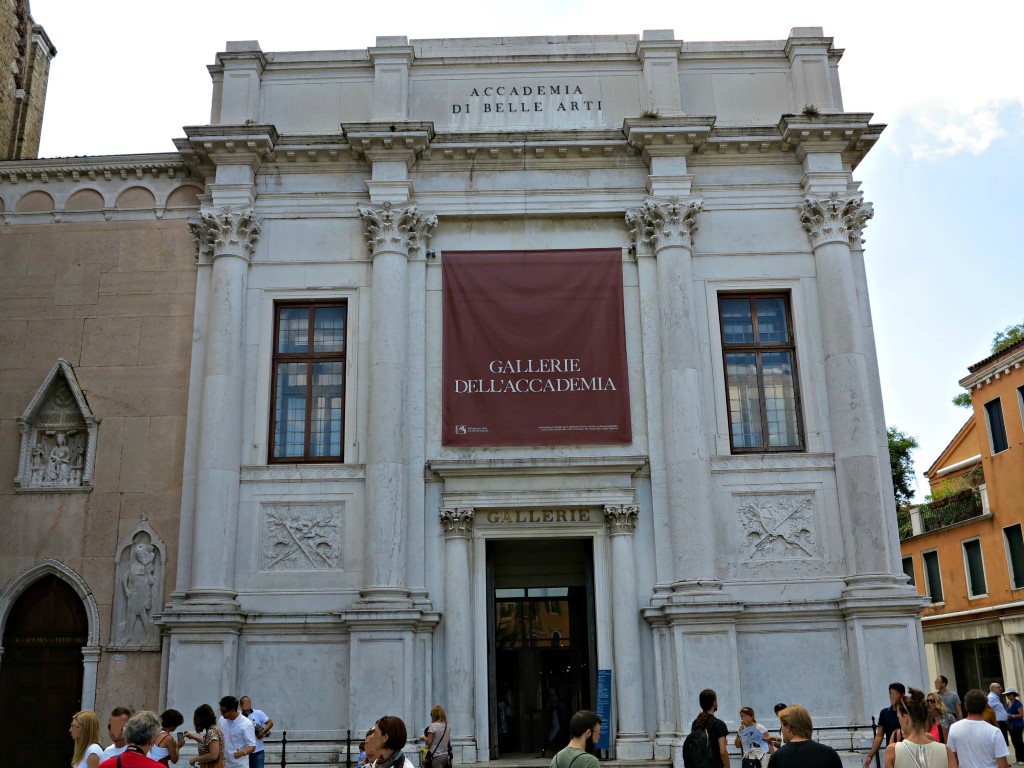
Visiting the Venice Academy Gallery you can observe a unique collection of works from the period ranging from the 1300s to the 1700s. This is the largest collection related to Venetian painting. The Academy Galleries are a must for art lovers.
5 Rialto Bridge
Il Rialto Bridge is one of the main things to see in Venice. It represents one of the city’s icons and, together with the bell tower of St. Mark’s Square, is recognizable worldwide. It is one of the most photographed places to visit in Venice.
6 Basilica of Santa Maria Gloriosa dei Frari
The Basilica of Santa Maria Gloriosa dei Frari is the largest church in Venice dedicated to the Assumption of Mary. Architecturally very distinctive, it is an extraordinary example of Venetian Gothic art.

7 Church of Santa Maria Maggiore in Venice
The sixteenth-century church of Santa Maria Maggiore was used for various purposes until, at the end of the nineteenth century, it was abandoned and handed over to the State Monopolies Administration, which turned it into a tobacco warehouse. On that occasion, modifications were made to the interior structure of the building. These nineteenth-century additions were later removed during a restoration carried out at the end of the sixties by the Superintendency. The central nave was decorated with a cycle of frescoes depicting ‘The Exaltation of the Cross’, ‘The Souls in Purgatory’, ‘The Madonna in Glory with St. Francis’. The fresco, dated 1700, was removed during the mentioned intervention to allow for the restoration of the degraded support.

8 Palace of Prisons
Building designed since 1563 by G.A. Rusconi to partly supplement the prisons of the Doge’s Palace, it housed, in the three rooms facing Riva degli Schiavoni, the ‘Night Lords of the Criminal’, a magistracy responsible for overseeing citizens’ behavior especially during nightlife. The construction, resumed in 1589 by Antonio da Ponte, was completed by Antonio and Tomaso Contino in 1614.

9 Palazzo Mocenigo, Venice
Gentleman’s residence in San Stae, it preserves precious eighteenth-century furnishings and paintings. It is the headquarters of the Center for the Study of Textile and Costume History, which consists of rich and complex collections from various sources. The museum displays a selection of rare pieces – fabrics and costumes – of particular value. The body of the heritage is kept in the impressive textile library. It also offers researchers a remarkable specialized library in the sector and is one of the most interesting museums in Venice.

10 Carlo Goldoni’s House
Birthplace of the famous playwright, located in Palazzo Centanni, in San Polo. It houses a small Goldonian museum rich in modern educational suggestions as well as the famous puppet theater from Ca’ Grimani ai Servi, already included in the collections of Ca’ Rezzonico. Very important are the archive and the library (over 30,000 works) of theatrical texts and studies with original manuscripts.

11 Ca’ Rezzonico
It is one of the most famous palaces in Venice, characteristic, located near Dorsoduro. The seat at Palazzo Rezzonico, work of Longhena and Massari. It houses very important paintings from the 18th century Venetian period, from Tiepolo to Rosalba Carriera, from the Longhi to the Guardi to Canaletto, set in a context of precious furnishings and accessories of the time. Very remarkable donations, among which stands out that of Egidio Martini, have recently enriched the museum with another three hundred works by artists including Cima da Conegliano, Alvise Vivarini, Bonifacio de’ Pitati, Tintoretto, Sebastiano and Marco Ricci and also the Tiepolo, the Longhi, Rosalba, Francesco Guardi. It deserves to be part of the list “Venice: things to see”.
12 New Procuracies, former Royal Palace
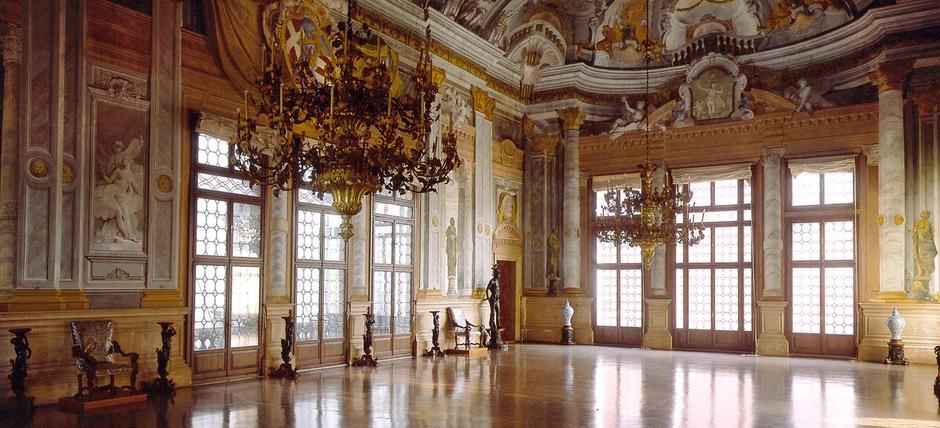
Made up of several building blocks including the New Procuracies, former residences of the Procurators, the Palace became the imperial seat under Napoleon I. Then, with the city’s transition to Austria and Italy, it became an imperial-royal house and Savoy residence. In 1919, it was ceded to the Italian state by Vittorio Emanuele III. It is currently occupied by various offices.

13 Venice Arsenal
Architectural complex originating in the early 13th century, subsequently expanded and enriched with additional buildings inside continuously until the first decades of the 20th century. It consists of water basins, open spaces, structures, architectures, furnishing elements of significant historical-artistic, environmental, and documentary value. All the elements present are strongly linked to the Venetian construction tradition and configure an organic and unified environment to be considered in an integral and indivisible way. In particular, the following stand out for their fundamental value: the Corderie della Tana; the Gaggiandre; the Artillery Workshops; the Squadron Building; the Bucintoro Shelter; the portals of the Artillery and the Armor Halls; the Docks; the monumental entrance at Campo dell’Arsenale.

14 Fortuny Museum
The Fortuny Museum is located in the eponymous palace of Campo San Beneto, transformed by Mariano Fortuny into his own atelier for photography, set design and stagecraft, textile creation, painting: the building has preserved rooms and structures, tapestries, collections related to all these functions. It also houses significant photographic collections and is traditionally a center for activities related to visual communication. Open to the public and visitable across three floors, the palace hosts rotating temporary exhibitions.

15 Venice Glass Museum
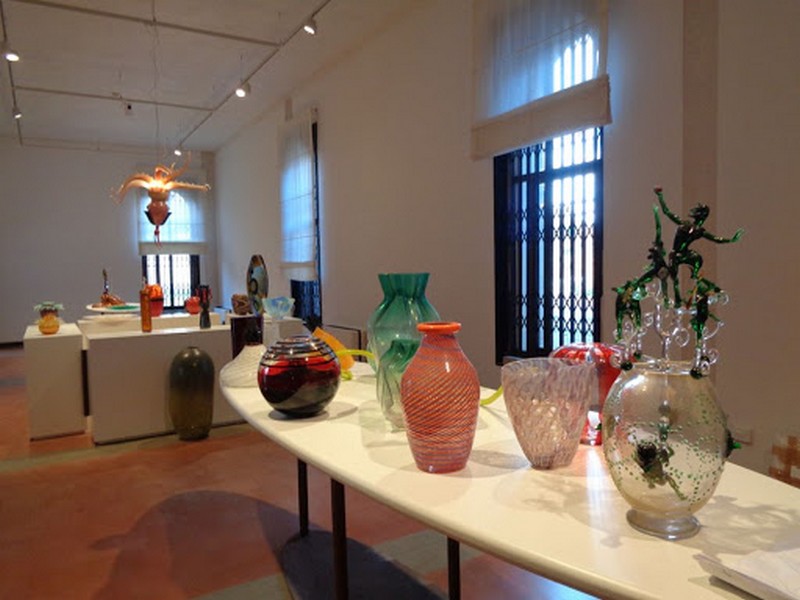
The Glass Museum is located on the island of Murano, at Palazzo Giustiniani. The collections are arranged chronologically: in addition to the archaeological section, which includes significant Roman artifacts from the 1st to the 3rd century AD, it houses the largest historical exhibition of Murano glass with important pieces produced between the 15th and the 20th centuries, including world-renowned masterpieces. Murano is famous worldwide for its glassmaking tradition and is definitely worth a visit during your stay in Venice.
16 Caffè Florian
Among the things to do during your stay in Venice, we recommend visiting this café, the oldest Italian café. Beware of the prices though! It is a perfect place for a Venetian aperitif and to taste the famous cicchetti, small snacks typical of the local tradition.

Hidden Venice: what to see away from the crowds
Even outside the classic routes, Venice surprises with authentic and quiet corners. If you want to discover its most reserved soul, we recommend a walk in the Castello district, among gardens, churches, and silent courtyards. The Scala Contarini del Bovolo, often not crowded, offers an unexpected view of Venetian rooftops. Another fascinating place is the island of Giudecca, where you can observe Venice from an unusual perspective, immersed in an almost surreal quiet. For those looking for unusual things to see in Venice, the Jewish Ghetto offers a unique perspective on the city’s history.
If you have more time to dedicate to visiting Venice, we recommend the following places of interest:
- Sacred Art Museum “Sant’Apollonia”, inside the Benedictine monastery.
- Pescaria, picturesque fish market
- Le Zattere, that is the southernmost area of Venice, overlooking the Giudecca Canal. Ideal place for a romantic walk
- Cannaregio, one of the oldest and most suggestive areas of Venice
- Venice Lido, lagoon island to reach for a day of relaxation
Among the things to see in Venice, we recommend a visit to the island of Murano to observe the world-famous glassmaking and a trip to Chioggia. Don’t forget to explore the other lagoon islands like Burano, famous for its lace and colorful houses, and Torcello, with its evocative atmosphere and the Basilica of Santa Maria Assunta.
Quick information about Venice: how to get there, where to sleep, what to eat
17 How to get to Venice
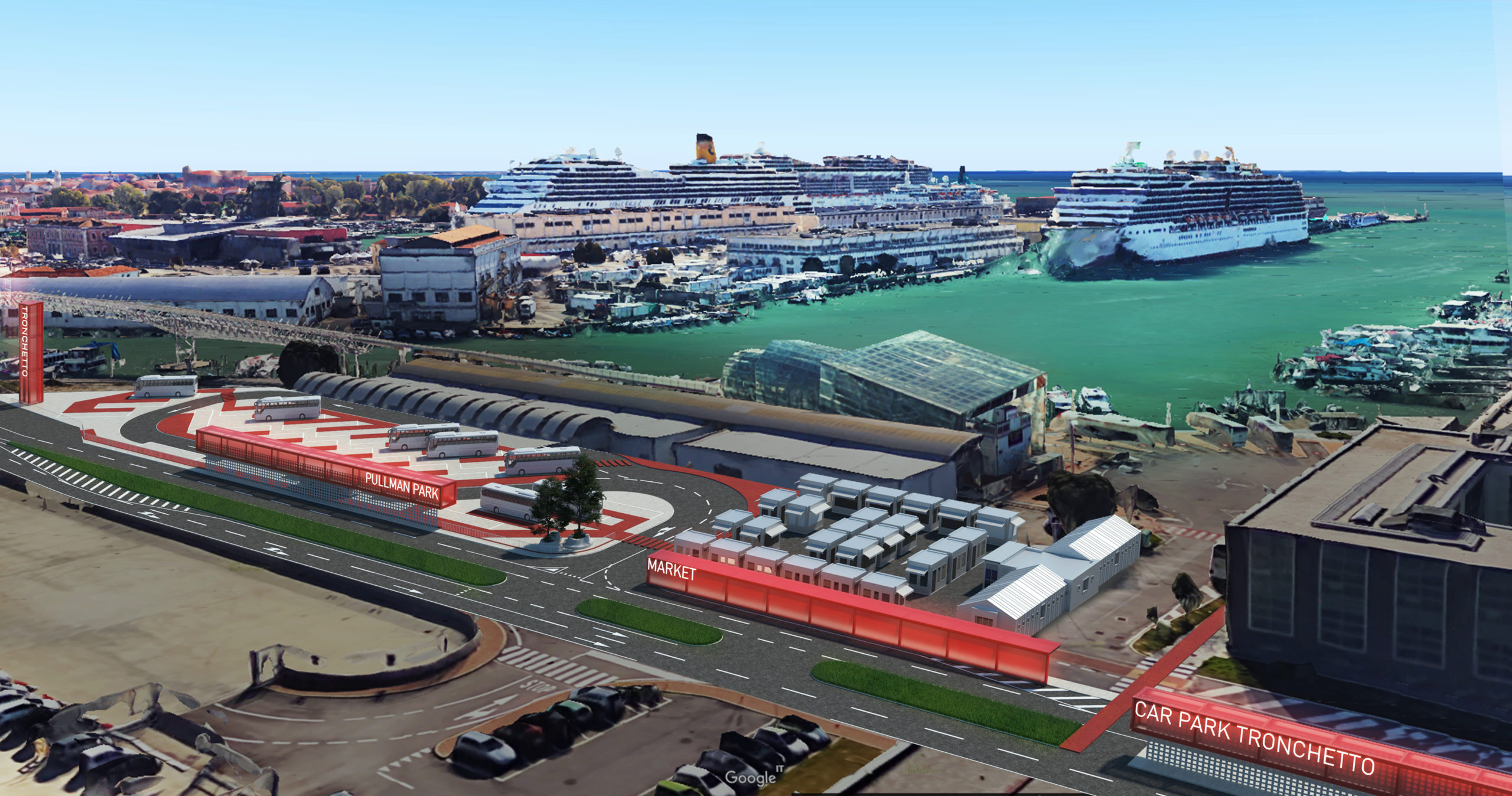
You can reach Venice by car, parking at Venezia Tronchetto, a parking area, and then moving by ferry. If you prefer the train, the stations closest to Venice are: Venezia Mestre and Venezia Santa Lucia. The Venice airport is the Marco Polo Venezia Airport.
18 Where to eat in Venice
Where to eat in Venice: we recommend moving slightly away from Piazza San Marco to find restaurants with traditional cuisine and avoid spending a fortune. Once you have made your choice, here is what to eat in Venice: risi e bisi, a typical Venetian dish; fegato alla veneziana and fritole, a typical sweet from the Venice Carnival.
If you are in Venice, you absolutely must stop at the Bacari, typical Venetian taverns where you can drink a glass of excellent wine accompanied by cicheti, small portions of typical dishes such as Sarde in Saor, Trippa, Acciughe and Baccalà fritto. The Venetian aperitif at the bacari is a culinary experience not to be missed.

19 Where to Stay in Venice: Strategic Solutions and Recommended Areas
Finding accommodation in Venice can be complicated, especially due to the high prices in the historic center. However, there are great alternatives in less touristy but still charming neighborhoods. One of them is Dorsoduro: quieter, authentic, and well connected to points of interest.
B&Bs in Venice are a valid solution to experience the lagoon atmosphere while saving some money. Also, Santa Croce and Castello are areas to consider, ideal for those wanting a more genuine Venice without sacrificing convenience.
🛏️ Tip: check our selection of hotels and accommodations in Venice on FullTravel or our guide on how to sleep in Venice spending less.
💡 Or search for deals on: Booking.com

Frequently Asked Questions about What to See in Venice
❓ What to see in Venice in one day?
Venice can be enjoyed even in a single day if planned well. You can start from St. Mark’s Square and visit the Basilica and the Doge’s Palace, cross the Rialto Bridge, take a vaporetto ride along the Grand Canal, and end with the sunset from Punta della Dogana or a quiet calle on the island.
❓ What are the most famous places of interest in Venice?
Among the most iconic are St. Mark’s Square, the Basilica, the Doge’s Palace, the Rialto Bridge, the Grand Canal, the Bridge of Sighs, and the La Fenice Theatre. Don’t miss Murano, Burano, and the Contarini del Bovolo Staircase for a complete experience.
❓ When is the best time to visit Venice?
Spring (April-May) and autumn (September-October) offer ideal weather and fewer crowds. In summer, Venice is enchanting but crowded, while in winter it has a melancholic charm, perfect for those who love tranquility — and the Carnival, of course.
❓ Can you visit Venice on foot?
Absolutely yes. Venice is a completely pedestrian city: you move on foot through calli, bridges, and squares, or by vaporetto. It is one of the most beautiful places in the world to explore by walking slowly.
❓ How much time does it take to visit Venice?
Two or three days are ideal to discover the center, visit the main museums, and dedicate a day to the islands (Murano, Burano, Torcello). With an extra day, you can explore less touristy areas and experience the city more calmly.