


The Principality of Liechtenstein has been ruled for centuries by the eponymous family of Austrian princes. More than just sovereigns, they have proven to be shrewd businessmen with an exceptional sense for opportunity, managing in just a few decades to transform the country’s economy from predominantly agricultural to industrial and commercial. Today, more than 60% of the workforce is employed in industry and advanced services.
A brief history: The principality was established in 1719 by the Austrian House of Liechtenstein. In 1816, it was annexed by Napoleon to the Confederation of the Rhine. After this chapter, it joined the German Confederation and remained until its dissolution in 1866, a pivotal year that also marked Liechtenstein’s full independence.
The principality today: The western lowland, lying beyond the Ratikon mountains, is the country’s most densely populated area. In addition to agriculture, it is home to major industrial and commercial operations (metallurgy, chemical, pharmaceutical, textile, and food-processing industries). These make Liechtenstein one of the world’s most industrialized nations by area—and one with the highest per capita incomes.
The mountainous region is dotted with villages and ski resorts, a favorite for tourists thanks to top-quality facilities. Despite its sovereignty, Liechtenstein has never had its own currency, customs, or postal system (except for issuing stamps), nor its own diplomatic corps—these tasks have been handled by neighboring Switzerland since 1924 (and before that by the Austrian Empire).
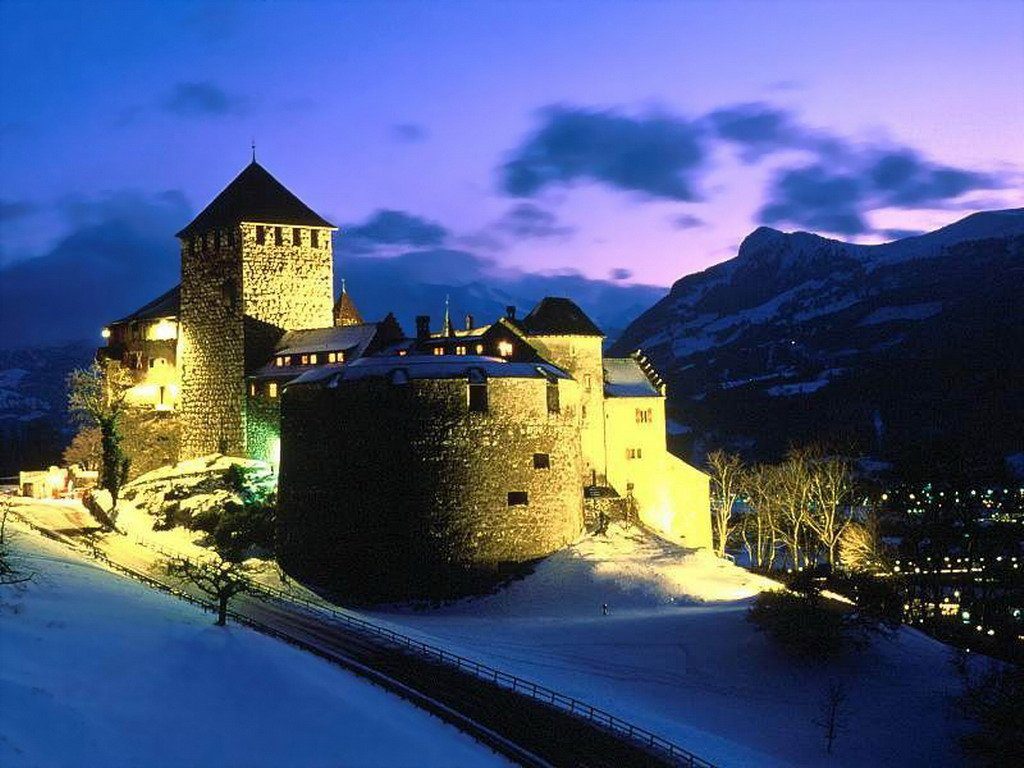
The Essential Facts about Liechtenstein
- Country: Fürstentum Liechtenstein
- Area: 160 km²
- Capital: Vaduz
- Population: 33,000 inhabitants
- Languages: German, Alemannic dialect
- Religion: Majority Catholic, minority Protestant
- Government: Absolute monarchy
- Main towns: Vaduz, Schaan, Balzers, Triesen, Eschen, Mauren, Triesenberg, Ruggell, Gamprin, Schellenberg, and Planken
Useful Information about Liechtenstein
- Currency: Swiss Franc (0.66 Euro)
- International dialing code: +423
- International car plate: FL
- Driving side: right
- Entry documents: ID Card or Passport
- Required vaccinations: None
- Electrical current: 230 V
- Measurement units: metric system
- Fixed public holidays: January 1: New Year; January 2: St Berchtold’s Day; January 6: Epiphany; March-April: Easter Monday; March-April: Easter; March-April: Good Friday; March 19: St Joseph; May 1: Labour Day; Thursday, 40 days after Easter: Ascension; Pentecost; 11 days after Pentecost: Corpus Christi; August 15: National Holiday; September 8: Nativity of Our Lady; November 1: All Saints; December 8: Immaculate Conception; December 25: Christmas; December 26: St Stephen’s Day
- Climate: The climate is typically Alpine, with cool breezy summers and cold, snowy winters
- Average temperatures: -1.1° C in January to 21.1° C in July
- Transport: There are no domestic rail lines apart from the international railway linking Zurich to Vienna, which stops at Schaan, north of Vaduz. From the Swiss border towns of Buchs and Sargans, three buses per hour run to the capital, while from Feldkirch (on the Austrian border) there is a bus every half hour
- Airports: Liechtenstein has no airports. The nearest is Zurich Airport in Switzerland