


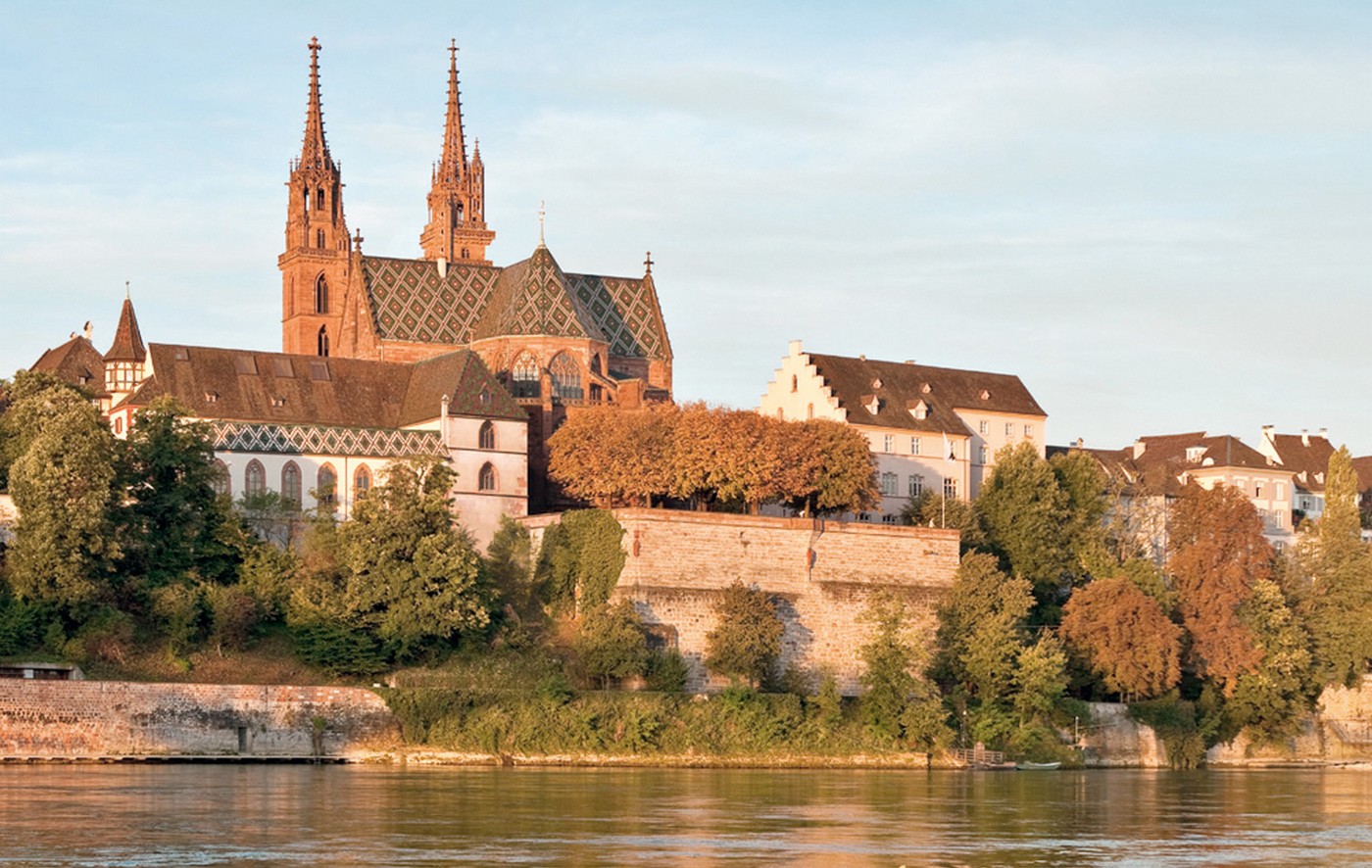

Basel is the second largest city in the Confederation by size and population (about 180,000 inhabitants). The ancient Basel lies nestled on the banks of the Rhine, right where the river, turning towards Northern Europe, forms an elbow curve and where Switzerland, France, and Germany meet. The result is a kind of cosmopolitan island, wedged between the Jura and the Black Forest, which has always drawn strength and character from its multiculturalism.
Basel, besides being the capital of the semi-canton of the same name (Basel-Stadt), is a leading industrial and commercial hub, where a lot is invested in ideas, creativity, and experimentation, as shown by Art Basel, the most important contemporary art fair in Europe, which every year, in the second half of June, catapults artists, critics, dealers, and collectors from all over the world into the immense pavilions of the Messe, the Exhibition Center.
Places of Interest in Basel
1 Walk Along the Rhine
What makes Basel attractive and widely frequented is also the Rheinweg, the elegant riverside promenade that features stately historic buildings and a lively nightlife. The citizens’ unmistakable riverfolk identity is also shown by a remarkable fact: despite the dense network of road transport shuttling between different parts of the city via numerous bridges, Baslers still prefer the characteristic fahre, small wooden motorless ferries that silently glide over the water using the favorable currents. Among the things to do in Basel, a cruise on the Rhine is definitely a must, allowing you to admire the city stretching along both banks of the river (from March to October).

2 Grosse Basel and Klein Basel
The Rhine crosses the city and divides it into two distinct parts: Grosse Basel, Greater Basel, on the western bank, and Klein Basel, Lesser Basel, on the eastern side. The first, vibrant and excellently preserved, is full of monuments, starting with the Münster, the red sandstone Romanesque-Gothic cathedral; fountains; medieval buildings; Gothic houses, like those lining Andreasplatz; 17th and 18th-century grand houses such as the Stadthaus or the Pharmacy Museum; taverns, hotels, and restaurants. The second, Klein Basel, is decidedly less charming, busy with traffic, dotted with large blocks and corporate offices, broad avenues like Clarasgraben and Rebgasse, lined with many stores and department stores.

3 Basel Cathedral: Münster
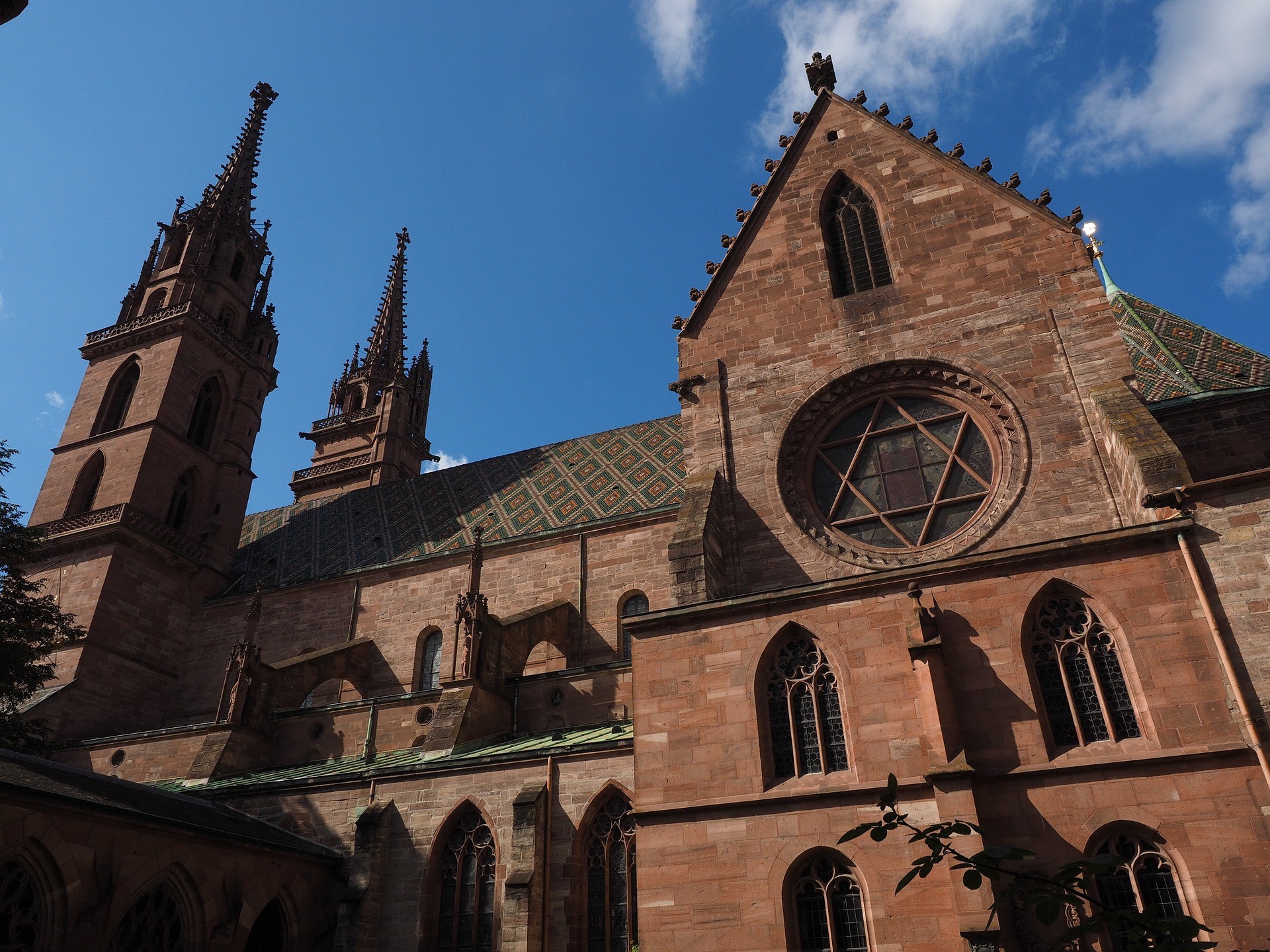
The Basel Cathedral, Münster, is among Basel’s tourist attractions. Prominently situated, the ancient episcopal seat towers over the Rhine and radiates its presence across the region. The Reformed Temple is a living monument of Romanesque and Gothic architecture (1019-1500): built from red sandstone, it boasts a rich historical tradition as well as exceptional musical and sacred vitality.
4 Basel Zoo
The Basel Zoo dates back to 1874, the year of its inauguration. Also called “Zolli,” it houses a large number of local and exotic animals. With its charming park-like area and carefully arranged enclosures, a visit to Basel Zoo is always worthwhile. There are about 600 different animal species in an eleven-hectare park with exotic flora in the heart of the city.

5 Kunstmuseum Basel: Museum of Contemporary Art
The Kunstmuseum Basel and the Basel Museum of Contemporary Art collect contemporary artworks. The opening of the underground passage linking the main building with the new extension, designed by Basel architects Christ & Gantenbein, allowed for increased exhibition space. The main building on St-Alban-Graben showcases works from the 15th century up to 1960. The new building hosts temporary exhibitions and works created between 1960 and 1990. The Kunstmuseum Basel holds one of the oldest public art collections and the world’s largest Holbein collection. All three buildings of the Kunstmuseum Basel provide a total exhibition area of 10,000 square meters.
6 Museum of Cultures
The Museum of Cultures Basel is currently one of the most important ethnographic museums in Europe. The collection, with over 300,000 items, is impressive and enjoys worldwide fame. Over generations, the collection has focused on precious objects from Europe, Africa, America, Oceania, and Asia. Admission to exhibitions is free with the Upper Rhine Museum Pass.

7 Beyeler Foundation
The Beyeler Foundation is located in Riehen and is a place to discover the 250 masterpieces of Hildy and Ernst Beyeler, to admire collections of classical modern art or sensational exhibitions. In the modern 127-meter-long building designed by architect Renzo Piano, you can admire diverse art collections and special exhibitions. Part of the ground floor is reserved for exceptional temporary exhibitions, such as those on Marlene Dumas, Gerhard Richter, or Ferdinand Hodler. These exhibitions are accompanied by a busy calendar of events with readings, debates, and guided tours.
8 Tinguely Museum
The Tinguely Museum in Basel houses the world’s largest collection of works by Jean Tinguely. Temporary exhibitions, often interactive, are dedicated to his predecessors, contemporaries, or the latest trends. The museum’s permanent exhibition dedicated to him provides a broad overview of forty years of his artistic activity. Temporary exhibitions, inspired by Tinguely’s ideas, shed light on a wide range of 20th and 21st-century artists, from his declared models like Marcel Duchamp and Kurt Schwitters to contemporaries such as Arman, Niki de Saint Phalle, and Yves Klein, addressing current themes and trends. The museum building itself is a work of art, designed by renowned architect Mario Botta. Admission to exhibitions is free with the Upper Rhine Museum Pass.