

The official name of this country is the Kingdom of Denmark, which also includes the Faroe Islands and Greenland. However, these territories are autonomous and not part of the European Union.
Denmark today is a parliamentary monarchy, but its royal history runs deep: it is the second-oldest monarchy in the world (since 1660). Denmark is renowned for its high quality of life, thanks largely to an efficient and inclusive social model: here, the state looks after everyone without distinction. This is possible thanks to significant taxation, balanced by very high-quality public services. The main cities in Denmark include the capital Copenhagen on the island of Sjælland, Århus, Aalborg and Esbjerg in Jutland, and Odense on the island of Fyn.
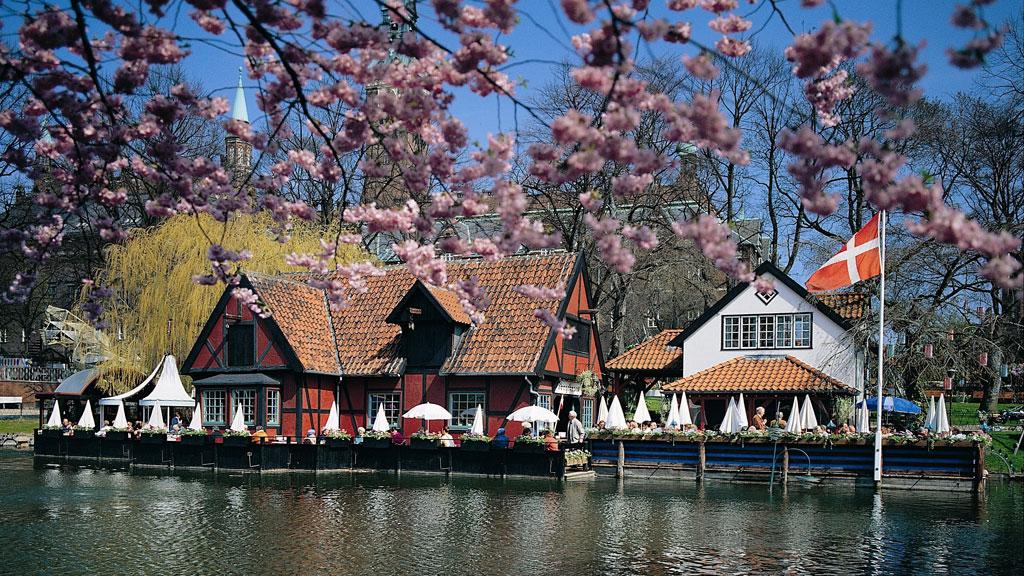
Denmark boasts a wealth of attractions, from unspoiled natural landscapes to remarkable examples of architecture—a particular highlight of the country. If you’re planning a trip to Denmark, make sure not to miss the Tivoli Gardens and the iconic Little Mermaid statue, a true symbol of Copenhagen.
The Major Cities of Denmark
Besides the capital, Copenhagen, Denmark offers many picturesque towns worth visiting.
What to See in Aarhus
Arhus (also called Aarhus), Denmark’s second-largest city, sits on the eastern Jutland coast, overlooking the bay of Arhus Bugt, with a population of about 296,000. Highlights in Aarhus include the charming Old Town with its dollhouse-like homes, Sankt Clemens Cathedral, the ARoS Art Museum, the Women’s Museum, and the Vadestedet Promenade.
In Aarhus, you’ll find narrow streets named after historical figures and events, such as Klostergade (Monastery Street) or Borggade (Castle Street). Amid cobbled alleys and crooked houses, right behind the Cathedral, you can stop at the Casablanca Café, one of the city’s oldest establishments.
What to See in Odense
Odense, Denmark’s third-largest city with 187,000 inhabitants, sits on the island of Fionia (Funen), linked to both Jutland and Zealand by bridges. Don’t miss: the House and Museum of Hans Christian Andersen, born here in 1805; the Old Town, where during Advent a colorful Christmas market is held each year; Sankt Knud’s Cathedral; the Art Gallery, and the Fyn Village, a faithful reconstruction of a traditional farming village with costumed actors.
What to See in Aalborg
Aalborg, Denmark’s fourth city, stands on the Limfjord in northern Jutland, with roughly 164,000 residents. Top spots include the Lindholm Hoje Viking Museum, the Maritime and Shipping Museum, the North Jutland Art Museum, the Aalborg Zoo, and the ancient Heligandskiostret Convent.
Denmark Fast Facts
- Country: Kingdom of Denmark
- Area: 43,094 km²
- Capital: Copenhagen
- Population: 5 million inhabitants
- Language: Danish
- Religion: Protestant majority
- Government: Constitutional monarchy
- Main cities: Copenhagen, Aalborg, Aarhus, Frederikshavn, Odense, Silkeborg, Vejle
Practical Information for Denmark
- Currency: Danish Krone (1 Dkr.=0.134 Euro)
- International dialing code: +45
- International plate: DK
- Driving side: right
- Entry documents: ID card or passport
- Required vaccinations: None
- Electricity: 220 Volt/50Hz
- Measurement system: metric
- Time zone: same as Italy
- Fixed holidays: January 1: New Year; March–April: Maundy Thursday; March–April: Easter; March–April: Good Friday; March–April: Easter Monday; 40 days after Easter: Ascension; 50 days after Easter: Pentecost; 51 days after Easter: Whit Monday; May 12: General Prayer Day; June 5: Constitution Day; December 25: Christmas; December 26: St. Stephen’s Day; December 31: New Year’s Eve
- Climate: The climate changes frequently. April and May are mild, from June to August it gets quite warm. Autumn is the windiest and rainiest season, while winter temperatures rarely drop much and snow is uncommon.
- Average temperatures: Annual average in the country ranges from -1°C to 20°C.
- Transport: National airline is SAS Scandinavian Airlines; also served by other airlines such as Alitalia, Air One, Sterling Airlines, etc. Trains: Danish Railways DSB; German Railways
- Airports: Copenhagen has two airports: Kastrup and Roskilde. Additional airports in other cities: Esbjerg, Karup, Aalborg, Aarhus, Frederikshavn, Odense, Silkeborg, Vejle, etc.