


The city located in the far northeast of Brazil has a clear connection to the Christian tradition, starting with its name. The toponym Natal, in fact, refers to the Christian nativity because the city was founded precisely on December 25 (in 1599). And almost two years earlier another event linked the city to the liturgical calendar: on January 6, 1598, the construction of the Fortress of Natal began, called precisely the Fortress of the Magi. The fortress, which can be visited, includes a chapel with a central well, prison cells, soldier dormitories, a dining hall for the captain and commanders, an execution wall, and a secret passage used exclusively by the captain.
What to see in Natal
Landing at Natal airport, the closest in South America to the European continent, one of the most popular tourist activities is a tour along the entire Natal coastline aboard the so-called dune buggy, a vehicle suitable for sandy terrain.
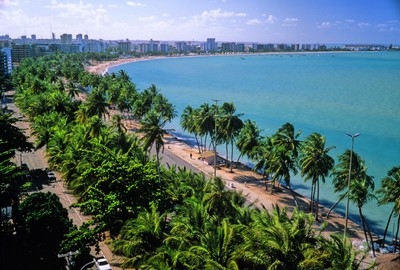
Among the many white sandy beaches worth mentioning is certainly Ponta Negra, which has become one of the main hubs of Natal also thanks to the many restaurants where you can taste typical fish and meat dishes. Even more fascinating is Morro do Careca, at the end of Ponta Negra, where sea, mountain, and dunes meet creating a natural spectacle. Dominating the Natal coastline is the Farol da Mãe Luíza, the lighthouse still used by the Brazilian navy and open for visits on Sunday afternoons.
For animal lovers, a visit to the Natals Aquarium is unmissable, located along the road from Redinha to Jenipabu. The institute, founded and run by a family of retired biologists and environmentalists, hosts about 60 marine species (including piranhas, rays, and sharks) and animals from surrounding environments (including monkeys, snakes, turtles, and lizards).


)