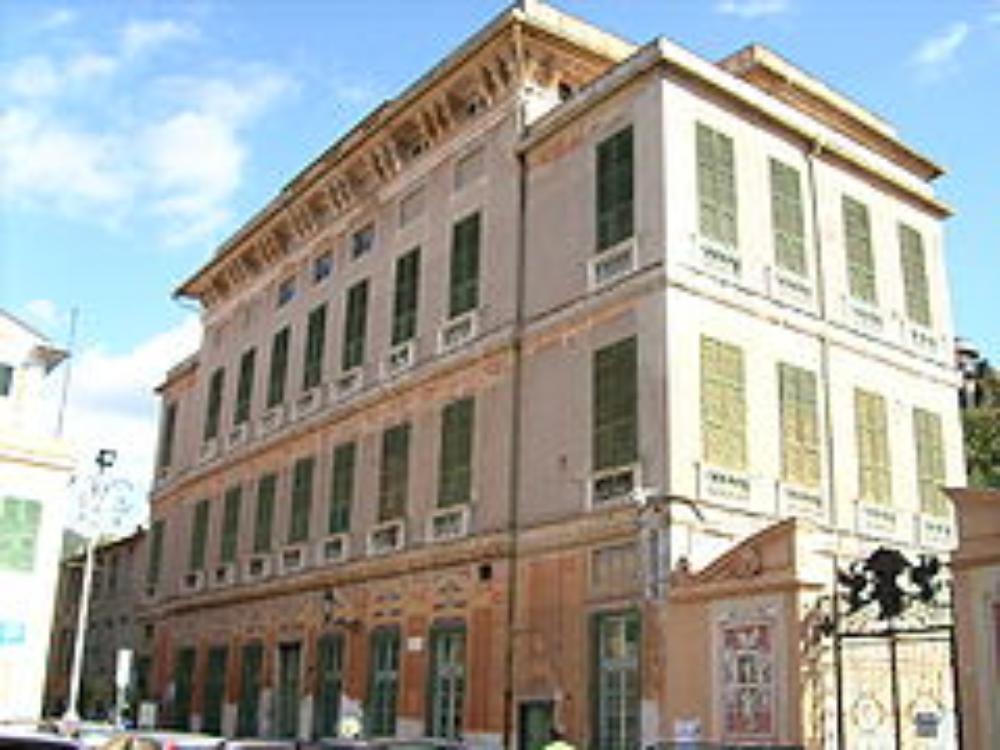


In 1884, a meteorological and seismic observatory was added through the initiative of the priest Andrea Bianchi, in collaboration with Father Francesco Denza (the founder of the Italian Meteorological Society and the National Meteorological Network). The current name honors two priests who long devoted their teaching and conducted scientific observations at the observatory. The Observatory’s importance far exceeded that of the physics cabinet, which was soon absorbed by the Observatory itself. In fact, from the time of its founding, it was among the most modern and well-equipped in Italy, so much so that it was soon invited to join the newly established Italian Meteorological Network. With the advent of air navigation, the Chiavari Observatory played an indispensable role as a station for monitoring the atmosphere to assist flight and fulfilled this important and delicate task until the Italian Air Force established a dedicated weather station with the construction of Genoa’s first airport. Moreover, the Chiavari Observatory has always provided weather data to local radio, television, and newspapers, to the Ministry of Public Works, the Ministry of Agriculture and Forestry, and the Hydrographic Office of the Civil Engineering Department of Genoa. The Museum is divided into three sections: Physics Cabinet equipped with about 300 instruments dating from the late 18th century to the early 19th century. Seismology, with three operational historical seismographs. Classical meteorology (with ancient detection instruments) and modern meteorology, featuring an interactive showcase and a laboratory simulating a weather office connected to a fully operational data acquisition station.
Information about the Scientific Museum “Sanguineti-Leonardini”
Piazza N. Signora Dell’orto, 8 16043 Chiavari (Genoa) 0185/365339 info@museodellascienza.it
https://www.museodellascienza.it
Source: MIBACT