At the highest point of the city, the Rocca Maggiore of Assisi is reachable by ascending via Porta Perlici, near the Cathedral of San Rufino, or by taking the outer ring road that leads to the top of the Asio hill.
The first historical records of the fortified structure date back to 1173-1174 when Cristiano, Archbishop of Mainz, stayed there after occupying Assisi on behalf of Frederick Barbarossa. In 1198 it was destroyed by a popular uprising. According to tradition, on that occasion the citizens expelled the Duke of Spoleto Corrado di Ursilengen and the young Frederick II, who was only 4 years old. The fortress remained in a state of abandonment until 1362 when Cardinal Egidio Albornoz decided to rebuild it on the basis of the ancient Germanic fortification.
Rocca Maggiore stands imposingly and sternly overlooking the historic center below, the narrow gorge traversed by the Tescio river, and much of the Umbrian Valley stretching from Perugia to Spoleto: visiting its structure offers the chance to observe a significant example of well-preserved 14th-century military architecture, while enjoying one of the most evocative panoramas of Umbria.
The route develops within the Albornoz building, square in shape, consisting of a master tower and angled keep, integrated over the centuries through a system of walls equipped with towers.
During the rule of Biordo Michelotti (1394-1398), numerous maintenance and restoration works were carried out, and his coat of arms appears in several places.
In 1458, by order of Jacopo Piccinino, the polygonal tower to the northwest was raised. The following year, Pope Pius II commissioned the construction of the corridor connecting the fortress to the dodecagonal tower. The entrance door near the keep was built in 1484; above it are three coats of arms, with that of Sixtus IV in the center. At the end of the 15th century, the fortress became the scene of fierce struggles between the Fiumi and Nepis families. From 1501, Cesare Borgia settled there, followed by his sister Lucrezia.
The last major intervention on the Rocca of Assisi took place in 1535 when Pope Paul III had the circular bastion constructed.
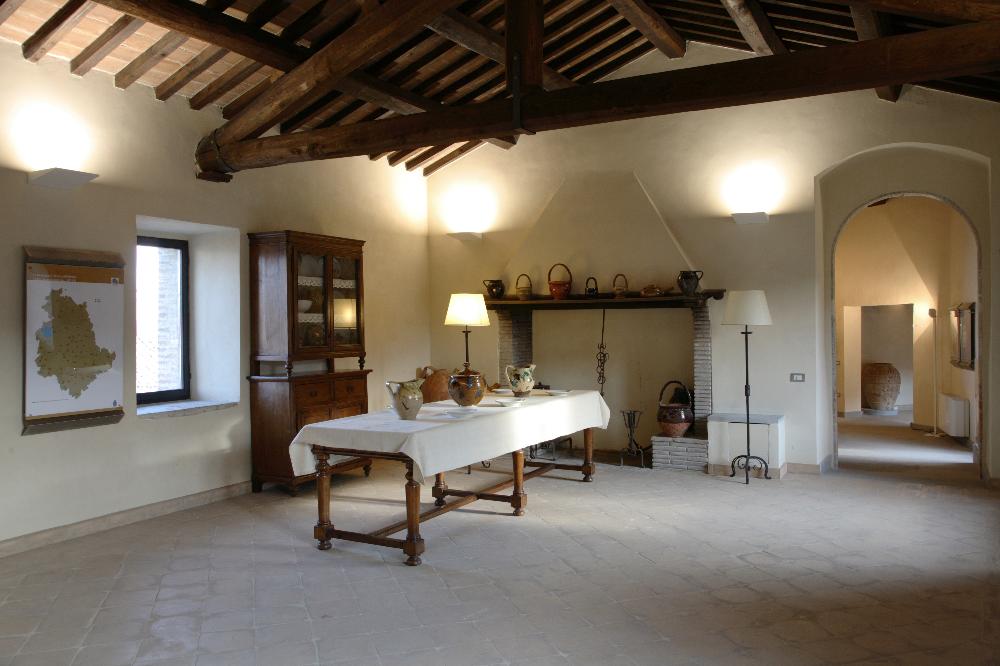
After its primary defensive role, the fortress became the residence of castellans tasked with controlling the territory; later it was used as a prison and then as a warehouse. Recently enhanced and restored, it is now open to visitors. The entrance is near the 16th-century bastion; inside there is a courtyard paved with 14th-century bricks; adjacent is the keep, where service rooms were arranged. The keep served as the castellan’s residence, composed of five rooms connected by a spiral staircase.
Information on Rocca Maggiore
Piazzale delle Libertà Comunali,
06081 Assisi (Perugia)
075 8155234
[email protected]
Source: MIBACT