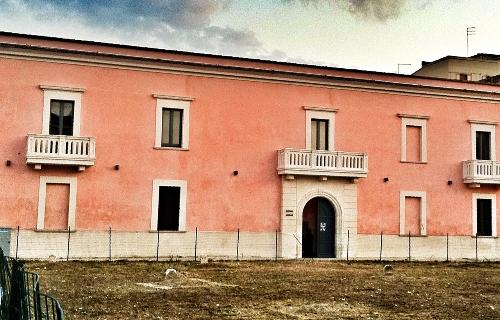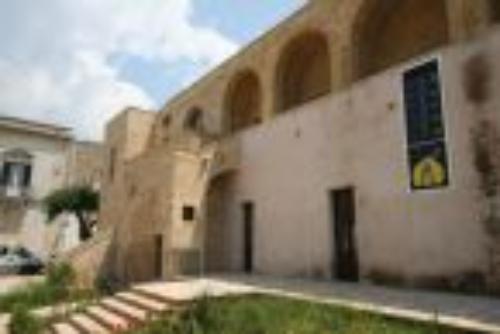


The Egnazia Museum
Named after Giuseppe Andreassi, director of the museum and archaeological area from 1976 to 1985 and Archaeological Superintendent of Puglia from 1990 to 2009, the museum is located outside the ramparts of ancient Gnathia, in the area of the Messapian necropolis.
The recently renovated exhibition retraces the thirty centuries of history of this important Bronze Age settlement, the Messapian and Roman city, a bishopric seat in late antiquity, through the exceptional wealth of the displayed finds and an especially evocative illustrative apparatus.
The Archaeological Park of Egnazia
The Archaeological Park of Egnazia, set within a pleasant natural and environmental context, is one of the most interesting in Puglia.
The city, known in the ancient world and mentioned by Greek and Latin authors, due to its privileged geographical position, was a strategic commercial stopover linking the West and the East.
The first settlement, consisting of a village of huts, arose in the 16th century BC and had continuous habitation until the Iron Age, when the entire Puglia territory was inhabited by the Japigi. Around the end of the 6th century BC, Egnazia was established as a Messapian settlement, corresponding today to the provinces of Brindisi and Lecce. From the 3rd century BC, with the presence of the Romans in the area, the city transformed and in the 1st century BC became a municipality. It gained great importance thanks to the presence of the port and the Via Traiana, a convenient variant of the Appian Way on the route from Rome to Brindisi. From the 6th century AD, the lower part of the settlement was progressively abandoned and habitation continued on the Acropolis, until the 13th century, within a large fortified area.
From the Messapian phase of Egnazia remain the massive defensive walls and the necropolises, with pit tombs, semi-chamber tombs, and monumental chamber tombs.
From the Roman city you can admire the remains of the Via Traiana, the Civil Basilica with the Hall of the Three Graces, the Shrine of the Eastern deities, the porticoed square, the cryptoporticus, and the baths. Among Christian worship buildings, dating between the 4th and 6th centuries AD, noteworthy are the Episcopal Basilica with the baptistery and the Southern Basilica, originally paved with mosaics.
Information about the National Museum and Archaeological Park of Egnazia “Giuseppe Andreassi”
Via degli Scavi
72010 Fasano (Brindisi)
0804829056
[email protected]
https://www.archeopuglia.beniculturali.it
Source: MIBACT