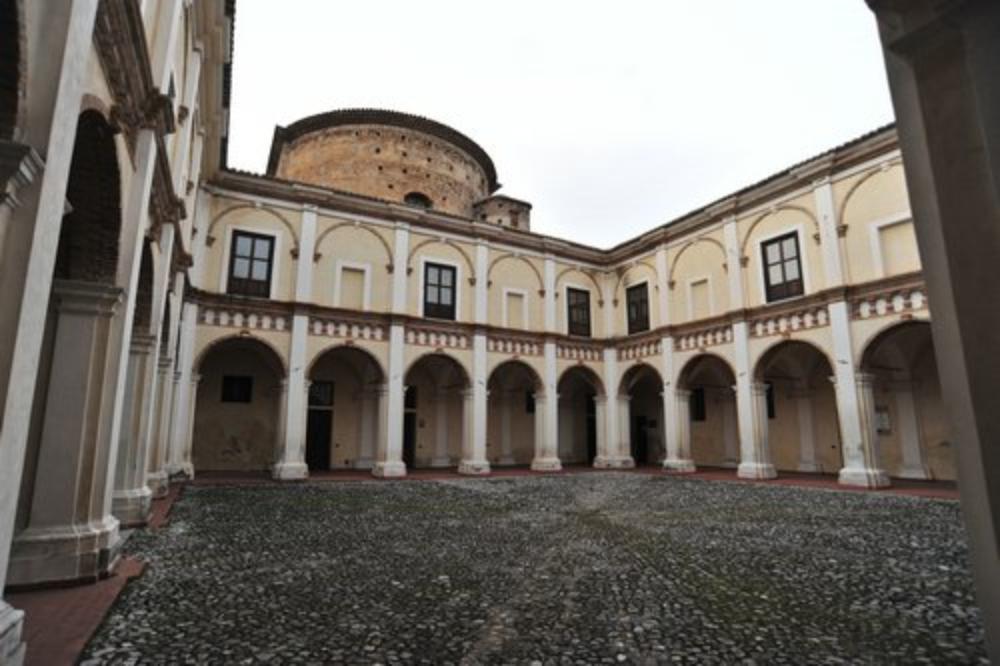


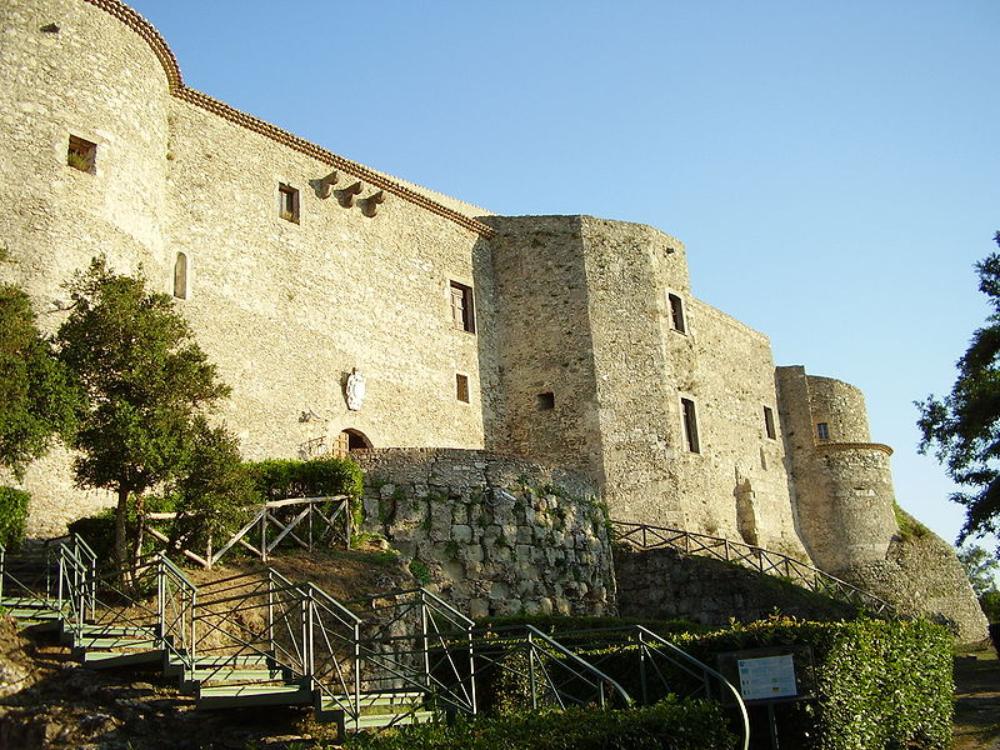

Although the castle is called Norman-Swabian, its initial construction phase does not date back to the time of Roger I as popular tradition suggests, but rather to the era of Frederick II; it was expanded during the 13th century by the Angevins. In the 1500s, it underwent slight modifications to adapt it as a residence. Damaged by an earthquake at the end of the 18th century, it was used as a prison. Since 1969, it has housed the State Archaeological Museum, named after Count Vito Capialbi, who in the 19th century was a scholar and archaeologist of the area.
The current arrangement follows a chronological and topographical order and includes materials from the city and nearby archaeological sites, enriched by some 19th- and 20th-century collections donated by local scholars.
The museum is divided into four main sections: artifacts from sacred buildings, from necropolises, from private collections, and Roman-era materials.
The exhibition begins with items from the protohistoric age, the result of excavations in the area, such as a hut from the Eneolithic period. There is a 13th century BC sword, accidentally found near a 6th century BC tomb. On the first floor, artifacts from the four sacred areas of the Magna Graecia city are displayed, including:
from the Scrimbia district come finds dating from the end of the 7th to the end of the 5th century BC, with Corinthian, Rhodian and Attic ceramics, some large-sized, basins and bronze helmets, votive statuettes and remarkable quality gold, silver, and various jewelry, including earrings, rings, fibulae, pins. From the same area come architectural fragments, dating to around 550 BC, of a large Doric temple not yet located.
from Cofino come some pinakes typical of Locri Epizefiri production and two detailed clay models of temples.
The lower floor exhibits artifacts from necropolises, dating between the end of the 7th and 4th centuries BC, among which stands out a gold leaf with an inscription in Doric-Ionic dialect attesting Orphic worship, offering advice for the deceased in the afterlife. It was found in a woman’s tomb dating between the 5th and 4th centuries BC.
The artifacts from the Hellenistic necropolis of the Piercastello district testify to the presence of the Bruttians in the area, highlighted by two ceramic warriors from a monumental chamber tomb from the late 3rd century BC.
Among the private antiquarian collections stand out architectural ceramics, such as archaic terracottas from the Scrimbia sanctuary, palmette antefixes and silenic mask antefixes, and painted simas. Among the ceramics are Attic red-figure lekythoi.
Of interest is the Capialbi coin collection, containing some extremely rare Locrian aurei.
In the last section, dedicated to the Roman period, are kept finds from Sant’Aloe where various domus and a thermal complex with beautiful mosaics have been uncovered; also nearby, in the 1970s, a hoard of 867 silver Brettian coins dating to the late 3rd century BC was found. From this site also come sealed terracotta vessels and marble statues, including a high-quality bust of Agrippa. Some Roman funerary sets with finely decorated lamps, glass containers, and precious unguentaria are also present.
In the courtyard, a 3rd century mosaic is displayed, found near the ancient city port.
Information on National Archaeological Museum “Vito Capialbi”
Norman-Swabian Castle
89900 Vibo Valentia (Vibo Valentia)
096343350
Source: MIBACT