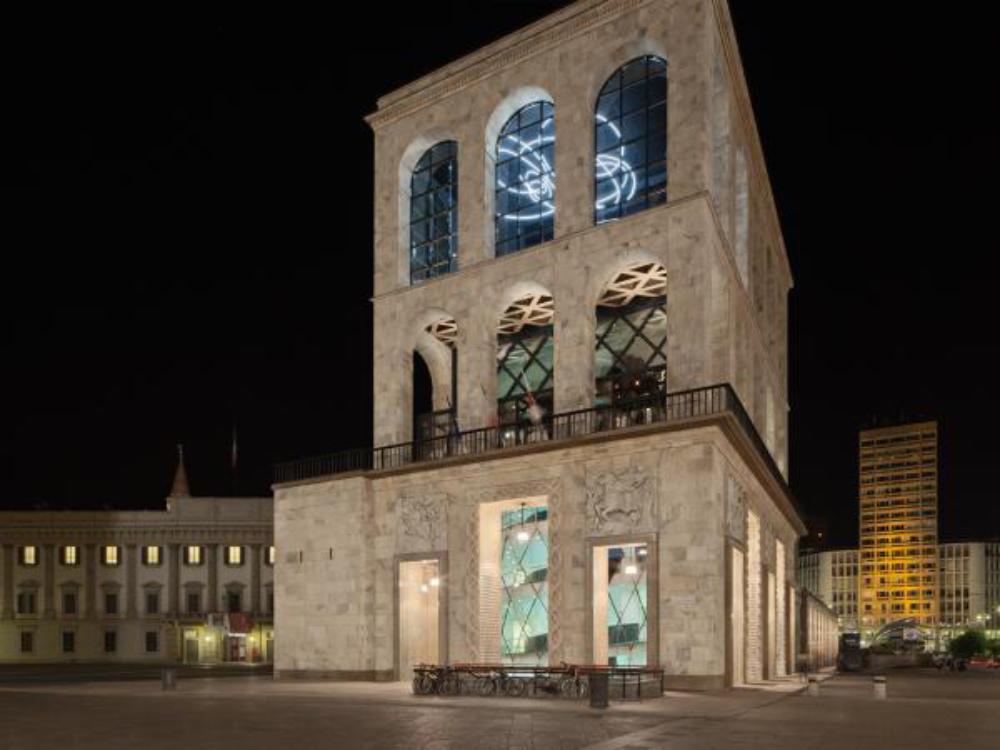
The building of the National Archaeological Museum of Mantua is inspired by the Scala di Milano, adapted to the circumstances of the site, where the narrowness of the area enclosed by the existing walls of other structures prevented the construction of the boxes assigned to the balconies and gave the cavea an elongated shape.
After the Unification of Italy, the building, which had become sporadically used and lacked maintenance, was put up for sale by the State Property Office and purchased by the Municipality of Mantua in 1896, which designated it as the Market for Silkworm Cocoons and later, in 1930, for fruit and vegetable trading.
Donated by the Municipality of Mantua to the Ministry of Cultural Heritage and Activities, the restoration began with the aim of preserving the environmental and architectural features of a remarkable example of late 19th-century paleo-industrial architecture, maintaining its original external appearance, and transforming it into a archaeological museum intended to house works found in the city and others from the numerous archaeological sites in the Mantua province.
The space inside the Archaeological Museum has been horizontally divided by three floors, with views to the inside and outside, so as not to lose the perception of the original building.
Since the work is still ongoing, of the future nearly 2000 sqm of exhibition space, only 200 are open to the public, represented by the temporary exhibition rooms.
Here, since 1998, the permanent exhibition “Archaeology from the Mantua area” has been on display, which aims to be a synthesis of the future museum. The entrance to the Archaeological Museum is currently located in Piazza Castello. The museum’s collections include Neolithic materials, Bronze Age, Etruscan, Venetic, Celtic, Roman, Lombard, Gothic, medieval, and Renaissance artifacts.
Information about the National Archaeological Museum of Mantua
Piazza Castello 46100 Mantua Tel. 0376.329223 or 0376.320003.