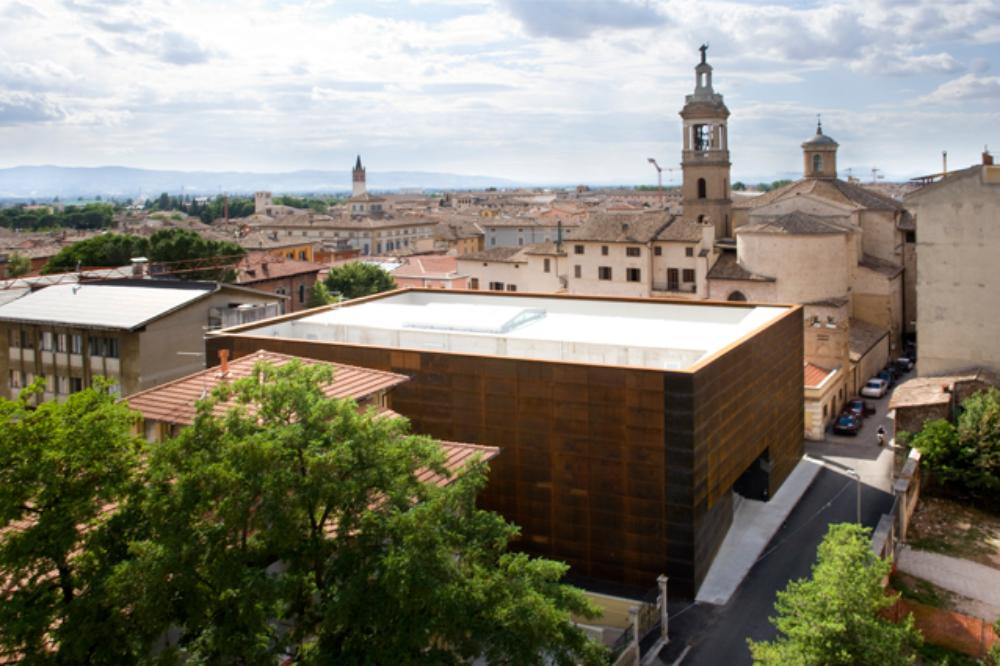
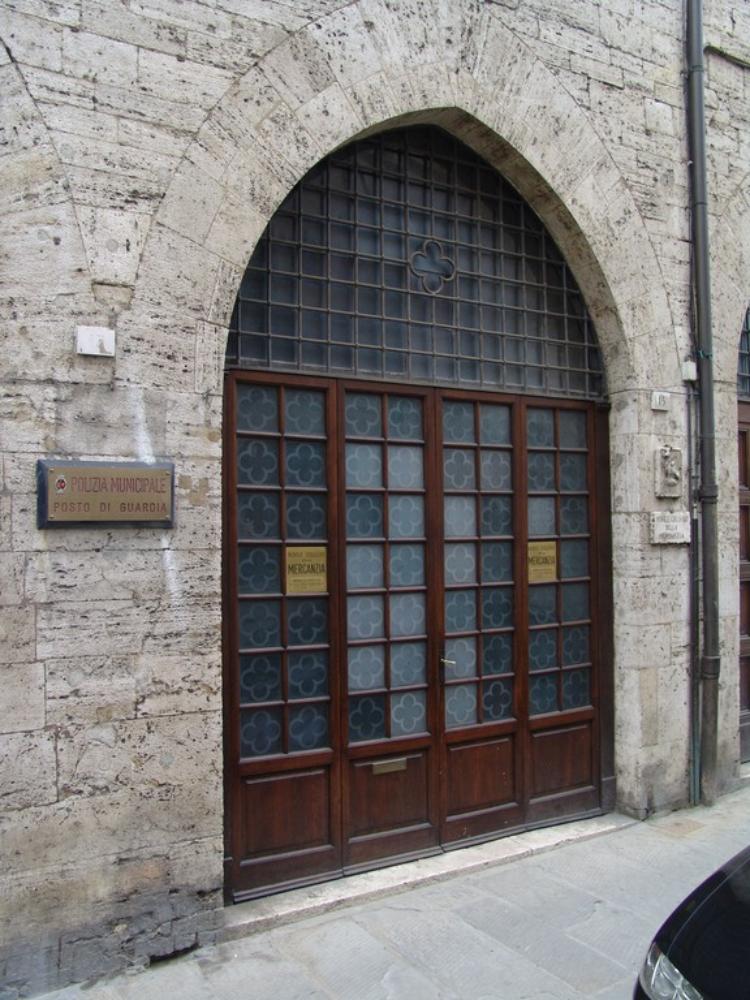
Palazzo Vitelli, which houses the Municipal Art Gallery reopened to the public in 1995, is located in the center of Città di Castello, near the city walls, on Via della Cannoniera.
The sober Renaissance architecture of the building is enriched on the garden-facing facade by elegant monochromes by Cristoforo Gherardi, likely designed by Giorgio Vasari, and by a porch with an overlying loggia, which contains the sculpture collection, including a group of terracottas by Andrea Della Robbia.
Part of the decorative scheme of the interior rooms is also by Gherardi, with contributions from Cola dell’Amatrice.
Divided into twenty-six rooms, plus additional exhibition spaces for temporary shows, the art gallery includes works from the 14th to the 20th century, most of which entered public ownership following post-unification expropriations. Testifying to the artistic vitality of the area, at the crossroads of important routes of communication and cultural exchange between different regions, are notable works by mainly non-local artists: Raphael, Luca Signorelli, Domenico Ghirlandaio, Andrea Della Robbia, Lorenzo Ghiberti, Antonio Vivarini, Raffaellino del Colle, Pomarancio, and Santi di Tito. In rooms inaugurated in 2006, three important donations are housed: the plaster cast collection of the sculptor from Città di Castello, Elmo Palazzi (1871–1915), a collection of bronzes by Bruno Bartoccini (1910–2001), and the Ruggieri collection, which gathers about twenty paintings by Italian 20th-century artists.
The extensive malacological collection in the basement rooms is open to free admission.
The furniture displayed in the various rooms of the art gallery did not originally belong to the palace’s furnishings but forms part of the donation made by Elia Volpi, who was responsible for the last restoration of the building and its owner, to the Municipality of Città di Castello in 1912.
Sixteenth-century tables of typically Umbrian craftsmanship or of convent origin, sets of 17th and 18th-century chairs and armchairs are examples. The most valuable and interesting pieces are furnishings from churches and monasteries of Città di Castello. The group of Gothic stalls, carved and decorated with marquetry, attributed to the workshop of the most famous early 15th-century Florentine woodworker, Manno di Benincasa Mannucci, is noteworthy. The choir, the sacristy cupboard signed and dated 1501, and the large carved and gilded sarcophagus that housed the body of Blessed Margherita, are among the documents demonstrating the highest quality of Umbrian craftsmanship at the end of the 16th century.
Information about Municipal Art Gallery of Città di Castello
Via della Cannoniera, 22/A
06012 Città di Castello (Perugia)
0758554202
[email protected]
Source: MIBACT