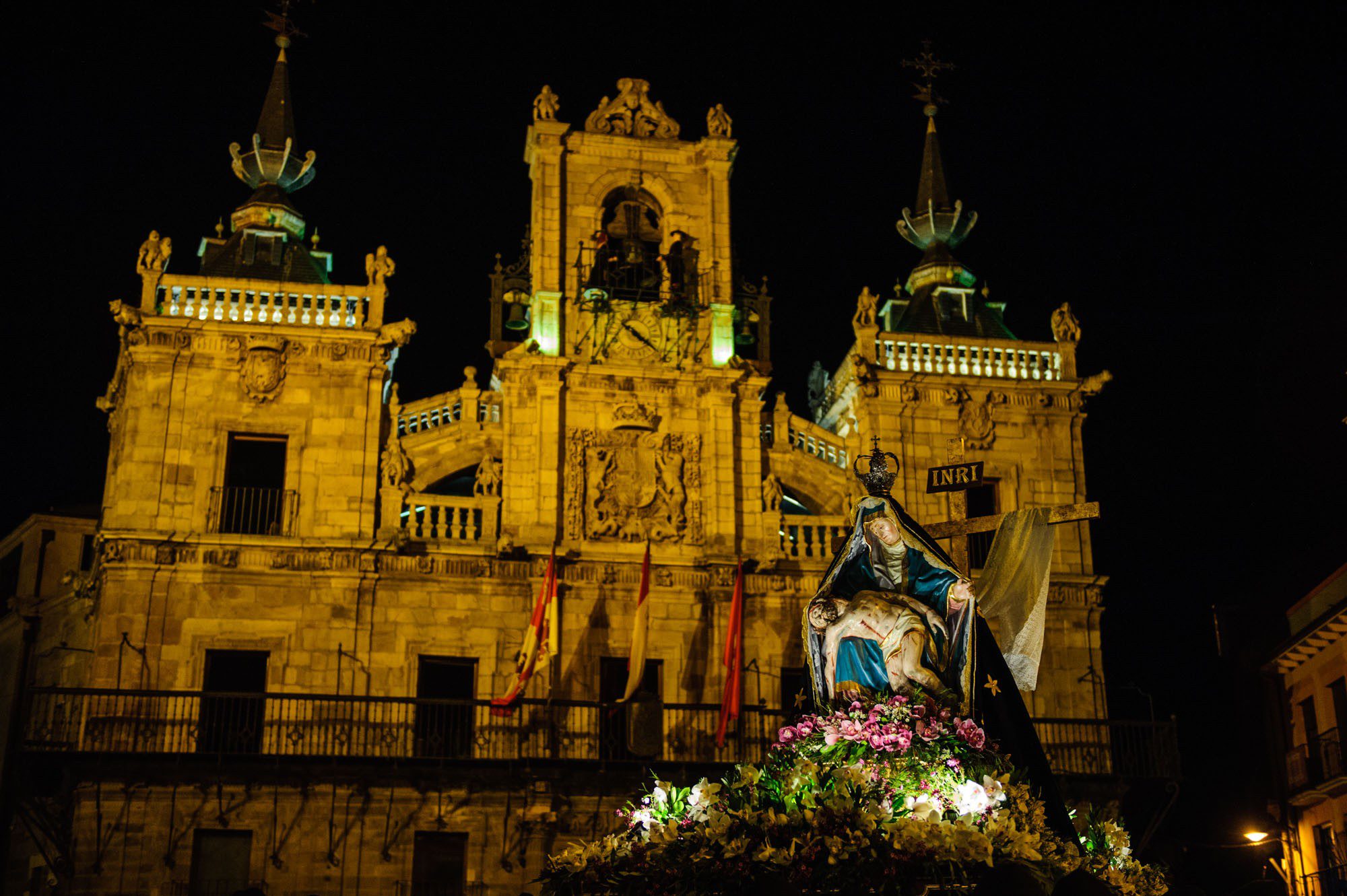


The Holy Week is one of the most important and meaningful festivals in Spain, and the city of Astorga is renowned for its unique celebration. This annual event draws visitors from all over the world, eager to experience a blend of religious traditions, local culture, and spectacular processions. In this article, we’ll explore the history, traditions, and top highlights of Holy Week in Astorga.
The Origins of Holy Week in Astorga
Holy Week in Astorga has deep roots in Spanish history and tradition. Dating back to the 18th century, when the city was a major religious and cultural hub, several religious brotherhoods were founded in Astorga, each tasked with organizing the week’s processions and ceremonies.
Astorga’s Brotherhoods
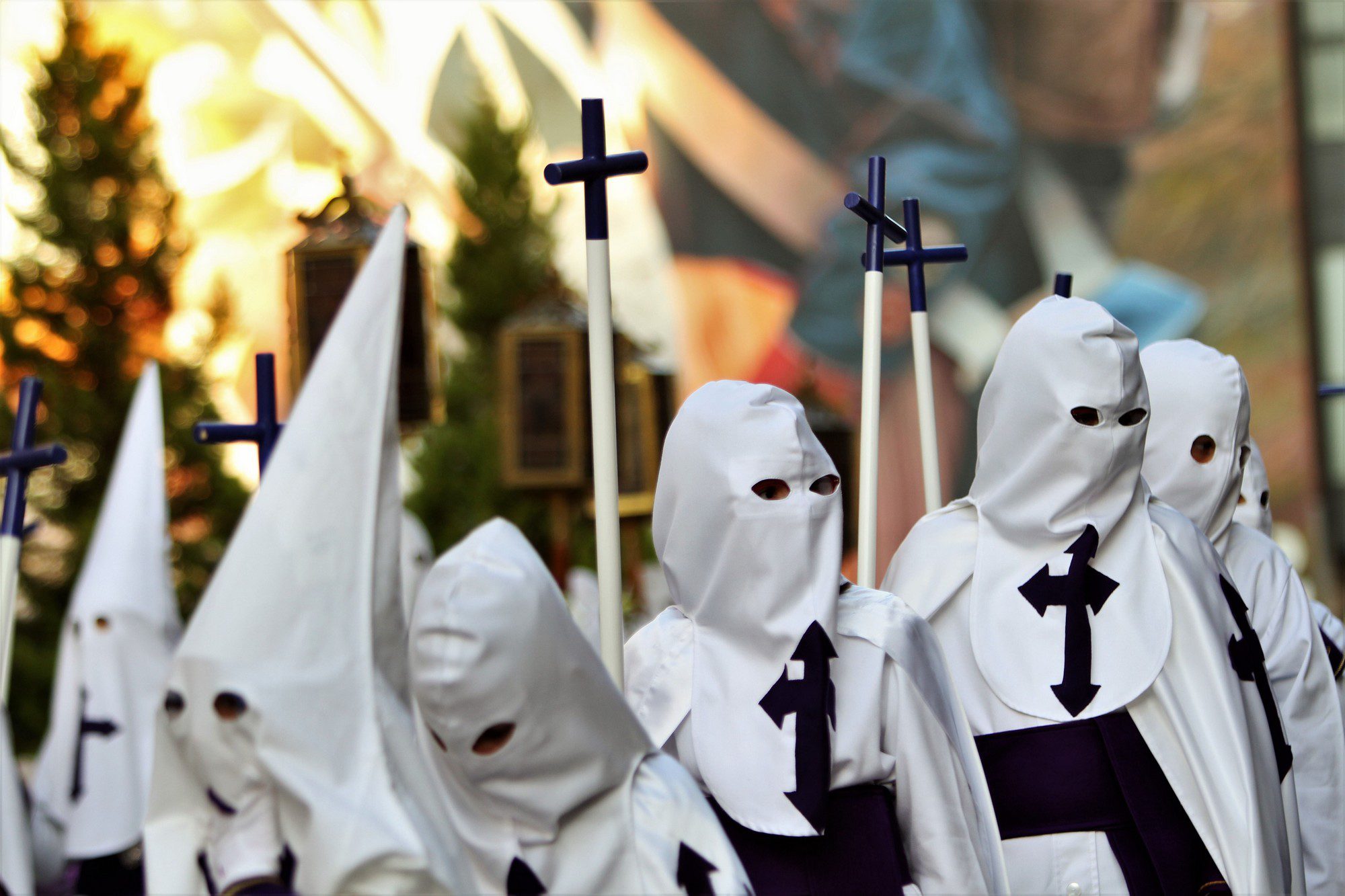
Holy Week in Astorga is marked by the active involvement of seven religious brotherhoods, each with its own distinctive style and rituals. These groups are responsible for organizing the processions and ceremonies throughout the week.
Here are the main brotherhoods in Astorga:
- Brotherhood of the Blessed Sacrament: This brotherhood organizes the Holy Thursday procession, during which the statue of Christ of Mercy is paraded through the streets.
- Brotherhood of the Holy Crucifix: In charge of the Good Friday procession, this brotherhood carries the statue of Christ of Forgiveness.
- Brotherhood of Sweet Memories: Responsible for Palm Sunday, they carry the statue of Christ in Agony.
- Brotherhood of the Holy Vera Cruz: This group organizes the Holy Wednesday procession, featuring the statue of Our Lady of the True Cross.
- Brotherhood of Christ of Great Power: They are responsible for the Holy Monday procession, carrying the statue of Christ of Great Power.
- Brotherhood of the Blessed Sacrament and Immaculate Conception: They organize the Holy Tuesday procession, featuring the statue of Christ of the Good Death.
- Brotherhood of Our Lady of Sweet Memories: Responsible for Holy Saturday, they carry the statue of Our Lady of Sweet Memories.
The Processions
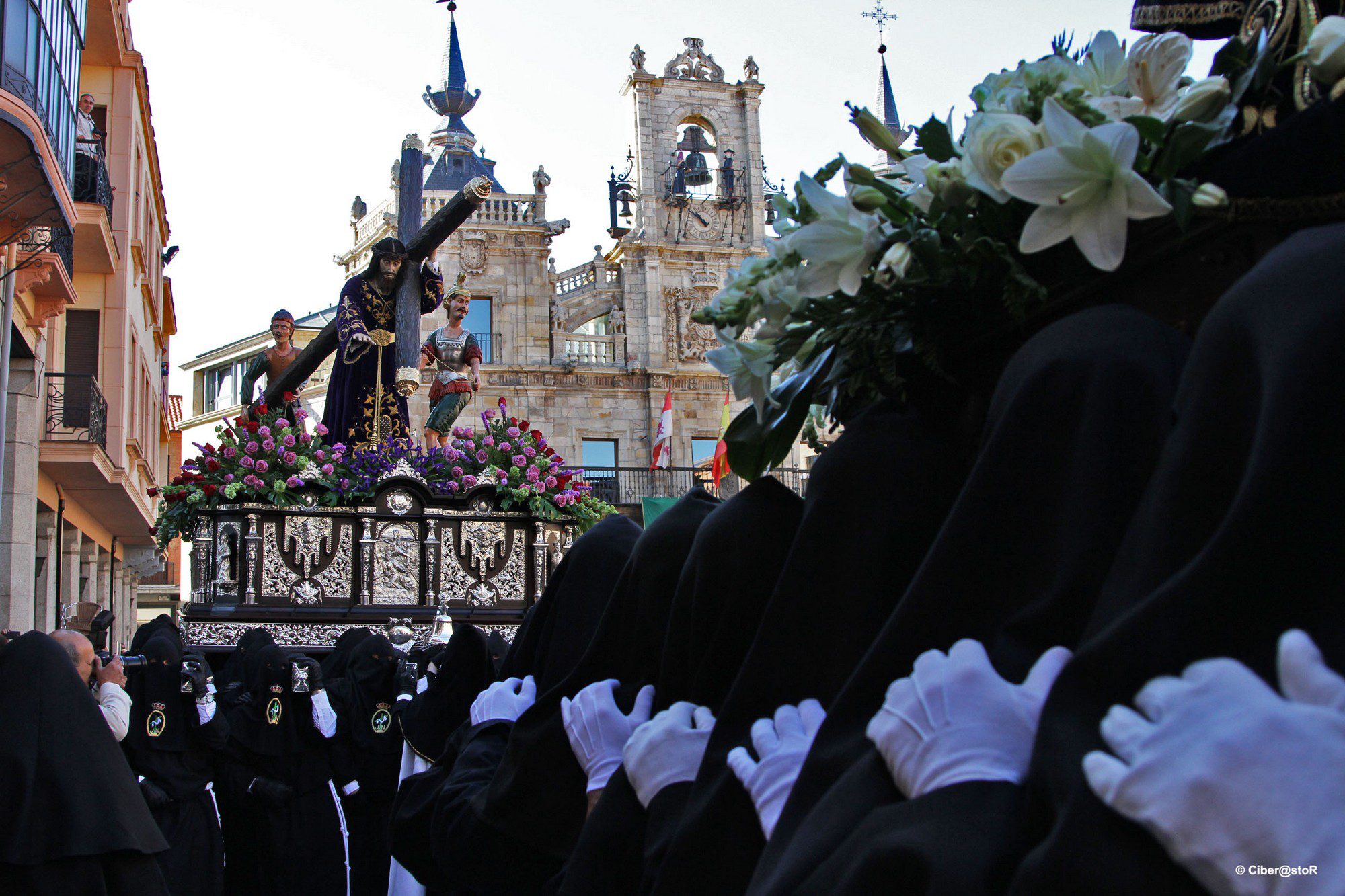
The processions are among the most spectacular and awaited events of Holy Week in Astorga. Each brotherhood holds its own procession, which winds through the historic streets, involving thousands of participants and onlookers.
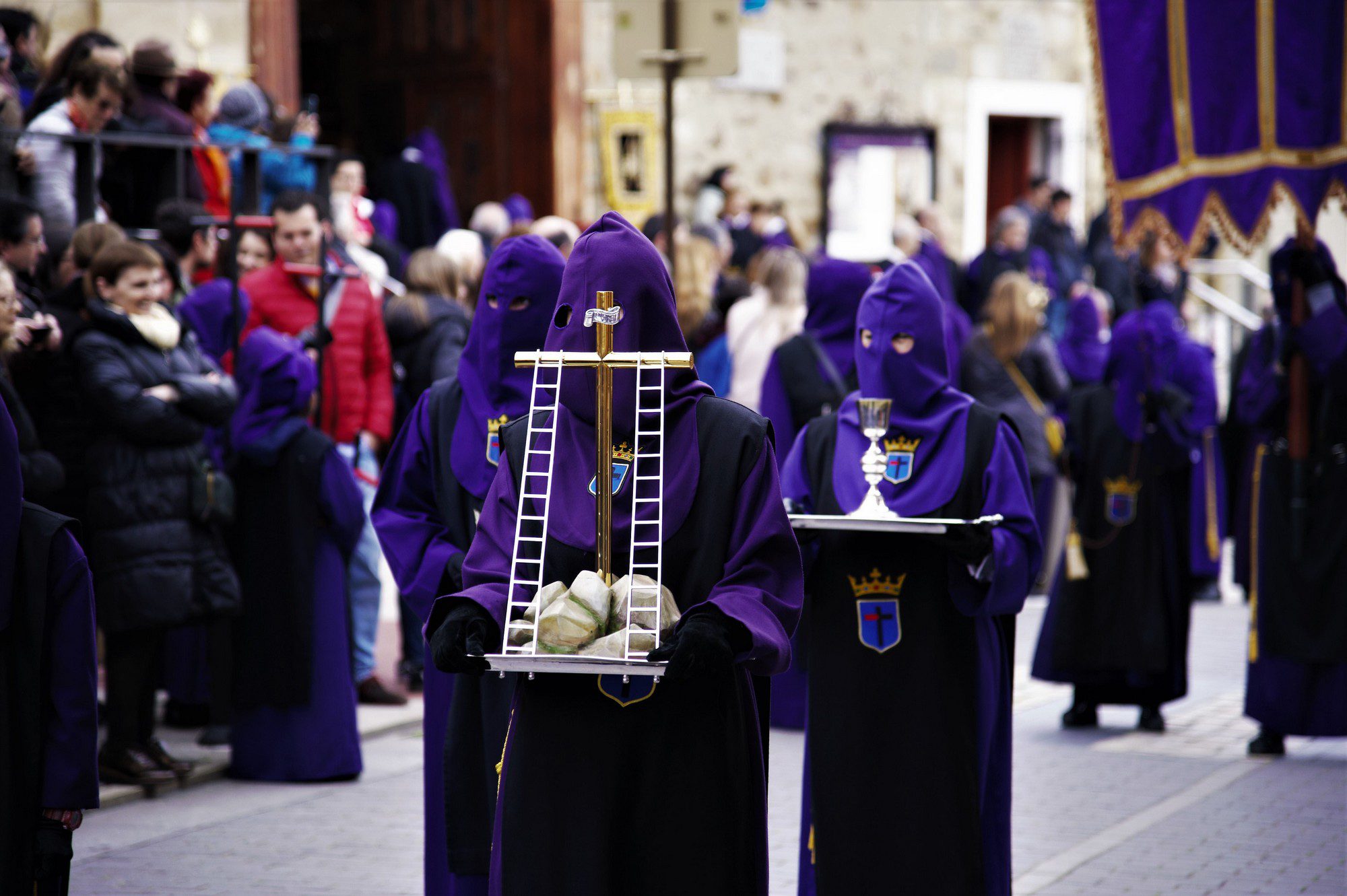
During the processions, members wear traditional attire and carry sacred statues, some of which are priceless works of art. The statues are borne on the shoulders of devoted followers, who move slowly along the set route. Streets are adorned with flower petals and colorful carpets, creating a truly enchanting atmosphere.
Many processions feature moments of prayer, religious chanting, and Bible readings, adding a spiritual depth to the celebration. The events take place both day and night, with candlelight and the moving shadows of the statues turning the streets into a magical stage.
Top Sights in Astorga during Holy Week
Beyond the processions, Astorga offers a host of attractions worth exploring during Holy Week. Here are some highlights:
- Cathedral of Santa Maria: This majestic cathedral from the 15th century stands as one of Astorga’s main landmarks. Its Gothic façade and lavish interiors are truly breathtaking.
- Episcopal Palace: Designed by Modernist architect Antoni Gaudí, this palace is a masterpiece in itself. It houses the Museum of the Camino de Santiago, showcasing the history and tradition of the famous pilgrimage route.
- Roman Museum: Set among the ruins of an ancient Roman villa, this museum offers an engaging look at the Roman past of Astorga and the surrounding area.
- Basilica of San Marcelo: Built in the 14th century, this basilica is a significant place of worship and an outstanding example of Romanesque architecture.