



Crustumerium, according to ancient authors, was a city overlooking the Tiber between Eretum and Fidenae; thanks to these precise testimonies, along with the indication of the exact distance from Rome along the Via Salaria, it has been easy to identify the historic site, marked by a vast area of surface archaeological materials.
The city, Latin according to most ancient authors, seems to have arisen between the 10th and 9th centuries BC, and from the beginning its history is linked to the birth and development of Rome; among other things, it is one of the main centers involved in the famous historical-legendary episode of the Rape of the Sabine Women. It reached the peak of its flourishing in the 7th and 6th centuries BC; its decline was marked, at the end of the 5th century, by the unstoppable expansion of Rome.
After the Florence-Rome highway toll booth, at the end of the long final straight, the hills of Crustumerium accompany for several kilometers those who reach the capital. The ancient city of Crustumerium is therefore the first archaeological complex encountered coming from the most important route connecting with Europe, almost an official introduction to Rome.
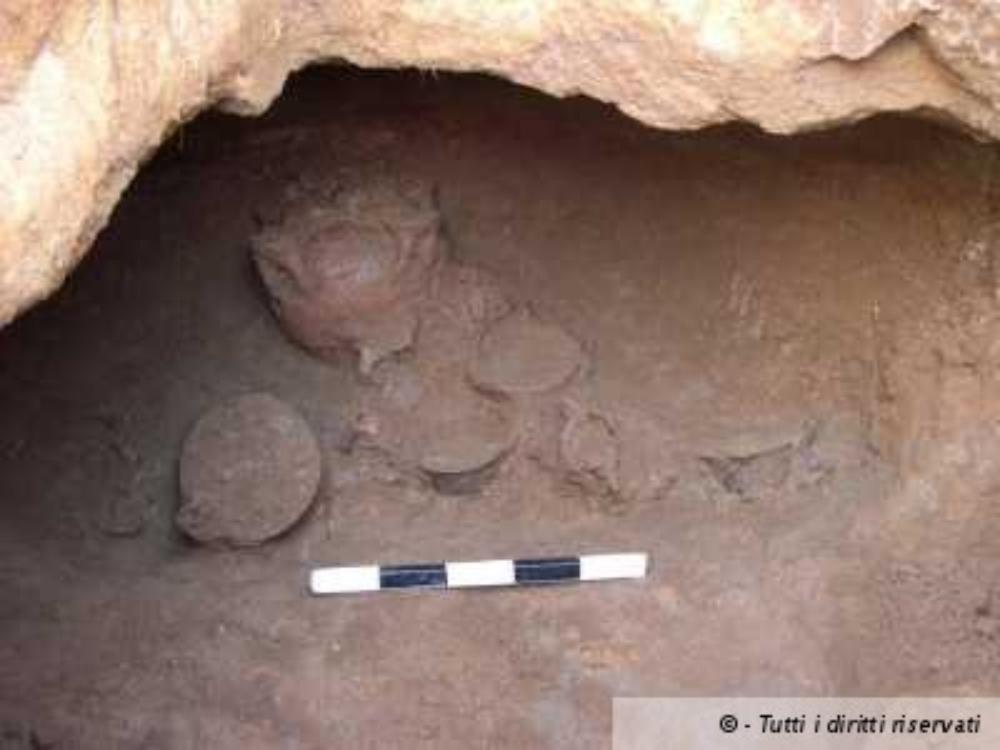
And it is a worthy introduction: Crustumerium, in fact, is the only center of the ancient Latin civilization unaffected by modern urbanization, and throughout the area the landscape is extraordinarily preserved. Currently, the area of the ancient city is known only in broad terms, thanks to surface surveys and sporadic excavations by the Archaeological Superintendence of Rome (since 1982), which have nevertheless allowed the discovery of about two hundred tombs and the recovery of notable funerary equipment composed of ceramics and bronzes (about 120 pieces were recovered from tomb 9 alone, excavated in 1987 at Monte Del Bufalo).
In past decades, illegal excavators have managed to plunder thousands of tombs (numerous valuable objects have recently appeared on foreign antiquarian markets), causing significant damage to the scientific heritage and partially compromising future research.
The entire area of the settlement, surrounding necropolises, and part of the ancient center’s territory spanning about 440 hectares, is protected under laws 1089/39 and 1497/39. A sector of 58 hectares, including part of the funerary areas of Monte Del Bufalo and Cisterna Grande, was purchased by the Public Administration in 1998.