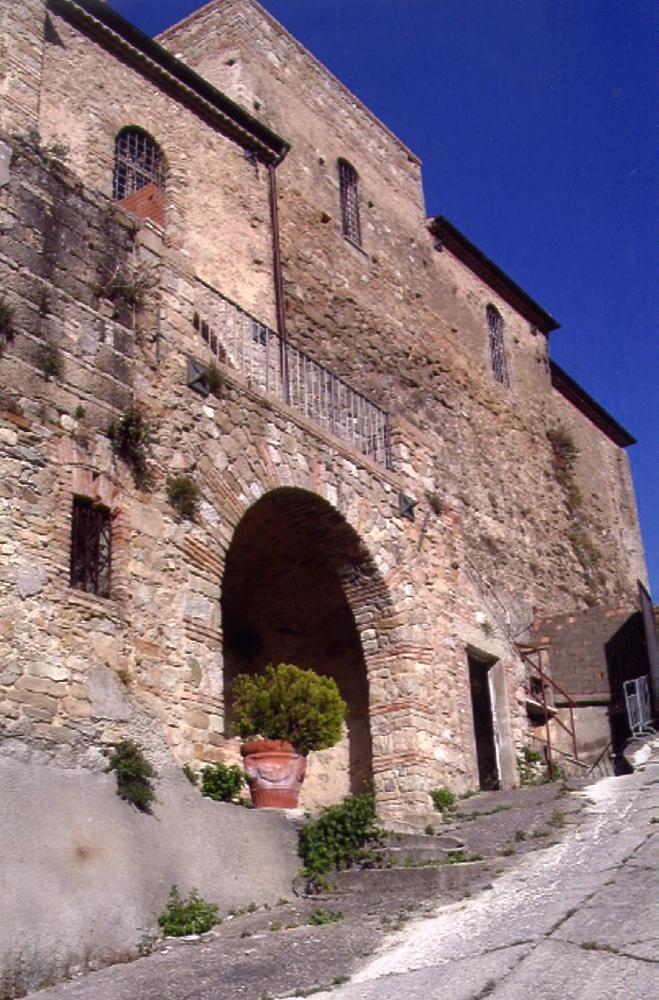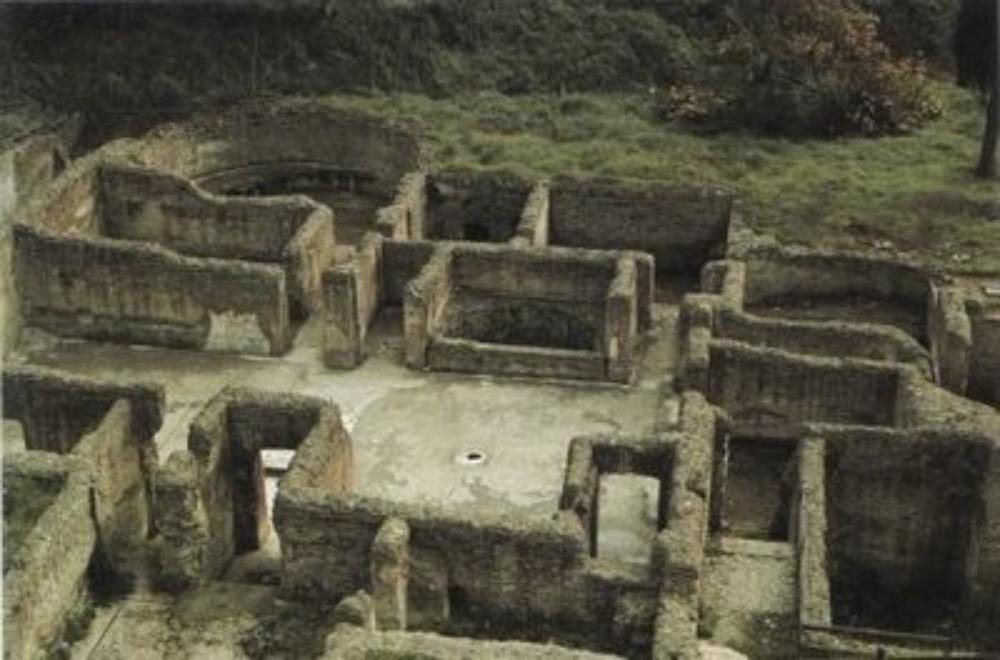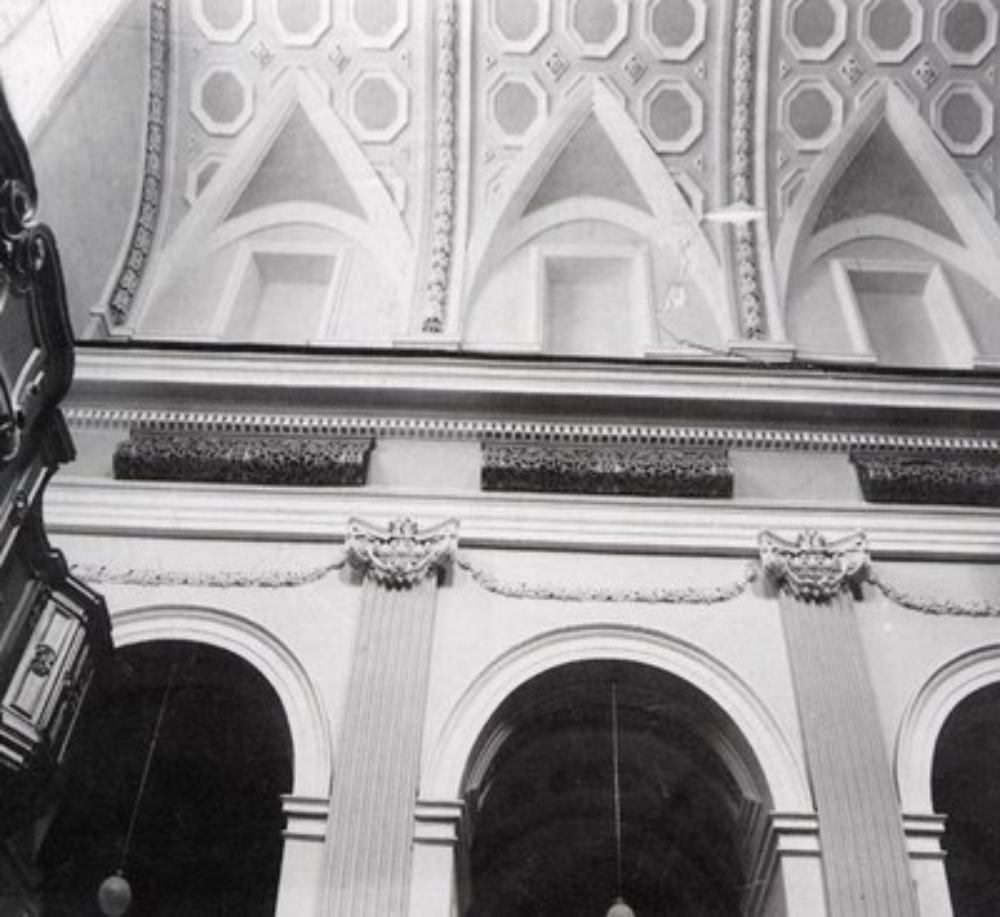


The Monastery of Santa Maria La Nova stands in the historic center of the city of Nola. The 1651 plate preserved at the Diocesan Historical Archive of Nola is the richest documentary source of information to reconstruct the events of the religious complex. It was Sister Francesca Sussolana, who belonged to a noble Nola family, who had a new convent built next to the ancient church in 1521 under the rule of Saint Clare. The complex expanded over the centuries due to direct purchases and donations of real estate located in its immediate vicinity and underwent numerous renovations and transformations both in the 16th and 17th centuries and, lastly, in 1828. Originally, the monastery had a quadrangular plan arranged over three floors, with an inner cloister featuring windows and surrounded by a corridor which, on the west side, included the staircase accessing the upper floors. The building’s roofs were characterized by pitched roofs with underlying rafters. The cloister had a basin in the center and a series of adjacent rooms serving utility purposes: cisterns, chicken coop, granary. On the far northwest of Via Ambrogio Leone stood the Belvedere Tower with a carriage entrance; high enclosing walls instead surrounded the two gardens of the complex. The Cloister wall positioned to the north closed off a second garden of the monastery on Vicolo I Ranieri. Attached was the Nuns’ Hospice with an internal small garden, incorporated into the rest of the building in 1846, along with another block probably serving as an accommodation area. The first refectory was located in the ground floor corridor, while the second was placed on the first floor. The kitchens with ovens and hearths were probably annexed to the refectories. The first and second floors were arranged into various rooms opening onto two corridors with windows and balconies. The dormitory in particular was located on the second floor with openings overlooking the cloister; towards the south it had sixteen cells and the recreation room. The main façade facing Via Senatore Cocozza today appears marked by the linearity of surfaces and the rhythmic succession of windows and simple moldings. At the corner between this street and Via Principessa Margherita is located the church with the annexed original nucleus of the chapel of the Presentation of the Blessed Virgin Mary. Since 1995, the building, owned by the municipality, has been designated to host the Historical – Archaeological Museum of Nola and its territory.
Information on the Monastery of Santa Maria la Nova
Via Senatore Cocozza, 1
80035 Nola (Naples)
+39.081.5127184 (Office for the archaeological heritage of Nola)
Source: MIBACT