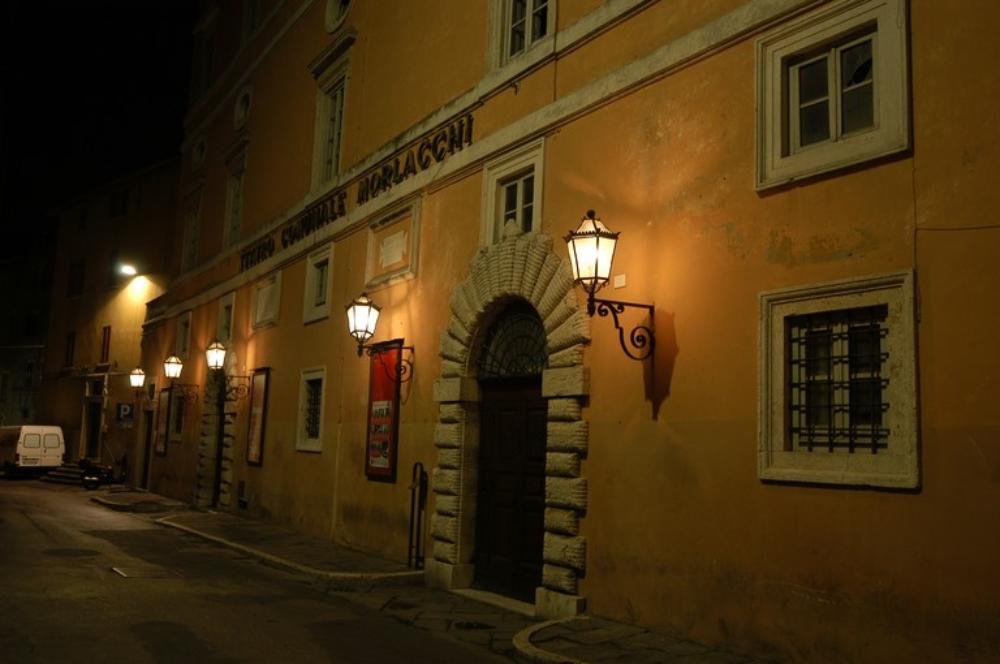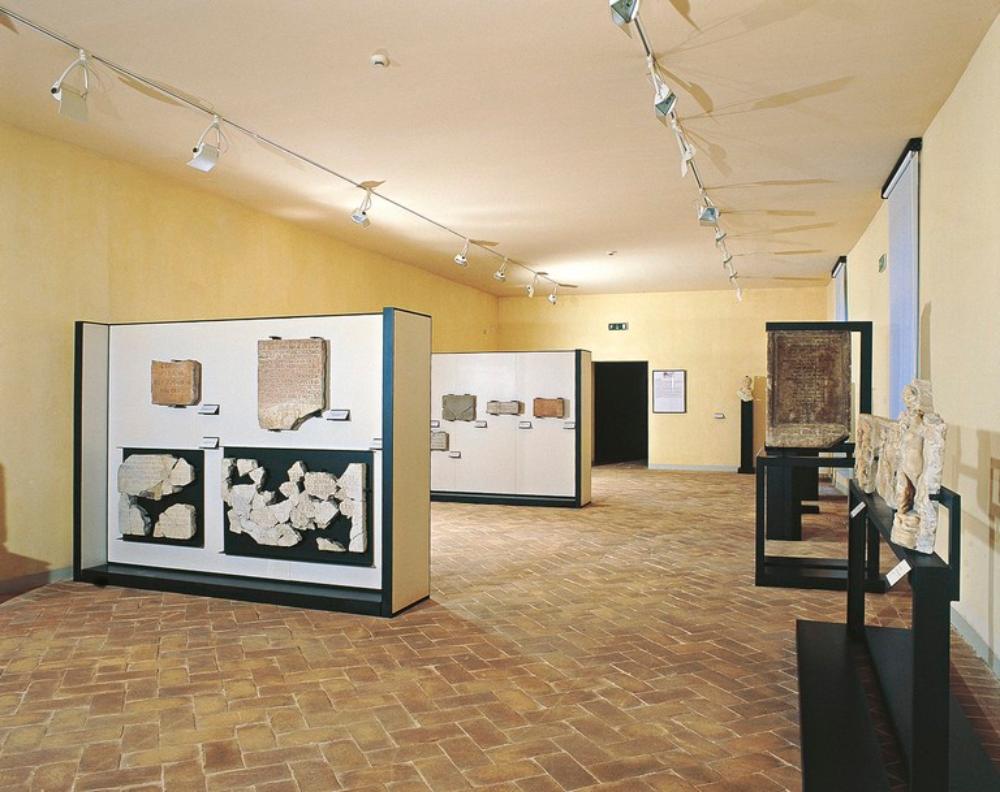


The City Museum, located inside Palazzo Trinci, stands on the main square of Foligno, the ancient Piazza Grande. Palazzo Trinci was built between the 14th and 15th centuries as the residence of the noble Trinci family who ruled the city from 1305 to 1439. Following Foligno’s annexation to the Papal States, the palace became the seat of the papal governors until the Unification of Italy and was later used to house the offices of the Magistrate, the State Property Office, and the Monopoly, as well as the barracks for the Finance Police. In 1985, after numerous structural changes over the centuries and damage sustained from the 1831-32 earthquake and World War II bombings, the palace was closed and restored. It reopened to the public in 1997 and since 2000, established as the City Museum, it hosts the new arrangement of the art gallery and the two archaeological sections. The noble Palazzo Trinci deserves a thorough visit both for the elegance of its exterior and the decorative richness of its interiors, as well as for the important art collections it houses. The art gallery, in particular, preserves works by major artists active between the 14th and 16th centuries such as Dono Doni, Bernardino di Mariotto, Giovanni di Corraduccio, Pierantonio Mezzastris, and Niccolò Alunno. Noteworthy inside the building is especially the frescoed hall depicting the Liberal Arts and the Planets, recently attributed to the famous painter from the Marche region, Gentile da Fabriano, and the chapel decorated with frescoes by Ottaviano Nelli portraying the Marriage of Saint Anne. The museum route, which unfolds over three floors starting from the Gothic staircase, includes the Archaeological Museum, the Art Gallery, the Museum of the Municipal Institution, and the Multimedia Museum of Jousts and Tournaments. The Archaeological Museum consists of extensive documentation on the Umbrian peoples of the Fulginates and Plestini, as well as a collection of stone materials, funerary urns, and sarcophagi from the Roman and late Roman periods. Other archaeological finds, previously part of the Trinci collection, are displayed in the frescoed rooms of the palace, respecting their original placement. The Art Gallery, whose origins date back to 1863, collects works from local ecclesiastical buildings and especially frescoes that were detached to prevent their destruction, offering a fairly comprehensive overview of the development of local artistic culture between the 14th and 16th centuries. The section dedicated to the Municipal Institution collects testimony on the municipality from the 15th century to the Unification of Italy, while the Multimedia Museum of Jousts and Tournaments, inaugurated in 2001, is a reference point for research, study, and the history of jousts and tournaments from the Middle Ages to today.
Information about City Museum of Palazzo Trinci
Piazza della Repubblica,
06034 Foligno (Perugia)
0742330584
[email protected]
https://www.comune.foligno.pg.it
Source: MIBACT