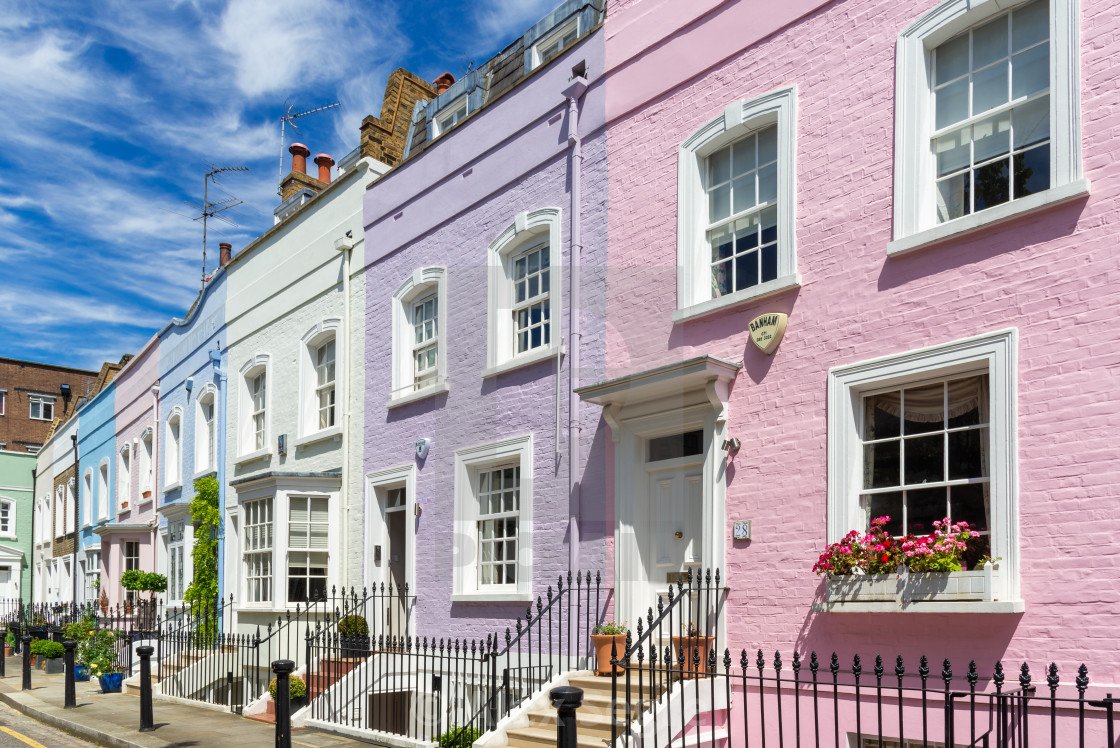


The streets of Chelsea in London, lined with stately buildings, impeccable Georgian architecture, antique and design shops, showrooms, and auction houses, faithfully reflect its refined and ultra-chic soul. History records Chelsea in London’s annals only from the 16th century (originally, it was a humble fishing village), when King Henry VIII indulged in having a manor house built here for the summer, and the humanist Thomas More hosted artists, writers, and intellectuals of the time.
- 10 Things to Do and See in Chelsea London
- 1 Sloane Square
- 2 King’s Road
- 3 Carlyle’s House
- 4 Holy Trinity Church
- 5 Chelsea Royal Hospital
- 6 Chelsea Physic Garden
- 7 Chelsea Old Church
- 8 Brompton Cemetery
- 9 National Army Museum
- 10 The Beach and Saatchi Gallery
- Getting Around Chelsea, London Neighborhood
- London Neighborhoods Map
- Curiosities about the Chelsea Neighborhood in London
In the following centuries, more and more members of upper-class London, artists, and intellectuals established their homes here, founded institutions and museums, or frequented it as a peaceful oasis on the riverbank overlooking the green expanse of Battersea Park. Many have fallen for Chelsea, from painter Turner to poet Shelley; from writers Oscar Wilde, Henry James, Virginia Woolf to contemporary artists and musicians like Mick Jagger and the other Stones, or irreverent designers like Vivienne Westwood. The Chelsea neighborhood in London is highly urbanized, with almost 160,000 inhabitants together with neighboring Kensington. Nestled between the Thames and the districts of Pimlico, Westminster, Victoria, Brompton, West Brompton, and South Kensington, Chelsea is a symbol of upscale London. An exclusive, cultured, enlightened, and unabashedly fashionable London.

10 Things to Do and See in Chelsea London
If you’re wondering what to see in Chelsea London, here is a list of the main attractions and points of interest in this fascinating London neighborhood. It’s best to start from Sloane Square, the starting point of Chelsea. A square defining a busy area, hosting the only underground station, adorned with trees and one of the city’s rare fountains.
1 Sloane Square
Sloane Square, in the Chelsea neighborhood of London, is a small rectangular square dominated in its center by a statue of Venus. The square was created at the end of the 18th century and is named after the wealthy doctor who purchased the Chelsea villa. West of Sloane Square is the Royal Court Theatre. Underground stop: Sloane Square.

2 King’s Road
The main street of the Chelsea district is called King’s Road. It is the temple of super-luxury and eccentricity; wealthy and newly rich residents live here in beautiful red brick houses or harmonious Georgian architecture. This street, full of fashionable shops, was made famous by punk fashion but especially by the miniskirt trend in the 1960s. At number 152 is the “Pheasantry,” which originated as the back of a furniture store. At the end of King’s Road, don’t miss the stalls offering antiques. Note the store opening hours: usually open between 9 and 10 am and close between 5 and 6 pm. In Chelsea and Knightsbridge, shops close between 7 and 8 pm on Wednesdays (same time on Oxford Street and West End but on Thursdays). Underground stop: Sloane Square.

3 Carlyle’s House
Carlyle’s House hosted the founder of the London Library, Thomas Carlyle, from 1834, where he wrote “The French Revolution“, “Frederick the Great“, and other well-known works. Thanks to Carlyle’s presence in Chelsea, the neighborhood and the house were visited by famous figures such as Charles Dickens, William Thackeray, Charles Darwin, etc. Today, the house operates as a museum entirely dedicated to Carlyle. Opening hours: from April to October, 11:00 am to 5:00 pm, Wednesday to Sunday. Closed on Good Friday. Admission fee required. Underground stop: Sloane Square or South Kensington.

4 Holy Trinity Church
Among the monuments of Chelsea district is the Holy Trinity Church on Sloane Street, which, although not of notable architectural value, preserves a symbol of the Pre-Raphaelite movement: stained glass windows by Morris and Edward Burne-Jones, depicting biblical scenes from the Old and New Testament.

5 Chelsea Royal Hospital
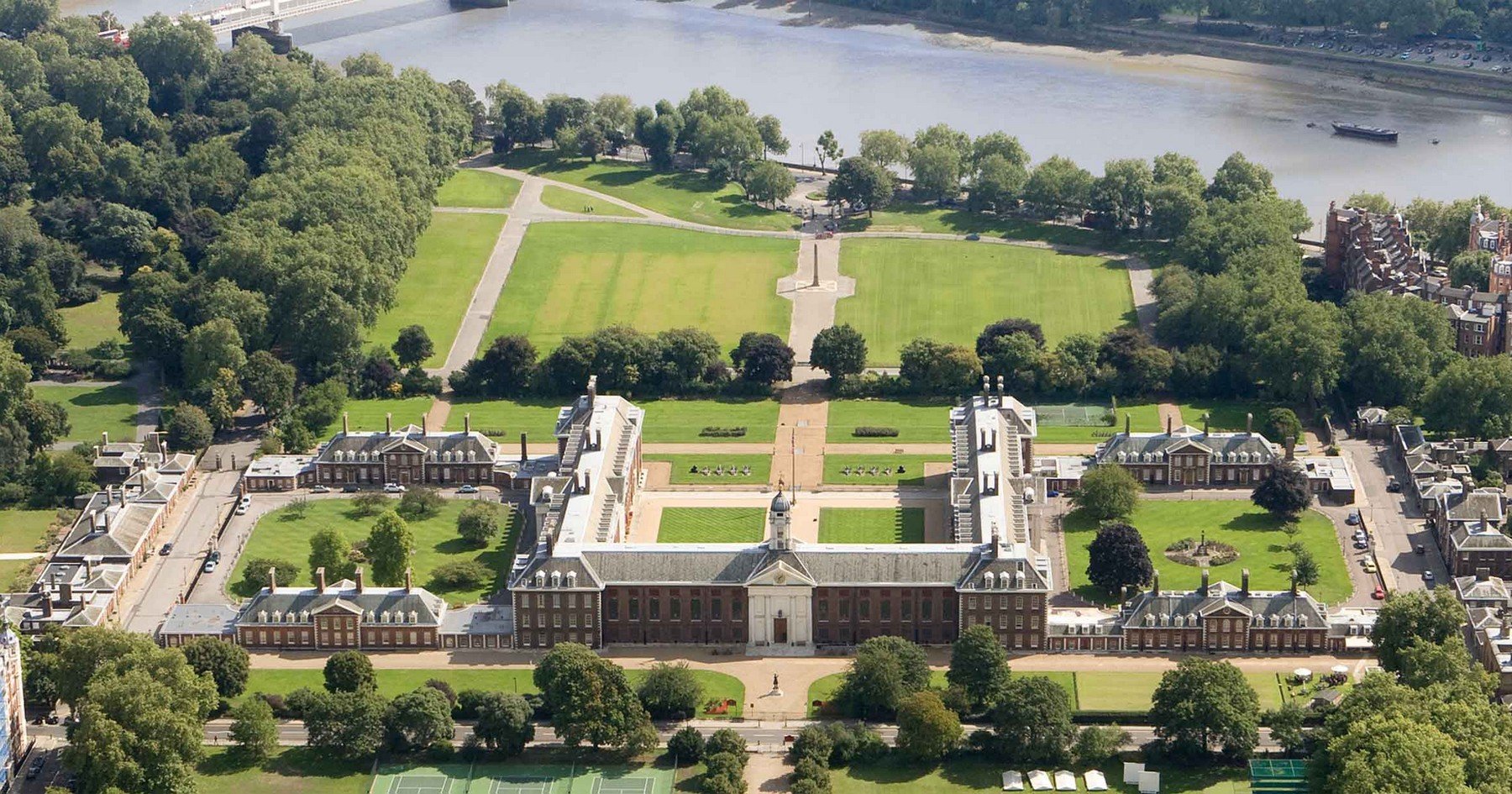
Nearby, the Chelsea Royal Hospital reveals the London counterpart of Paris’s Hotel des Invalides. In 1862, King Charles II ordered this hospital built to house army veterans — a grand building of white stone and red bricks, where hundreds of pensioners still live today. The statue of the king, a work by sculptor Gibbons, dominates the courtyard. Inside, visitors can tour the chapel and a small museum. Home to Chelsea pensioners in their iconic red coats, this is an elegant retirement home for elderly men and women. The Chelsea Flower Show is held here each spring among splendid gardens.
6 Chelsea Physic Garden
Those with a green thumb or simply nature lovers should not miss a visit to the Chelsea Physic Garden, with entrance on Swan Walk. It is England’s oldest botanical garden, founded by the Society of Apothecaries in 1673, a small Eden of exotic and rare plants. Opening hours: April to October, 2:00 pm to 5:00 pm, Wednesday to Sunday. Admission fee required. Underground stop: Sloane Square.

7 Chelsea Old Church
Heading towards King’s Road, a highly prestigious artery designed for the passage of Windsor royals and other nobility, you’ll pass the ancient Chelsea church known as Chelsea Old Church (parts date back to the 12th century), where the remains of Thomas More rest. Opening hours: 10:00 am to 1:00 pm and 2:00 pm to 5:00 pm. Underground stop: Sloane Square.

8 Brompton Cemetery
Managed by the prestigious Royal Parks, Brompton Cemetery is celebrated as the best Victorian garden cemetery in Britain. Its shady, peaceful avenues lead to a listed central chapel inspired by St. Peter’s Basilica in Rome. There are over 35,000 monuments, from simple stone plaques to elaborate family crypts. The surrounding parks are perfect for a stroll and guided walks are offered on Sunday afternoons.

9 National Army Museum
The National Army Museum in Chelsea is dedicated to the history of the British army. It is the UK’s leading military museum, focusing on personal stories rather than straightforward depictions of war, providing a very human view on a subject often reduced to statistics. Whether fighting on the front line or “Digging for Britain” with the Home Guard during World War II, the National Army Museum offers a comprehensive portrait of life during times of conflict in the UK. Family-friendly, it offers children’s uniforms to try on and child-friendly shows. Evening events include war films and lectures. Opening hours: 10:00 am to 5:30 pm. Underground stop: Sloane Square.

10 The Beach and Saatchi Gallery
Among its charming residential streets and garden squares, Chelsea offers many trendy spots to discover. Among these is “The Beach“, a stretch of Fulham Road between Redcliffe Gardens and Drayton Gardens, where you’ll find bustling, youthful, and elegant restaurants and bars. It is said Prince Harry frequents some local nightlife venues here. Founded in 1985 by contemporary art collector Charles Saatchi, the gallery is the prime meeting point and home for young British artists. The Saatchi Gallery hosts permanent and temporary exhibitions. Evening events and lectures are held by curators and artists. Perfect for visitors wanting to stay informed on cutting-edge trends in the London art world.

FullTravel Tip. If you are planning a stay in the district, also discover where to stay in Chelsea, London: recommended hotels, strategic areas, and budget options to experience this exclusive corner of the city without sacrificing comfort.
Getting Around Chelsea, London Neighborhood
In London’s Chelsea neighborhood, the best way to get around is on foot or by bus; residents have consistently opposed additional underground stations to preserve peace. Being in Zone 1 Chelsea London, it is easily reachable by all means of transport. In particular: the underground lines “District” and “Circle” reach Sloane Square. Alternatively, the “Piccadilly” line, passing through South Kensington, is close to Chelsea. Sloane Square is also a hub for bus lines. Bus numbers 11, 19, and 22 all stop at King’s Road.
London Neighborhoods Map

Curiosities about the Chelsea Neighborhood in London
- At no. 34 Tite Street, Oscar Wilde lived, where he wrote The Picture of Dorian Gray. Not far away, at the Cadogan Hotel on Sloane Street, he was arrested on charges of homosexuality.
- The best spot to enjoy a magnificent view of the Pagoda of Peace in the heart of Battersea Park, on the opposite bank of the Thames, is Embankment. Famous is its golden and bronze Buddha over 3 meters tall, created by a group of Japanese monks.
- At no. 21 Cheyne Walk, Thomas Stearns Eliot, Nobel Prize winner in Literature, wrote the famous Murder in the Cathedral.
- At number 430 King’s Road is World Ends, the showroom of the queen of all fashion madness, Vivienne Westwood. On its façade is a large clock whose hands move counterclockwise, with an inscription on the dial.
- Chelsea is no stranger to nonconformist fashions. It was here, in 1960, that resourceful Mary Quant launched the miniskirt trend, which went worldwide and entered women’s emancipation history.
- Residential streets like Bywater Street and Burnsall Street are famous for their colorful houses, adding a lively touch to the district.
- Chelsea also lends its name to the Premier League football team. It is one of the most important clubs in London and worldwide football.

Chelsea London remains one of the most charming and desirable neighborhoods in London, where history, culture, and luxury blend into a unique atmosphere. Whether you are a visitor or considering living in Chelsea London, this district offers an unforgettable experience in the heart of Kensington and Chelsea.