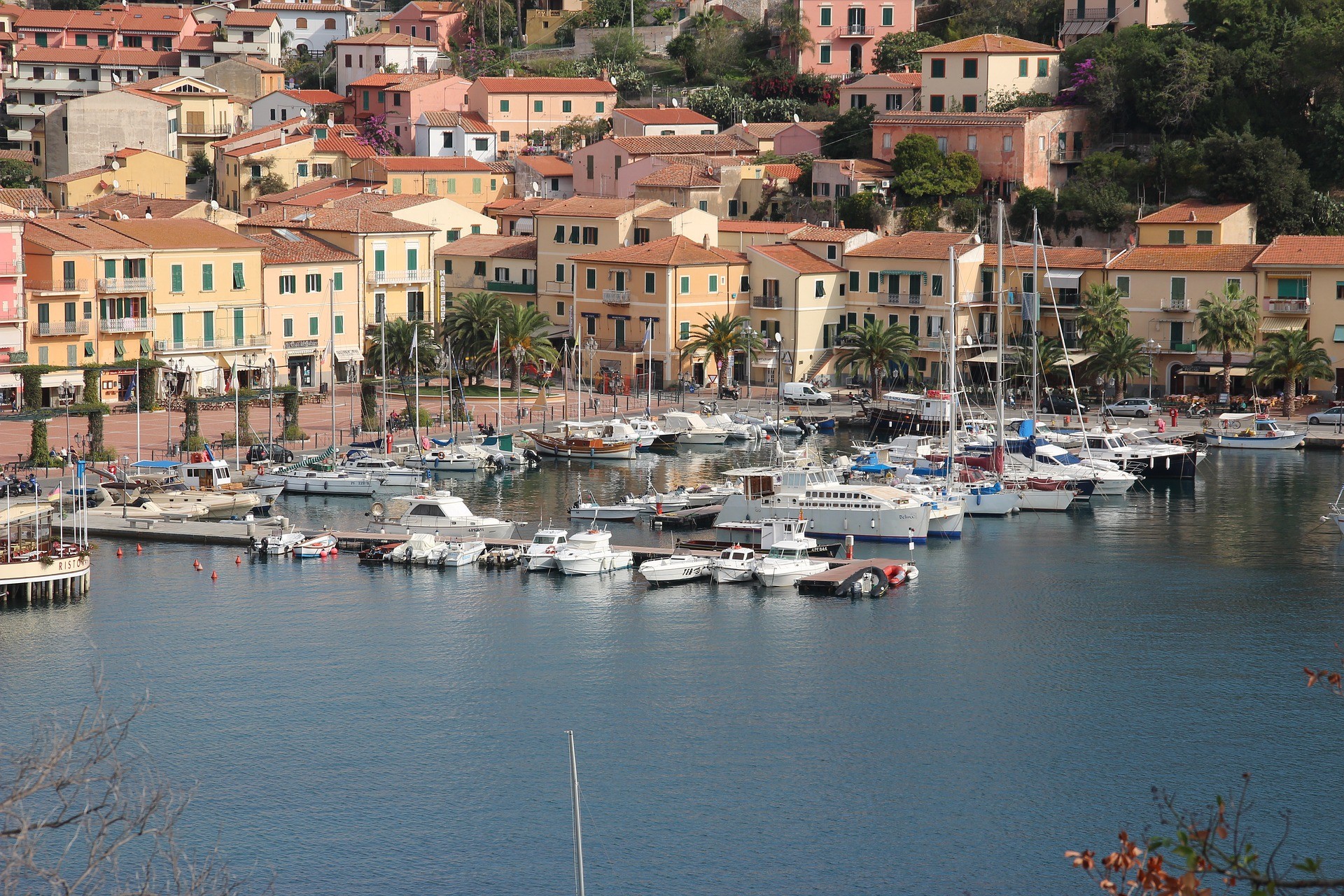


The Archipelago consists of seven islands, which, according to legend, were created from the pearl necklace of the goddess Venus. Each island within the Tuscan Archipelago National Park deserves a visit to experience the scents of Mediterranean plants—juniper, myrtle, lavender, and rosemary in particular—and the thriving wildlife, including migratory birds, wild rabbits, martens, and Maremma boars. The crystal-clear waters surrounding these islands are home to a variety of marine mammals such as dolphins, sperm whales, and fin whales.
How to reach the Tuscan Archipelago?
You can reach the islands of the Tuscan Archipelago by taking a ferry, which can be booked via Traghettilines. Ferries to Isola del Giglio and Giannutri depart from Porto Santo Stefano (GR), whereas those to Capraia and Gorgona leave from the port of Livorno. Note that for Gorgona, it’s mandatory to book in advance, as access is limited, just like on Pianosa. To reach Isola d’Elba, board the ferry in Piombino (LI). Lastly, for Montecristo, you must obtain a special permit from the State Forestry Corps in Follonica (GR), and their assistance is also needed to visit the island.

Isola di Capraia
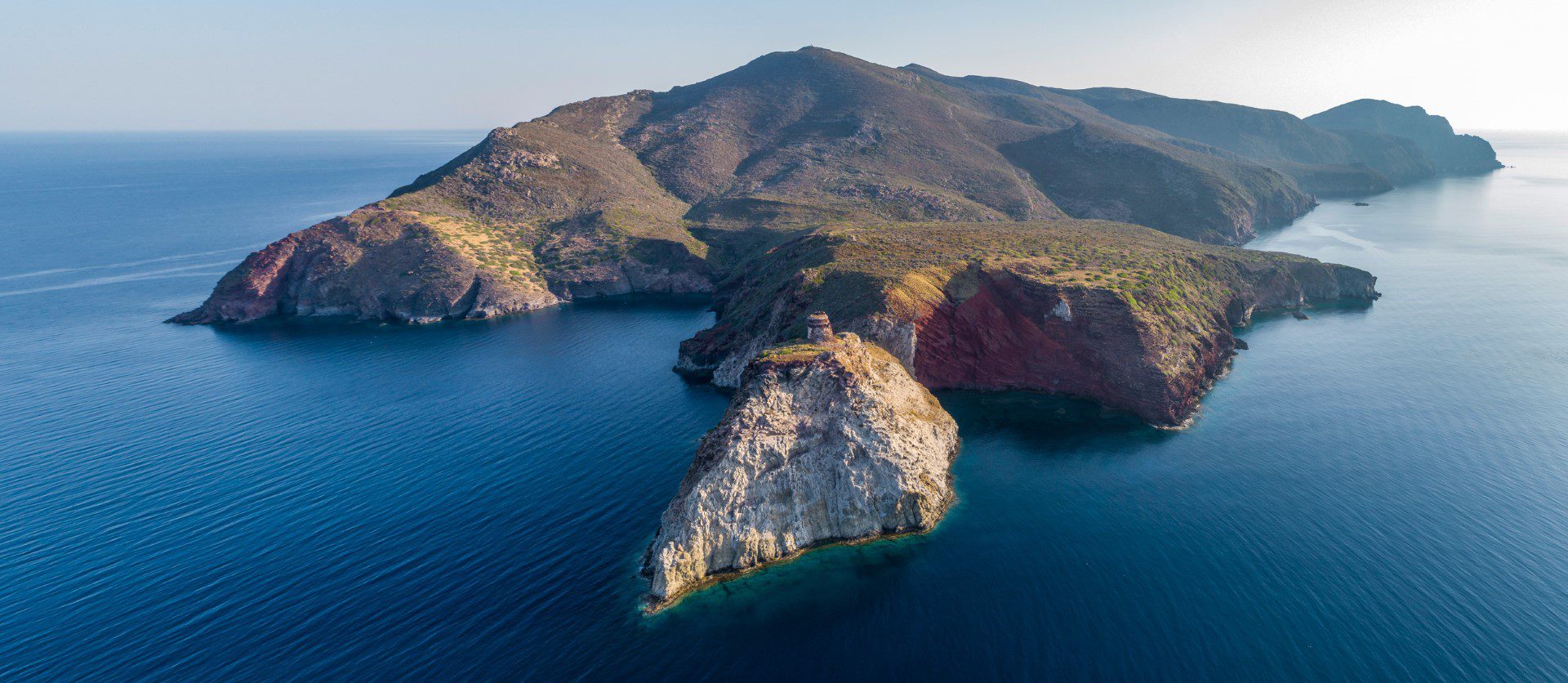
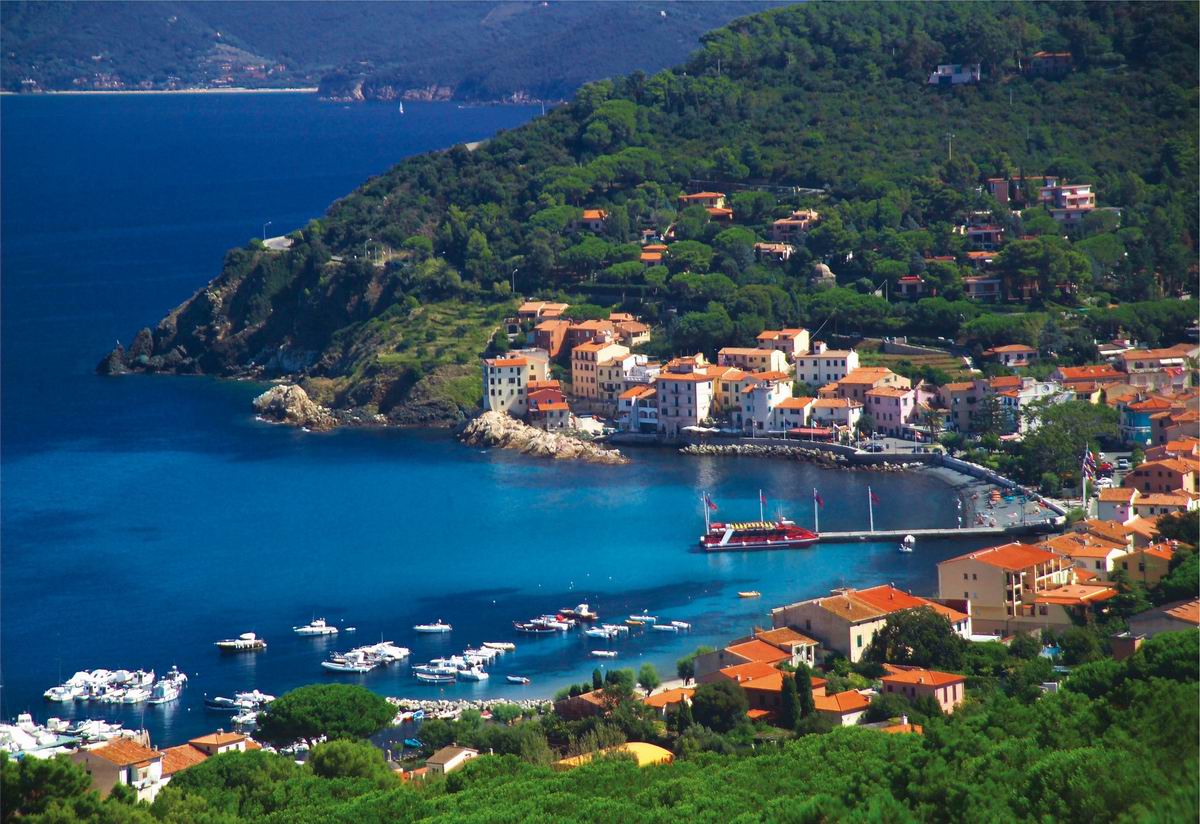
One of Tuscany’s most exclusive destinations is Isola di Capraia—wild and serene, largely untouched by mass tourism. This makes it perfect for those seeking relaxation and peace, away from the usual tourist crowds, and for those who enjoy nature-based activities such as snorkeling and scuba diving in its clear waters. Keep in mind that there are no sandy beaches here, only small pebble coves accessible by boat, along with a few small piers. Among the most picturesque is the striking Cala Rossa, known for its reddish cliffs—remnants of Capraia’s ancient volcanic crater. The island’s solitary road, serviced by a shuttle, leads to the small village 500 meters above the harbor, where the 400 inhabitants typically reside only in the summer season.
Isola di Pianosa
Pianosa is the third largest island in the Tuscan Archipelago and is almost deserted, known for its lush natural environment. The only area visitors may explore without a guide is the 19th-century village, abandoned since the island became a maximum-security prison in 1968. Here, you’ll find Neo-Gothic buildings, Christian catacombs, and the remains of Agrippa’s Roman villa, where Emperor Augustus’ nephew was once exiled. The villa, complete with a theater and thermal baths and decorated in black-and-white marble mosaics, was rediscovered in the nineteenth century.
Isola di Montecristo
If you’re visiting the Tuscan Archipelago, don’t miss the Isola di Montecristo—a completely protected and uninhabited area, ideal for guided hikes. The sea here is pristine; swimming and the removal of geological or plant materials are strictly forbidden. Since 2019, only 2,000 people per year are allowed on the island, except between April 16 and May 14. Wildlife on Montecristo includes the wild goat, Sardinian discoglossid toad, Audouin’s gull, golden eagle, and raven. The seabed is rich with sea anemones and coral.