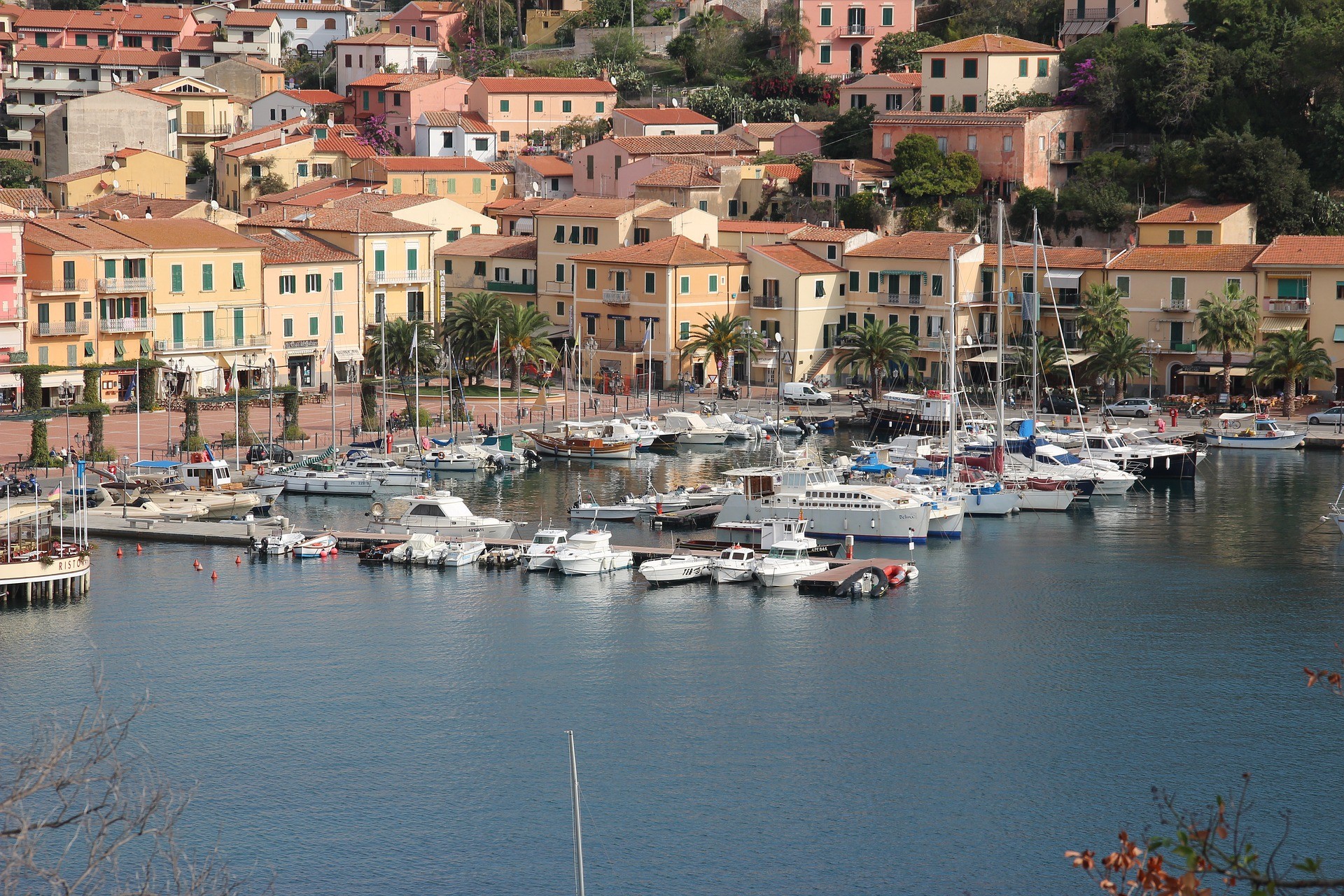


L’Archipelago consists of seven islands, said, according to legend, to have originated from the necklace of pearls of the Goddess Venus. Each island of the Tuscan Archipelago National Park deserves a visit to enjoy the scents of the Mediterranean vegetation (juniper, myrtle, lavender, and rosemary in particular) and the wildlife (migratory birds, wild rabbits, pine marten, Maremma wild boar). The transparent stretches of water, on the other hand, host various cetaceans such as dolphins, sperm whales, or blue whales.
How to reach the Tuscan Archipelago?
The islands of the Tuscan Archipelago can be reached by taking a ferry, such as those bookable on traghettilines. For the Island of Giglio and Giannutri, ferries depart from Porto Santo Stefano (GR), while for Capraia they depart from the port of Livorno, as well as those for Gorgona. For the latter, however, a reservation is required, as visits are limited in number, as well as for Pianosa. To reach the Island of Elba, instead, the ferry must be taken from the port of Piombino (LI). Finally, for the island of Montecristo, a special permit must be requested from the State Forestry Corps of Follonica (GR) and its assistance is also required to cross it.

Capraia Island
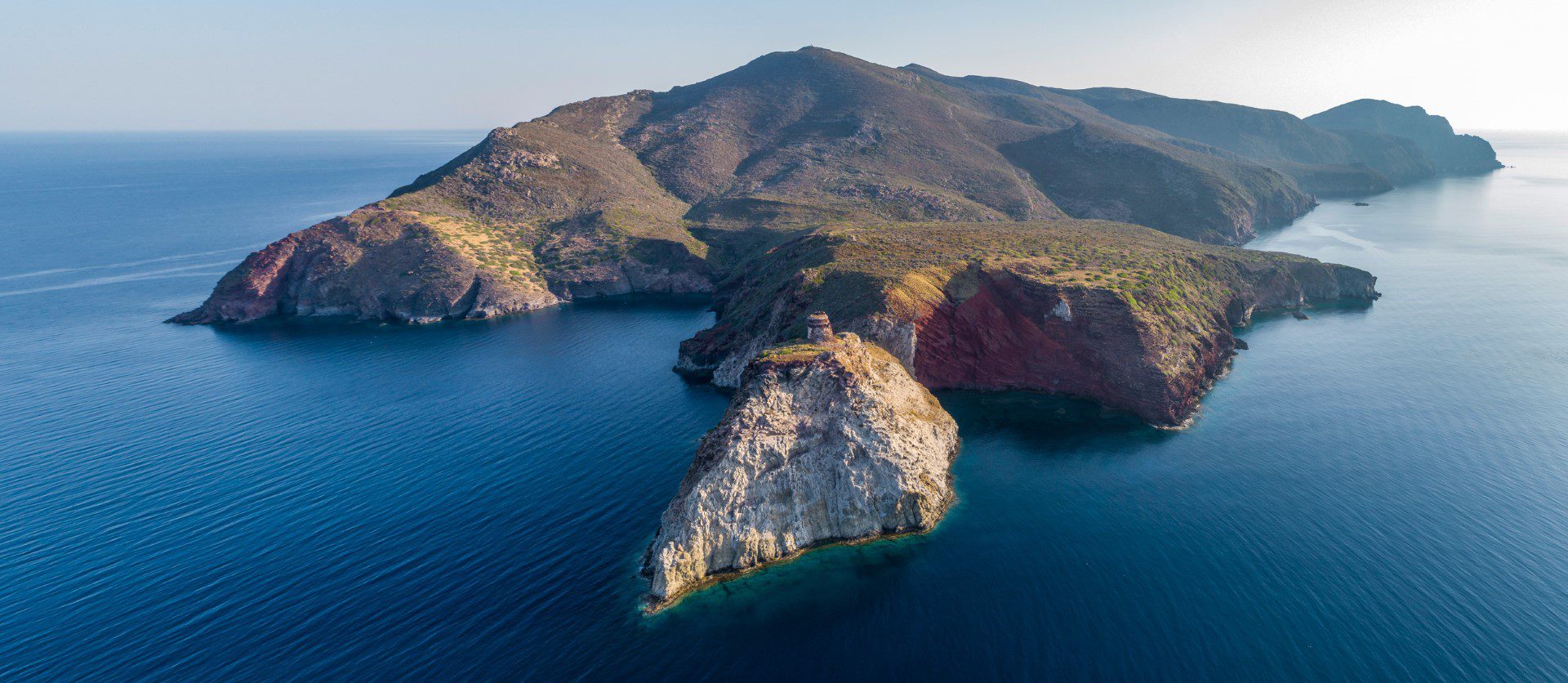
One of the most exclusive destinations in Tuscany is Capraia Island, a wild and quiet area that is not overwhelmed by tourists. For this reason, it is the perfect destination for those looking for relaxation and tranquility without the rush imposed by other tourist spots, and for those who love activities close to nature, such as diving in the transparent seabeds. It should be noted, however, that there are no sandy beaches but only gravel coves, accessible by sea, and some piers. Among the most beautiful is the suggestive Cala Rossa, characterized by a reddish wall that is actually what remains of the crater of the Capraia volcano. The only road on the island, passable by shuttle, leads to the town located 500 meters above the port, where the 400 inhabitants live, who usually spend only the summer season in the area.
Island of Pianosa
Pianosa is the third largest island of the Tuscan Archipelago, it is an almost deserted area, characterized by lush nature. The only area of Pianosa that can be visited without the aid of a tour guide is the nineteenth-century village, uninhabited since the island was turned into a maximum security prison in 1968. Here you can find the neo-Gothic style buildings, as well as the Christian catacombs and the remains of Agrippa’s Roman villa, where the nephew of Emperor Augustus was exiled. The villa, which also included a theater and baths, and was covered with marble and black and white bicolor mosaics, was brought to light in the nineteenth century.
Island of Montecristo
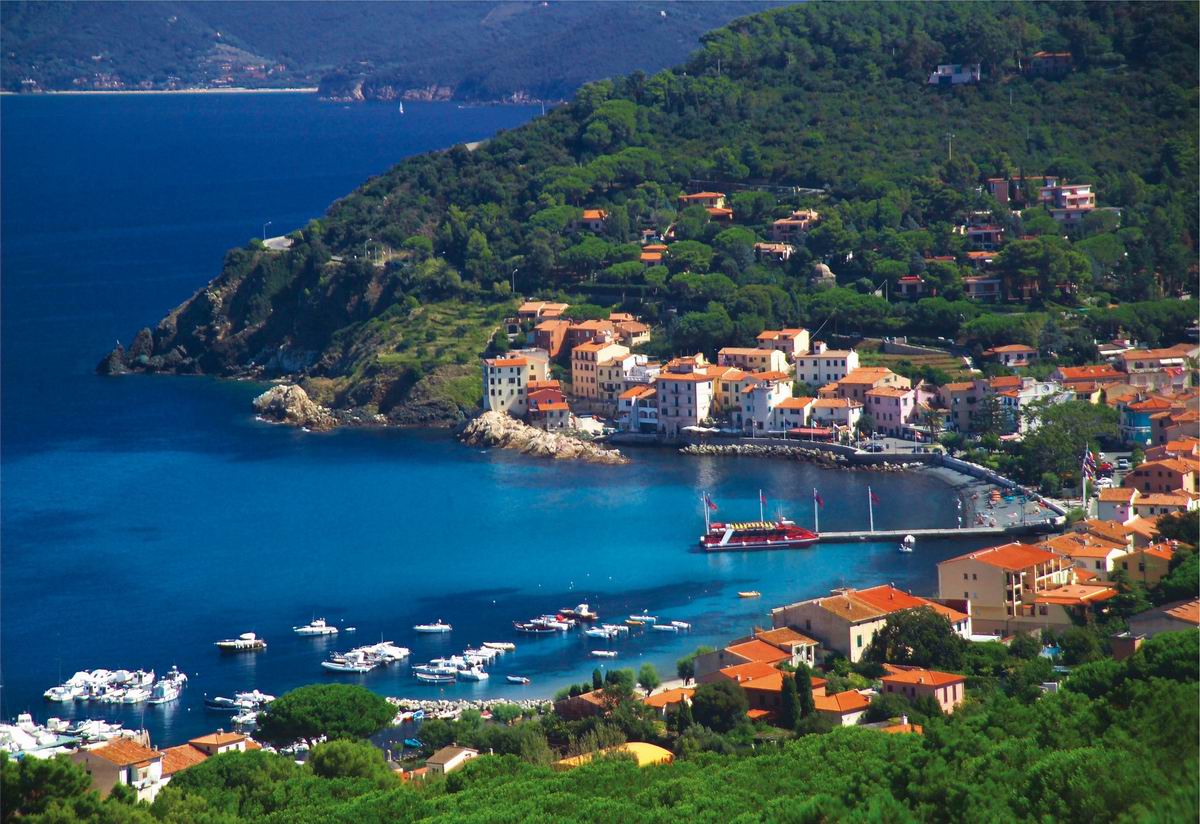
If you are on vacation in the Tuscan Archipelago, you must also visit the Island of Montecristo, an entire protected and uninhabited area, perfect for guided excursions. The sea is pristine, which is why bathing and the removal of any geological and/or plant material is prohibited. Since 2019, only 2000 people per year can access the island, but not in the period from April 16 to May 14. The animals you may encounter in the area include the wild goat, the Sardinian warbler, the Corsican gull, the golden eagle, and the imperial crow. On the seabed, there are sea anemones and corals.