


Amsterdam is by no means the largest capital in the world, but the amount of culture it manages to contain within its urban boundaries is impressive and incredible.
- 1. Amsterdam has the highest concentration of museums per square meter of any other city in the world!
- 2. Amsterdam hosts the world’s first airport museum
- 3. Every year Amsterdam hosts a cherry blossom festival
- 4. Amsterdam also has a park larger than New York’s Central Park, where you can see Highland cows!
- 5. There are hidden mini houses on the canals
- 6. Air raid test once a month
- 7. There are more bicycles than people in Amsterdam
- 8. Some of the canal houses are out of place
- 9. Amsterdam has more canals (and bridges) than Venice!
- 10. There are more than 2,500 houseboats floating on the canals
- 11. Amsterdam is home to the world’s only floating cat sanctuary!
- 12. Amsterdam has the world’s only floating flower market
- 13. Contrary to what you might think, cannabis is not legal in Amsterdam
- 14. Prostitution is legal in Amsterdam
- 15. The coffee shops and cafes are different in Amsterdam
- 16. There is a brewery inside a windmill
- 17. The XXX sign does not symbolize wickedness
- 18. Amsterdam hosts the world’s first condom store
- 19. Amsterdam was the first city in the world to host a gay marriage
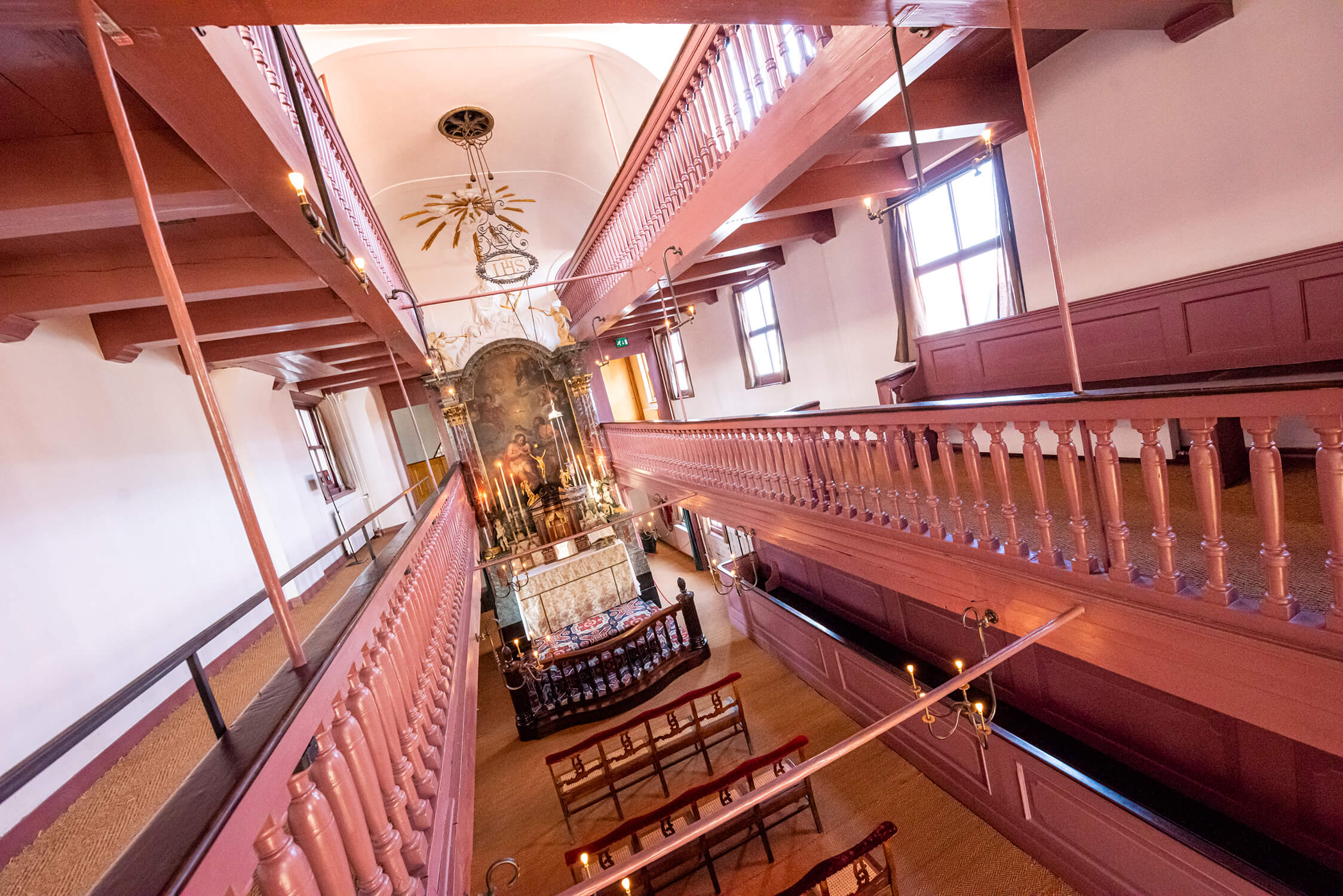
- 20. There is also a hidden church
- 21. There are hot food vending machines all over Amsterdam
There are no fewer than 75 museums in Amsterdam, covering a wide range of topics from marijuana and prostitution to the most famous museums like the Rijksmuseum or the Anne Frank House.
So, it goes without saying: if you like a bit of art and history, Amsterdam will make your mouth water.
PS: If you’re visiting, I highly recommend buying a city card: it will save you a lot of money. You can also buy the card to visit 5 museums.
If you can’t find inspiration among the expensive water bottles and the dozing backpackers at Schiphol airport, don’t worry: this beautiful airport has its own small branch of the Rijksmuseum… right between lounges 2 and 3.
Dating back to 2002, this is in fact the first museum in the world to be opened in an airport, ideal for those who want to enjoy some Dutch masters for free, 24 hours a day, 7 days a week.
Bonus Amsterdam Trivia: according to Arch Daily, the Holland Boulevard section of the airport that houses the museum was inspired by the Dutch polder landscape. There is also a great Drop&Go luggage storage in Amsterdam.
If you thought you had to go to Japan to see beautiful cherry blossoms in spring, then think again!
Along with the famous cherry blossoms of Bonn, Amsterdam is considered one of the best places in Europe to admire these beautiful pink flowers, with its cherry blossom park (part of the Amsterdamse Bos, see the next section) hosting 400 flowering cherry trees.
The trees were donated by the Japan Women’s Club and each single tree has a name; 200 have Dutch names while the other 200 have Japanese names.
Every year a cherry blossom festival takes place here when the trees start to bloom (obviously the dates vary) and it’s great fun to attend. Think Japanese food stalls, taiko drums, and other cultural performances. Even if you can’t attend the festival, you can always visit Kersenbloesempark for a picnic under the pink blossoms.
The Kersenbloesempark we mentioned above is part of the massive Amsterdamse Bos (which translates to Amsterdam Forest), a landscaped park full of things to do and see, including (among others) the Highland cows!
The Highland cows were placed in the park to keep part of the vegetation low without the need for mowing. You can really get close to the cows with no fences between you (don’t worry, they were more scared of us) if you head towards the Schinkelbos section of the park.
Amsterdamse Bos covers 2,500 acres, which is about three times larger than Central Park in New York, and often hosts concerts, theatre, or other gatherings.
Besides the cherry blossom park and Schinkelbos with the cows, there is also a rowing course, several bathing areas, a goat farm, an open-air theatre, and even a naturist (nudist) area!
If you’re looking for more quirky gems, there are some small special “secrets” to discover while exploring the streets of Amsterdam, including a row of mini houses squeezed between two regular-sized canal houses in the Jordaan.
According to Atlas Obscura, the miniature houses were placed there as a fun way to explain why the house numbers go from 54 to 70 on both sides.
The real explanation, that there used to be a courtyard leading to the missing houses which was removed and the houses joined, isn’t as fun as going to take a photo with the little houses!
P.S. We highly recommend following at least one itinerary for two days in Amsterdam.

This isn’t specific to Amsterdam, but since most visitors to the Netherlands go there, it’s likely where you’ll find yourself if you ever experience it.
On the first Monday of every month (unless it coincides with a national or religious holiday or Remembrance Day) at noon, the Dutch test the air raid sirens. It’s a very strange experience the first time you hear them and have no idea what’s happening, perhaps looking anxiously at the sky for jets.
But there is nothing to be alarmed about, unless the test lasts more than 90 seconds or occurs on a different day.
The system was created during World War II to warn of incoming air raids, but nowadays the sirens could be used to signal any emergency such as fires, floods, or workplace accidents.
Another thing you might notice as soon as you arrive in Amsterdam: there are bicycles… everywhere.It’s no wonder Amsterdam is often called the world capital of cycling.
For a first-time visitor, it can be quite intimidating trying to figure out where it is safe to walk and where you’ll have locals alarmingly and attractively cycling at you shouting for you to get out of the way. And the likelihood of this happening is high!
After all, according to The Guardian there are more bicycles than people in the Netherlands (and Amsterdam), and the Dutch are also masters of cycling infrastructure. Which means yes, they do get quite impatient with clueless tourists stumbling on their bike lanes.

There are a couple reasons why so many buildings in Amsterdam look crooked: It’s not for the pretty Instagram photos. The real reason is partly because the ground under Amsterdam is soft, so many canal houses have sunk over the years, causing them to lean sideways (like the famous dancing houses).
Also, the marshy ground on which Amsterdam is built requires piles under the buildings. In the past, these stilts were not of the best quality and were also a factor in causing some Dutch canal houses to start sinking or leaning.
Also, all canal houses in Amsterdam are slightly tilted forward, if you look up you’ll often see hooks at the top of the houses. This is deliberate, though; canal houses lean forward so that when loading things on the upper floors, objects would not smash against the building!
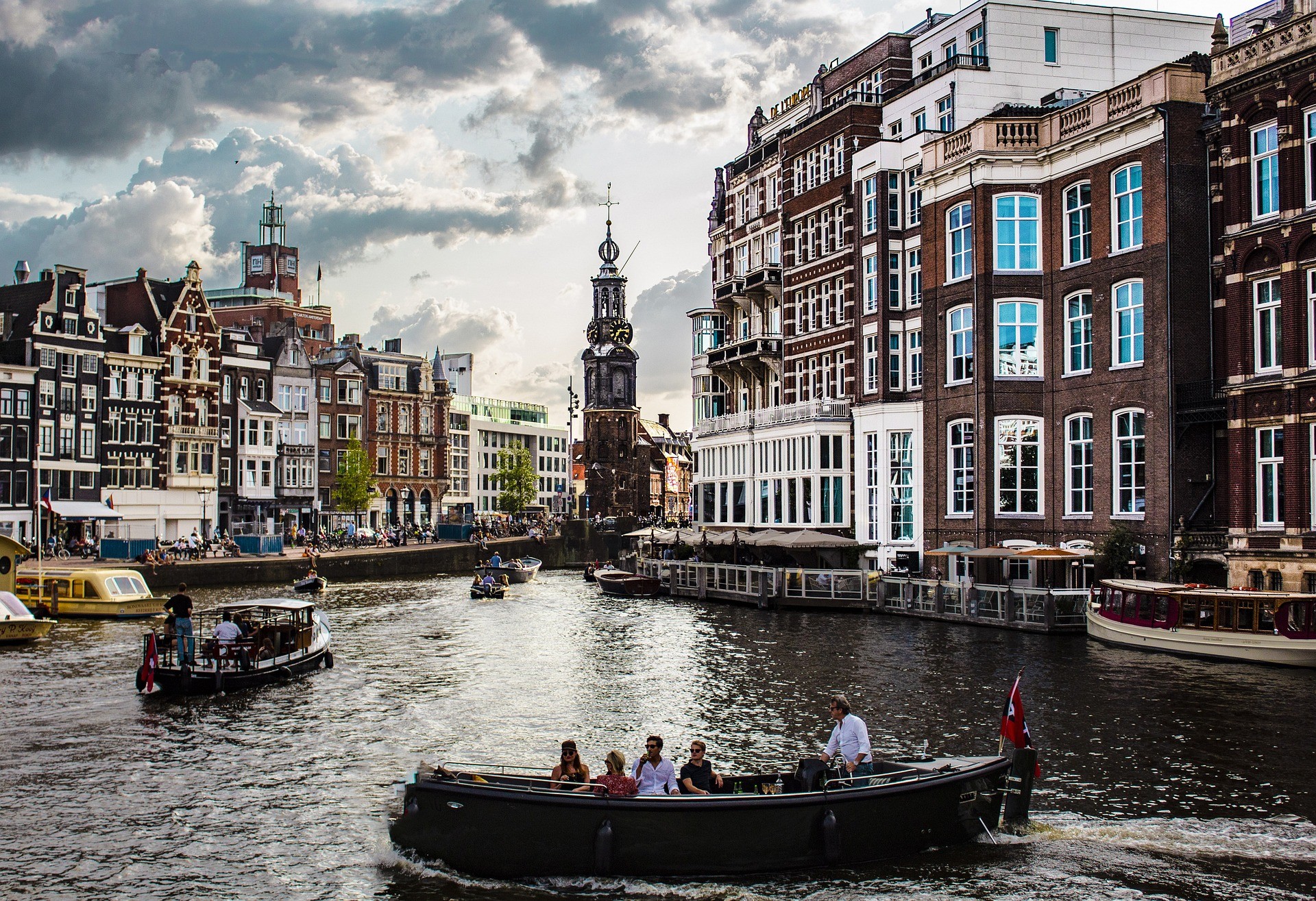
There is a reason Amsterdam is often called “The Venice of the North.” The city hosts 165 canals covering more than a hundred kilometers and crossed by 1,753 bridges . Venice, on the other hand, hosts 150 canals and only a mere 400 bridges!
Just be careful if you visit Amsterdam, as most of the time there are no railings on the sides of the canals, so it’s quite easy to stumble in after one too many beers.
PS: if you want a REALLY amazing canal destination in the Netherlands, don’t missGiethoorn. It’s a unique village where there are no roads, only canals!
Cute and quirky houseboats are another ubiquitous sight on Amsterdam’s canals, with over 2,500 scattered throughout the city. Amsterdam houseboats were originally a way to deal with a housing shortage after World War II and, while some of them are restored sailboats, many are more modern.
There is also a houseboat museum if you want to take a peek at what houseboats look like inside.
Besides all those houseboats, there’s one that has been turned into a floating cat sanctuary.De Poezenboot (which literally translates to “the cat boat”) houses about 50 cats looking for homes and 14 permanent residents.
It’s no surprise that De Poezenboot has become very popular among cat-loving city visitors, although you can only visit at certain times and you must book in advance.
Originally founded by cat lover Henriette van Weelde in 1968, the sanctuary started on land but expanded onto the boat when van Weelde ran out of space in her home. Visiting is free, but making a donation or buying cat-themed souvenirs is a good way to support this nonprofit sanctuary.
I tulips are synonymous with Amsterdam and the Netherlands, so in spring you can see them everywhere. Besides admiring the many free tulip fields in the Dutch countryside, you can also buy flowers or bulbs at the world’s only floating flower market!
Amsterdam’s bloemenmarkt is located on the Singel canal, within the historic canal belt, and has existed since 1862. Before you get too excited, though, the shops are set up on fixed barges, so you barely notice that you’re floating as you browse the goods, but you can have a good view from behind like in the photo below.
PS: if you like tulips, make sure to visit Keukenhof as a day trip from Amsterdam (if you visit in spring).

Dutch laws on cannabis are a bit strange and complicated. Although technically illegal, weed is decriminalized and tolerated if you follow some rules. So, if you decide to partake, do so only inside a bar, which is authorized to sell five grams per customer per day.
Dutch coffee shops also have other rules they must follow to stay in business, including not selling to minors under 18 or letting them enter the shop. So it’s not exactly free-for-all.
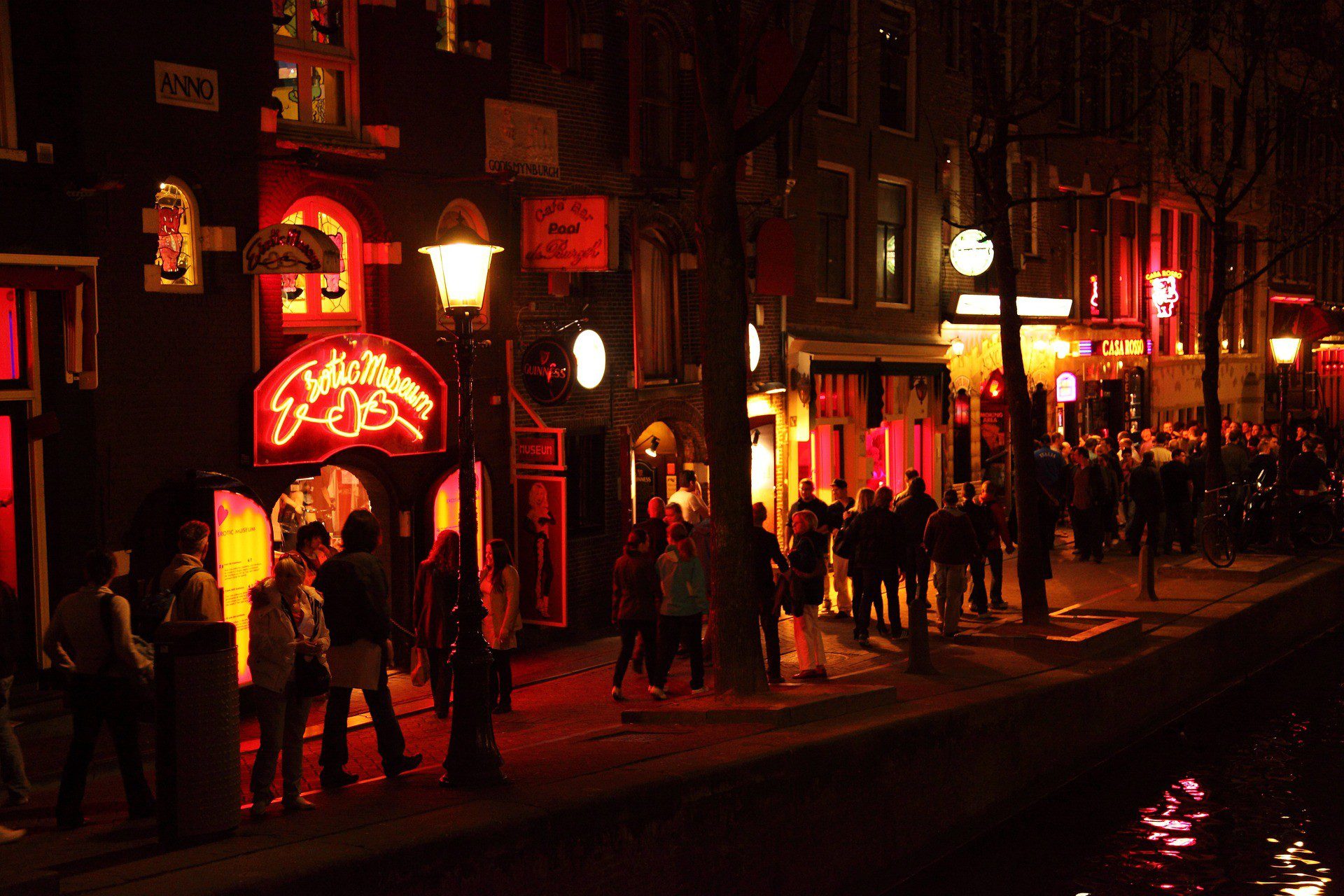
While marijuana is illegal but generally allowed, prostitution is fully legal in the Netherlands. Prostitution has been legal in Amsterdam since 1811, according to the Iamsterdam website, which means prostitutes must have a license and pay taxes. While Amsterdam’s red light district tours were halted starting in 2020, it’s still possible to stroll the streets and see the world-famous women standing in front of red-lit windows.
Don’t take photos or stare like an idiot, though; this is their real job. Visiting the Red Light Secrets museum (which we mentioned at the start of this post) is a must if you want to learn more about the history and details of Amsterdam’s most notorious neighborhood.
When in Amsterdam, if you want a coffee, go to a bar. If you want to smoke marijuana, go to a coffee shop. There are also “brown cafes” or brown bars, which are more like cozy traditional pubs to enjoy a drink or two. Visiting one is a must when you visit Amsterdam!
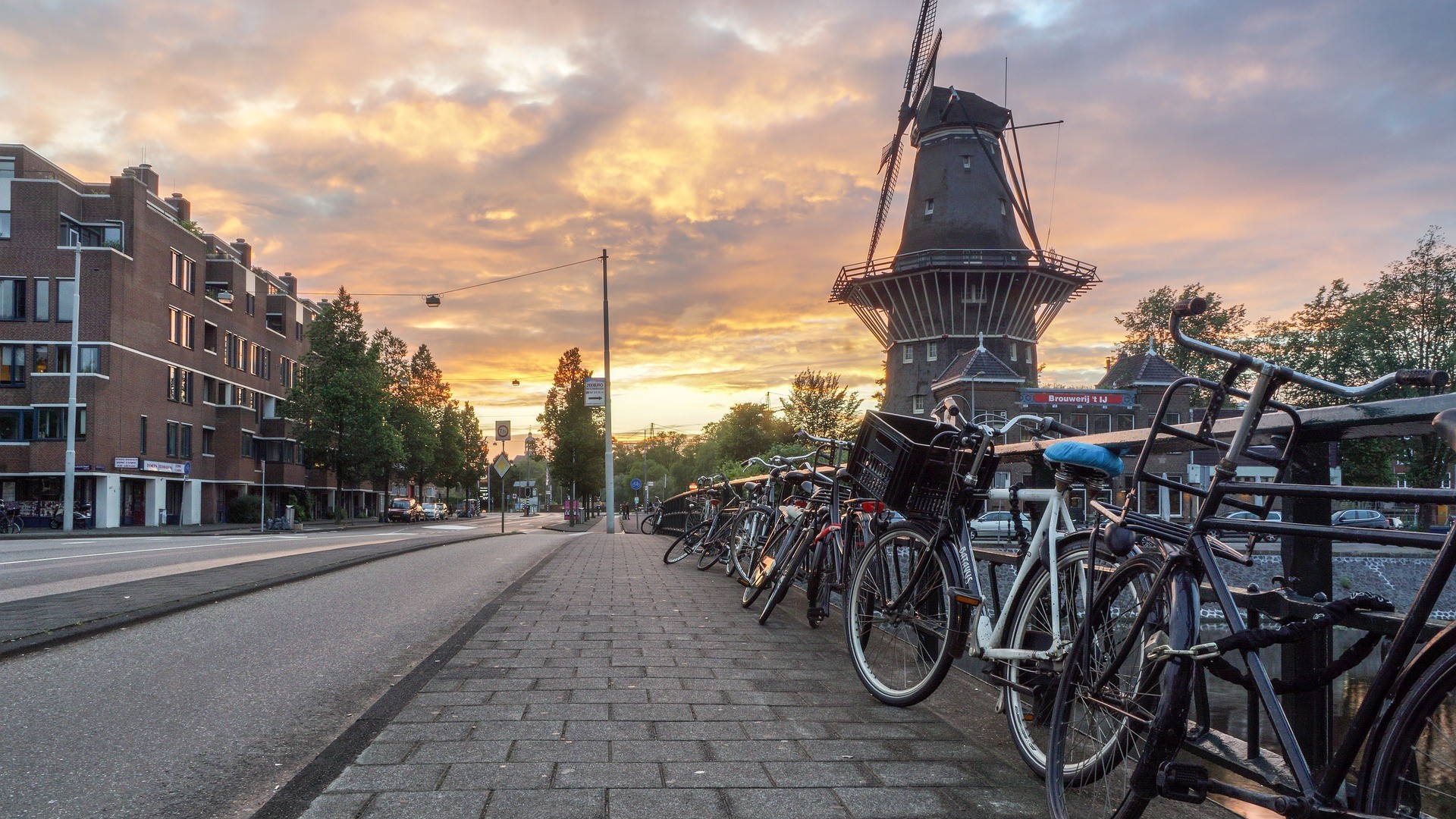
While the Heineken Experience is quite famous and popular among beer-loving tourists in Amsterdam, you should also check out Brouwerij ‘t IJ, which is located next to the largest wooden windmill in Amsterdam.
Although the brewery and the windmill (called De Gooyer) are two separate entities, they seem to be together, and if you sit on the outdoor terrace drinking a beer, you can also enjoy a view of the windmill while you relax.
Amsterdam’s coat of arms features three white crosses on a black stripe with a red background. When it looks extra fancy and official, there is also an Austrian imperial crown on top and two golden lions on each side (as you can see below) but it is more often seen simply as crosses.
You might notice these crosses while wandering around the city and think they have something to do with all the X-rated fun to be had, but plot twist: that’s not the case.
The truth is much less exciting: the three crosses are actually the crosses of Saint Andrew, representing the martyr Saint Andrew who was crucified on one of these crosses in the 1st century AD.
Saint Andrew was a fisherman and since Amsterdam was originally a fishing village, they took his cross as one of the main symbols of the city.
Conveniently located in Amsterdam’s red light district, the Condomerie is a store like no other, offering a range of condoms from your standard Durex to Ferrari-shaped novelty ones that (hopefully) are just for decoration.
Of course, there is much more than just fancy rubbers in this store. Originally founded in 1987 to fight taboos about selling condoms and safe sex, this Amsterdam institution has been a sexual force to be reckoned with for over three decades.
If you can’t visit in person, they also have an online store where you can order from!
Along with all the other firsts we’ve mentioned so far, Amsterdam also led the charge when it comes to gay marriage rights, being the location of the world’s first legal gay marriage.
According to Iamsterdam, the Netherlands fully legalized same-sex marriage in 2001 and four couples were the first to marry on April 1st at Amsterdam’s city hall.
Amsterdam is incredibly welcoming to gay travelers, hosting every year an epic canal pride (the only floating gay pride in the world!), as well as having an “Homomonument” dedicated to LGBTQ people who died during World War II and a pink visitor center for gay tourist information.
However, Amsterdam has not always been so tolerant, there was a time during the 17th century when Catholics were persecuted and had to hide their beliefs.
An example of this can be seen by visiting the church Ons’ Lieve Heer op Solder (Our Lord in the Attic) which was hidden in the attic of a typical Dutch house in the heart of the city.
As reported on Atlas Obscura, Jan Hartmann transformed the attic of his house into a tiny but still beautiful church in 1663. The church became a museum in 1888 (making it the second oldest museum in the city) that is worth a visit to climb the spiral staircase behind a false door and see the beautiful decorations. You can even attend a service in the attic!
This is by far one of the best gastronomic experiences in Amsterdam that you need on your list. Scattered throughout the city are the most magical inventions ever: heated food cubes filled with all kinds of tasty fried delicacies, waiting for you to unlock them with your hard-earned euro coins.
Hamburgers, croquettes, fries, and more on demand? Oof – Amsterdam, you really know how to live.



