
The hantavirus case linked to the MV Hondius cruise ship does not represent, according to health authorities, a high risk for the general population. However, for the tourism sector, it reopens a central issue: how to manage communication, health surveillance, repatriation, and traveler assistance in complex situations.
Add us to your preferred sources.

Hantavirus and travel: the case of the cruise ship MV Hondius brings back to the spotlight a sensitive issue for organized tourism, cruises, and the travel trade. This is not about fueling alarmism, but about understanding how a localized health event can trigger international procedures for surveillance, repatriation, passenger assistance, and risk communication.
According to updates released by international health authorities, the outbreak of Andes Hantavirus linked to the MV Hondius ship involved passengers and crew members, with confirmed cases, deaths, and monitoring measures for potentially exposed individuals. The World Health Organization assessed the risk for the general population as low, while for passengers and crew of the ship the risk was considered moderate.
For tourism operators, the point is not to turn this news into a generalized emergency, but to interpret it as a concrete case of risk management in travel. Cruises, expeditions, international itineraries, and organized trips often involve multiple countries, different health systems, transportation companies, insurers, border authorities, and customers who need clear information.
Summary
The MV Hondius case: why it concerns the travel trade
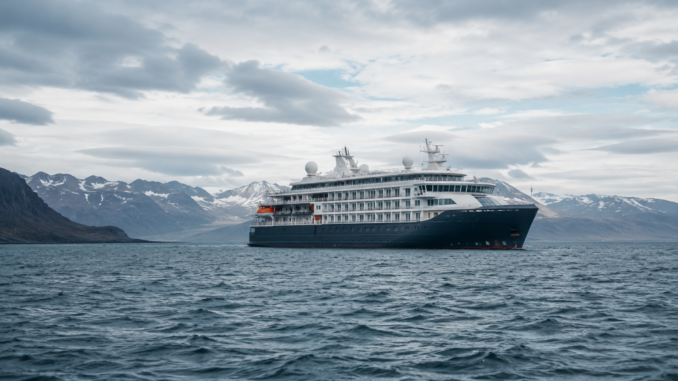
The MV Hondius is a cruise ship specialized in expedition travel. The hantavirus outbreak was reported to international health authorities after severe respiratory symptoms appeared on board. From that moment, a coordinated response was activated involving WHO, ECDC, national health authorities, medical evacuation procedures, contact tracing, and surveillance measures.
It is precisely this international dimension that makes the case relevant for tourism. A cruise ship is not just a means of transport: it is a closed environment, with passengers of different nationalities, onboard staff, ports of call, return flights, and possible subsequent contacts. When a health risk emerges, even if contained, management concerns not only medicine but also logistics, communication, assistance, and operational responsibilities.
Low risk for the general population, but caution in communication
Health authorities have emphasized that the risk to the general population remains low. This element is crucial to avoid alarmist headlines and misleading communications. At the same time, the case shows how important it is to distinguish between general risk and specific risk for potentially exposed people.
ECDC has published guidelines for managing passengers connected to the outbreak, including symptom monitoring, quarantine or self-isolation for high-risk contacts, testing in case of symptoms, and prevention measures for healthcare workers and personnel involved in managing returns.
For the tourism sector, the lesson is clear: in situations like this, it is not enough to say “there is no alarm.” It is necessary to explain to those truly concerned what to do, which sources to follow, which symptoms to monitor, and who to contact if needed.
What agencies, tour operators, and companies should do
For travel agencies, tour operators, cruise companies, and organized tourism operators, a case like that of MV Hondius suggests some good operational practices.
- First and foremost, follow official sources, such as WHO, ECDC, Ministry of Health, and local health authorities.
- Also consult authoritative and registered news outlets, capable of contextualizing news without fueling alarmism. FullTravel, as a registered news outlet, is part of this type of professional information aimed at the travel sector.
- Avoid generic or alarmist communications, especially if addressed to clients not involved in the event.
- Inform interested travelers in a targeted manner, distinguishing between exposed passengers, indirect contacts, and the general public.
- Verify insurance coverage and assistance procedures, especially for expedition travel, cruises, remote destinations, and complex itineraries.
- Update front office staff, so that they can respond with accurate and well-informed information.
- Keep a record of communications sent to clients in case of significant health events.
Why expedition cruises require stronger protocols
The case of MV Hondius concerns a particular type of travel: expedition cruises, often heading to remote areas, with nature-oriented itineraries, landings in isolated settings, and passengers interested in experiences off the traditional routes. This segment is growing, but requires very high management standards.
When an itinerary includes destinations far from major health hubs, the ability to respond becomes an integrated part of the travel product. It’s not only about safety on board but also about the availability of evacuation plans, coordination with local authorities, managing returns, and clarity of information provided to passengers before departure.
For specialized operators, this means strengthening not only health procedures but also preventive communication: what happens in case of an emergency, which assistance channels are available, what coverage is included, what responsibilities fall on the traveler, and what on the organizer.
The role of Italian authorities
Italy has also activated surveillance procedures following international reports. The Ministry of Health has announced it initiated risk assessment, surveillance, and health coordination, informing the relevant Regions to activate the necessary procedures.
This step is important for the Italian tourism sector because it shows how health events originating outside the national territory can still involve airports, return flights, Regions, and local monitoring systems. In contemporary tourism, risk management does not stop at the destination’s border.
A lesson for post-pandemic tourism
After the pandemic, the tourism sector has learned to coexist with words like protocol, quarantine, surveillance, close contacts, and risk communication. The hantavirus case should not be conflated with Covid-19, as the virus nature, transmission modes, and risk level are different. However, it reminds operators that preparedness remains essential.
The difference between effective management and a reputational crisis can depend on the quality of information given to clients. A traveler correctly informed is less prone to panic, better understands operational decisions, and tends to have greater trust in the organization.
What to communicate to travelers
In cases like this, communication should be simple, cautious, and fact-based. Operators should avoid absolute statements, excessive minimizations, or sensational messages. It is better to explain that health authorities are monitoring the situation, that the risk to the general population is considered low, and that any measures concern specifically exposed individuals.
For departing clients, it is helpful to remind them of the importance of travel insurance, emergency contacts, updated destination information, and consulting official sources. For clients already involved in a trip or return, the priority is to provide clear operational instructions without overloading communication with unverified details.
The point for the travel sector
The hantavirus case linked to the MV Hondius should not be seen as a brake on cruises or organized travel. Rather, it should be interpreted as a professional reminder: international tourism requires procedures, reliable sources, trained staff, and rapid response capacity. For FullTravel Trade, the core issue is not fear of contagion, but quality management. In a sector where travelers seek increasingly unique, remote, and personalized experiences, safety is not an accessory element: it is part of the travel’s value.
Operators who can communicate correctly, prepare clear protocols, and collaborate with the competent authorities will also be the most credible in the market’s eyes. Not because they promise zero risk, but because they demonstrate the ability to manage it.
Pubblicato in Organized trips, TravelNews
Be the first to comment