

You are about to leave for Lecce, in Puglia and you are wondering what are the things to see and the ones you absolutely cannot miss? This is the guide for you. We thought to share some curiosities about the Salento city and to point out the main places of interest that the city offers. So you can clear any doubts about what to visit in Lecce and what to see, also with the Lecce city card.
- What to see in Lecce in one day
- 1 Piazza Duomo
- 2 Historic center of Lecce
- 3 Castle of Charles V in Lecce
- 4 Roman amphitheater of Lecce and Piazza Sant’Oronzo
- Churches of Lecce and places of worship
- 5 Basilica of Santa Croce
- 6 Church of San Francesco della Scarpa
- Museums in Lecce and art galleries
- 7 MUSA- Historical Archaeological Museum, Lecce
- 8 Provincial Museum Sigismondo Castromediano
- 9 Roman Theater Museum, Lecce
- 10 Lecce Children’s Museum
- Other museums in Lecce
- 11 What to buy in Lecce
- 12 How to get to Lecce
- 13 What to eat in Lecce
- 14 Where to eat in Lecce
What to see in Lecce in one day
Visiting Lecce in its entirety requires a lot of time, but if you only have one day available you can still see the main things by organizing your tour in advance. Let’s start by saying that it is indeed a city rich in works of art dating back to the Roman, medieval, and Renaissance periods, but Lecce is essentially a Baroque city.

1 Piazza Duomo
From Piazza Sant’Oronzo, following some picturesque alleys, you arrive at Piazza del Duomo. It is a very large square that features, in front of the only entrance, the Duomo in Lecce Baroque style. The square also includes the Seminary, the Bell Tower, and the Bishop’s Palace. Piazza Duomo of Lecce is a must-visit stop for those who want to explore the beautiful Salento city.

2 Historic center of Lecce
Historic center of Lecce: by visiting this part of the city, you can realize how much Baroque art has influenced the architecture of this place. The buildings are decisively decorated and the Lecce stone stands out, making this area of the city warm and evocative: the golden coloration that characterizes the houses, the churches, the monuments stands out from everything else, making the city’s atmosphere almost surreal. In Lecce, the historic center represents the actual heart of the city, and it is precisely there that some of the most important historical, religious, and tourist sites are located: the Church of Santa Maria della Provvidenza, the Adorno Palace, the Basilica of Santa Croce and the Piazza Sant’Oronzo, the city’s living room where we will also find Lecce’s lively nightlife.

3 Castle of Charles V in Lecce
The Castle of Charles V in Lecce stands near Piazza Sant’Oronzo and is one of Lecce’s symbols. Formerly used as a defensive point of the city, it is currently the seat of the Culture Department of the Municipality of Lecce. Inside, there are periodically exhibitions, cultural activities, and events. You can also visit the fortress with guided tours that will take you through the rooms of the Castle and the Paper Mache Museum. Undoubtedly a site to include in the list “Lecce: places of interest”.

4 Roman amphitheater of Lecce and Piazza Sant’Oronzo
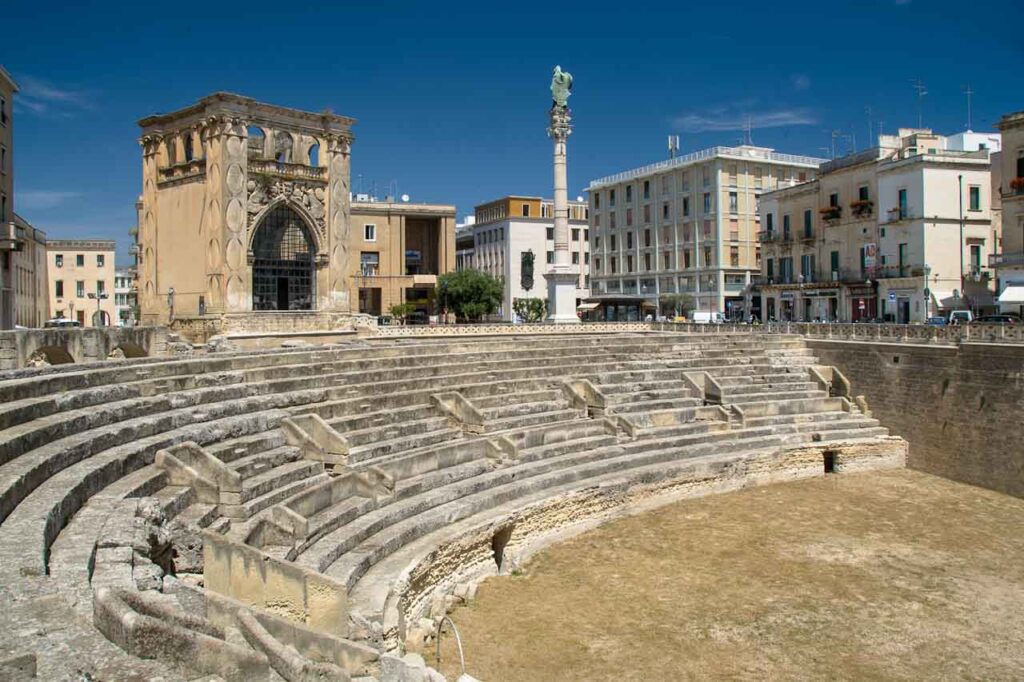
The Roman amphitheater of Lecce is currently used as a setting for concerts and cultural events; the amphitheater is the strongest testimony of the Roman influence in the Apulian city. It is one of the places that must absolutely be visited. The amphitheater is located on the eastern edge of the Roman city and dates back to the Augustan age. The monument has an elliptical plan with the major axis oriented east-west and could accommodate up to 14,000 spectators. Thanks to the excavations carried out, numerous architectural elements in marble and sculptural decoration elements of the building have been recovered, such as the group of “chalice” capitals and some bas-reliefs with scenes of venationes.
Churches of Lecce and places of worship
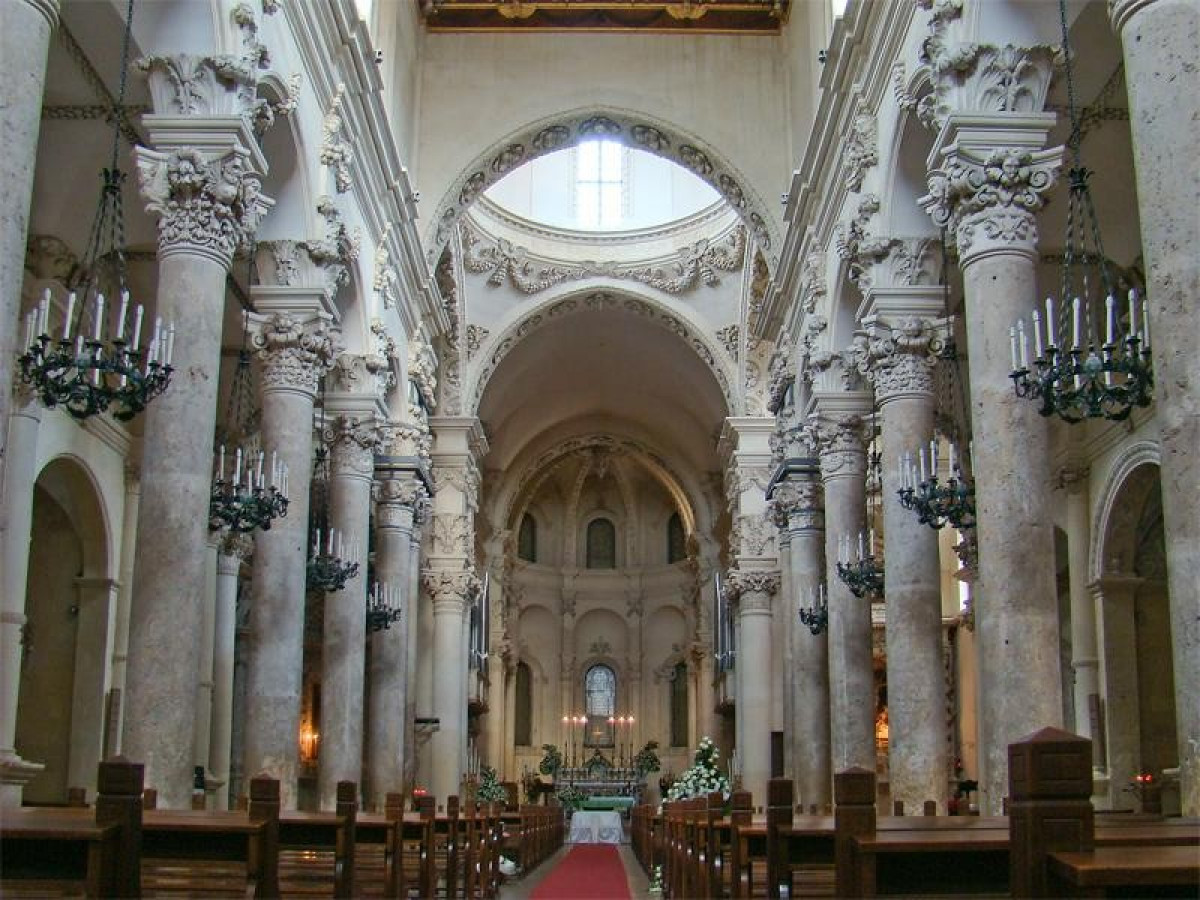
5 Basilica of Santa Croce
The Basilica of Santa Croce is one of the most important monuments in the city and is a clear representation of how Baroque art has dominated over the years and influenced the architecture of the Salento city. A visit to this Basilica is to be included in the ” Things to do in Lecce” list.
6 Church of San Francesco della Scarpa
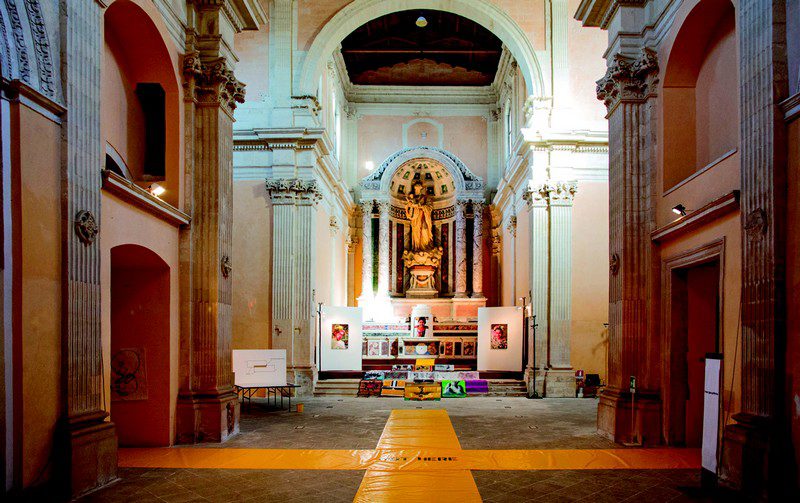
The church of San Francesco della Scarpa in Lecce was built in the 12th century, on land owned by the Guarini family and was later renovated between 1699 and 1714. The absence of a richly decorated exterior facade, like most Lecce churches, earned it the nickname of “church without a facade”.
Museums in Lecce and art galleries
7 MUSA- Historical Archaeological Museum, Lecce
“The Historical-Archaeological Museum (MUSA) of the University of Salento, inaugurated in June 2007, was created within the framework of the Coordinated Plan of the Universities of Catania and Lecce (IN20 Initiative) and financed by the Ministry of University and Scientific Research (MIUR) and the European Union under the P.O.N. 1994/1999 and 2000/2006. MUSA was born as an exhibition structure aimed at enhancing, educational use, and dissemination of research conducted over several decades by archaeologists and ancient historians of the University of Salento. The exhibition intends to retrace the fundamental stages of research paths developed by the ancient history and archaeology sector of the Lecce university and, at the same time, offer an updated overview of investigation horizons – from prehistory to the Middle Ages, from Salento to the Mediterranean East – and the resources currently available in terms of skills, equipment, and laboratory tools.”

8 Provincial Museum Sigismondo Castromediano
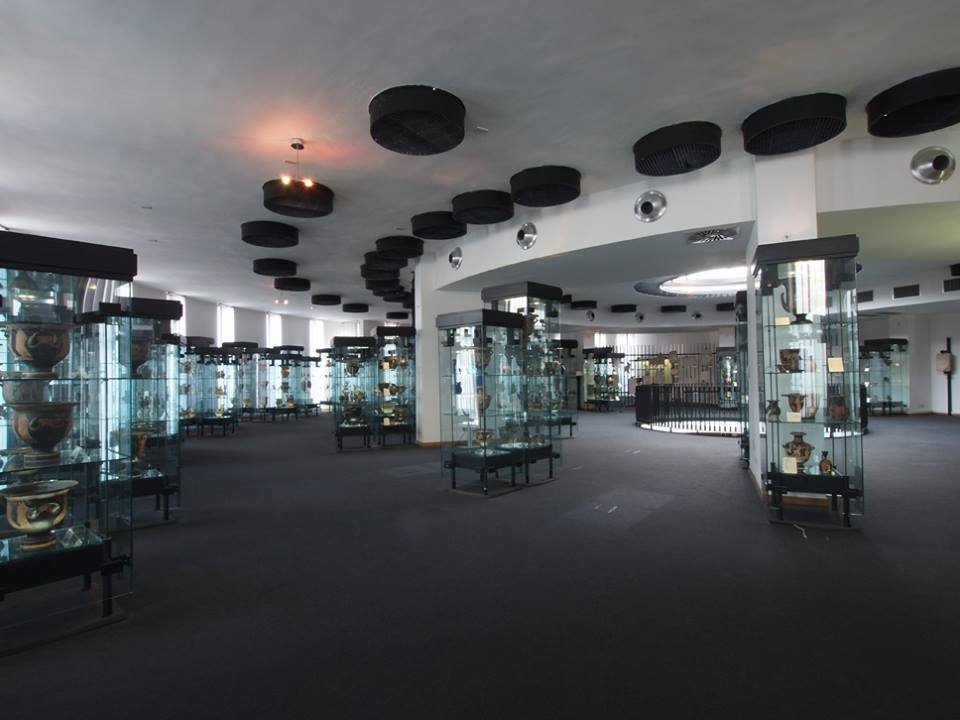
The types of materials preserved in the museum are: numismatic assets; archaeological finds; anthropological finds; demo-ethno-anthropological goods; works and art objects; drawings; photographs; contemporary art works. The museum is characterized by the multiplicity of its collections divided into respective sections: prehistoric, archaeological, medieval, baroque, nineteenth and twentieth century Salento. The archaeological collections come from excavations at the end of the nineteenth century and have been enriched by excavation campaigns funded by the Province of Lecce (Roca, Rudiae, Cavallino, Poggiardo). They provide an organic overview of the Messapian civilization in Salento from the 7th century B.C. Purchases, donations, and deposits have enriched their content and classes (Attic, Apulian, local vases, bronzes, terracottas, inscriptions). The historical-artistic sections gave rise to an Art Gallery (Venetian polyptychs from the 14th and 15th centuries, Neapolitan painting from the 16th to the 18th century, ceramics, glass, textiles, silver from the Baroque age) and the section “Salento Artists between the Nineteenth and Twentieth Centuries”.
9 Roman Theater Museum, Lecce
“Attached to the theater, the Roman Theater Museum of Lecce was set up by the Memmo Foundation in some rooms of the prestigious seventeenth-century palace belonging to the Romano family. The museum, besides containing finds from excavations carried out in the first half of the last century that brought the ancient monument to light, houses an exhibition entitled “”Rome. The scene of life”” created in collaboration with the Archaeological Superintendence of Rome and the Archaeological Superintendence of Puglia, which illustrates the theme of stage design and illusionistic representation in the Roman world. Of great scenic effect is the series of nine theatrical masks from Hadrian’s Villa in Tivoli. Finally, thanks to a model, it is possible to see a reconstruction of a vast urban area of Lupiae (ancient Lecce) in the Roman imperial age.”
10 Lecce Children’s Museum
The Lecce Children’s Museum is a “non-museum museum,” set up according to modern museum education theories, consisting of copies, reconstructions, reproductions of prehistoric objects. A guide character, Mister Caveman, reproduced on explanatory panels, telling through his comics the origin of man and his cultural evolution, contextualizes the exhibited objects, placing them in a path that reaches up to the early Iron Age.
Other museums in Lecce
- Papyrus Museum
- Environment Museum
- Museum of Popular Traditions Abbazia di Cerrate
- Chinese Missionary and Natural History Museum
- Franciscan Art Gallery of the Minor Friars of Lecce
11 What to buy in Lecce
Lecce is a small eldorado also for artistic craftsmanship, especially the processing of papier-mâché, poor art, which has roots dating back to the 17th century. On via Vittorio Emanuele, there are several workshops, including that of Claudio Riso, where it is possible to follow the various stages of processing and admire works with sacred and profane subjects. Next to the Church of the Gesù, there is a permanent craft market exhibition, the right place to buy pignatte, the characteristic pottery with the rooster design; while for objects, lamps, and other furniture accessories in Lecce stone it is worth making a stop at Tracce, in Corte dei Romiti and at Petra Aurea, in the central via Palmieri.

Lecce in a nutshell: how to get there and where to eat
12 How to get to Lecce
If you want to reach Lecce by plane, keep in mind that the closest airport to Lecce is Brindisi, which is about 30 km from the city center, and you can get there by taxi, renting a car, or thanks to the very well-organized bus service.

13 What to eat in Lecce
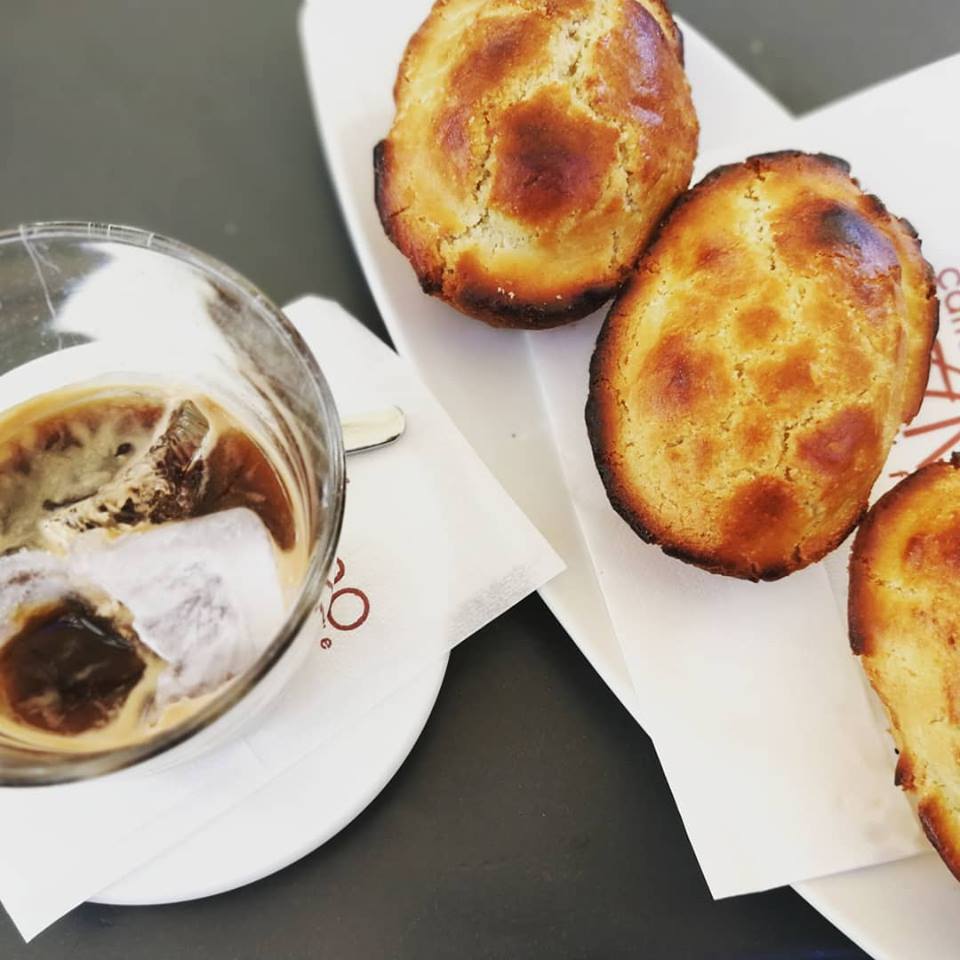
We strongly recommend tasting the typical Salento dishes, in particular the rustico leccese, made of two puff pastry discs filled with mozzarella, tomato, béchamel sauce, and nutmeg. Not to mention the puccia, the typical bread, to be enjoyed plain or stuffed. Another traditional dish not to miss during your holiday in Salento is the pasticciotto leccese, to be eaten strictly hot, just baked, to be accompanied by a cup of Salento coffee.
14 Where to eat in Lecce
There are many restaurants in Lecce where you will have the opportunity to taste excellent food. Between one visit and another (the Cathedral and its splendid square enclosed on three sides; the Basilica of S. Croce with the lace-carved facade and the adjacent Government Palace; Piazza Sant’Oronzo, the heart of city life, with the remains of a Roman Amphitheater…), it is very pleasant to mingle with the locals, take part in their small daily rituals: a coffee or an aperitif at Caffè Alvino (also B&B), a historic bar in Piazza Sant’Oronzo in front of the Amphitheater; a small glass of rosolio with a piece of quince jelly at Bar della Cotognata Leccese near the castle; a full immersion in pasticciotti (shortcrust pastry pastries filled with custard), fruttoni with almond paste and creamy ice creams from Pasticceria Natale, in via Trinchese. And a stop at Valentina, in via Petronelli, popular for taralli with extra virgin olive oil, orecchiette, preserves, and jams.