


Nick Mason, Roger Waters and Richard Wright are architecture students with a passion for music; they were joined by Syd Barrett, who had moved from Cambridge to London to study art. In 1965 they founded the Pink Floyd and their incredible and long-lasting story began, characterized by a constant desire to experiment.
The places of Pink Floyd in London are numerous. This itinerary will take you to discover some still recognizable and indissolubly linked to the band’s history.
London Itinerary on the places of Pink Floyd in 10 stops
1 All Saints Church Notting Hill
Where: Clydesdale Road – W11 1JE. Subway: Ladbroke Grove or Westbourne Park.
Pink Floyd played in the hall of this church eleven times, between September 30 and November 29, 1966. All concerts were organized by the London Free School, a collective of artists whose purpose was to organize cultural events at a local level. Among the participants in the group were Emily Young, the inspiration for Pink Floyd’s song See Emily Play, who later became a famous sculptor, and Anjelica Houston.
Another facility in the same area used by the London Free School was the Tabernacle, a circular building made of red bricks, built in the second half of the 19th century as an evangelical Christian church and, after years of abandonment, became a place for squatting and cultural production. The Rolling Stones, and perhaps also Pink Floyd, used it as a rehearsal room.
The London Free School helped turn the Notting Hill Carnival from a local event into the great outdoor party we know today.

2 Roundhouse
Where: Chalk Farm Road – NW1 8EH. Subway: Chalk Farm.
The Roundhouse was built in the mid-19th century as part of the London – Birmingham railway line. It was equipped with a turntable that allowed trains to change direction once they reached the terminal. It was used for this function for only ten years because in the meantime, trains, due to increased demand for transport, had become too long for this building. So, for about a century, it was dedicated to other uses, including storage of gin.
In the 1960s it was transformed into a cultural center and inaugurated on October 15, 1966 with the concert All Night Rave, the launch event of the counterculture magazine International Times. The headliners were Soft Machine, while for Pink Floyd it was their first major concert.
Pink Floyd played at the Roundhouse eleven more times between 1966 and 1971. Among these, in December 1966 they performed at the New Year’s Eve rave Psychedelicamania along with The Who.
The Roundhouse has hosted concerts by the most important rock artists. To name just a few: Rolling Stones, Led Zeppelin, Clash and The Doors, in their only indoor concert in Great Britain.

3 Saville Theatre
Where: 135 Shaftesbury Avenue – WC2H 8AH. Subway: Tottenham Court Road or Covent Garden.
Pink Floyd played in this theater twice in 1967, on March 5 and October 1.
The Saville Theatre was inaugurated in 1931. It is an Art Deco style building, characterized by a long bas-relief that runs almost forty meters along the main facade and by a huge arched window above the entrance.
Pink Floyd’s concerts took place in the brief period when the Saville was acquired by Brian Epstein, legendary manager of the Beatles. During the year it was under his ownership, besides Pink Floyd, The Who, Jimmy Hendrix, Elton John and many others performed there. The Beatles shot the promotional video for “Hello Goodbye” there.
The Saville became a cinema from the late 1970s. Today, despite the addition of signs from the Odeon chain which acquired it in 2001, the original facade still proudly stands.

4 Sound Techniques
Where: 46a Old Church Street – SW3 5BY. Subway: Sloane Square.
The Sound Techniques recording studios, in the Chelsea neighborhood, are mainly associated with English folk rock names like Nick Drake, Fairport Convention and Steeleye Span. Pink Floyd recorded their first two singles here, Arnold Layne and See Emily Play.
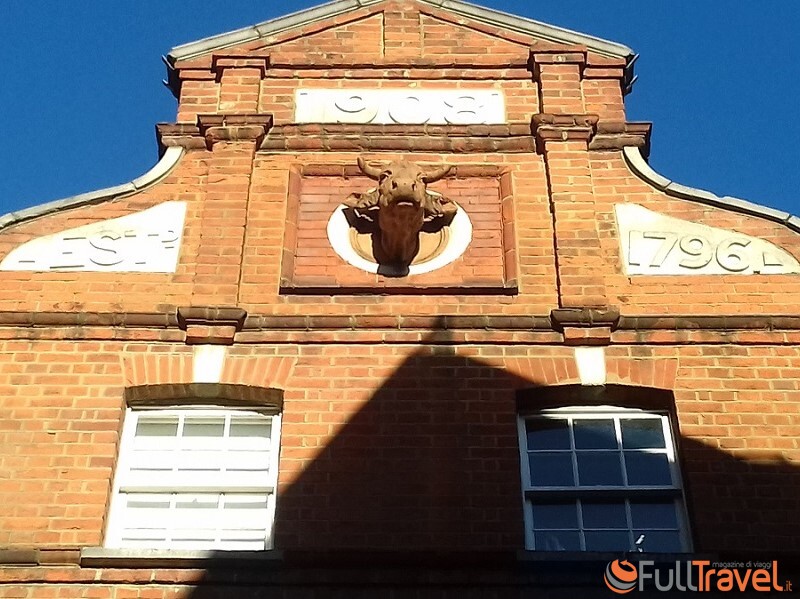
The building was originally a dairy factory: hence the curious decoration with the cow’s head. The inscriptions on the facade tell us that the company was created in 1796, while the Chelsea building was built in 1908.
Sound Techniques were active between 1965 and 1976. In 1976 the lease contract expired and the two owners, Geoff Frost and John Wood, unable to buy the building due to lack of funds, closed the studios, continuing their parallel activity of producing recording studio equipment in the workshop they had meanwhile set up in Suffolk.
The Old Church Street building now houses private residences.
5 Alexandra Palace
Where: Alexandra Palace Way – N22 7AY. Transport: Finsbury Park subway and bus W3.
On April 29, 1967, the Great Hall of Alexandra Palace hosted The 14 Hour Technicolor Dream, a marathon of music and performing art created to raise funds for the International Times magazine. Pink Floyd were the headliners and played last, at dawn, having come directly from Amsterdam where they were engaged in recording a program for Dutch TV. Among the audience was John Lennon who witnessed a performance by Yoko Ono. At the time the two had met only once, at an Ono exhibition.
Exactly three months later, Pink Floyd played again at Alexandra Palace, at the Love in Festival. On that occasion as well, the London concert was the second of the evening, as they had played in Norfolk a few hours earlier.
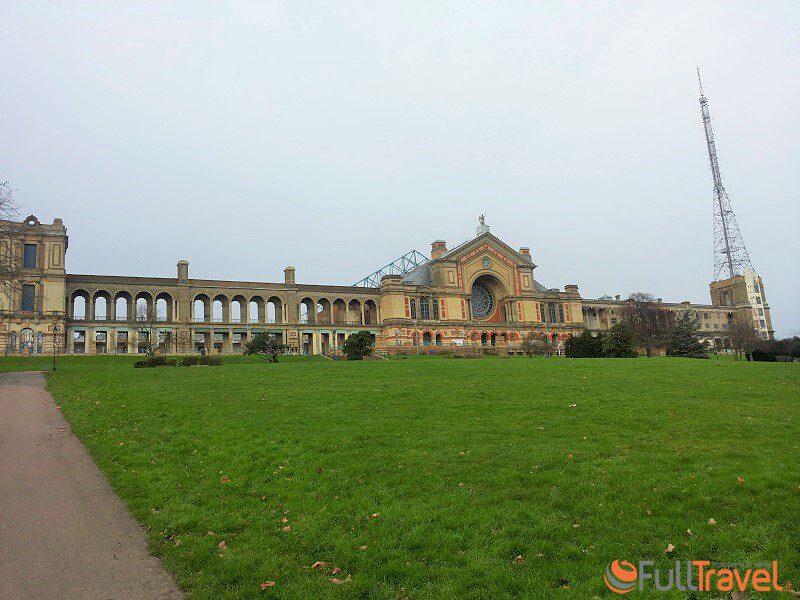
Alexandra Palace is the only Victorian People’s Palace surviving in London, despite having suffered two major fires that destroyed parts of it during its history. The Great Hall, with its unmistakable stained glass window, has a capacity of more than 10,000 seats and hosts concerts, fairs, and sports events.
6 Kensington Olympia
Where: 7239 Olympia Way – W14 8UX. Subway: Kensington (Olympia)
On December 22, 1967, Olympia hosted the Christmas On Earth Continued concert with Pink Floyd, Traffic, Eric Burdon and the Animals, and as the headliner, Jimi Hendrix. It was one of Syd Barrett’s last live appearances. In January of the following year, he was joined at four concerts by David Gilmore, who then replaced him permanently.
The band rented Olympia for rehearsals and set-up of the Animals tour, which began in January 1977.
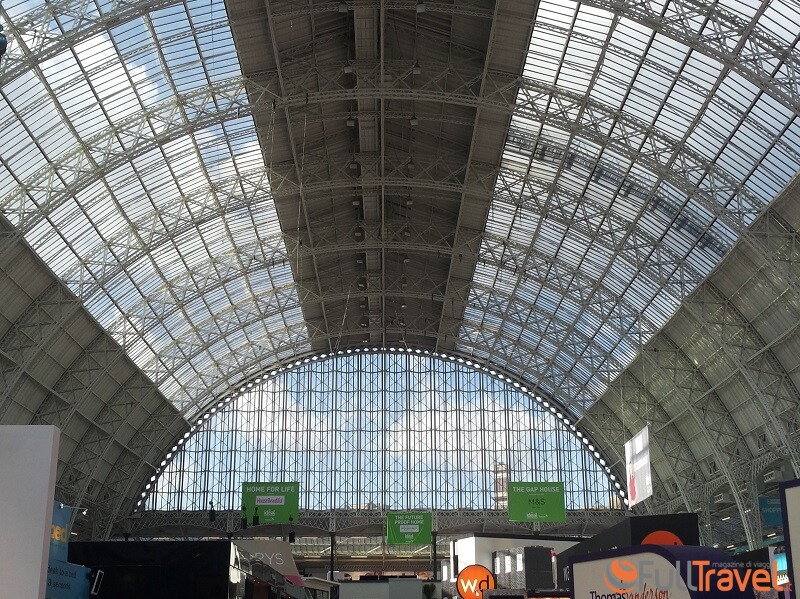
Olympia, characterized by a beautiful glass and iron vault, was built in 1886 as a fair space. In the Victorian era, fairs were events halfway between educational and recreational, offering reconstructions of exotic environments. The nearby Earls Court, built for the same purpose and dating back to the same period as Olympia, was recently demolished to create new housing. Earls Court hosted numerous Pink Floyd concerts, including eleven dates of The Wall tour and the fourteen concluding dates of the Pulse tour in 1994, the band’s last.
Olympia is still used for numerous trade fairs.
7 Rainbow Theatre
Where: 232 Seven Sisters Road – N4 3NP. Subway: Finsbury Park.
The Rainbow Theatre is a key place in the history of The Dark Side of The Moon. Even a year before the album’s release, Pink Floyd played live the sequence of all tracks, with some parts still being defined. Rainbow was used for rehearsals in January 1972 and, between February 17 and 20, was the venue for four performances, the first reserved for the press.
In November 1973, the band played there again in two dates, at the end of the tour that followed the album release. The proceeds of the two concerts went to charity for Robert Wyatt, drummer of Soft Machine, who became paraplegic after falling from the fourth floor of a building during a party.
Rainbow was built in 1930 as a cinema in the Astoria chain. At the time it was the largest in London, with a capacity of three thousand seats. From 1971, for ten years, it was used for rock concerts. Artists who played there included David Bowie (as Ziggy Stardust), Genesis, Queen, and the Jacksons. In 1995, after fourteen years of abandonment, it was acquired by the Universal Church of the Kingdom of God.

8 Chelsea Cloisters
Where: Sloane Avenue – SW3 3DW. Subway: Sloane Square.
This Chelsea residence was Syd Barrett’s last address in London. He moved there at the end of 1973 and stayed until 1979, when he ran out of royalties from the albums published with Pink Floyd and had to return to Cambridge to his mother’s house.
Many stories exist about his stay at Chelsea Cloisters, and their truthfulness cannot be completely certain. It seems, for example, that he rented two apartments, one on the sixth floor where he kept guitars and amplifiers and one on the ninth floor where he lived. It is said that he basically had no contact with the outside world and spent time sitting on the floor watching the seven televisions he kept on simultaneously. He refused outside visits: when his ex-girlfriend Gayla Pinion visited him, she said all the windows were closed, the curtains drawn, and there was a horrible smell. During his stay at the Cloisters, Barrett never played his guitars. He only touched them to give them away.
9 Britannia Row Studios
Where: 33 Britannia Row – N1 8HQ. Subway: Angel.
After recording Dark Side of the Moon and Wish You Were Here at Abbey Road Studios, Pink Floyd established their own studios in 1975, Britannia Row. Here they recorded the album Animals and parts of The Wall, including the single Another Brick in the Wall. For the famous children’s choir, some students from the nearby Islington Green School were recruited. Their music teacher prepared the song in class and then took them to the studios for recording, without the principal’s permission. When the album was released, the lyrics caused a stir and the principal prohibited the students from having any contact with the band, unwittingly embodying the spirit of the song.
At that time the school received a check for 1,000 pounds and, when achieved, a platinum record. Recently a lawyer convinced former students to sue Pink Floyd to receive the proper payment as musicians in a recording session.
Nick Mason took over ownership of Britannia Row Studios, which he sold in the early nineties, retaining ownership of the property. Initially used for equipped offices, it is currently awaiting conversion into apartments.

10 Battersea Power Station
Where: 188 Kirtling Street, Nine Elms – SW8 5BN. Subway: Battersea Park.
The iconic Battersea power station was immortalized on the cover of the album Animals, released in 1977. For the photo shoot, an inflatable pig was commissioned and anchored to one of the station’s chimneys. However, the rope unexpectedly broke and the pig found itself flying along the route to Heathrow airport, causing surprise and panic among the pilots. It was followed by police helicopters until it landed in Kent.
Battersea Power Station was built in Art Deco style between 1929 and 1955 by Sir Giles Gilbert Scott, known for designing the red telephone boxes, Liverpool Cathedral and Southbank power station, now home to Tate Modern. It was decommissioned in 1975: its productivity was declining due to aging equipment and running costs were becoming too high.
Grade II status protected the building, saving it both from destruction and bizarre transformations. The power station and surrounding area were acquired by a Malaysian consortium creating housing and offices, some of which have been purchased by Apple.