

Splendid and renowned Ligurian location, Sanremo is largely associated with the annual edition of the Italian Song Festival held in this location since the first half of the 20th century. But Sanremo is a well-known holiday resort in Liguria, in the province of Imperia, not far from neighboring France. Let’s see what to see and do in Sanremo.
- What to see and do in Sanremo
- 1 Stroll along the avenues and the seafront
- 2 The Sanremo casino
- 3 The Ariston Theatre
- 4 La Pigna
- The Villas of Sanremo
- 5 Villa Nobel
- 6 Villa Ormond
- 7 Roman Villa of Bussana
- 8 Roman Villa of Foce
- Cultural Places in Sanremo
- 9 Palazzo Borea D’Olmo
- 10 Sanremo Civic Museum
- 11 Scientific Collection
- 12 Rambaldi Art Gallery, Villa Luca
- 13 Physics Cabinet Museum of Cassini Classical High School
- 14 Where to Sleep in Sanremo
What to see and do in Sanremo
1 Stroll along the avenues and the seafront
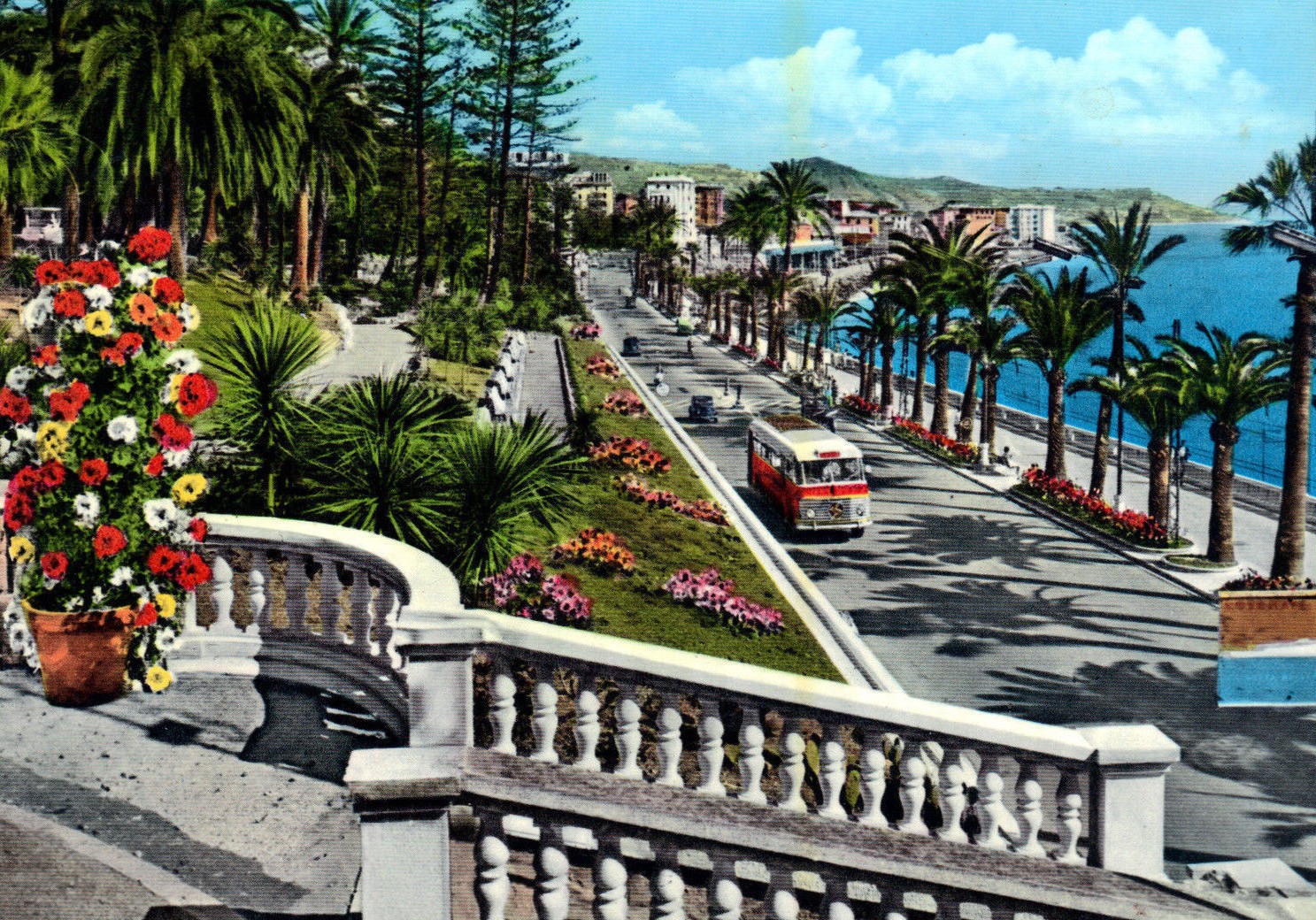
The avenues of Sanremo invite you to walk among palm trees and very well-kept gardens. The Marsiglia park features exotic plants and the Riviera Palace Hotel hosts the Tourism office. The seafront with its palms of “the city of flowers” recalls prestigious places of the French Riviera, with its gardens and charming villas that suggest a lifestyle not exactly popular. If you are looking for parking in Sanremo, you can park right on the Lungomare delle Nazioni, by the sea or in Corso Imperatrice.
2 The Sanremo casino
Sanremo is a location that hosts one of the few casinos in Italy. The casino was opened in 1905 and later expanded over the following years. It is open every day and is located at the beginning of Corso Matteotti.

3 The Ariston Theatre
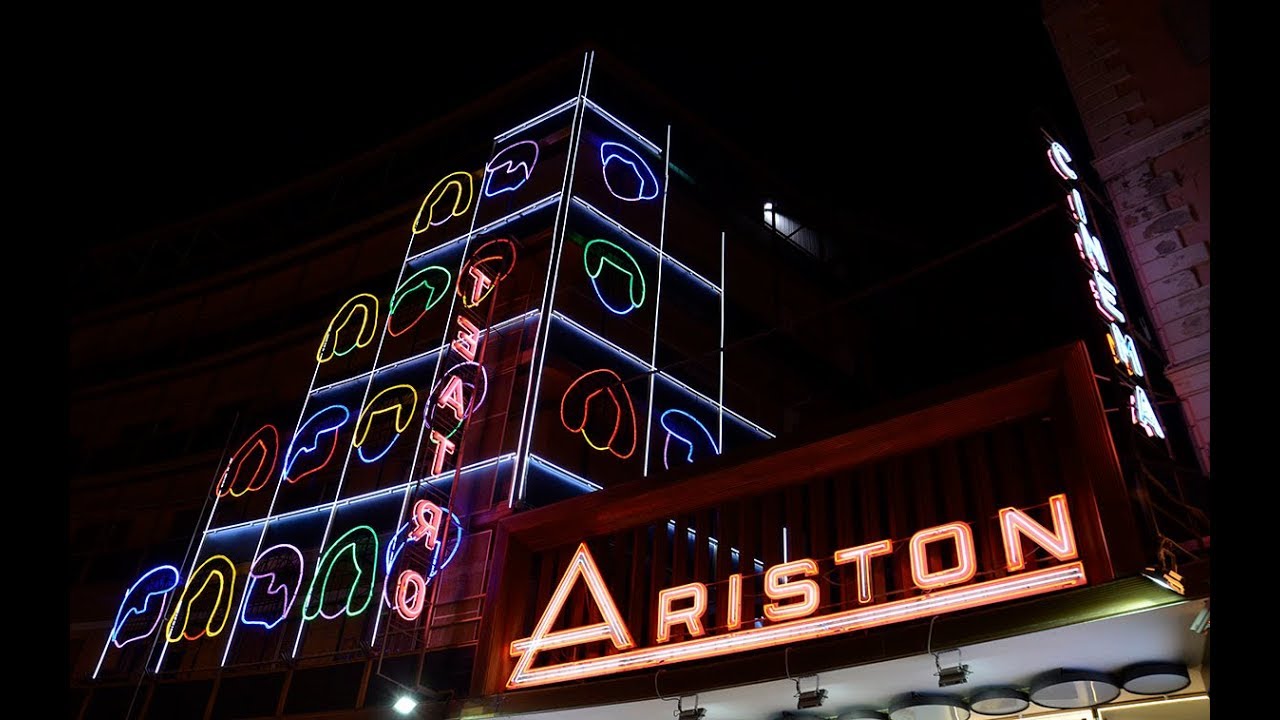
The Ariston Theatre of Sanremo is (perhaps) one of the best known in Italy thanks to the annual editions (usually in February) of the Italian song festival known exactly as the “Sanremo Festival”. The Ariston Theatre is located along Corso Matteotti and has an old-style (Art Deco) facade with its century of life (1924). Since 1977, it has been the fixed venue of the singing event which was previously held at the casino in certainly more cramped spaces compared to the theatre.
4 La Pigna
Sanremo encloses a charming medieval city among some bastions. This is “La Pigna”. It is an absolutely must-see place with streets, squares, fountains all dating back to the medieval period and still inhabited houses. Among the most beautiful squares is “Piazza dei Dolori”, but the whole area lends itself to a pleasant stroll among palaces and cafés that echo the times gone by.

The Villas of Sanremo
5 Villa Nobel
Villa Nobel is a magnificent 19th-century building rising in eclectic style to the east of the town along corso Cavallotti. Its history began at the end of 1870, when the pharmacist from Rivoli Pietro Vacchieri had an elegant little palace built based on a design by Filippo Grossi, appreciated “for the slenderness and elegance of its forms.” The general appearance of the villa, surrounded by a beautiful park of precious plants that extended to the sea, enlivened by canopies, “French-style” roofs, was anything but unpleasant. Nobel, who purchased it on April 25, 1891, was struck also by the availability of a large piece of land (6,099 square meters), crossed by two level crossings, equipped with gas lamps and two wells with related pumps as well as a series of small buildings and shacks. Nobel lived there alone for 6 years (1890-1896). The renovation work, entrusted in 1892 to the architect Pio Soli, did not overwhelm the original design but involved adding an extra floor and modifying the central coverings and the turrets. In the attic, windows alternated with frescoed metopes were opened. At the death of the Swedish scientist in 1897, the villa passed to Max Adolphe Philipp, Director of the German Dynamite Company, and then was transferred again. The sale to the Autonomous Board of Stay and Tourism of Sanremo dates back to 1969, which used it for cultural and tourist events, followed by the last transfer of ownership in 1973 to the Province of Imperia, which in the 1980s entrusted its permanent management to the Nobel Foundation, supervised by engineer Strandh, Director of the Museum of Technology in Stockholm. Since 1993, new restoration and setup works transformed it into a museum.

6 Villa Ormond
It was 1875 when the Swiss entrepreneur Michel Louis Ormond, head of a cigar factory in Vevey, as well as a politician passionate about history and the arts, became the owner of Villa Rambaldi, at the center of a vast estate in the eastern area of Sanremo. After marrying the French poet Marie Margherite Renet in Paris in 1866, the frail health of his wife led Michel Louis Ormond to seek a residence on the Riviera. When on February 25, 1887, a violent earthquake hit the western Ligurian region, the Ormond residence suffered severe damage, so the Swiss family decided to build a new building: after two years of work (1889), the result was the elegant Villa Ormond, designed by the Swiss architect already responsible for the Geneva Opera House and numerous villas for Swiss high society. The villa hosted illustrious guests such as the Princes of Prussia, the Duke of Aosta, and Empress Elisabeth of Austria. With the death first of Michel Louis Ormond (1901) and then Marie Margherite (1925), the Ormond property was put up for sale and it was the Municipality of Sanremo that closed the deal, purchasing the entire estate in 1930 for three million lire. Thanks to the then mayor, Pietro Agosti, the park was opened to the public, and the large fountain designed by Agosti himself and the exhibition pavilion were built. Today a wing of the villa hosts the International Institute of Humanitarian Law, while the villa is often used as a venue for international flower shows or tourist events.

7 Roman Villa of Bussana
The remains of the Roman villa of Bussana are located near the mouth of the Armea stream, in the locality of Capo Marine. In ancient times, the villa was arranged along what was probably the route of the via Julia Augusta or on a secondary road connected to it. It cannot be ruled out that the villa originally had a much larger extension than is visible and that inside it included not only the productive part but also a residential part, although this has not been preserved. Therefore, it would not be a simple rustic villa but a true extra-urban residence, equipped to accommodate the owner for stays of varying length. Further proof of this interpretation is also the rather refined technique found in the construction of the walls, the cement work with facing in rectangular blocks of limestone and sandstone (petit appareil).
With the exception of a kiln for firing bricks and tiles and a water reservoir, it is not easy to determine the function of the preserved rooms since most do not have specific arrangements that document the conduct of particular activities, so one can suppose general functional uses such as warehouses or granaries, or others still connected to domestic activities. Outside the perimeter walls of the villa and therefore perhaps completely unrelated to it, there is a tomb of quadrangular shape externally and semicircular inside, so as to create a large apsidal niche where the commemorative statue of the deceased or that of a deity could have been placed. The wall construction technique is similar to that used for the villa, but the stone blocks alternate with rows of bricks. Ceramic materials found from the kiln excavation, along with coin and epigraphic finds, allow dating the construction of the villa and tomb to between the 1st and 2nd centuries AD.
8 Roman Villa of Foce
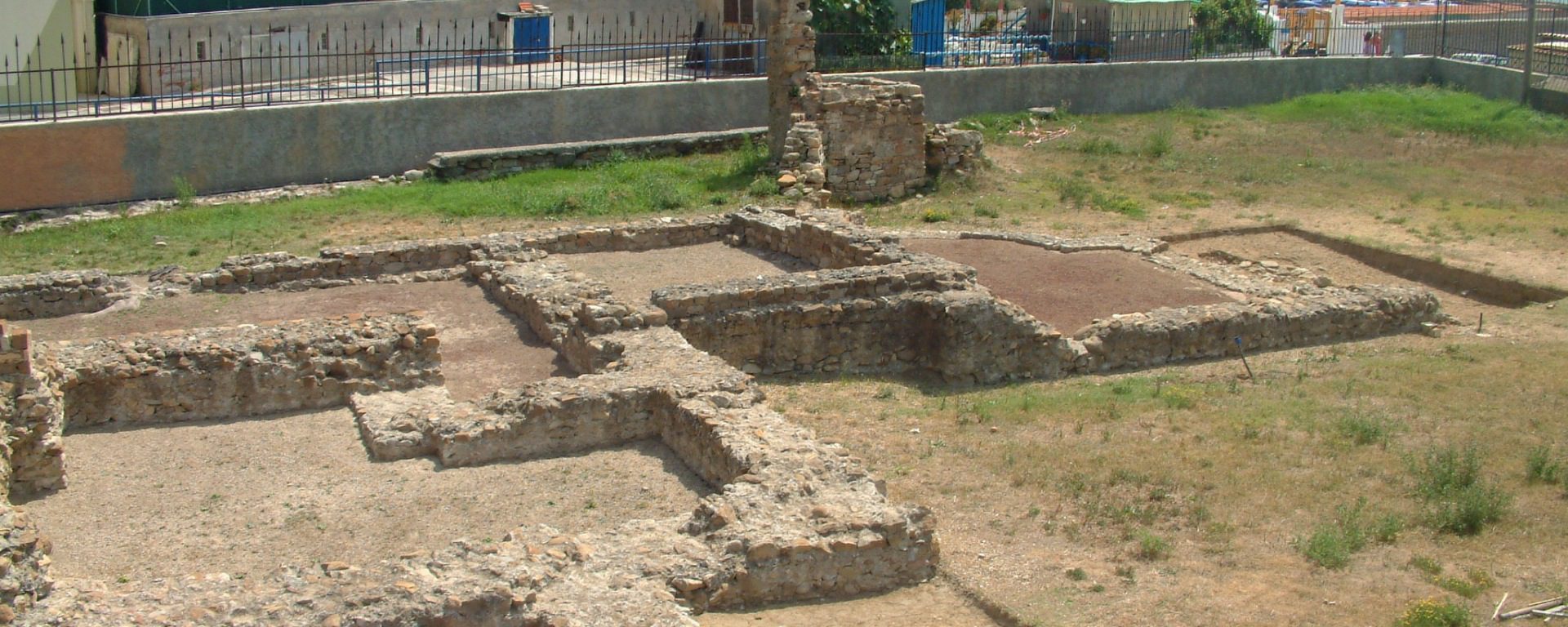
The remains of the Roman villa of Foce are located near the monumental cemetery of Sanremo, close to the sea outlet of the Rio Foce. The site was known since the 17th century, as evidenced by reports from local scholars. According to unfounded hypotheses, which however were credited until the early 20th century, the villa was identified as Villa Matuciana, a name derived from a toponym that recalls the main center of this area in Roman times, presumably to be identified with the urban area of Sanremo. Following the report of honorary inspector engineer P. Agosti in 1925, the first archaeological investigations began carried out by archaeologist P. Barocelli, who uncovered some rooms correctly recognized as part of a thermal complex belonging to a villa. Other remains, perhaps also belonging to this same building, were identified further west near the Rio San Bernardo, while the existence of submerged remains of the villa was only hypothesized.
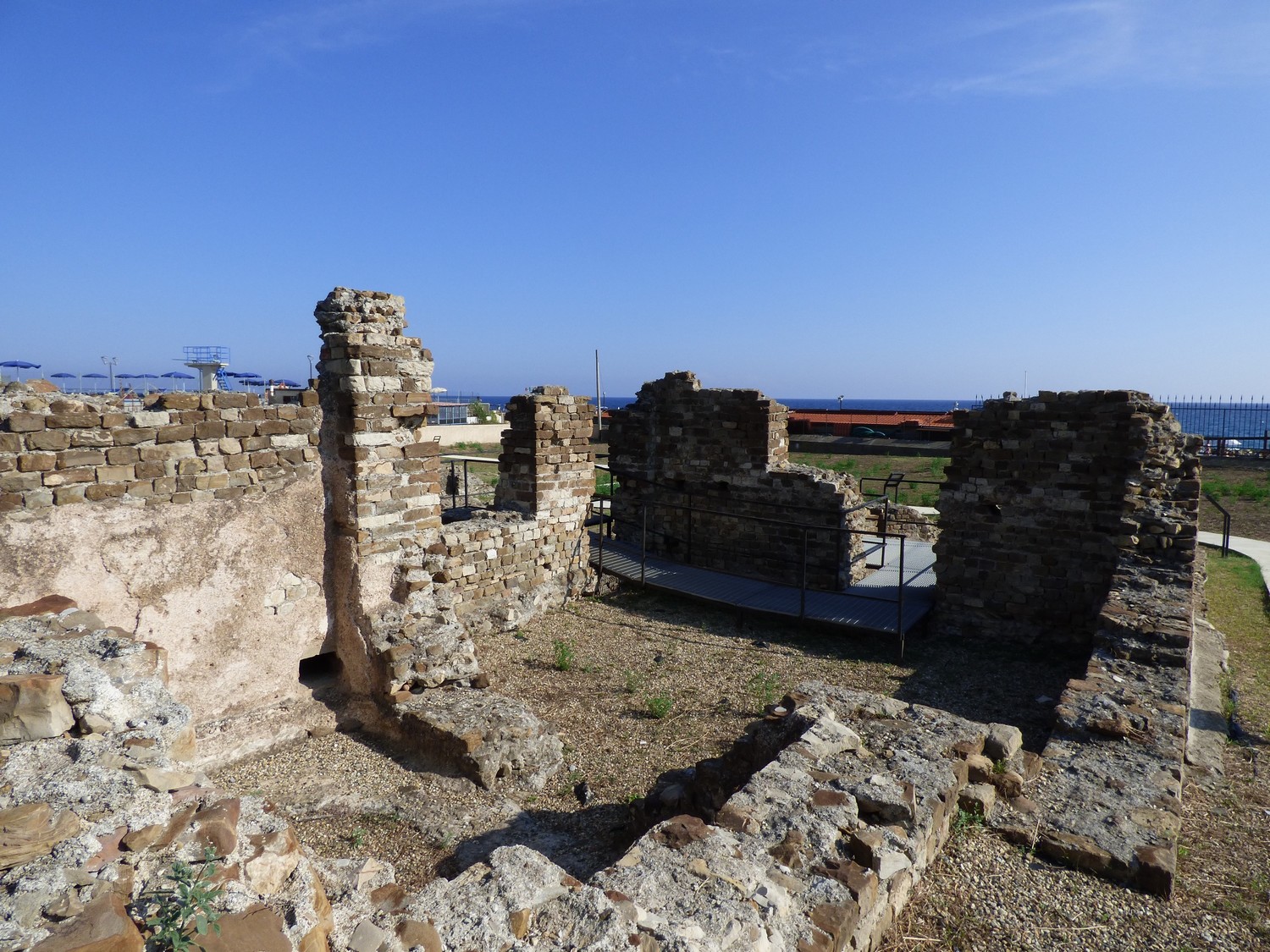
Three rooms, those today preserving the highest walls, were perhaps already reused since the 17th century for the construction of a rural house. Excavations and research on the villa were resumed by N. Lamboglia in 1937 and continued in 1962-63 again by Lamboglia after the villa area was acquired by the Ministry and the Municipality of Sanremo. Thus the rural house was demolished and a series of other rooms were brought to light. More recently, underwater investigations carried out by the Superintendence confirmed that the alleged submerged ruins in the stretch of sea in front of the villa are in fact natural rock outcrops.
The Foce villa most likely belongs to the type of maritime villas, large extra-urban residences located near the sea. Currently, 12 rooms are visible: the entire bathing area (balneum) of the villa, intended exclusively for the owner’s use; the resting rooms overlooking the open space in front, perhaps treated as a garden; a service room related to the functioning of the baths; the open courtyard; the latrine. In some of the bath rooms, various heating system elements are preserved. Based on current research, it is possible to propose an initial dating of the villa to the 1st century AD on the basis of the type of heating installations and the ceramic finds, data also consistent with the construction technique of cement work with facing in rectangular blocks of sandstone and limestone (petit appareil), used for the construction. Furthermore, the ceramic finds testify to the continuous use of this building until the 5th – 6th centuries AD.
Cultural Places in Sanremo
9 Palazzo Borea D’Olmo
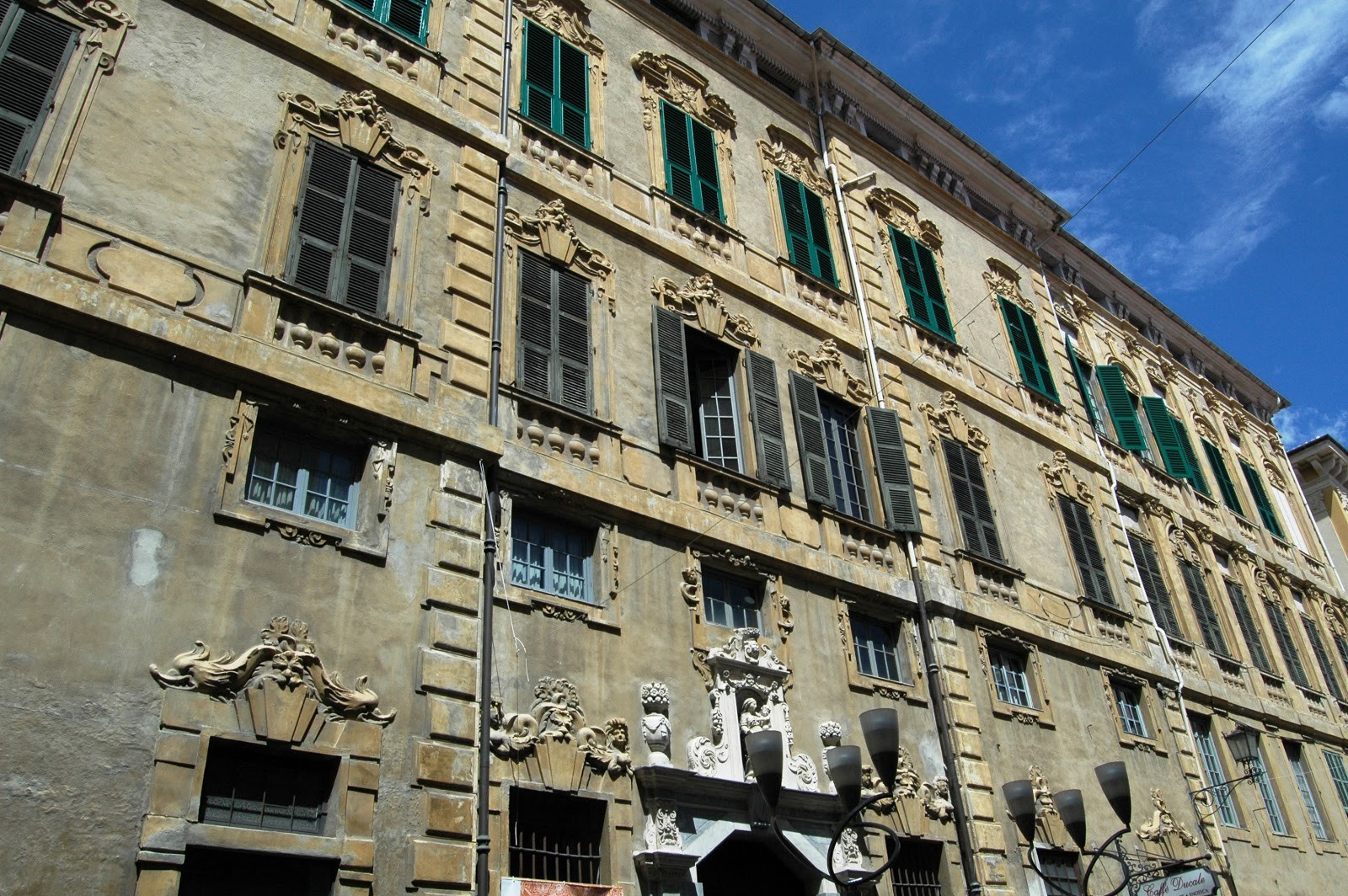
Palazzo Borea d’Olmo is one of the most important Baroque buildings in western Liguria. It was constructed in several phases starting from a late medieval core and took on its current appearance in the full Baroque era, between the 17th and 18th centuries. The building has been continuously inhabited by members of the Borea d’Olmo family, of Venetian origin and ancient lineage, who chose it as their private residence, from which it took its name. After the gradual alienation of the surrounding garden areas, it currently directly faces south onto via Matteotti, the main street of the city.
The facades are characterized by a large Renaissance-style cornice that harmonizes with the Baroque-Mannerist decoration. On the south and west sides, there are two beautiful marble portals (with original wooden doors, clad with iron with studded plates) topped with marble statues of the “Virgin with Child” (front facade) and “St. John the Baptist” (via Cavour side), the work of Florentine artist Fra Giovanni da Montorsoli (1507-1563), who in his youth was the favorite pupil and assistant of Michelangelo and one of the sculptors of the `Doria workshop?, active in the Palazzo del Principe in Genoa. The monumental atrium, in pure Genoese style, features marble columns and balustrades, a short staircase, and a harmonious arrangement of vaults.
Inside, the rooms housing the Museum on the second floor are enriched with frescoes and decorative inserts attributed to the painter Maurizio Carrega (1737 – 1818). The vaults of the halls bear late 17th-century frescoes by Giovanni Battista Merano. Noteworthy inside is a tiny chapel with a marble altar, featuring a statue of the Immaculate Virgin linked to sculptor Giacomo Antonio Ponsonelli. The Palazzo has shared for several centuries the vicissitudes of local history. It has hosted a long line of Princes, sovereigns, and illustrious men: from Queen Elizabeth of Spain, to King Charles Emmanuel III, to painter Jean-Honoré Fragonard, to Pope Pius VII, to Prince Philip of Edinburgh.
10 Sanremo Civic Museum
The Civic Museum, originally established as an Archaeological Museum, is located on the second floor of Palazzo Borea d’Olmo, in the splendid rooms of the prestigious residence, enriched by works by Bernardo Strozzi, Giovanni Battista Merano, Maurizio Carrega. Since 1988 it has been divided into three distinct sections: archaeological, artistic (art gallery), and historical (collection of Garibaldian relics).
The archaeological section, the most consolidated, established in 1972 and supported by the permanent educational exhibition “Man and the Origin of Civilization in Liguria,” gathers the oldest findings discovered in the Sanremo territory and district, from the Paleolithic and Bronze Age through to the Roman period. The Art Gallery hosts a valuable collection of paintings and sculptures from bequests and acquisitions. The most representative is the collection of paintings and prints donated by the poet Renzo Laurano, pseudonym of Luigi Asquasciati (1909-1986), a selection of landscapes, portraits, and religious subjects from the 17th century to the early 20th century, including D. Fiasella, C. Giuseppe Ratti, G Grosso. Recently created is the room dedicated to artists active between the 19th and 20th centuries, from Edward Lear to Antonio Discovolo and Antonio Rubino. The exhibition is completed by a series of sculptures by early 20th-century authors (Vincenzo and Nello Pasquali, Franco Bargiggia) and a room dedicated to contemporary art (paintings by Cesi Amoretti, Giannetto Fieschi, etc.). In the Stucco Room, the historical section displays evidence of the city’s history and an important collection of Garibaldian relics belonging to the English noblewoman Caroline Phillipson.

11 Scientific Collection
The scientific collection of antique physics and geodesy instruments was studied, cataloged on a digital medium, and recovered with the help of the Physics Museum of the D.I.F.I. – University of Genoa (during 2006-2007), within the framework of the project for the safeguarding and enhancement of historical scientific instruments existing in schools and other cultural institutions in Liguria, supported and funded by the Liguria region (Department of Culture). Ninety-four instruments were cataloged. Most of the instruments date from the second half to the end of the 19th century. By promoting this heritage, the I.I.S. “Colombo” in Sanremo aims to organize initiatives for the dissemination of scientific culture aimed especially at young people and secondary school students in western Liguria. The collection also includes mineralogical and natural sciences collections and some anatomical models.
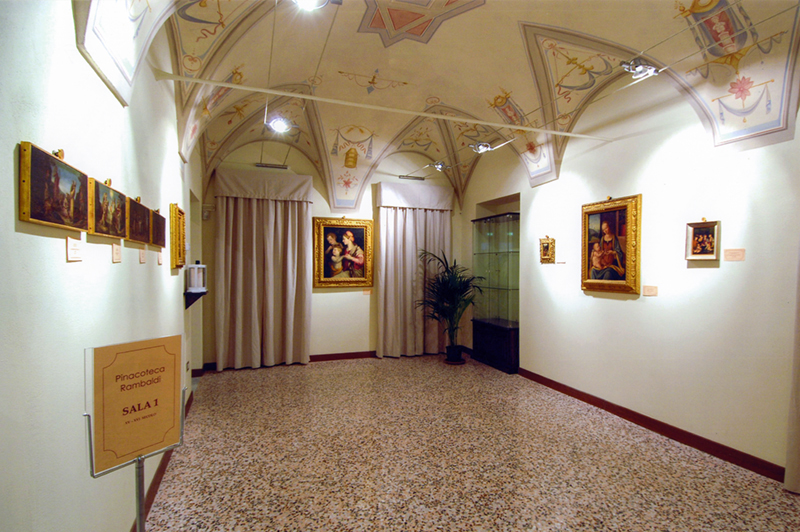
12 Rambaldi Art Gallery, Villa Luca
Established in 1866, the Rambaldi Collection, which includes the art gallery and library, originated from the bequest of the library and print collection that the priest Paolo Stefano Rambaldi (1803-1865) left at his death to his native town of Colla, today Coldirodi, a district of the Municipality of Sanremo. Currently, the Art Gallery is composed of about one hundred paintings, from the 15th to the 19th century.
Among them stand out the Madonna and Child attributed to Lorenzo di Credi (Verrocchio’s workshop), the Holy Family by Frà Bartolomeo della Porta, in addition to precious paintings by Aurelio Lomi, Salvator Rosa, Michele Rocca, Jacopo Ligozzi, and many other examples of the major Italian schools of painting. The collection is closely linked to the social and cultural environment of 19th-century Florence, where Rambaldi was for almost ten years, until 1849, rector of the Major Archiepiscopal Seminary. The priest’s taste was not entirely foreign to interest in more recent authors, still linked to classical canons such as Anton Raphael Mengs and Antonio Morghen, and authors of a classicizing taste such as the Hungarian Karoly Marko the Elder.
Attached to the art gallery, the Library houses more than five thousand volumes, including precious incunabula, 16th-century books, and rare manuscripts collected by the priest. The transfer of the collection in 2006 from the modest premises of the former municipal seat of Coldirodi to the large renovated spaces of Villa Luca, still in Coldirodi, maintained the connection between library and art gallery and preserved the collection’s character.
13 Physics Cabinet Museum of Cassini Classical High School
The oldest Higher Education Institute in the province and one of the few centennial high schools in Italy: founded in Nice in 1860, when the Kingdom of Sardinia extended to the Var, in the same year it was transferred to Sanremo, to become Italian after the cession of this city to France. It is the only high school that, in the province of Imperia, offers access to a wide range of courses, also enriched by several ongoing experimental programs.
The scientific imprint of the high school is evidenced by the Physics Cabinet where precious finely crafted instruments for conducting experiments have been collected over time; as proof of this, the chronicle reports that the laboratory was also used by Alfred Nobel during his stay in Sanremo. Currently, with the fruitful collaboration of the Physics Department of the University of Genoa and with the support of the Liguria Region, the original collection has become a museum open to the public, as well as an opportunity for in-depth study for students and those passionate about science.

14 Where to Sleep in Sanremo
Sanremo offers good hotel and non-hotel accommodation. Being a holiday resort for years, it is used to the “cult of the guest.” In Sanremo, it is possible to find hundreds and hundreds of accommodation offers.