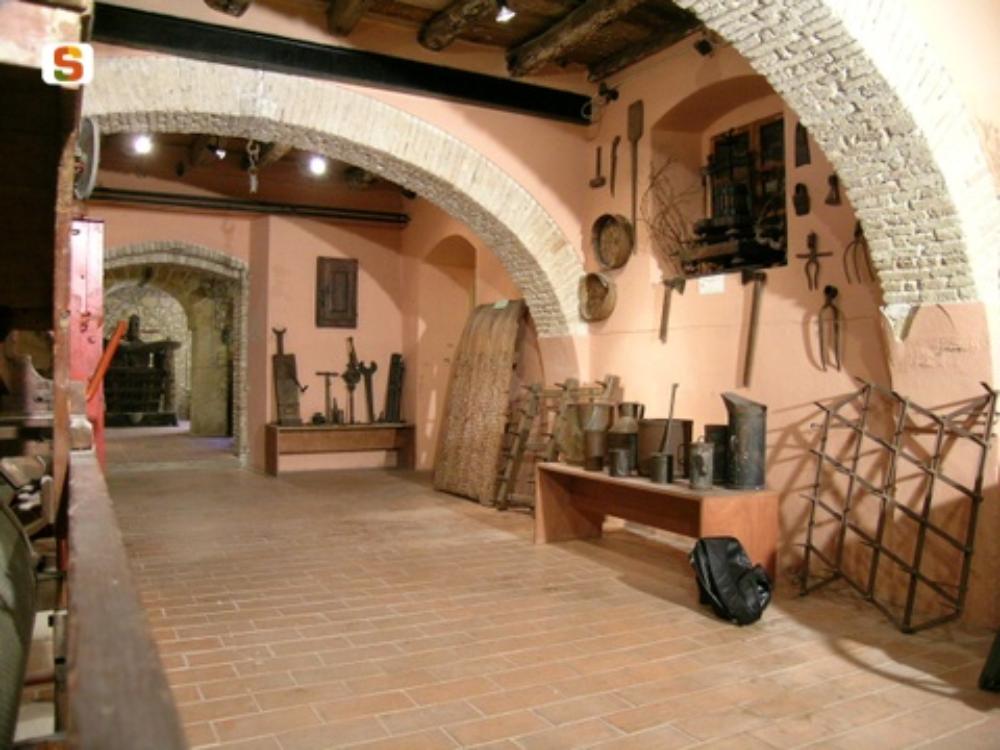

It displays agricultural tools and materials, household utensils, and finely crafted artifacts. Of great interest is the Roman-era well, dated between the 2nd and 3rd centuries AD, and a historic wine cellar consisting of a collection of 1300 bottles. It is organized into 2 main routes.
The building housing the museum was constructed at different times on a medieval monastic complex. The museum is arranged on two levels and is accessible through a courtyard that displays machinery from the traditional Sardinian production world. The ground floor is divided into various rooms dedicated to equipment and objects for working the land and the processing and measurement of products (olives, grapes, grains), tools related to wine production, including a wooden press of particular historical interest, and objects related to the dairy industry. You then access the cloister where there is a cistern (not visible) from the 14th century, and where three rooms open out, dedicated to winemaking and distillation and to various harnesses for work animals, tools for shoeing and branding livestock, yokes, and goads. The first floor houses four rooms: a permanent photographic exhibition on historical memory (1885-2000).
Information about Villa Muscas Center of Peasant Culture
Via S. Alenixedda, 2
09128 Cagliari (Cagliari)
070487894
[email protected]
Source: MIBACT