


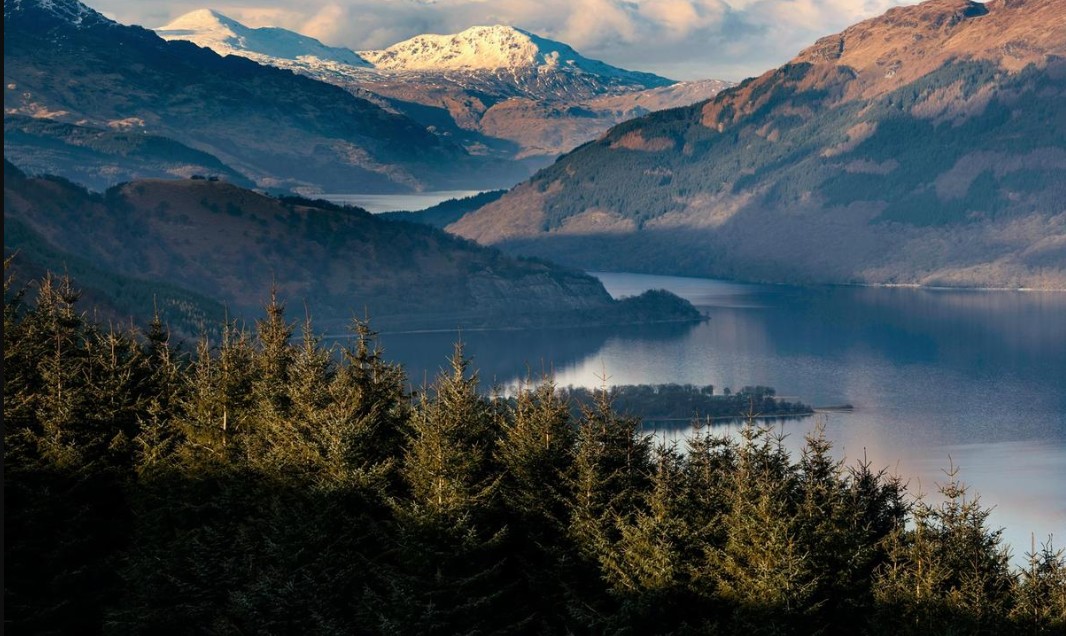

Se weather conditions allow it, excursions are carried out all year round; take off from Culag Lochside Guesthouse, on the shores of the Lake Lomond, in central Scotland, and reach even the most remote and unknown corners of the region. If you want to stop for lunch, the company can also offer inns and restaurants overlooking fjords and lakes, where you can enjoy the best of local cuisine.
Silently fly over woods, heaths, and gorges inhabited by birds of prey and wildlife; admire from above islands and islets with strange and rugged shapes; spy on cliffs inhabited by thousands of seabirds, and finally land, with the lightness of a dragonfly, on the water’s surface, letting yourself be rocked by the waves of a lake or an inlet. Scotland by seaplane, as proposed by the company Loch Lomond Seaplanes, is undoubtedly one of the most original and exciting, as well as natural, ways to discover a region so rich in lakes and inlets.
The company is based in Helensburgh, in Argyll, but typically, takeoff occurs from Loch Lomond, in Central Scotland, near the cheerful town of Luss. Excursion programs satisfy all tastes and budgets, and their duration varies depending on the itinerary.
The shortest and cheapest
In just 30 minutes and for £110 per person, you can fly over Loch Lomond, the largest lake in all Great Britain, admiring its very green shores: the eastern one, quieter and wilder, and the western one, bustling with activities and tourist settlements. You fly over charming towns like Luss, always full of tourists and with a delightful row of cottages, built in the old and humble houses constructed between the 18th and 19th centuries, by slate quarry workers and those who worked in the spinning mill. Or Inverbeg, where the two shores come closer and you can spy the handful of islets that emerge in the middle of the basin. The largest, Inchmurrin, hosts what remains of Lennox Castle. From the lake, you then move to the nearby Trossachs National Park, shaped by spectacular heights covered with dense woods and dotted with 18 tiny lakes.
The intermediate
Those who love the coast can try a 45-minute flight (£145 per person) to admire the rugged profile of Kintyre (southwestern Scotland), the finger-shaped peninsula, all stretched towards the coasts of Northern Ireland; then passing islands such as Jura, rough and mountainous, with pastures spotted with sheep; Islay, the small homeland of peated whisky, on whose high cliffs hundreds of seabirds nest, or Arran, further south, with an oval profile, long beaches, woods, cultivated fields, and the summit of Goatfell, which dominates everything. Finally, a spectacular view of the nearby Firth of Clyde, the estuary of the Clyde, Glasgow’s river, which, meeting the ocean, carves the coast into winding and irregular branches. An area among the most evocative in the region, where numerous species of migratory birds stop and where so many aquatic species live stably, in the most protected and remote areas. This has led several sectors to be declared nature reserves and sites of particular scientific interest.



