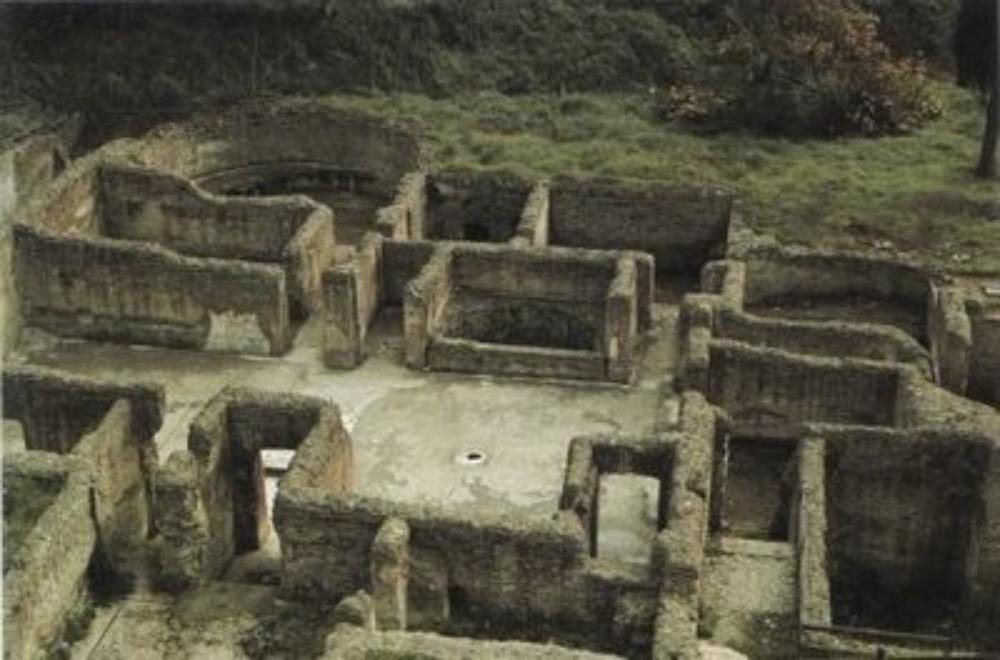
San Leucio, architecture
In the architect’s designs, the workers’ houses of San Leucio are aligned in two continuous and symmetrical blocks, open towards a central scenic element, the statue of the sovereign, and all the streets radiating from a large circular square are connected to each other with other circular and concentric streets. From the general plan of San Leucio one can also notice the Cathedral, the Theater, and a Hospital for needy artists. Naturally, in addition to the Royal House.
San Leucio, the workers’ village
The first stone of the workers’ village of San Leucio was laid on September 18, 1798, but the revolution of 1799 prevented the realization of this large and ambitious urban planning project, drastically reducing the original plan. However, the symmetry was maintained. The rows of workers’ housing, on both sides of the monumental entrance gate topped by two lions and the Bourbon coat of arms, overlook a large rectangular courtyard and face the Royal Belvedere House, which is accessed by a large double and symmetrical staircase. The church, smaller than expected, was incorporated into the central building and its forecourt is elevated compared to the square.
In the Royal House, besides the King’s apartment, there were the lodgings of the parish priest and the school teacher, and rooms for the management and administration of the manufactory. The cellars were instead used for winemaking and as storage for oil, fruit, and whatever was produced on site.
Not far from the workers’ village, in the Vaccheria district, agricultural activities were organized, while in the spinning mills, upstream of the Casina del Belvedere, silks and velvets destined for the furnishings of the royal residences and wealthy Neapolitan palaces were produced.
The Royal Colony was governed by special laws and regulations. Here there was a legal-economic code, established by Ferdinand, which for its great originality was translated into Latin, Greek, French, and German.