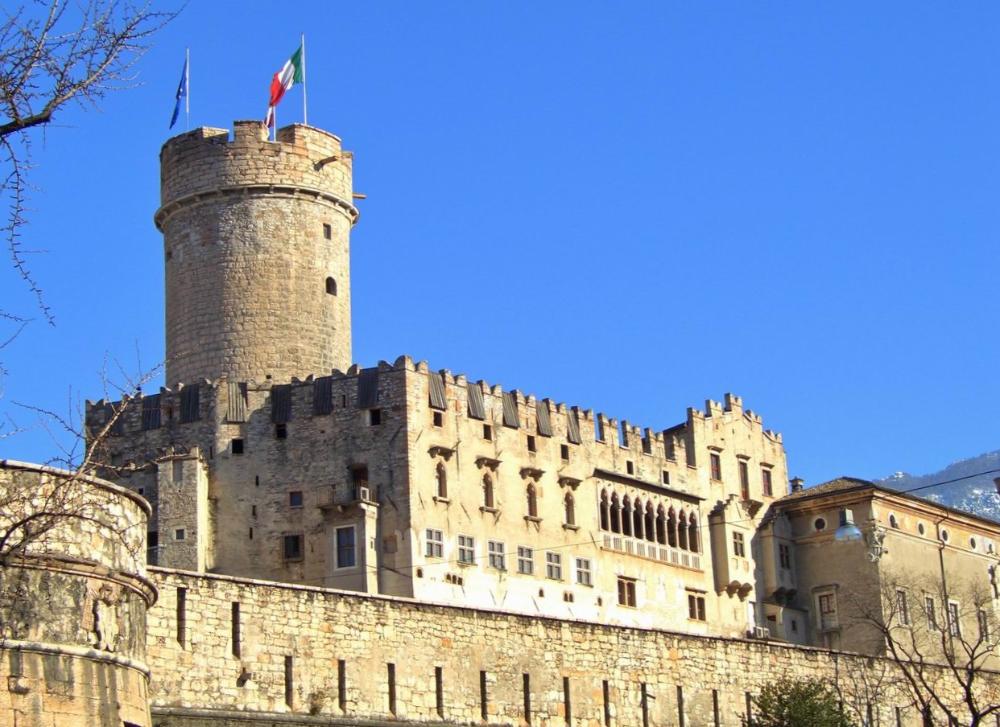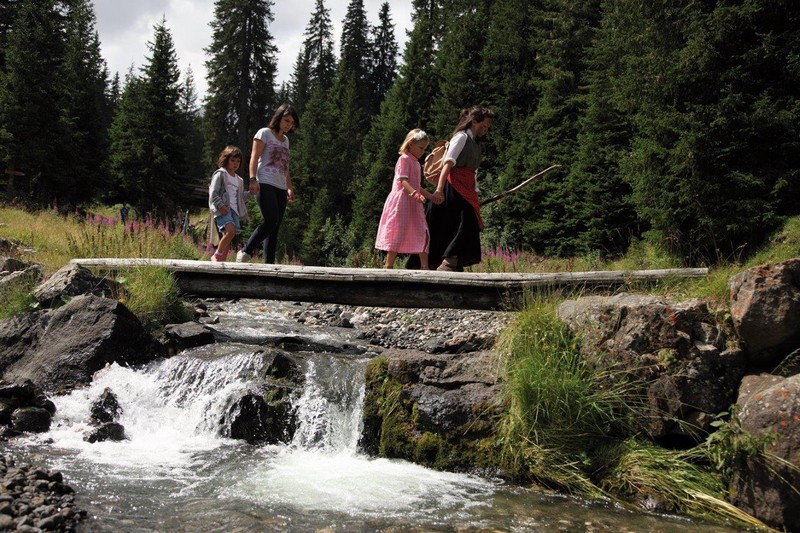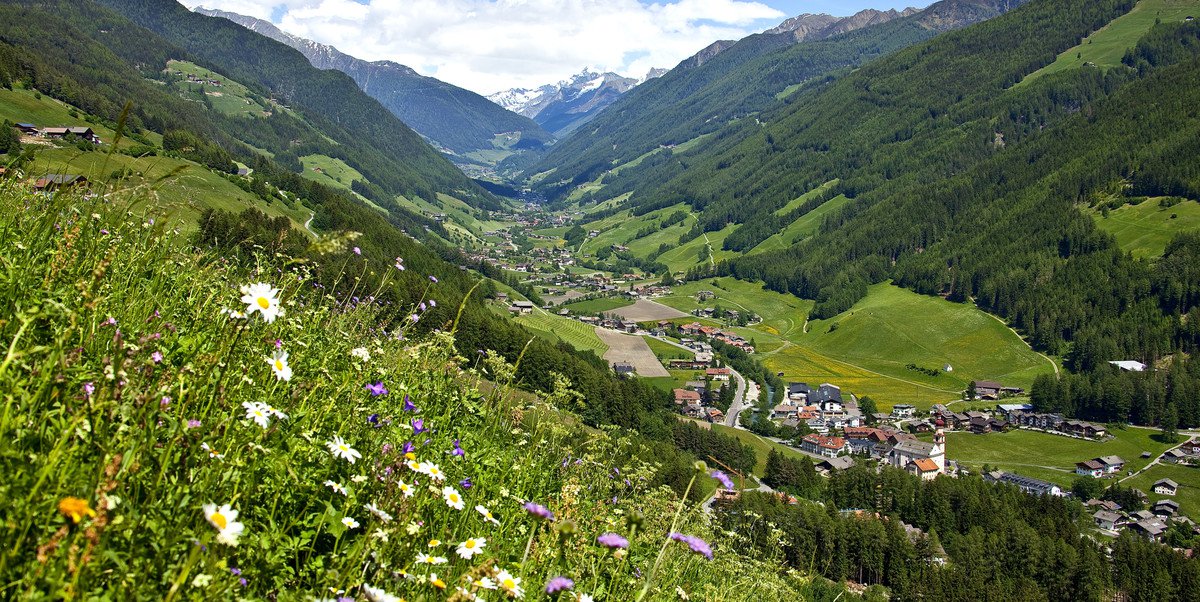


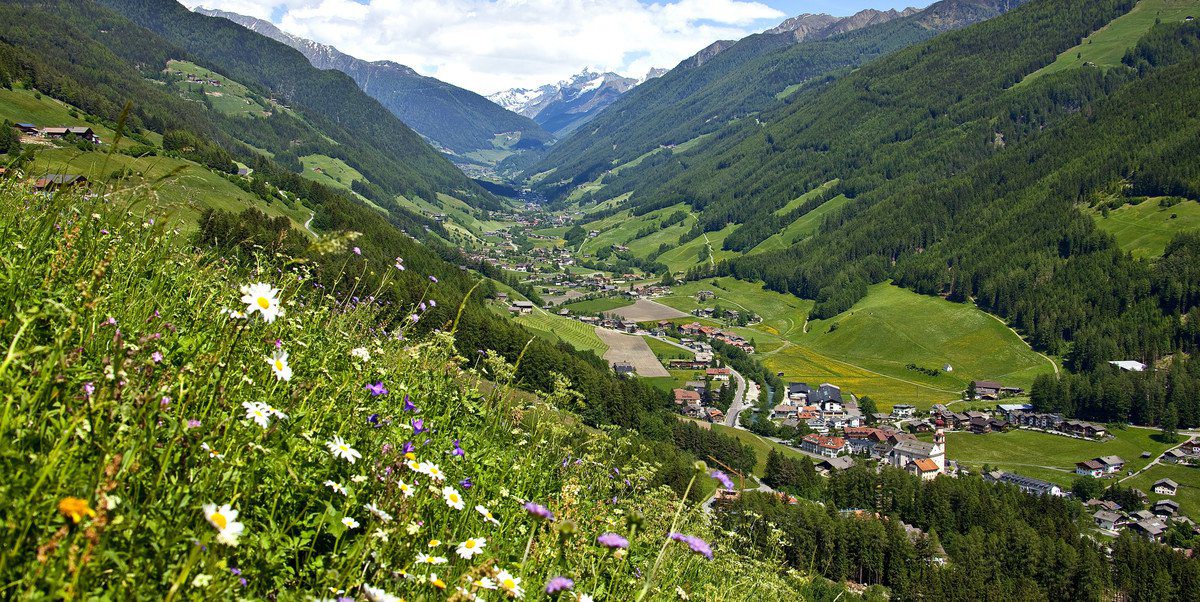
Valle Aurina is a valley and a municipality in the province of Bolzano, in South Tyrol. Curiously, the territory of Valle Aurina is located both in the more well-known Val Pusteria and in the Valle di Tures. It has a surprising area with peaks over three thousand meters high and a careful preservation of customs and traditions of the Alpine area, as well as environmental attention like throughout the region. An ideal destination for mountain holidays but also for slow tourism. In Valle Aurina, there are several attractions to see. Here are things to do in Valle Aurina when it rains, when you don’t ski, or when you are looking for cultural curiosities.
- Museum of Nativity Scenes and Popular Art Maranatha
- Information about Museum of Nativity Scenes and Popular Art Maranatha
- Oberkofler Brothers Memorial Museum
- Information about Oberkofler Brothers Memorial Museum
- Kirchler Mineralogical Museum
- Information about Kirchler Mineralogical Museum
- Mining Museum: Grain Store Cadipietra and Aurina Valley Museum Area
- Information about Mining Museum: Grain Store Cadipietra and Aurina Valley Museum Area
Museum of Nativity Scenes and Popular Art Maranatha
The Museum of Nativity Scenes and Popular Art Maranatha is located in Lutago, a hamlet of Valle Aurina. The Maranatha is the largest exhibition of nativity scenes in Europe. Works of art from various countries are displayed in the garden and in an exhibition area of 1,300 square meters. The Maranatha nativity scene museum in Lutago comes from a brilliant intuition of the Gartner family. Since its opening, efforts have been resolutely made to keep the museum not only authentic and attractive but also to expand the place as a special source of faith, strength, and hope in the Christian sense.
The overall inventory of the museum consists of numerous new and old nativity scenes, some borrowed. Existing nativity scenes, such as the large wooden oriental nativity, are expanded and completed by Jonas Pitscheider and Lukas Troi. Through the tireless commitment of passionate builders of nativity scenes and backgrounds/scenarios, such as Olaf Flatscher, Paul Gartner, Eduard Untergasser, and Rainer Minatti, to name just a few, it has been possible to display many old and original wooden nativity scenes.
The entrance hall itself is very special: the room is a reconstruction of a Tyrolean “Stadel“, built with the old wood from the worn-out farm “Holzlechnhof” of Predoi, dating back to 1725. At the entrance on the left, the Tures Castle is represented as a nativity scene of knights, built by Maria Hofer from Predoi.
In the entrance hall, behind the heavy wooden door on the left side of the room, visitors can admire a nativity scene by Egon Oberkofler. The skilled wood sculptor originally from Valle Aurina represented the birth of the Lord in a local atmosphere. Next to it is displayed a nativity scene from North Tyrol and a mountain hut nativity scene from South Tyrol. On the right side of the entrance hall is the Christmas Night of Reimmichl, a nativity scene created by Georg (Jörg) Lanzinger from Sesto. South Tyrolean, Austrian, and German painters contributed to the construction and expansion of the nativity scenes and their backgrounds at Maranatha.
Among local artists, particularly worth mentioning is Albert Abfalterer, who painted a ten-meter-long watercolor, possibly the largest he has created so far. These backgrounds adorn the depictions of Tyrolean customs over the annual cycle in the Gothic parlor. In the entrance room, on the right, is the large nativity scene of the customs of the Valle Aurina, whose miniature buildings were built by Alfons Hofer of Prettau, in twenty years of patient work during the winters. Beyond the world of peasant nativity scenes, you arrive at the “Great oriental nativity of the king”.
Information about Museum of Nativity Scenes and Popular Art Maranatha
The Museum of Nativity Scenes and Popular Art Maranatha is open all year round on weekdays: 9:00–12:00/14:00–18:00. On Sundays and public holidays, it is open in the afternoon from 14:00 to 17:00. Entrance fee: 5.00 euros.
Valle Aurina (Bolzano)
Phone 0474 671682
Email: [email protected]
Website: https://www.krippenmuseum.com
Oberkofler Brothers Memorial Museum
In the old fodder warehouse of Casa Mesner Gottfried Oberkofler a commemorative collection of the Oberkofler brothers has been set up: Johann Baptist (1895-1969) and Josef Georg (1889-1962). After taking vows and becoming a priest, Johann Baptist attended the Munich Academy of Fine Arts and then devoted himself entirely to painting. Josef Georg studied law and then worked as a lecturer in Innsbruck, where he later lived as a novelist and poet.
Information about Oberkofler Brothers Memorial Museum
S. Giovanni, 247 – 39030 Valle Aurina (Bolzano)
Phone: 0474 671178
Open from Easter until the end of October, from Tuesday to Sunday from 3:00 p.m. to 5:00 p.m.
Entrance ticket price: 2.00 euros
Kirchler Mineralogical Museum
The Kirchler Mineralogical Museum is the result of a challenging research and collection effort that lasted several decades and originated from a great passion for minerals.
The museum displays 1000 specimens of minerals that were formed inside the Earth about 30 million years ago.
In the museum’s multimedia section, the birth of minerals is presented, their discovery and difficult extraction, and finally the therapeutic action of many of them.
Information about Kirchler Mineralogical Museum
S. Giovanni, 3 39030 Valle Aurina (Bolzano)
Tel. 0474652145
Email: [email protected]
Website: https://www.museo-mineralogico.it
The museum is open from April to the end of October every day from 9:30 AM to 12:00 PM and from 3:00 PM to 6:30 PM. From November to the end of March it is open every day from 3:00 PM to 6:00 PM
Entrance ticket: 3.00 euros
Mining Museum: Grain Store Cadipietra and Aurina Valley Museum Area
Information about Mining Museum: Grain Store Cadipietra and Aurina Valley Museum Area
Cadipietra, 99 39030 Aurina Valley (Bolzano)
Tel. 0474 651043
Email: [email protected]
Website: https://www.museominiere.it
Hours: from 9:30 to 16:30 Tuesday to Sunday, from April to October € 9.00 Source: MIBACT