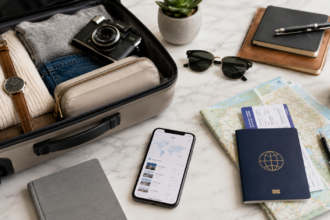


Flying can be stressful, especially if you’re unsure about what items are allowed or prohibited onboard. In this article, we’ll explain what you can and cannot bring on a plane in terms of hand luggage and checked baggage. You’ll also find practical tips to make sure you comply with all the rules and airline regulations.
- 1. Introduction to Cabin and Checked Baggage
- 2. What is Allowed in Hand Luggage
- 3. What is Allowed in Checked Baggage
- 4. What You Cannot Bring in Hand Luggage
- 5. What You Cannot Bring in Checked Baggage
- 6. Rules for Liquids and Gels in Hand Luggage
- 7. Rules for Liquids and Gels in Checked Baggage
- 8. Hand Luggage Packing Tips
- 9. Checked Baggage Packing Tips
- 10. Conclusion
1. Introduction to Cabin and Checked Baggage
When packing for a flight, there are two main types of luggage: carry-on (hand luggage) and checked baggage. Hand luggage includes any item you can stow in the overhead bin or under the seat in front of you. Checked baggage refers to anything you hand over at the airline desk to be placed in the hold of the aircraft.
Usually, you’re allowed one carry-on bag per passenger—some airlines permit two. Checked baggage is typically limited to two or three pieces per traveler, depending on the airline’s policies. Weight and size restrictions also often apply, both for carry-on and checked baggage.
2. What is Allowed in Hand Luggage
In your carry-on, you can generally bring items like laptops, tablets, cameras, and books. You’re also allowed to take an umbrella, coat, or a small bag of snacks. However, certain items are strictly prohibited in cabin baggage, such as sharp objects, liquids, and aerosols over a certain volume.
3. What is Allowed in Checked Baggage
In your checked baggage, you can bring clothes, books, and personal care items. Many airlines also allow you to check sports equipment like golf clubs, skis, and snowboards. However, firearms, explosives, and flammable liquids are not permitted in checked luggage.
4. What You Cannot Bring in Hand Luggage
Some items are never allowed in your cabin bag, no matter the circumstances. These include sharp objects such as knives and scissors, and items that can be used as weapons, like baseball bats and golf clubs. You’re also not permitted to carry flammable items like aerosols, lighters, and matches.
5. What You Cannot Bring in Checked Baggage
Certain objects are banned even in your checked bags. These include firearms, explosives, and flammable liquids. Items that could be used to harm other passengers, such as knives, baseball bats, and golf clubs, are also prohibited.
6. Rules for Liquids and Gels in Hand Luggage
There are strict limits on liquids and gels in hand luggage. All containers must hold no more than 100 milliliters each, and they must fit inside a single, transparent, resealable plastic bag. The bag’s total capacity must not exceed one liter (about 34 ounces).
7. Rules for Liquids and Gels in Checked Baggage
There are no specific size or quantity restrictions for liquids and gels in checked baggage. However, all items should be securely packaged to prevent leaks and spills during the flight.
8. Hand Luggage Packing Tips
When preparing your hand luggage, remember to place all liquids and gels in a transparent, resealable bag stored in an easily accessible spot—this speeds up security checks.
Make sure everything is tightly packed to avoid items shifting and getting damaged while traveling.
9. Checked Baggage Packing Tips
When packing your checked luggage, it’s important to keep liquids and gels in see-through, resealable bags, placed where they’re easy to find. This will help you at security checks if necessary.
Secure all your belongings properly to prevent damage in transit. Also, always label your checked bags with your name and contact details, in case they are lost.
10. Conclusion
Flying can be a stressful experience, especially when you’re unsure about what you can and cannot pack. In this article, we’ve outlined the rules for both hand luggage and checked baggage, along with useful tips to help you comply.
By following these guidelines, you’ll breeze through security and enjoy a safe, smooth flight. Next time you’re preparing for a trip, keep this advice in mind for a hassle-free journey.
For the most up-to-date and specific information, always check your airline’s official website—they provide a full list of items allowed and prohibited in both cabin and checked bags. Staying informed and following the rules will help make your flight as stress-free as possible.