


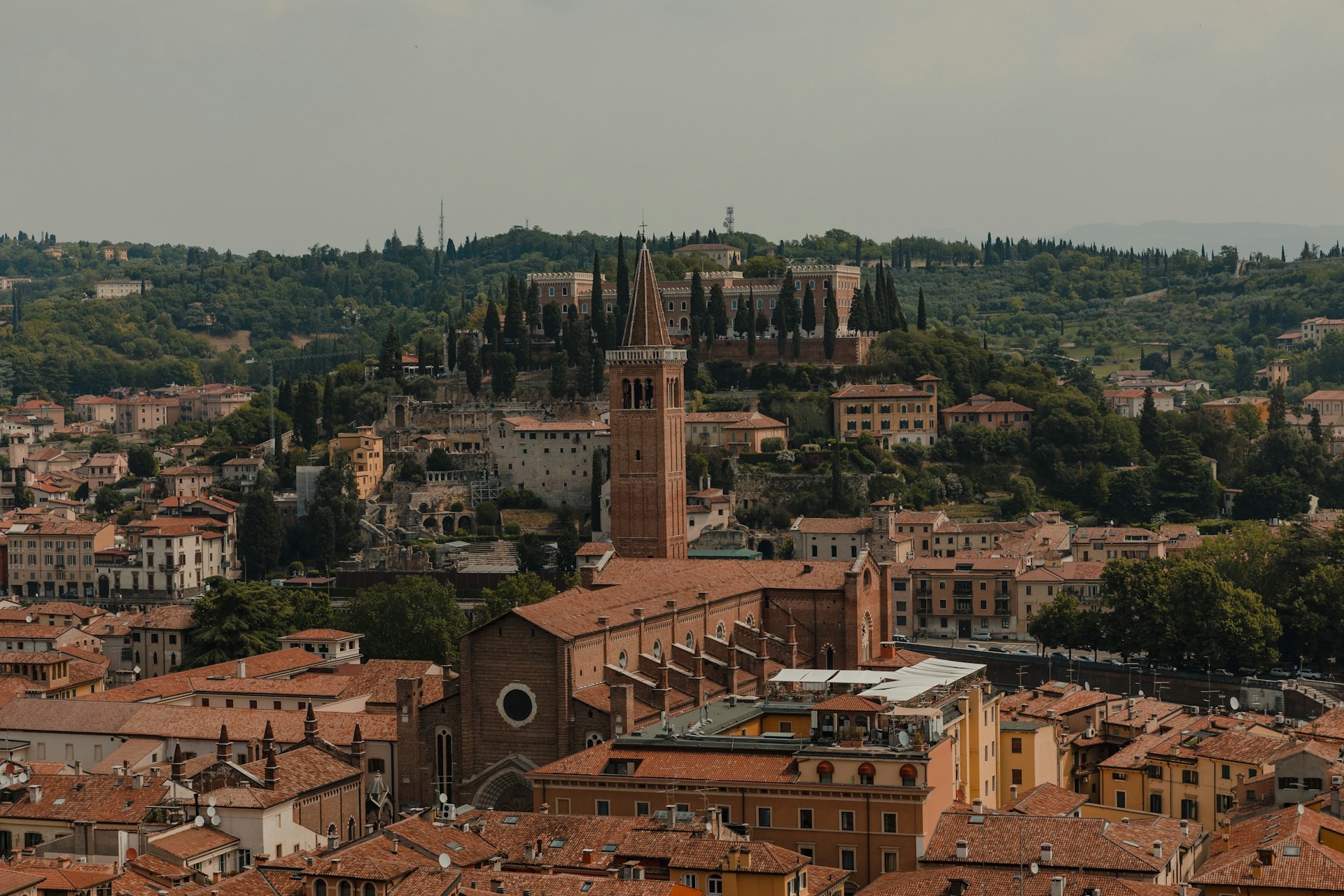

There is something rare in Verona: the ability to be both monumental and intimate at the same time. It doesn’t overwhelm you with the grandeur of Rome nor does it tower over you with the density of Florence. It welcomes you, lets you walk, and allows you to discover charm at every corner. For those with a weekend available, a well-constructed Verona 2-day itinerary lets you see almost all the best without rushing, also enjoying the slow pace of an aperitif in the square or a stroll along the Adige River at sunset.
- When to go to Verona
- Getting around Verona in 2 days
- Verona 2-day itinerary: the first day
- Morning: the Roman heart of the city
- Nearby: the Scaliger Tombs and Sant’Anastasia
- Afternoon: the Cathedral and Castelvecchio
- Evening: aperitif and dinner in Verona
- Verona 2-day itinerary: the second day
- Morning: Juliet, the Roman Theatre, and the Archaeological Museum
- The climb to Castel San Pietro
- Afternoon: San Zeno Maggiore and the Lungadige
- Practical tips to optimize your time
- Where to sleep in Verona
- Conclusion
- Frequently asked questions about Verona in 2 days
- Are two days enough to visit Verona?
- What should you absolutely see in Verona?
- When is the best time to visit Verona?
- How do you get around Verona during the weekend?
- Is it worth buying the Verona Card?
If you’re in a hurry
- Verona can be comfortably visited on foot in 2 days: the historic center is compact and everything is reachable without transport.
- Day 1: Arena, Piazza Bra, Piazza delle Erbe, Piazza dei Signori, Arche Scaligere, Sant’Anastasia, Cathedral, Castelvecchio and Ponte Scaligero.
- Day 2: Juliet’s House, Roman Theatre, Castel San Pietro viewpoint, Basilica of San Zeno Maggiore.
- The best time is from April to October; in summer check the Arena Opera Festival schedule.
- Consider the Verona Card 48h if you plan to visit more than three paid sites.
- The car is useless: the center is a ZTL zone. Better to arrive by train.
A UNESCO World Heritage site since 2000, Verona preserves almost three thousand years of layered history: Romans, Scaligeri, Venetians. Each layer is visible, almost tangible, walking through its streets. And then there is the myth of Romeo and Juliet, which every year brings millions of visitors from all over the world — although, let’s be clear, Verona is worth much more than its romantic reputation.
When to go to Verona
Verona is a valid destination in every season, but the best period runs from April to October. In spring the city is especially beautiful, with squares coming alive and temperatures still pleasant. Summer brings the famous Arena Opera Festival, which between June and August transforms the center into an open-air stage: a unique experience, but one that must be booked well in advance. September and October are perhaps the most balanced months: less crowd, warm light, grape harvest in the surrounding hills.
Winter is not to be discarded: Verona dresses up for Christmas and its lights are spectacular, but some attractions reduce hours and the cold can make outdoor visits less enjoyable. If you’re planning a weekend in Verona out of season, especially consider March and November as good compromises between prices, crowds and weather.
Getting around Verona in 2 days
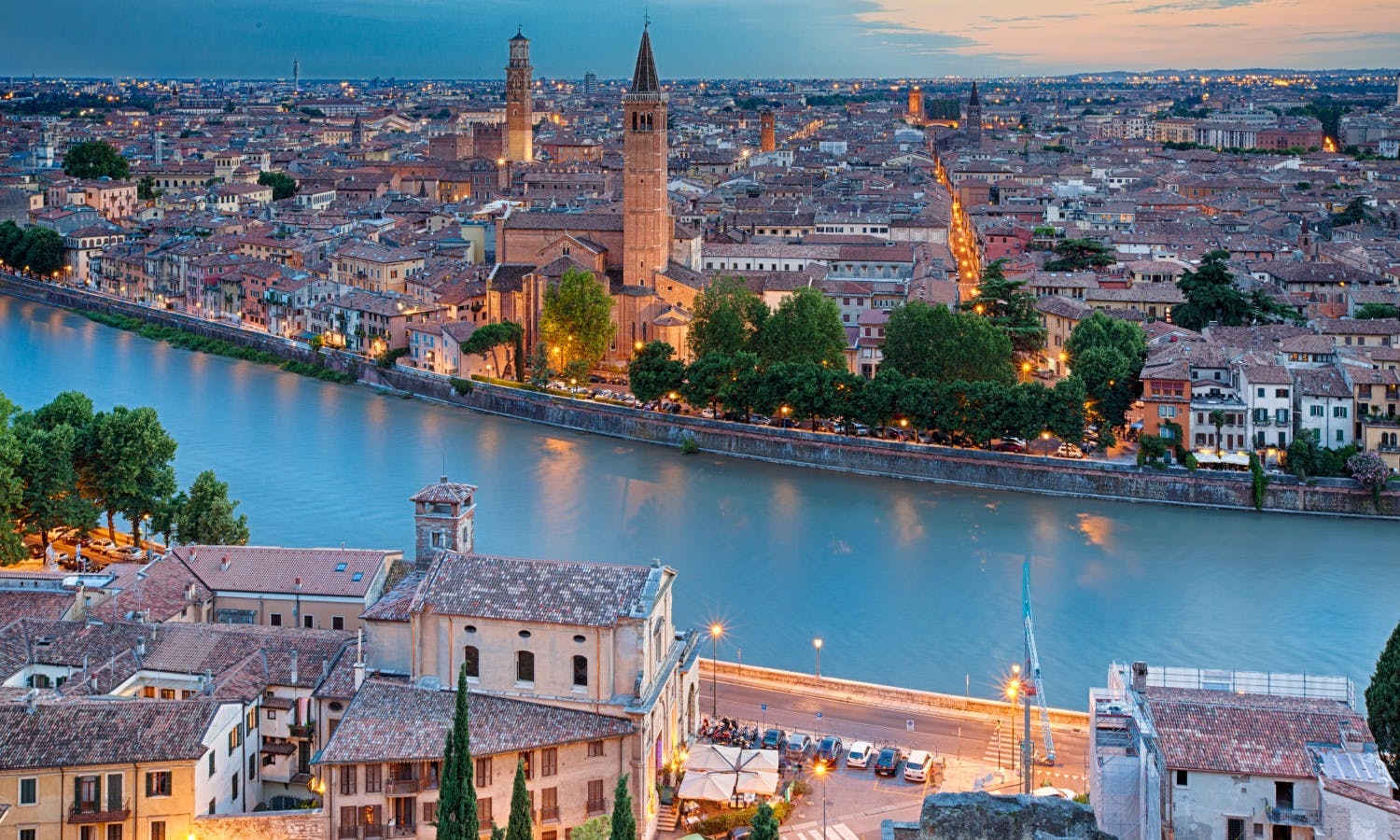
The good news is that Verona is a city designed to be experienced on foot. The historic center is relatively compact and the main attractions are all within walking distances, often chainable in a single route. You won’t need to take a bus or taxi to move from one stop to another on the itinerary, at least for the first two-thirds of the visit.
If you arrive by train, and Porta Nuova station is well connected with Milan, Venice, Bologna and Rome, you can reach the center on foot in about 20 minutes or take an urban bus. The car is discouraged: the historic center is mostly a ZTL zone and parking in the surrounding areas requires time and caution. Better leave it at the hotel or a park-and-ride and forget about it for two days.
It’s worth considering the Verona Card, available in 24 or 48-hour versions: it includes entrance to the main museums and monuments (Arena excluded during performances) and the possibility to use public transport. If you plan to visit multiple paid sites, the savings are tangible. You can buy it online or on site. Alternatively, you can explore the city on board a red tourist bus with recorded audio guide. Hop on and off whenever you want on a route that takes you to the main attractions and monuments of the city.
Verona 2-day itinerary: the first day
Morning: the Roman heart of the city
Day one in Verona inevitably starts at the Arena where we recommend you book in advance. The Roman amphitheater from the 1st century AD is the symbol of the city and one of the best-preserved ancient theaters in the world. Still able to host over 15,000 spectators today, it is the venue for the opera festival held every summer. Visiting it early in the morning allows you to avoid the crowd and stroll the cavea in relative tranquility. Allow at least an hour, more if you are passionate about Roman history. To guide you through all the following stops, also check out our complete guide on what to see in Verona.
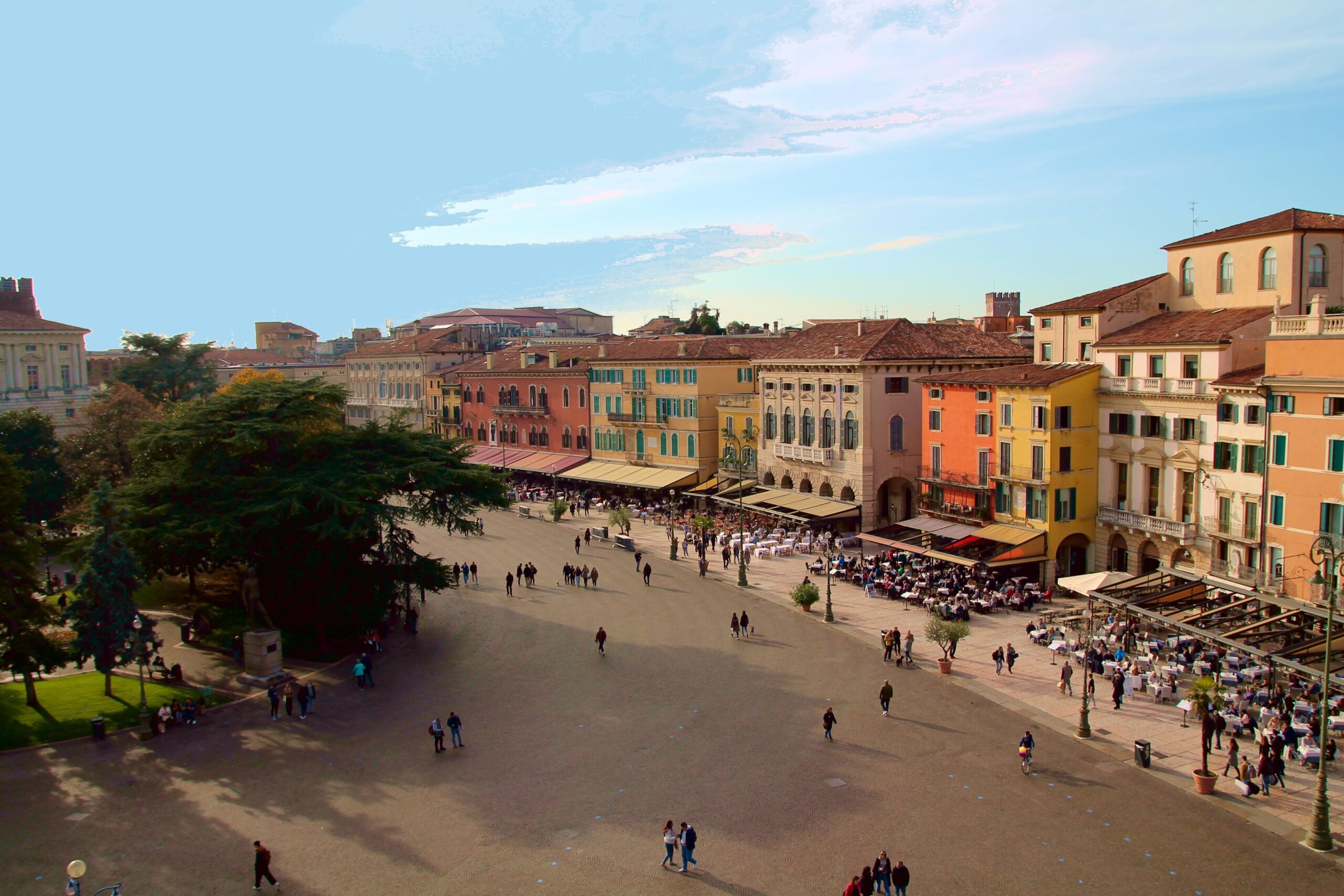
Leaving the Arena you find yourself already in Piazza Bra, the largest square in Verona, with its Liston — the promenade overlooking the amphitheater frequented by locals and tourists at every hour of the day. It’s the perfect place for a quick coffee before continuing. From here, take Via Mazzini, the ultimate shopping street, which leads you straight into the medieval heart of the city.
Arriving at Piazza delle Erbe, stop. This is perhaps the most beautiful and lively square in Verona: a centuries-old market in the center, a medieval fountain, frescoed palaces all around, and the Gardello tower in the background. It is one of the most photographed urban scenes in Italy, and rightly so. Not far away, through the Arco della Costa, opens Piazza dei Signori, quieter and more aristocratic, dominated by the statue of Dante and surrounded by the Scaliger palaces. The two squares are practically adjacent and can be visited together, unhurriedly, in about 45 minutes.

Nearby: the Scaliger Tombs and Sant’Anastasia
Just a few meters beyond Piazza dei Signori are the Scaliger Tombs, the Gothic mausoleums of the della Scala family, lords of Verona in the 14th century. They are one of the most elaborate medieval funerary complexes in Italy, visible for free from the outside through the fence. They deserve a close look: the sculptural details are astounding and tell of a dynasty that had a taste for power and grandeur.
A few minutes’ walk away is the Basilica of Sant’Anastasia, the largest Gothic church in Verona, built between the 13th and 15th centuries. Inside it houses the fresco of Saint George and the princess by Pisanello, considered one of the masterpieces of International Gothic. It’s worth a visit just for this. The contrast between the austere exterior and the richly decorated interior is remarkable.
Afternoon: the Cathedral and Castelvecchio
After a lunch break at one of the city center’s restaurants — the traditional Veronese osteria is an institution, with Amarone risotto and mixed boiled meats front and center — the afternoon is dedicated to two very different but equally indispensable places.
The Verona Cathedral, dedicated to Santa Maria Matricolare, is one of the most interesting Romanesque cathedrals in Veneto. Built in the 12th century on even older foundations, it houses an Assumption by Titian in the first chapel on the left. The three-nave structure, with its characteristic porticoes supported by lion columns, is a manual of medieval architecture. It is not as crowded as other attractions: you can visit calmly in about half an hour.
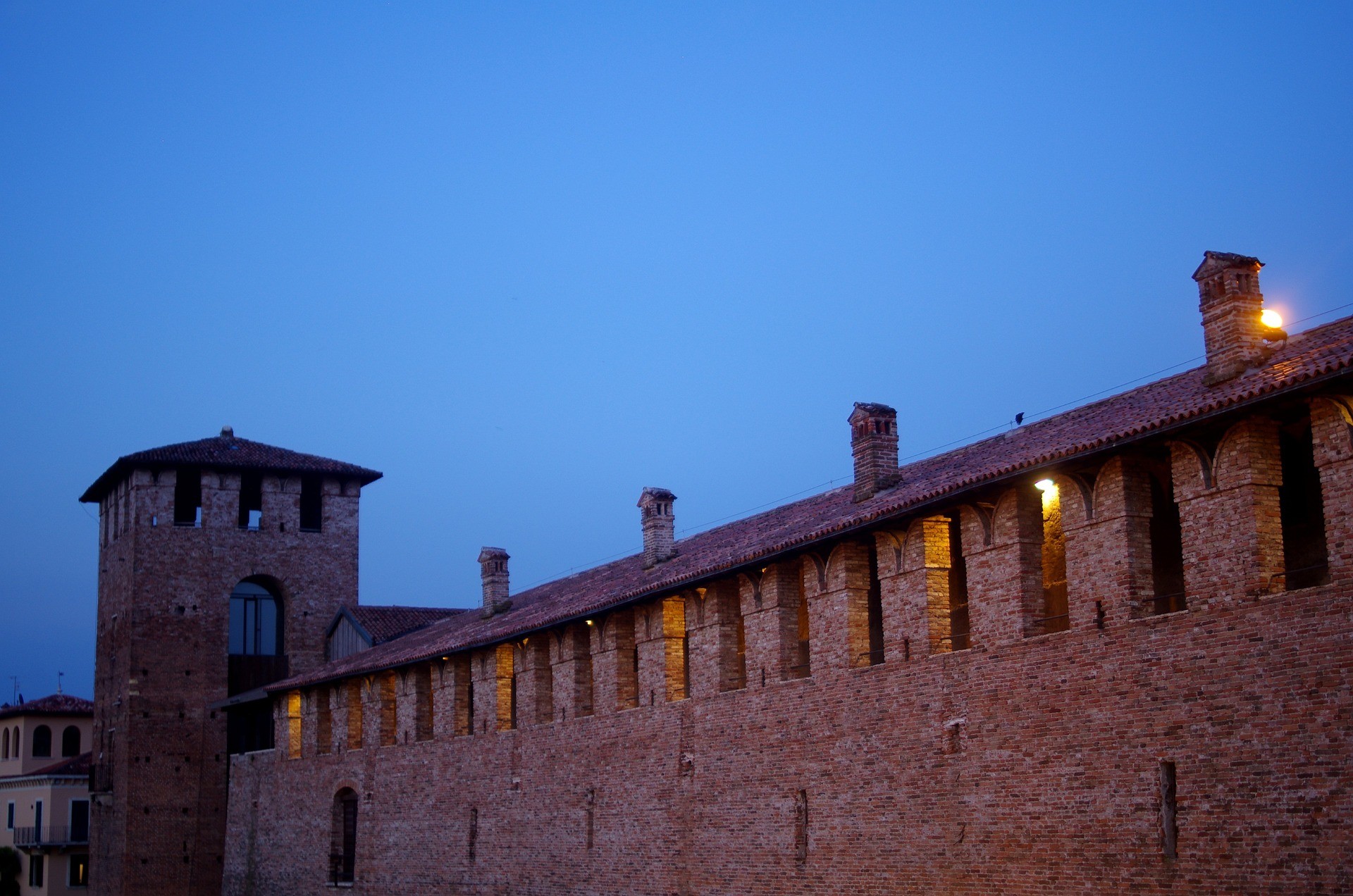
In the late afternoon shift your focus to Castelvecchio and its famous bridge. A 14th-century Scaliger fortress, it now houses one of the most important civic museums in the Northeast, with Venetian paintings, medieval sculptures, and goldsmith works. But even those not inclined for museums will find something special here: the inner courtyard, the towers, and above all the Scaliger Bridge — the battlemented bridge crossing the Adige — are scenographies of rare beauty. At sunset, the reflection of the bridge on the water is one of the most evocative images of the city. We also feature it among the must-see places and hidden treasures of Verona worth exploring beyond the most beaten paths.
Evening: aperitif and dinner in Verona
The evening of the first day is made for strolling and enjoying the city as it empties of the more hurried tourists. The district of Veronetta, on the right bank of the Adige, is less touristy and more authentic: family-run taverns, Valpolicella and Soave wine, a real city atmosphere. Or head back to Piazza delle Erbe, which in the evening transforms into a lively outdoor living room.
Verona 2-day itinerary: the second day
Morning: Juliet, the Roman Theatre, and the Archaeological Museum
The second day in Verona can start with a visit to the House of Juliet, on Via Cappello. We know: Juliet never existed in the literal sense, and that balcony is certainly not Shakespeare’s. But the courtyard is charming, the statue of Juliet brings bad luck to those who don’t touch it (according to local tradition), and the love notes stuck to the walls are some of the most touching and absurd things you can see while traveling. It’s worth about half an hour, no more, but it’s a necessary piece in the imagination of Verona. We recommend booking in advance so you can make the most of your time.
A more substantial visit is to the Roman Theatre, one of the most fascinating complexes in the city, perched on the San Pietro hill with a view that embraces the historic center and the Adige in a panorama that alone justifies the ticket. Built in the Augustan age, it still hosts summer performances today. Above it is the Archaeological Museum, with Roman artifacts of great interest. Allow at least an hour and a half to enjoy the visit without rushing.

The climb to Castel San Pietro
From the Roman Theatre, a staircase — or alternatively a paid panoramic elevator — leads to the top of San Pietro hill, where Castel San Pietro stands. The castle itself is partly closed to the public, but the viewpoint in front of you is one of the most beautiful in Italy: Verona at your feet, the river embracing it, the terracotta-colored roofs, the medieval towers. If the sky is clear, you can glimpse in the distance the foothills and Lake Garda. Bring your camera and don’t rush descending.
Afternoon: San Zeno Maggiore and the Lungadige
In the afternoon of the second day, it’s time to move slightly away from the center to reach the Basilica of San Zeno Maggiore, about a 20-minute walk to the west. It is unanimously considered one of the masterpieces of Italian Romanesque architecture: the 12th-century bronze doors, the rose window called “the Wheel of Fortune,” the silent cloister, and the crypt where San Zeno, patron saint of the city, rests, are elements of a beauty both sober and very profound. Dante mentions it in Purgatory. That’s enough to understand its historical and cultural significance.
If you still have energy and time, a walk along the Lungadige is the most beautiful way to end the second day: no imposed stops, just the river, the bridges, the palaces reflecting in the water, and that typical feeling of well-lived Italian cities — the sensation of really having understood where you are. Before leaving, or while planning your itinerary from home, return to our guide on what to see in Verona to discover any corners this weekend didn’t have time to offer you.
CuriosityDid you know there is also an underground Verona? If you have a couple of hours, take the opportunity to book the tour that takes you to the underground heart of Verona with a guided visit to two unique archaeological sites: Corte Sgarzerie and the area of via San Cosimo.
Practical tips to optimize your time
Verona is particularly suitable to be explored early in the morning, when the light is beautiful and the squares are still quiet. The main sites usually open between 8:30 and 9:00. Plan to visit the Arena and the central squares in the early part of the day, leaving museums and churches — often cooler and sheltered — for the central hours. Keep in mind that many museums are closed on Mondays, including the Castelvecchio museum. If your weekend falls over a Monday, reorganize your stops accordingly. Tuesday and Wednesday are the quietest days to visit the main attractions.
Booking the Arena online in advance is always advisable during the summer months, as are restaurants in the city center on Friday and Saturday evenings. Verona is a very popular weekend destination among Italians: don’t take anything for granted.
Where to sleep in Verona
The choice of hotel makes a big difference in a city like Verona. Sleeping in the historic center, among Piazza Bra, Via Mazzini and Piazza delle Erbe, means being able to go out in the evening without worries and return to the hotel on foot after dinner, enjoying the city at a completely different pace. Options are plentiful, from family inns to boutique hotels in historic buildings. Those on a tighter budget can consider hotels and B&Bs in the areas near the station, easily reachable on foot in 15-20 minutes.
Conclusion
Two days in Verona are not enough to exhaust it, but they are enough to understand it and, above all, to fall in love with it. It is a city that shows its best side when you walk it without hurry, letting yourself be surprised by an alley, a door, a medieval sign nestled between a bar and a boutique. Wear comfortable shoes, bring a curious spirit and the desire to stop every now and then to look around. Verona will do the rest.
Frequently asked questions about Verona in 2 days
Are two days enough to visit Verona?
Yes, two days are sufficient to see the main attractions of Verona without rushing. The city is compact and the historic center is fully walkable. With a well-organized itinerary, you can visit the Arena, the historic squares, Castelvecchio, the Roman Theater, Juliet’s House, and the Basilica of San Zeno. If you want to explore museums more deeply or make excursions nearby—such as Lake Garda or Valpolicella—it is useful to add a third day.
What should you absolutely see in Verona?
The must-see spots in Verona are: the Roman Arena, Piazza delle Erbe and Piazza dei Signori, Castelvecchio with the Scaliger Bridge, the Roman Theater with the Castel San Pietro viewpoint, and the Basilica of San Zeno Maggiore. Juliet’s House is optional but is an icon of the city that many visitors still choose to include.
When is the best time to visit Verona?
The ideal period is from April to October. Spring and early autumn offer the best balance between climate, crowds, and costs. Summer is the season of the Arena Opera Festival, an extraordinary experience but which requires advance booking. Winter is pleasant for Christmas, but some attractions reduce their hours.
How do you get around Verona during the weekend?
On foot, almost always. Verona’s historic center is compact, and the main attractions can be reached by walking. Driving is not recommended because the center is a limited traffic zone (ZTL). If you arrive by train at Porta Nuova station, you can take a city bus or walk to the center in about 20 minutes. To get to more peripheral attractions like San Zeno, you walk or take a bus.
Is it worth buying the Verona Card?
It depends on your plans. The 48-hour Verona Card includes entry to the main museums and monuments (with exceptions during performances at the Arena) and public transport. If you plan to visit at least three or four paid sites, the savings compared to single tickets is real. You can purchase it online in advance or directly on site at museums and authorized sales points.