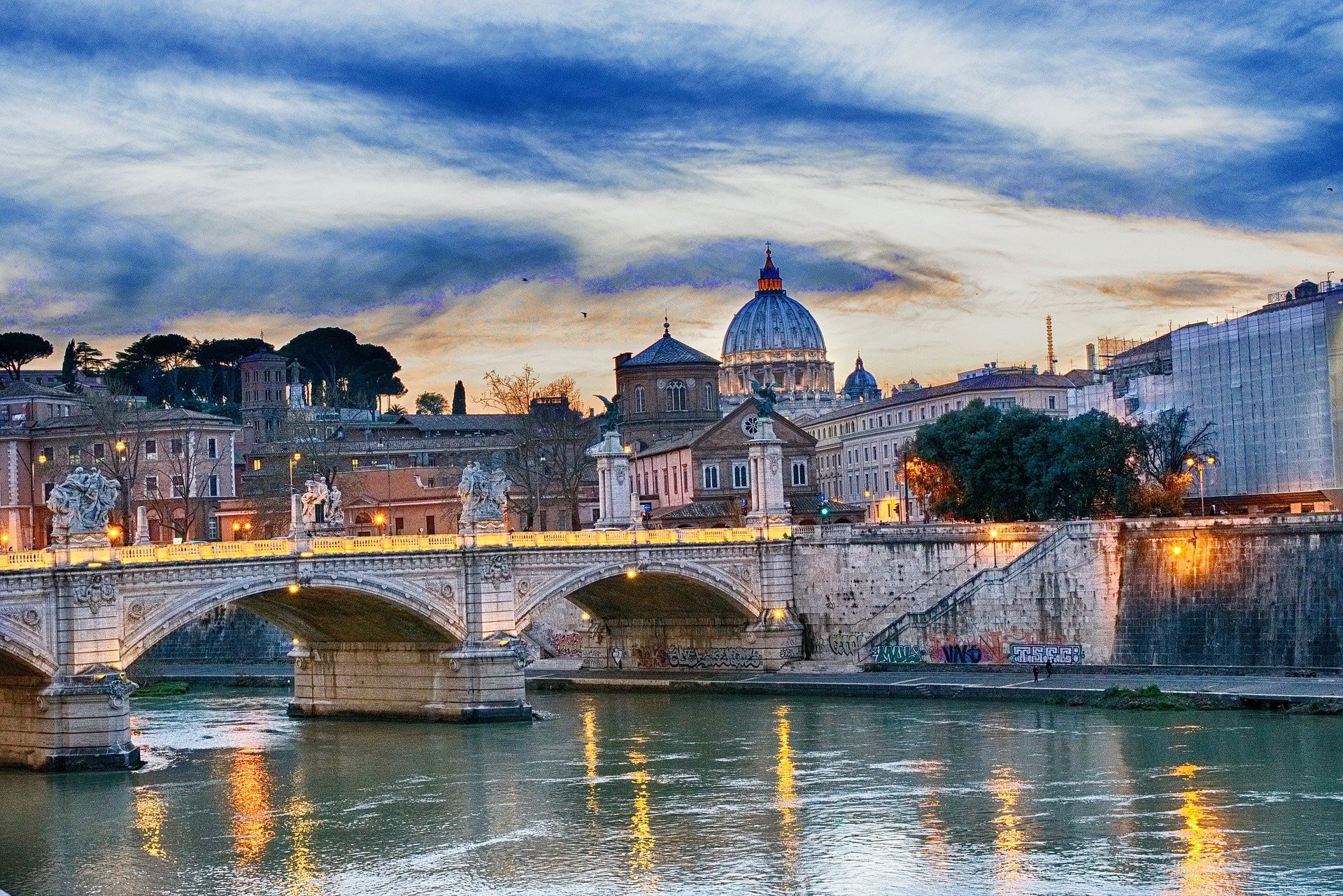


What to do for free in Rome is a question that, upon closer examination, makes little sense if you change your point of view. Rome is a city you pass through even before visiting it: its squares, churches, neighborhoods, and views don’t require tickets, but time, attention, and the ability to observe. It is a capital that continues to tell its story even when you don’t enter a museum.
- Free Rome: a city offered in public space
- Squares and fountains: the monumental face accessible to all
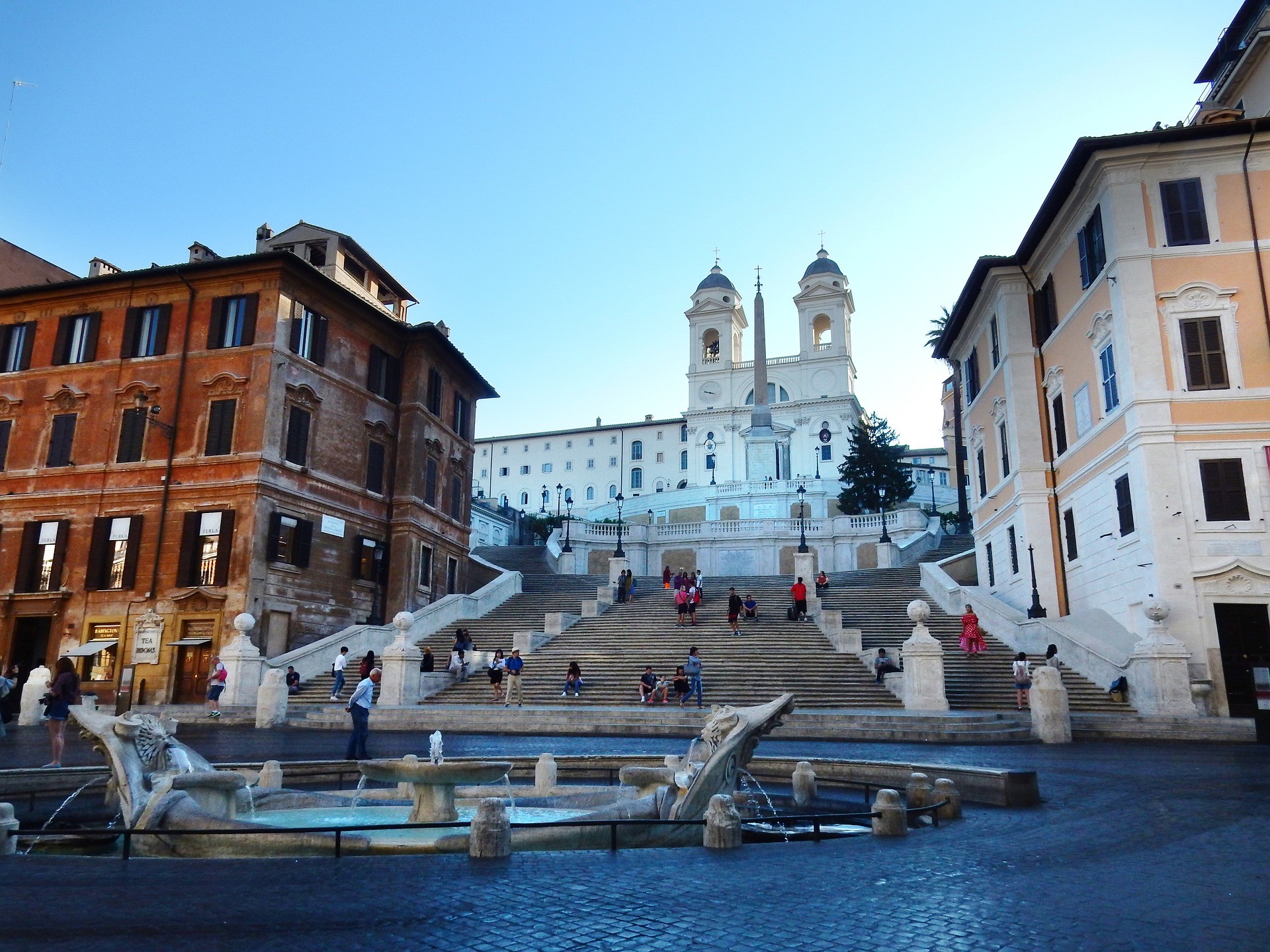
- Piazza di Spagna and Trinità dei Monti
- Trevi Fountain
- Piazza Navona
- Piazza del Popolo
- Churches and art: Rome’s free heritage
- The Pantheon
- St. Peter’s Basilica
- Caravaggio in Roman churches
- Neighborhoods to walk through to understand Rome
- Trastevere
- Campo de’ Fiori and the Jewish Ghetto
- Monti Neighborhood
- Street art and creative outskirts
- Rome from above: viewpoints and free panoramas
- The Pincian Hill
- The Janiculum
- The Vittoriano (lower terrace)
- Parks and green spaces: the Rome that slows down
- Villa Borghese
- Villa Pamphilj and Villa Ada
- Rome for free and trip planning
- Frequently asked questions about what to do for free in Rome
- What are the best things to do for free in Rome?
- Can you visit Rome well without paying for tickets?
- Which museums are free in Rome?
- Which churches to see for free in Rome for art?
- Where to see Rome from above for free?
- Is Rome a safe city?
- How to save time (and money) in Rome?
- What to do for free in Rome with children?
This guide starts exactly from here: the idea that Rome can be experienced without spending money, and especially without the frenzy of “having to see everything.” It is not a quick list, but a thoughtful path through places, contexts and walks that allow you to understand the city in its most authentic dimension, the everyday one.
Free Rome: a city offered in public space
Rome is built to be enjoyed outdoors. Monumental squares, fountains, staircases, open churches, and historic neighborhoods form an urban fabric that doesn’t require intermediaries. Even first-time visitors can grasp its essence simply by walking, stopping, observing details.
For this reason, talking about “free” in Rome doesn’t mean giving up, but choosing. Choosing to slow down, to alternate great symbols with less obvious places, to read the city as a collection of layers that coexist in the same space.

Squares and fountains: the monumental face accessible to all
The squares of Rome are not just urban spaces, but true historical stages, designed to be crossed and lived. None of them require a ticket, yet they tell centuries of power, art, and urban transformations.
Piazza di Spagna and Trinità dei Monti
The staircase of Trinità dei Monti is one of the most iconic places in Rome, but also one of those that best convey the relationship between the city and visitors. Climbing the steps, stopping to watch the continuous flow of people, overlooking the historic center means immediately entering the Roman rhythm. Nothing else is needed: the square is already an experience.
Trevi Fountain
Trevi Fountain is probably the most crowded place in Rome, but it remains a must-see to understand the scenic power of the city. Visited at dawn or late at night, when the flow decreases, it allows you to catch the dialogue between water, architecture, and urban space without distractions.
Piazza Navona
Built over Domitian’s stadium, Piazza Navona is one of the clearest examples of Roman layering. Here the ancient city coexists with the Baroque one and with contemporary daily life. Sitting on a bench and watching what happens is one of the best ways to understand Rome without spending anything.

Piazza del Popolo
Piazza del Popolo is a symbolic access point to the city. Wide, bright, directly connected to the Pincian Hill, it allows you to move naturally between monumentality and urban landscape, without interruption.
Churches and art: Rome’s free heritage
In Rome, art is not confined to museums. Many of the most important masterpieces are found inside churches freely accessible, often without queues and without filters.
The Pantheon
The Pantheon is one of the best-preserved buildings of antiquity and one of the most impressive places to visit in Rome. The oculus, the light entering from above, the perfection of proportions make the experience powerful even for those without specific historical knowledge. It is one of those places that needs no explanation.

St. Peter’s Basilica
Entrance to St. Peter’s Basilica is free and allows access to one of the most significant sites of Christianity. Even for those not interested in the religious aspect, the architectural and artistic impact is such that the visit is essential. For those who wish to explore further, a visit to the Vatican Museums can be organized separately, as explained in the guide on what to see in the Vatican Museums.

Caravaggio in Roman churches
San Luigi dei Francesi and Santa Maria del Popolo host some of Caravaggio’s most famous works, viewable for free. It is one of the most surprising aspects of Rome: being able to observe absolute masterpieces without going through a ticket office.
Neighborhoods to walk through to understand Rome
Rome is not understood only through its monuments, but especially in its neighborhoods. Walking without a precise destination is often the best way to grasp the character of the city.
Trastevere
Trastevere is probably the most evocative neighborhood of Rome. Its alleys, irregular squares, churches, and daily life tell the story of a city that resists total tourist transformation. Even without sitting in a local venue, crossing it is a complete experience.

Campo de’ Fiori and the Jewish Ghetto
Campo de’ Fiori changes face during the day: market in the morning, meeting space at other times. Not far away, the Jewish Ghetto represents one of the most dense areas of history and memory in the city, to be walked through with respect and attention.

Monti Neighborhood
Monti is one of the most interesting neighborhoods to observe contemporary Rome: independent shops, bookstores, unexpected views, and a still relatively authentic dimension, despite its centrality.
Street art and creative outskirts
In recent years Rome has developed an important heritage of street art, especially in less central neighborhoods. Discovering the most famous murals is a free way to read the contemporary city. A good starting point is the guide dedicated to street art and murals in Rome.

Rome from above: viewpoints and free panoramas
Observing Rome from above allows you to understand its urban complexity. Fortunately, some of the most beautiful panoramic points are freely accessible.
The Pincian Hill
The Pincian Hill viewpoint offers one of the most famous views of the city, especially at sunset. It is a place of passage, but also of rest, frequented by both Romans and visitors.
The Janiculum
The Janiculum is one of the most suggestive panoramic points in Rome. Here the city appears less chaotic, more readable in its extension. It is also a space connected to historical memory and national identity.
The Vittoriano (lower terrace)
Access to the lower terrace of the Vittoriano is free and allows you to observe the Roman Forum and the historic center from a privileged perspective, without having to go up to the paid levels.

Parks and green spaces: the Rome that slows down
Rome is also a green city, and its historic villas offer ideal spaces for a free break away from traffic.
Villa Borghese
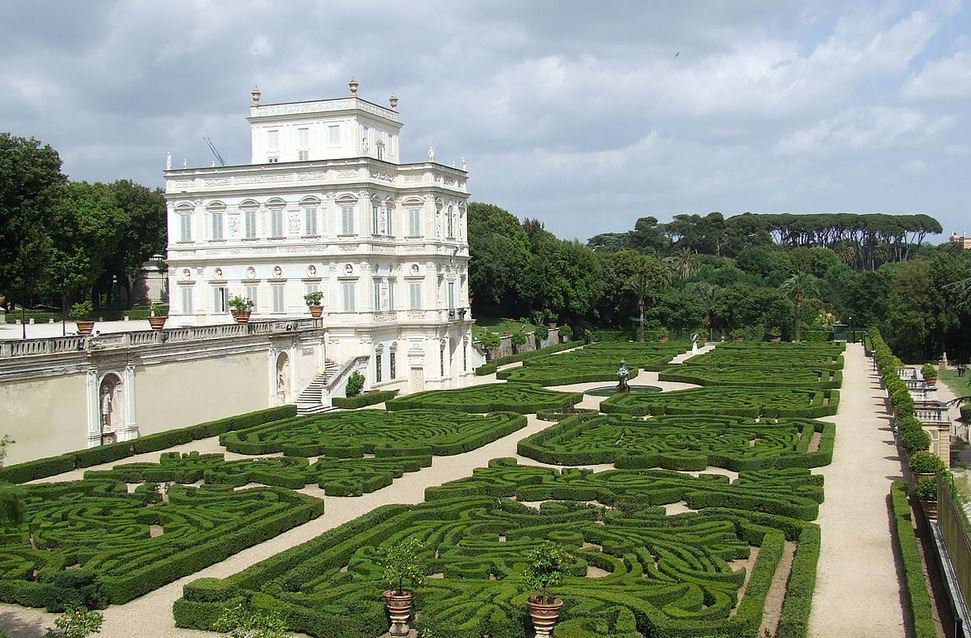
Villa Borghese is one of the most important green lungs of the city. Walking among avenues, gardens and panoramic terraces allows you to experience Rome at a different pace. For those wishing to visit the Borghese Gallery, it is useful to consult the guide on how to buy tickets.
Villa Pamphilj and Villa Ada
Less central but larger, these villas are frequented mainly by Romans. They are ideal for those looking for open spaces and less crowded places.
Rome for free and trip planning
Visiting Rome without spending money doesn’t mean improvising. Some organizational choices make a difference, especially for those staying multiple days.
To optimize time and travel, it is helpful to consult the tips to save time during your visit to Rome and consider pre-planned itineraries, such as Rome in 3 days.
Those traveling with children can find dedicated ideas in the guide on Rome with children, while for those looking for budget solutions, the guide on where to stay in Rome cheaply.
Frequently asked questions about what to do for free in Rome
What are the best things to do for free in Rome?
Among the best free experiences are the great squares (Piazza Navona, Spanish Steps), monumental fountains (Trevi Fountain), viewpoints (Pincian Hill and Janiculum), walks through historic neighborhoods like Trastevere, and entry to many churches housing artworks of absolute value.
Can you visit Rome well without paying for tickets?
Yes. Rome is a city experienced in public spaces: walking through the historic center, entering churches, crossing neighborhoods, and resting in parks allows you to grasp the heart of the city even without paid attractions. The experience changes: fewer “checklists,” more observation and slow pace.
Which museums are free in Rome?
Many state museums offer free entrance on specific days (for example, the first Sunday of the month, when scheduled). Additionally, during the year there may be free openings or special events. It is always advisable to check the official website of the institution or museum before planning the visit.
Which churches to see for free in Rome for art?
Rome offers many churches with free access that hold very important artworks. Among the best known for art are San Luigi dei Francesi and Santa Maria del Popolo, where you can see masterpieces by Caravaggio without a ticket.
Where to see Rome from above for free?
The most beautiful free viewpoints include the Pincian Hill, the Janiculum, and some terraces accessible without tickets such as the lower part of the Vittoriano. They are perfect at sunset or on clear days.
Is Rome a safe city?
Rome is no more dangerous than other large European capitals. As everywhere, it is enough to take normal precautions, especially in crowded areas and on public transport: watch bags and backpacks, and prefer well-lit streets in the evening.
How to save time (and money) in Rome?
To save, choose accommodation well connected, organize your days by area, and alternate visits and walks. If you include paid attractions, booking in advance can avoid queues and extra costs. On your site, you can link to the dedicated guide on how to save time during your visit.
What to do for free in Rome with children?
With children, parks and historic villas (such as Villa Borghese) work very well, as do large squares where you can stop without stress, and short walks in central neighborhoods. Alternating open spaces and light cultural stops makes the day sustainable for everyone.
{
“@context”: “https://schema.org”,
“@type”: “FAQPage”,
“mainEntity”: [
{
“@type”: “Question”,
“name”: “Quali sono le migliori cose da fare gratis a Roma?”,
“acceptedAnswer”: {
“@type”: “Answer”,
“text”: “Tra le esperienze gratuite migliori ci sono le grandi piazze (Piazza Navona, Piazza di Spagna), le fontane monumentali (Fontana di Trevi), i belvedere (Pincio e Gianicolo), le passeggiate nei quartieri storici come Trastevere e l’ingresso in molte chiese che custodiscono opere d’arte di valore assoluto.”
}
},
{
“@type”: “Question”,
“name”: “Si può visitare Roma bene anche senza pagare biglietti?”,
“acceptedAnswer”: {
“@type”: “Answer”,
“text”: “Sì. Roma è una città che si vive nello spazio pubblico: camminare nel centro storico, entrare nelle chiese, attraversare quartieri e sostare nei parchi permette di cogliere il cuore della città anche senza attrazioni a pagamento.”
}
},
{
“@type”: “Question”,
“name”: “Quali musei sono gratis a Roma?”,
“acceptedAnswer”: {
“@type”: “Answer”,
“text”: “Molti musei statali offrono l’ingresso gratuito in giornate specifiche e durante l’anno possono esserci iniziative speciali. Conviene verificare sempre sul sito ufficiale dell’ente o del museo prima di organizzare la visita.”
}
},
{
“@type”: “Question”,
“name”: “Quali chiese vedere gratis a Roma per l’arte?”,
“acceptedAnswer”: {
“@type”: “Answer”,
“text”: “Tra le chiese ad accesso gratuito più note per l’arte ci sono San Luigi dei Francesi e Santa Maria del Popolo, dove si possono vedere capolavori di Caravaggio senza biglietto.”
}
},
{
“@type”: “Question”,
“name”: “Dove vedere Roma dall’alto gratis?”,
“acceptedAnswer”: {
“@type”: “Answer”,
“text”: “I punti panoramici gratuiti più belli includono il Pincio, il Gianicolo e alcune terrazze accessibili senza biglietto come la parte bassa del Vittoriano.”
}
},
{
“@type”: “Question”,
“name”: “Roma è una città sicura?”,
“acceptedAnswer”: {
“@type”: “Answer”,
“text”: “Roma non è più pericolosa di altre grandi capitali europee. Come ovunque, è sufficiente adottare le normali precauzioni, soprattutto nelle zone affollate e sui mezzi pubblici.”
}
},
{
“@type”: “Question”,
“name”: “Come risparmiare tempo (e soldi) a Roma?”,
“acceptedAnswer”: {
“@type”: “Answer”,
“text”: “Per risparmiare, scegli un alloggio ben collegato, organizza le giornate per aree e alterna visite e passeggiate. Se inserisci anche attrazioni a pagamento, prenotare in anticipo può evitare file e costi extra.”
}
},
{
“@type”: “Question”,
“name”: “Cosa fare gratis a Roma con bambini?”,
“acceptedAnswer”: {
“@type”: “Answer”,
“text”: “Con bambini funzionano molto bene parchi e ville storiche, piazze ampie dove fermarsi senza stress e passeggiate brevi nei quartieri centrali. Alternare spazi aperti e tappe culturali leggere rende la giornata sostenibile per tutti.”
}
}
]
}