

In April, the curtain rises on the enchanting show hosted by the Gardens of Castel Trauttmansdorff, as springtime blooms take center stage. Around 250,000 bulbs are set to reveal their beauty to visitors at what was voted the most beautiful park in Italy in 2005, delighting with vibrant colors and captivating fragrances. April brings the first wave of peonies, rhododendrons, daffodils, and tulips, but each subsequent month adds new stars: Japanese cherry trees, azaleas, alliums, rockroses, and foxgloves in May; lavender and oleanders in June; sunflowers and lotuses in July and August.
The Gardens of Castel Trauttmansdorff span 12 hectares and welcome over 400,000 visitors every year, making them the number one tourist destination in South Tyrol. This natural amphitheater allows you to take in both exotic and Mediterranean landscapes at a glance, framed by the mountains of sunny Merano. Here, not only do the changing blooms amaze in every season—even autumn and winter—but you’ll also find plants from around the world alongside typical South Tyrolean vegetation. This diverse flora lines scenic walking paths, flourishes in the water gardens and terraced grounds, perfumes the hidden corners of the Garden of the Senses and the exotic Japanese Garden, and climbs the hills among cacti, succulents, grapevines, and olive trees.
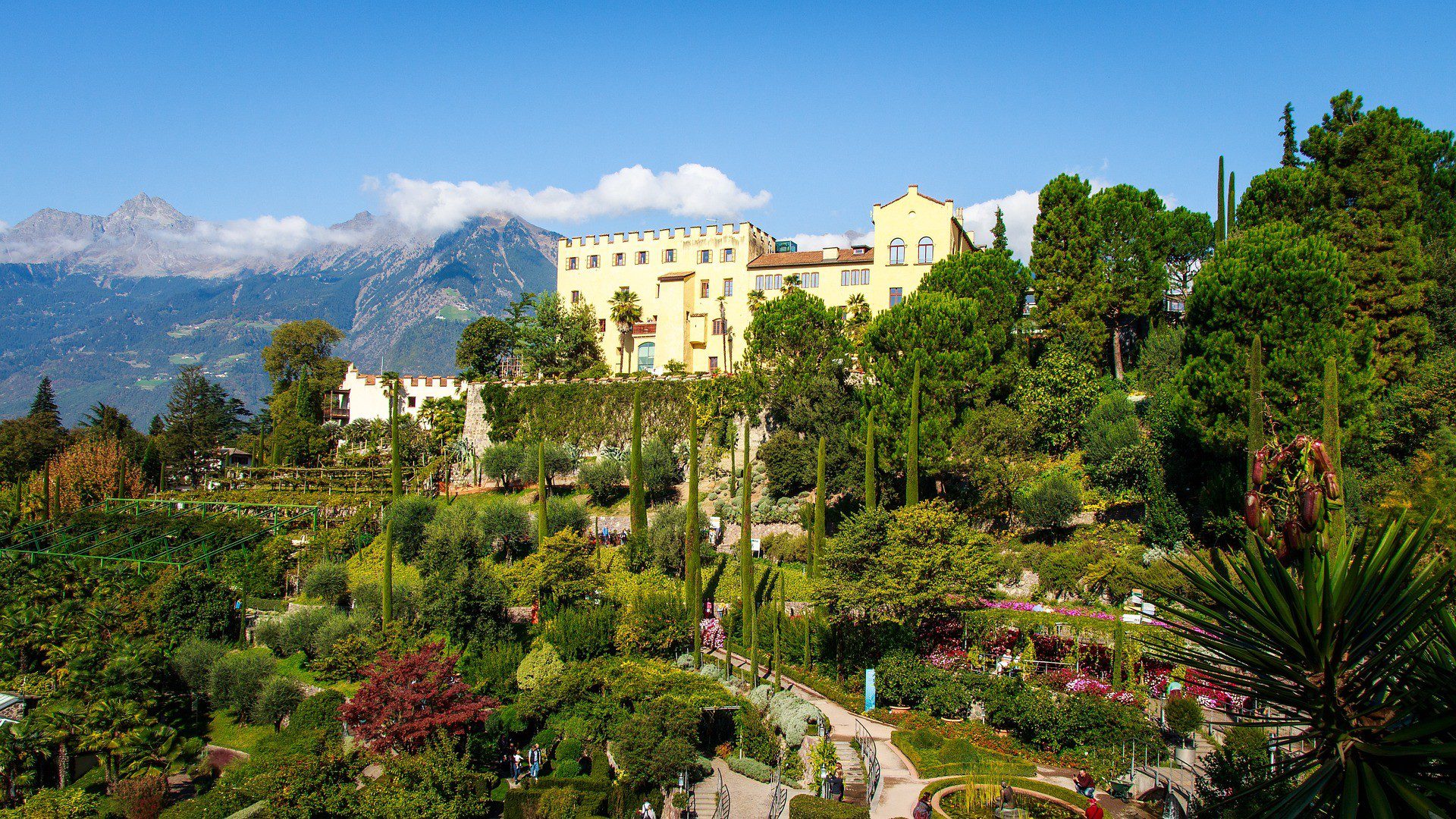
The mild, sunny climate of Merano has made it possible for plant species to thrive here that could not survive south of the Alps, creating a truly unforgettable landscape. The story began 150 years ago, when the first exotic plants were introduced to local parks and gardens. Today, thanks to the dedication of countless expert hands, you can admire these arranged according to their place of origin, on a route that highlights the connections between wild vegetation, climate, soil, and human influence—with natural, cultivated, and themed landscapes blending seamlessly along the way.
This magical place, where nature and art come together, features many spaces designed for immersive experiences: eleven art pavilions, the scenic Matteo Thun panoramic platform, and the Forbidden Garden. These areas turn a simple garden visit into a journey of discovery, offering insights into both the marvels of the natural world and human creativity.