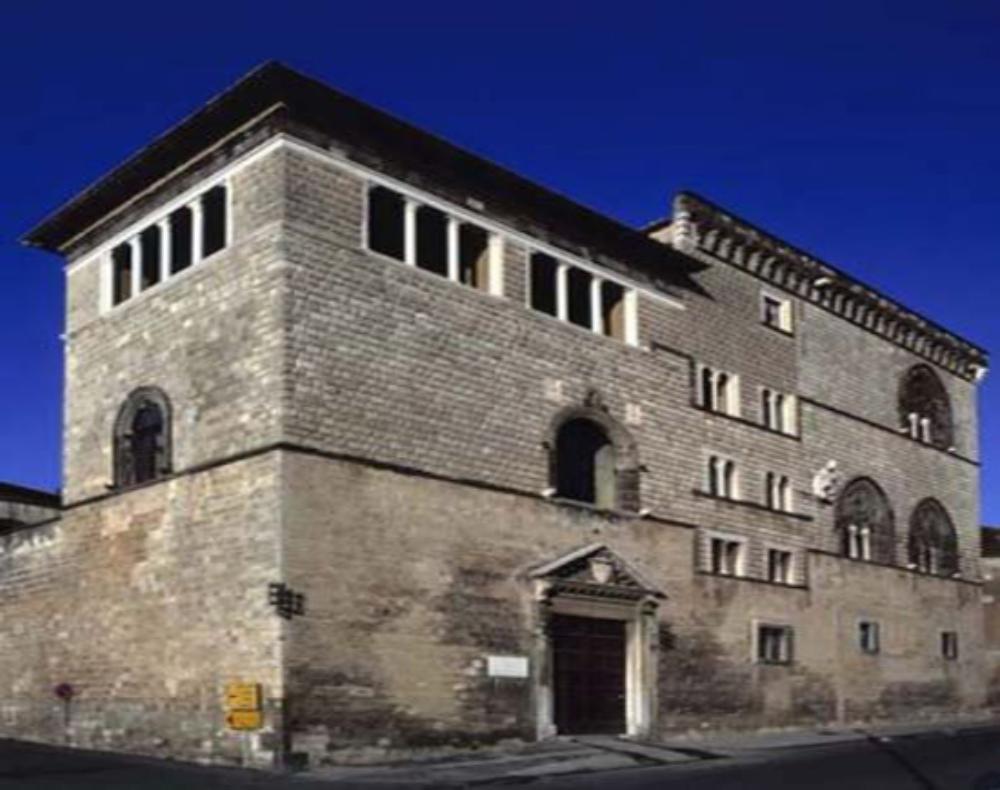


The museum is housed in the splendid Palazzo Vitelleschi, built between 1436 and 1439 by the will of Cardinal Giovanni Vitelleschi, during the pontificate of Eugene IV. The building, one of the most important monuments of the early Renaissance in Lazio, was also used as a princely residence for the popes during their stays in Corneto.
Later owned by the Soderini family, in 1900 the palace was purchased by the Municipality of Tarquinia, which in 1916 entrusted it in perpetuity to the State to be used as the National Archaeological Museum. Inaugurated in 1924 by merging two historic 19th-century collections, the Municipal Collection and the private Bruschi-Falgari counts’ collection, the museum was gradually enriched with materials from excavations carried out in the area of the ancient Etruscan city and its vast necropolises. Since the early 1980s, many museum rooms have been undergoing renovation and the old installations have been reviewed. Currently, on the ground floor, you can admire stone funerary sculptures, particularly the splendid sarcophagi from the Hellenistic period family tombs. The first floor houses furnishings from the rich city necropolises, as well as the famous terracotta relief with a pair of winged horses from the pediment of the great temple of Ara della Regina. On the second floor, paintings from some well-known painted tombs have been relocated; they were removed in the 1950s from their natural rock support for conservation reasons and remounted on frames that enable the evocative reconstruction of the funerary chamber.
Information about National Archaeological Museum
Piazza Cavour
01016 Tarquinia (Viterbo)
0766856036
Source: MIBACT