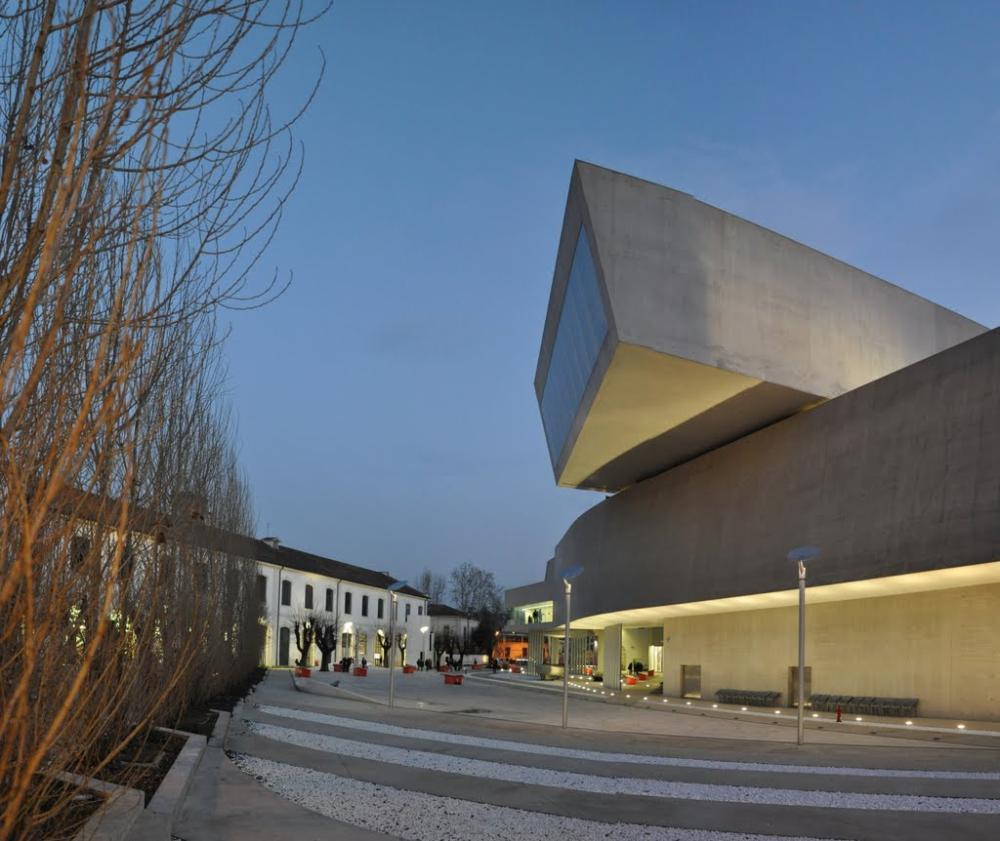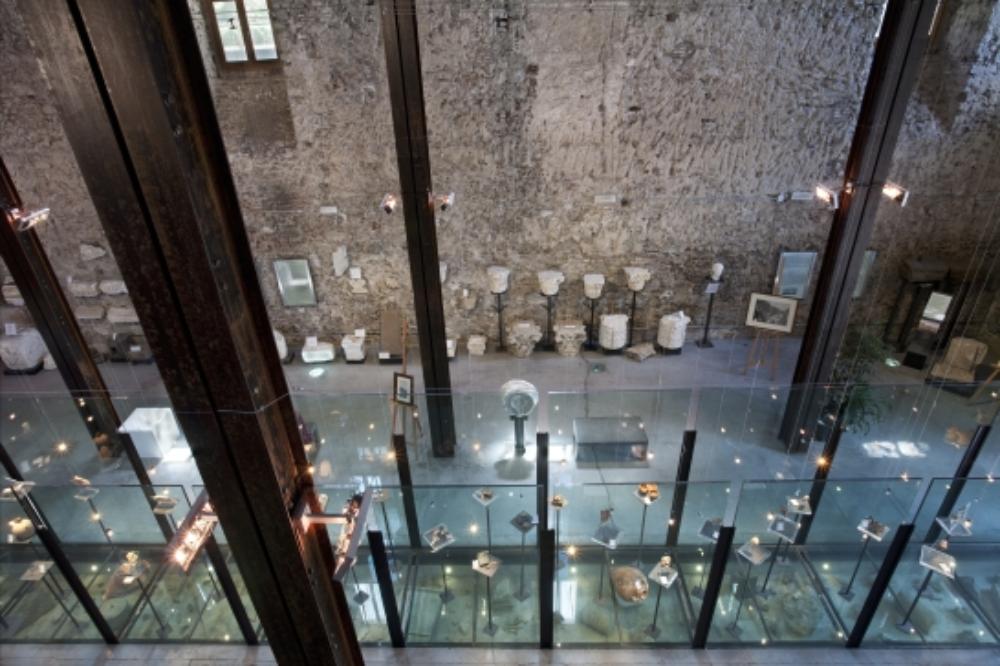


In the fortress of the Ruspoli princes family, dating back to the 13th century, is located the National Museum Cerite. The exhibition criteria for the collection take chronology into account.
For the oldest period, some burial goods from the Sorbo necropolis are displayed, with biconical vessels used as urns, both female (bowl-shaped lid) and male (helmet-shaped lid). For the Orientalizing period (7th century BC), numerous burial goods from the Monte Abatone necropolises, Casaletti di Ceri, and Laghetto are on display.
Of particular interest are a vase decorated with a mythical couple (Helen and Menelaus?) from the early 7th century BC; a small red clay cinerary urn shaped like a hut with white overpaintings (Monte Abatone) from the 7th century BC; a terracotta cinerary urn depicting a married couple reminiscent of the namesake sarcophagus preserved in the Villa Giulia museum. From the chamber tombs in the Banditaccia area come burial goods with imported Greek materials, including a Rhodian balsamarium shaped like a leg, an oinochoe of similar origin, as well as a large Corinthian Etruscan crater known as the Gobbi.
Also displayed are 6th century BC burial goods from the Banditaccia and Monte Abatone: Corinthian, Laconian imports, Attic black-figure pottery including kylikes, Tyrrhenian amphorae with inscriptions, and red-figure pottery including the large kylix with Peleus and Thetis. There are also local productions represented by rare Ceretan hydriai and a wide range of bucchero ware.
Also exhibited are two sarcophagus lids from the tomb of the Tamsnie with an inscription recalling the Etruscan name of the city (Caisre). The exhibition concludes with a display of some votive objects from the Manganello temple as well as architectural materials unearthed in recent urban area excavations.
Among the most recent acquisitions is the Odescalchi collection, donated to the museum, which includes Etruscan, Greek, and southern Italian pottery covering a chronological span from the 7th century BC to the Roman era.