In 1494, the Moro offered the Mulino di Mora Bassa as a wedding gift to his wife Beatrice d’Este. After her death in 1498, Sforza transferred the Mill, along with the surrounding lands, to the Dominicans of Santa Maria delle Grazie in Milan, who owned it until Napoleon confiscated these properties.
In 1803, Marchese Saporiti redeemed the Mill and all the Sforzesca estate from the Napoleonic state, leaving the entire inheritance to his nephew Rocca di Reggio Emilia. In 1845, Carlo Alberto, King of Piedmont, officially recognized the Marquisate of Sforzesca for him.
After an inheritance division, Mora Bassa passed to the Milanese Counts Archinto Gropallo Saporiti, who in 1988 sold the section of Roggia Mora and its hydraulic buildings to the Associazione Irrigazione Est Sesia, its current owner. In 2000, thanks to the efforts of Est Sesia and with support from the Lombardy Region and the Municipality of Vigevano, the Mill became a museum.
Inside, visitors will find an exhibition with forty panels, “Water Shapes the Landscape“, illustrating the region’s transformations over the centuries, along with a display dedicated to “Leonardo’s Machines“—projects of the Florentine genius, studied and built by skilled artisans Gabriele Niccolai and Dario Noè, with the approval of Professor Carlo Pedretti.
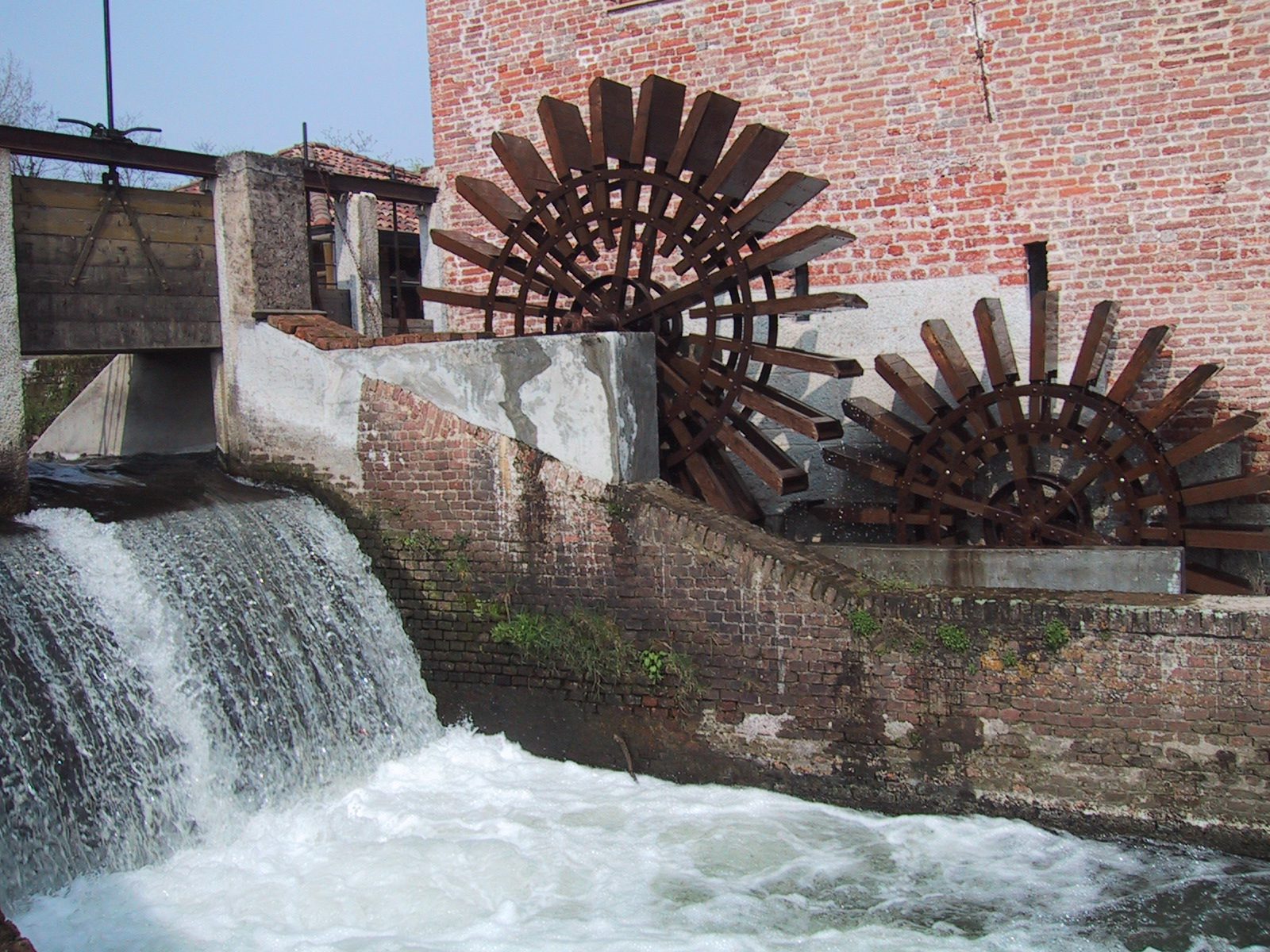
The wooden machines, crafted just as in the 15th century, are fully functional and allow visitors of all ages to touch, explore, and experience this fascinating world from the past. The magic of this place also lies in the room where the Moro and Cecilia Gallerani—the “Lady with an Ermine” painted by Leonardo—used to meet, and where legend claims their spirits linger.
Outside, the Mill boasts a large garden. Part of it features an educational trail for learning about irrigation measurement systems, and there is also a multipurpose hall for conferences, workshops, and other events.
Information for Mulino di Mora Bassa: Strada Mora Bassa, 38 – 27029 Vigevano (Pavia). Tel. 393 9517846. Email: [email protected]