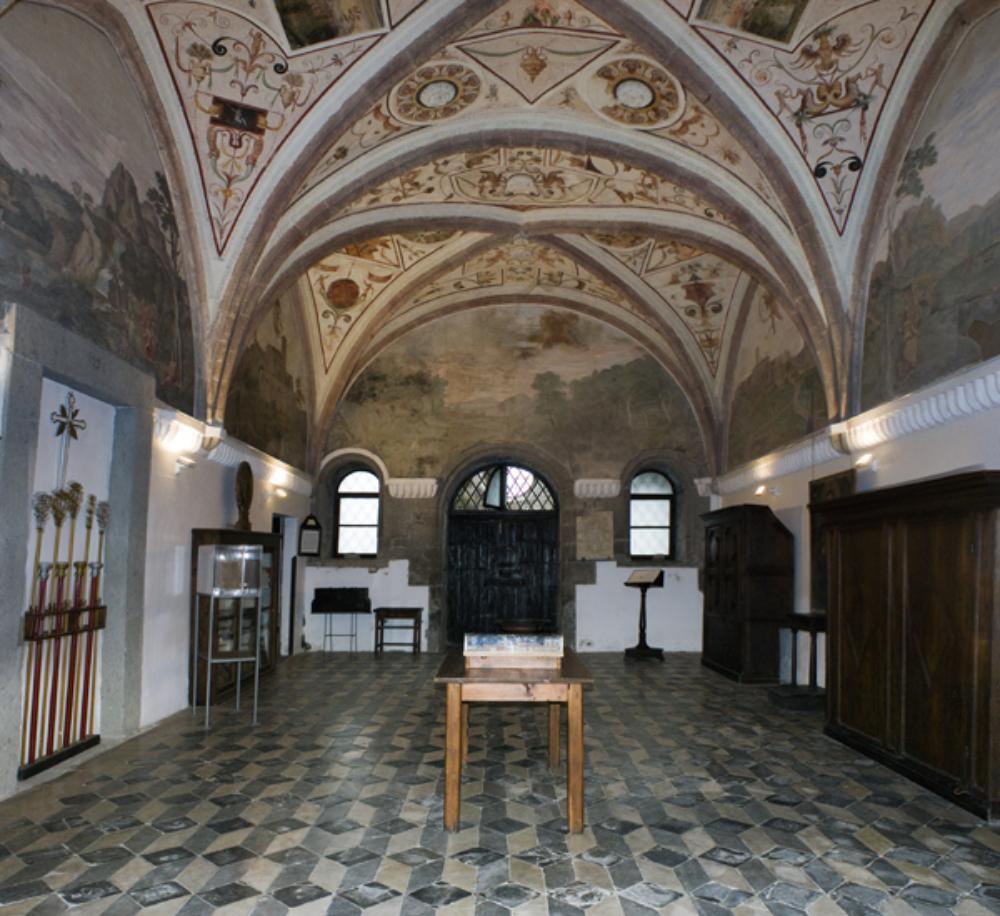



Since June 23, 2015, the Quirinale, symbol of the Italian State and official residence of the President of the Republic, has opened its doors to citizens and tourists. This initiative has transformed the Palazzo del Quirinale in Rome from a “power” building into a place accessible to the public, offering a unique opportunity to explore art and history at the Quirinale.
- FIRST QUIRINALE ROUTE
- Noble Floor
- Ground Floor
- SECOND QUIRINALE ROUTE
- Noble Floor
- La Vasella
- Quirinale visit: other points of interest
- The Quirinale Gardens
- Carriages
- Ground Floor
- How much does it cost to visit the Quirinale
- How to book a visit to the Quirinale
- School Visits to the Quirinale
- Quirinale Opening Hours
- Quirinale Visit Days
- Information for visiting the Quirinale: what to know
- Security Checks
- Access mode for people with disabilities
- Art and History at the Quirinale
Before 2015, visits to the Quirinale were limited to a small free area. Today, visitors can access a significant part of this historic complex, including the Quirinale gardens, the carriage museum, the stables, and the rooms housing the precious Savoy porcelains. The tour also includes admission to the Paoline Chapel, the Corazzieri Hall, the Banquet Hall, the Hercules Room and the Gallery of Alexander VII.
Guided tours of the Quirinale are available in two routes, offering visitors the flexibility to choose between a shorter or more in-depth experience:
- FIRST ROUTE: artistic and institutional (duration about 1 hour and 20 minutes)
- SECOND ROUTE: artistic, institutional and thematic (duration about 2 hours and 30 minutes)
The second route, in addition to including everything in the first, also offers access to La Vasella, the Quirinale Gardens, and the Carriages.

FIRST QUIRINALE ROUTE
Noble Floor
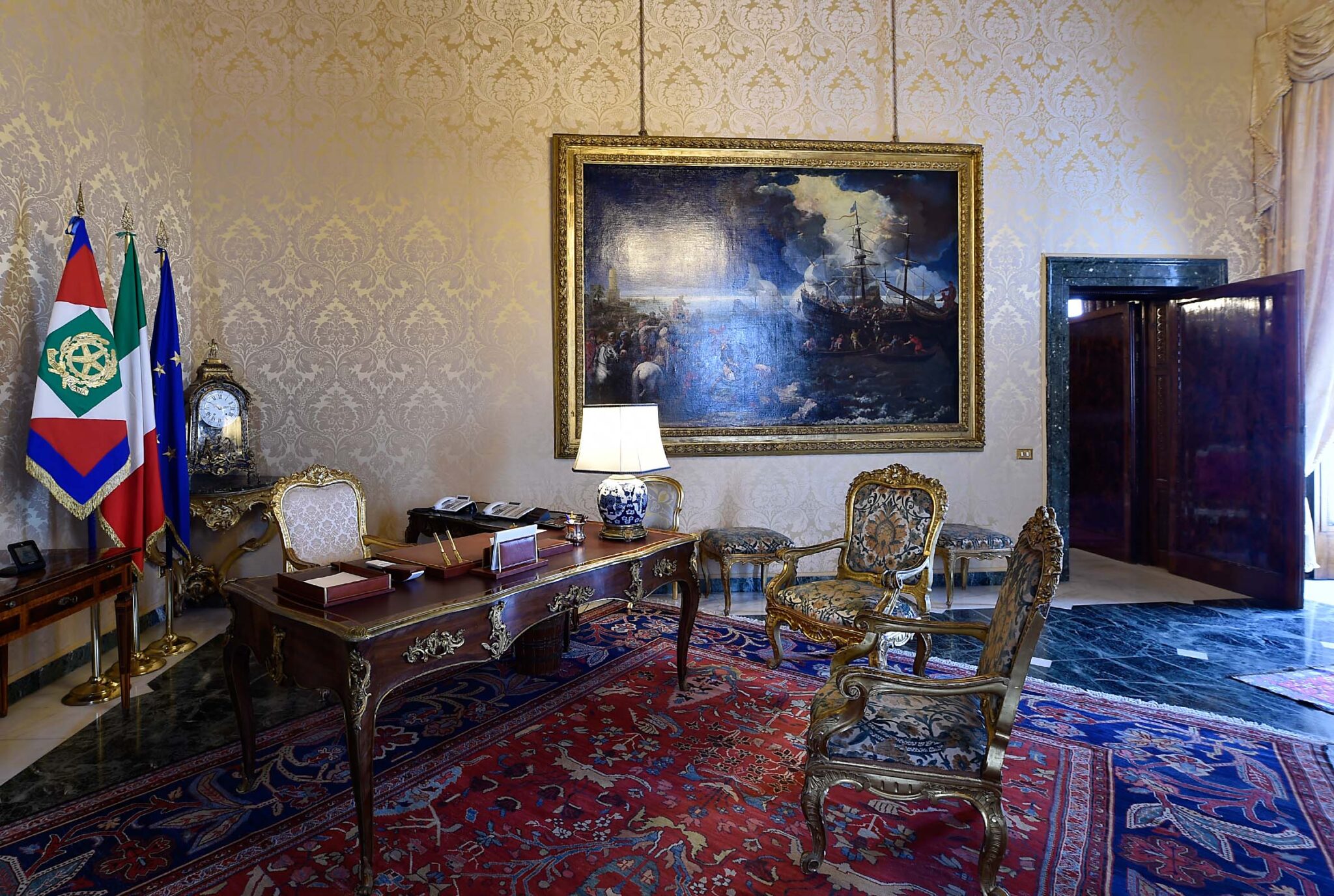
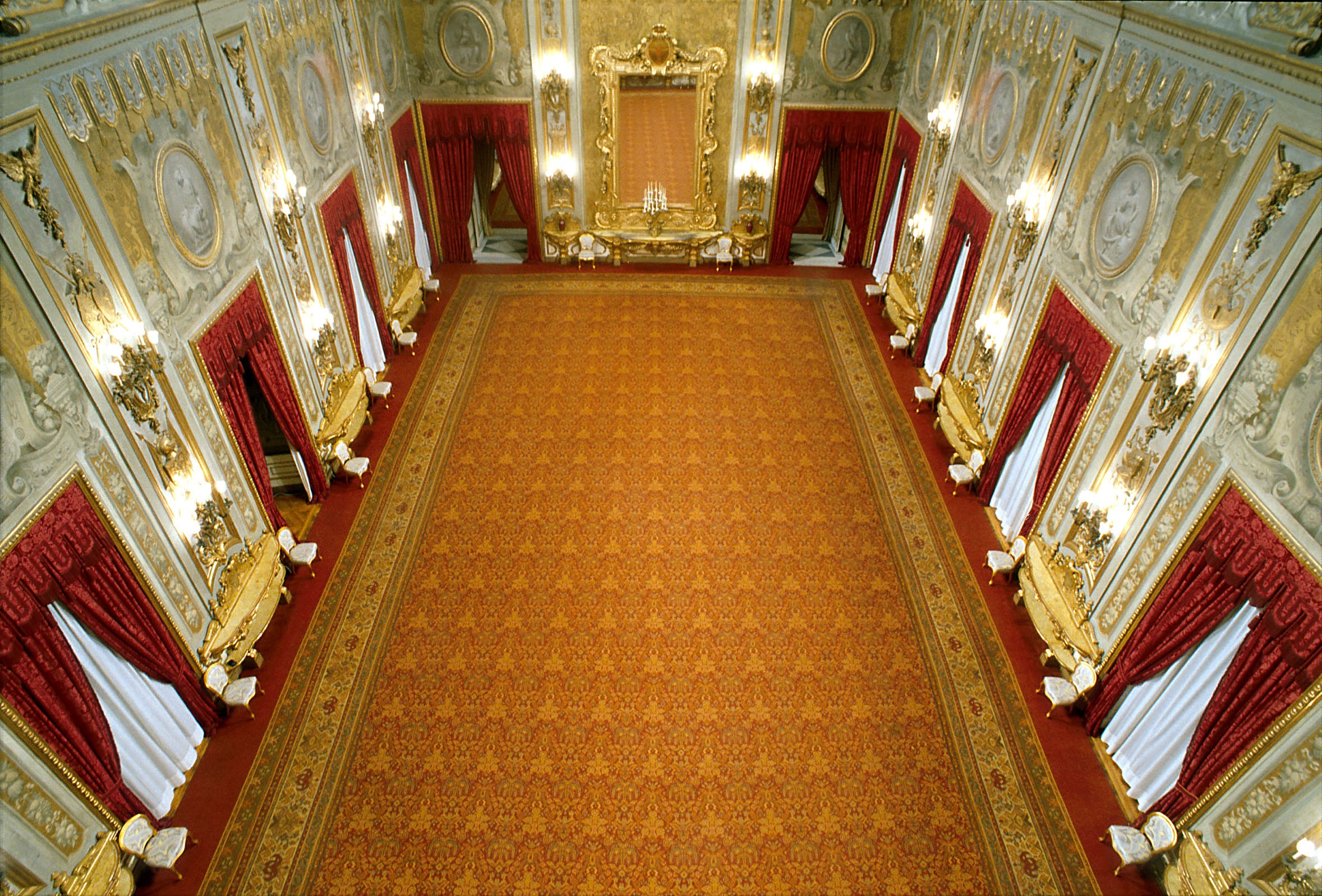
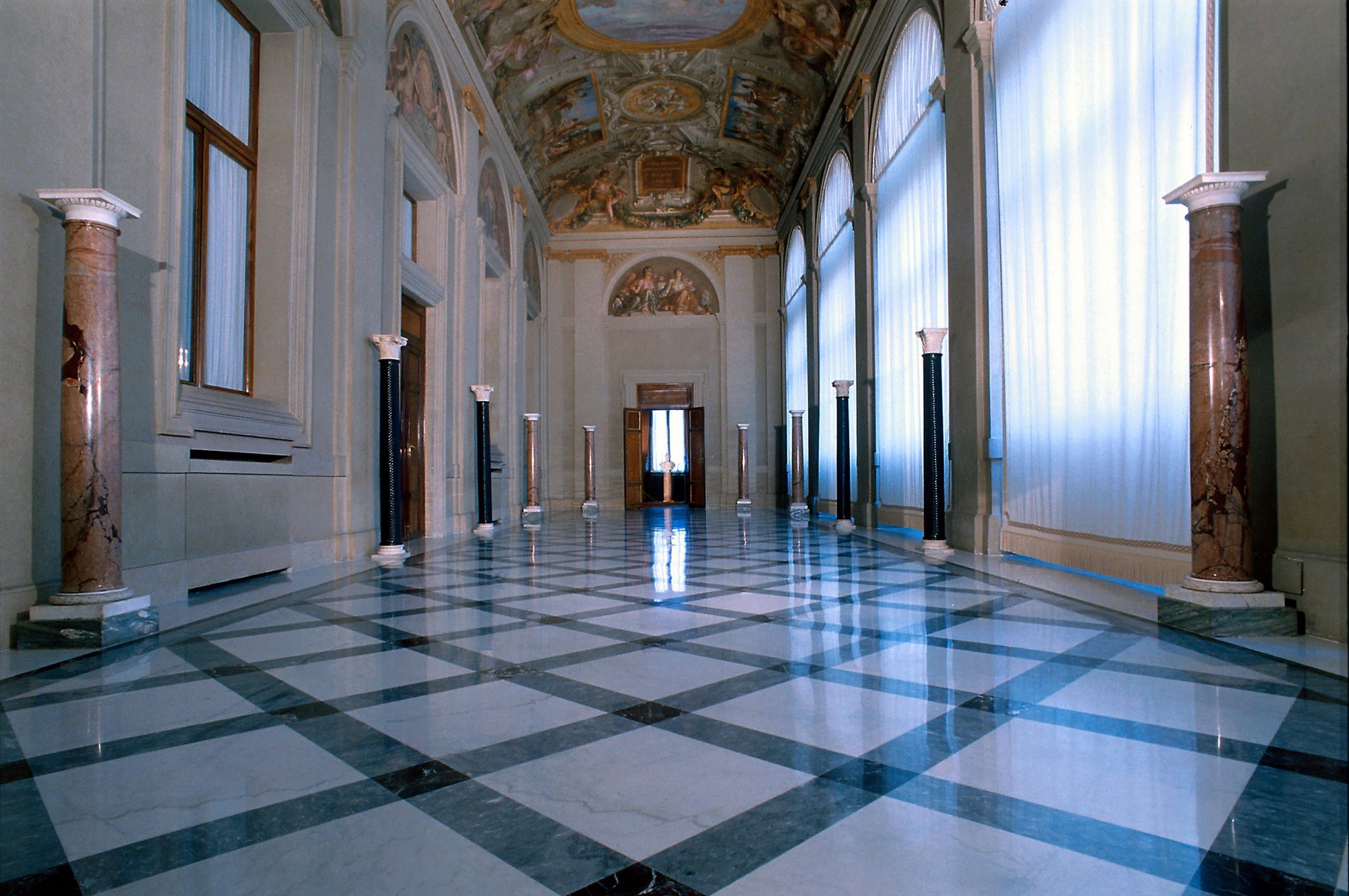
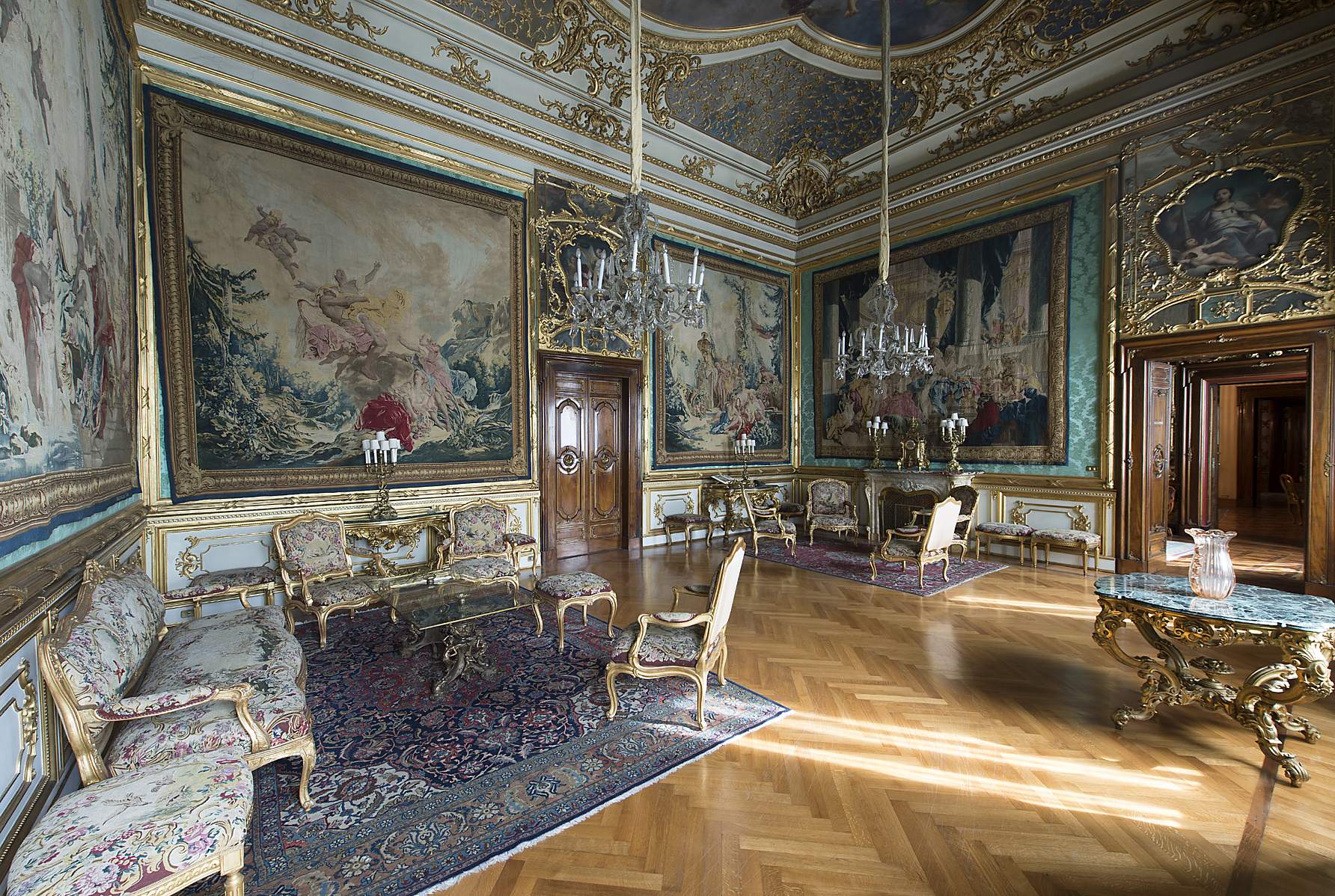
The tour begins with the Grand Staircase and continues through a series of magnificent rooms, including the Antechamber of the Banquet Hall, the Bust Gallery, the Corazzieri Hall, and many others. Visitors can admire the interiors of the Quirinale, rich in artworks and historic furnishings, testifying to the long history of the palace as a papal, royal, and presidential residence. In particular: Grand Staircase, Antechamber of the Banquet Hall, Bust Gallery, Seasons Room, Corazzieri Hall, overlook to the Paoline Chapel, First Representation Room, Virtues Room, Flood Room, Loggias Room, Bussolanti Room, Balcony Room, San Giovanni Sitting Room, Yellow Room, Augustus Room, Ambassadors Room, Hercules Room, Caskets Room, Urbano VIII Passage, Drusus Room, President’s Study, Lille Tapestry Room, Napoleonic Sitting Room, overlook to the Piffetti Library, Bronzino Room, Honor Loggia, Bees Room, Ladies Room, Victory Room, Peace Room, Music Room, Zodiac Room, Paolo V’s Workshops Room, Tapestries Room, Mirrors Room, Banquet Hall.

Ground Floor
On the ground floor, visitors can explore an exhibition on the history of the Palazzo del Quirinale, which recounts its past as a residence of Popes, the Savoys, and Presidents of the Republic. This section includes the Popes’ Room, the King’s Study, and a room dedicated to the Presidents of the Republic, where the Italian Constitution is displayed along with historic documents and photographs. Finally, the Globe Room, with an exhibition of historic-institutional objects and documents.
SECOND QUIRINALE ROUTE
The second route offers a more complete experience, including everything present in the first route plus some additional areas.
Noble Floor
Grand Staircase, Antechamber of the Banquet Hall, Bust Gallery, Seasons Room, Corazzieri Hall, overlook to the Paoline Chapel, First Representation Room, Virtues Room, Flood Room, Loggias Room, Bussolanti Room, Balcony Room, San Giovanni Sitting Room, Yellow Room, Augustus Room, Ambassadors Room, Hercules Room, Caskets Room, Urbano VIII Passage, Drusus Room, President’s Study, Lille Tapestry Room, Napoleonic Sitting Room, overlook to the Piffetti Library, Bronzino Room, Honor Loggia, Bees Room, Ladies Room, Victory Room, Peace Room, Music Room, Zodiac Room, Paolo V’s Workshops Room, Tapestries Room, Mirrors Room, Banquet Hall.

La Vasella
This section displays a vast collection of tableware, porcelains, candlesticks, and kitchen utensils, including fine pieces by Richard Ginori, Meissen, and Sèvres, as well as oriental porcelains owned by the Savoys.
Quirinale visit: other points of interest
The Quirinale Gardens
The garden tour includes the Grove with the Rustic Fountain, the Tower of Ippolito d’Este complex, the Fountain of the Bathing Women, and the Coffee House, offering a glimpse into the green spaces of this historic palace.

Carriages
The Carriage Museum displays four Grand Gala carriages dating from 1789 to 1819, along with a gallery of carriages used until 1939. The Historical Cabinet shows harnesses offered by various sovereigns to the Savoys and some decorations of Napoleon’s carriage, King of Italy.
(To access the Carriage exhibition area, an external staircase of about 80 steps must be climbed, which must also be descended on return).
Ground Floor
Exhibition on the history of the Palace as residence of the Popes, the Savoys, and the Presidents of the Republic; Popes’ Room; King’s Study; Room adjacent to the King’s Study, with exhibition on the Savoys and the Albertine Statute; Room dedicated to the Presidents of the Republic, with display of the Italian Constitution, historical documents, photographs, and short film screenings; Globe Room, with exhibition of historic-institutional objects and documents. In case of rain, the visit might not include crossing the Gardens.
How much does it cost to visit the Quirinale
- The first route is free, with a mandatory booking fee of 1.50 euros.
- The second route costs 20 euros, including the booking service. Various discounts and free entries are available for students, teachers, over 65s and persons with disabilities.
It is free for students and teachers of schools organizing the visits; for those under 18; for students and professors of faculties of Architecture, Cultural Heritage Conservation, Education Sciences, and degree courses in Literature or literary subjects, with archaeological or art-historical focus, from Faculties of Literature and Philosophy and Fine Arts Academies, upon presenting the enrollment certificate for the current Academic Year; for disabled persons and their attendants, except for the booking fee.
For visitors aged between 18 and 25 and over 65, and for teachers of state schools, the cost of route 2 is €5.
How to book a visit to the Quirinale
Bookings can be made through:
- Call center: tel. 06 39.96.75.57 (Monday-Sunday, 9:00-19:00)
- INFOPOINT: Information and booking center, Salita di Montecavallo 15, Rome
- Online Quirinale Bookings
It is necessary to book at least 5 days before the date of the visit. Visits are organized in groups of maximum 30 people, with entries every twenty minutes.
It is important to know that entrance rounds accompanied by volunteers trained by Quirinale staff will be respected, hence booking is mandatory. Booking is required at least 5 days before the visit date. Visits are organized for a maximum of 30 people, with entries every twenty minutes. The ticket is nominative and tied to a date and time. In case of delay compared to the scheduled visit time, entry to the Palace will no longer be allowed. The date and time of the visit cannot be changed and the ticket is non-refundable.
During institutional events, both routes may be subject to changes and/or reductions. In case of bad weather, Route 2 (Artistic-institutional and thematic) may undergo modifications due to the inaccessibility of some outdoor areas. In these cases, no refund, not even partial, of the entrance ticket is provided.
Booked visits may also be canceled due to unforeseen institutional commitments. In such cases it will be possible to reschedule the visit or obtain a refund of the amount paid. Unsold entrance tickets can be purchased up to one hour before the start time of the visit at the INFOPOINT, still paying the booking fee.
The visit is accompanied by volunteer staff. Agreements have been made with “Sapienza – University of Rome”, the University of Rome “Tor Vergata”, the University of Rome Tre, and the Italian Touring Club.
The visit to the Palazzo del Quirinale does not include access to current exhibitions, except those set up in the visit routes. The visit is in Italian. Visitors must arrive 15 minutes before the visit begins, with a valid identification document. If the personal data of the names indicated at booking do not match the data on the documents, access will be denied.
Children under 12 must be accompanied by an adult.
School Visits to the Quirinale
Visit requests from schools must be sent directly to the Palazzo del Quirinale via certified email at: protocollo.centrale@pec.quirinale.it, or by fax at 0646993125, or alternatively by postal mail to “Secretariat General of the Presidency of the Republic – Intendant Service – Via del Quirinale, 00187 Rome”.
Requests may be sent from July 1 and will be processed in the order received until availability is exhausted. Visits are organized for up to two class groups plus teachers, up to 60 participants per school, and are conducted by specialized staff of the Palazzo del Quirinale; they are completely free and take place on Tuesdays, Wednesdays and Fridays. School visits are reserved for the first route only.

Quirinale Opening Hours
The Palazzo del Quirinale is open from 9:30 AM to 4:00 PM. The last entry for route 1 is at 2:30 PM, while for route 2 it is at 1:30 PM.

Quirinale Visit Days
Visits are possible on Tuesdays, Wednesdays, Fridays, Saturdays, and Sundays. The palace is closed on certain specific dates throughout the year, including holidays and for institutional commitments. The Palace is closed on: March 8, April 21, May 1, from May 23 to June 3, from July 29 to September 2, from December 23 to January 6, 2020.
Entrance: Via del Quirinale at the height of Via della Consulta – 00187 Rome.

Information for visiting the Quirinale: what to know
Security Checks
At the entrance, every visitor will undergo the necessary security checks. It is not permitted to bring bulky or potentially dangerous objects, nor to take photos or video recordings.
At the entrance, every visitor will undergo the necessary security checks. It is not allowed to:
- bring suitcases, trolleys, bags, backpacks, plastic or glass bottles, cans, umbrellas, sharp, pointed or blunt objects;
- take photographs or make video recordings;
- use amplification devices or radio transmission devices;
- leave the designated paths;
- touch furnishings and artworks;
- smoke (including electronic cigarettes).
Animals are not allowed. It is necessary to follow the general instructions indicated by the signage.
Access mode for people with disabilities
The Palazzo del Quirinale is equipped to welcome visitors with disabilities. It is advisable to report any specific needs at the time of booking to ensure adequate assistance.

Art and History at the Quirinale
The Quirinale, besides being the residence of the President of the Italian Republic, is a true museum of art and history. Its rooms house works by renowned artists like Gian Lorenzo Bernini and contain precious collections that tell the history of Italy. The palace architecture, by architects such as Domenico Fontana and Ferdinando Fuga, is itself a masterpiece that testifies to the evolution of Italian art through the centuries.
The Manica Lunga, an extension of the palace designed by Ottaviano Mascherino, houses one of the most important art collections of the Quirinale. The Savoy Stables, now converted into exhibition spaces, regularly host exhibitions at the Quirinale which further enrich the cultural offering of this extraordinary complex.
Visiting the Quirinale means immersing oneself in a journey through Italian art, history, and culture within what is not only a royal palace of Rome but also the beating heart of the Italian Republic. Guided tours at the Quirinale offer a unique opportunity to explore this invaluable cultural heritage, allowing visitors to admire the interiors of the Quirinale and understand the central role this palace has had and continues to have in Italy’s history.