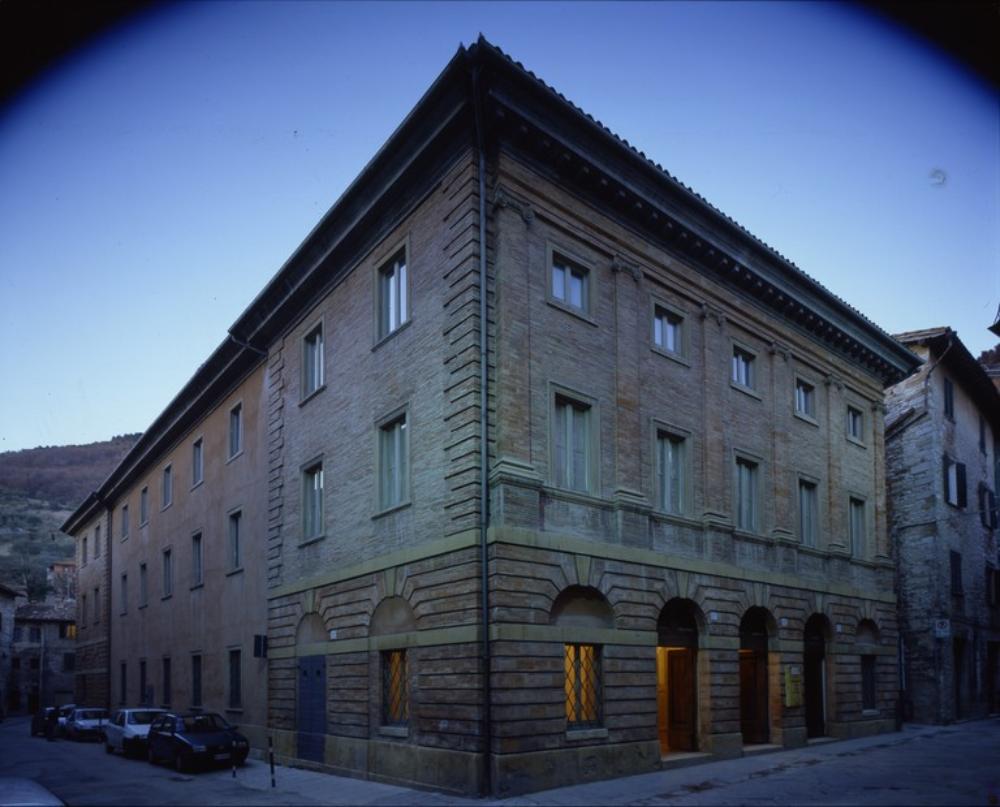
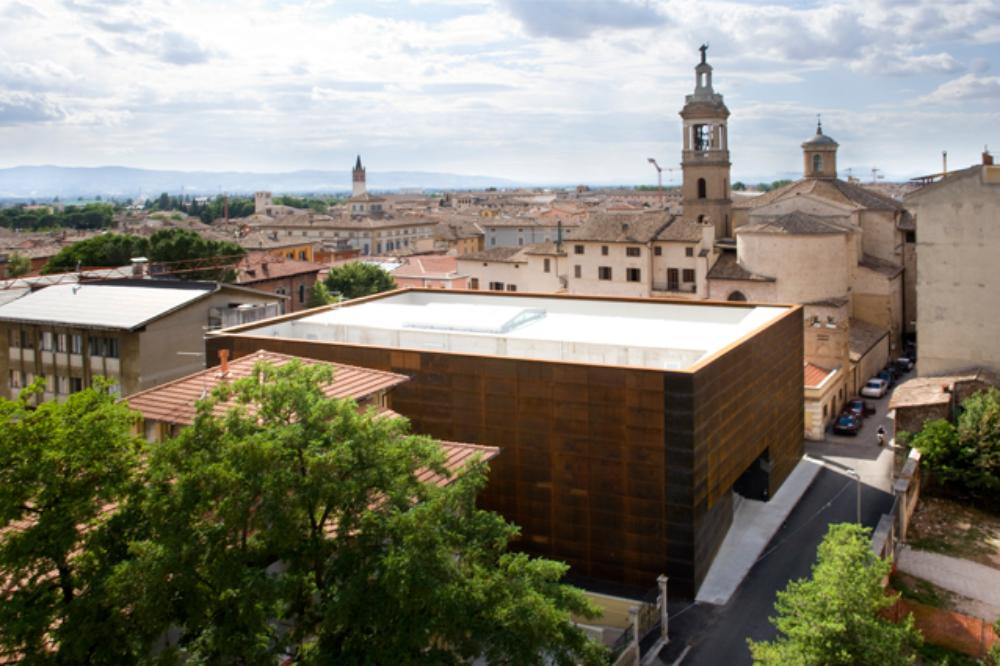
The Chapter Museum of San Lorenzo is located in Perugia’s main square, Piazza IV Novembre, opposite the Fontana Maggiore and adjacent to the cathedral entrance.
It has been reopened to the public since 2000, following restoration works that significantly expanded its exhibition spaces.
Established in 1923, the museum consists of works originating from the cathedral and diocesan churches: goldsmithery, liturgical vestments, paintings, and sculptures that offer a valuable testimony of artistic production from the 11th to the 19th century.
In the lapidarium, set up in the recently recovered underground rooms, numerous archaeological pieces are on display. The rooms are likely part of what was once Martino IV’s palace. The exhibited fragments, dating from the 13th to the 16th century, come from the ancient cathedral and nearby places of worship.
The rich art gallery is second in Perugia, in terms of quantity of works, only to the National Gallery of Umbria. Notable pieces include: the Saint Onofrio altarpiece painted by Luca Signorelli in 1484 for the cathedral, the only work by the Cortona master in the city; the Deacon’s Head by Arnolfo di Cambio; the architectural fragment from Giovanni Pisano’s workshop; the two triptychs by Meo da Siena and Agnolo Gaddi; the Pietà by Bartolomeo Caporali; and the Marriage of the Virgin by Carlo Labruzzi, painted in 1815 to replace, on St. Joseph’s altar, the one painted by Perugino, confiscated by Napoleonic troops in 1797.
Since January 2011, guided tours allow visitors to explore an archaeological path that stretches about 1 km beneath the cathedral, built right on top of a terrace of the Etruscan city, offering a glimpse into several eras of the city (Etruscan, Roman, late antique, medieval).
The excavations have brought to light the large retaining wall of the terrace, built using a technique similar to Etruscan walls but much better preserved.
The existence of sacred buildings in the area, dating back to the archaic period (6th – 4th century BC), is evidenced by the foundations’ remains and the polychrome terracotta decorations of the temple buildings (the Silenus head antefixes) now displayed at the National Archaeological Museum of Perugia.
At the foot of the terrace, a paved section of an important roadway of the Etruscan-Roman city has been uncovered, connecting with the one long-identified beneath Piazza Cavallotti.
Probably since the Byzantine era, the terrace was used for defensive purposes, and from the 10th century onwards, around the cathedral church, a monumental complex of buildings, towers, and palaces gradually formed: the “castle of San Lorenzo,” as designated by medieval documents.
Information about the Chapter Museum of the Cathedral of San Lorenzo
Piazza IV Novembre,
06121 Perugia (Perugia)
0755724853
[email protected]
https://meseiecclesiastici.it/umbria
Source: MIBACT