


New York, the city that never sleeps, is a true paradise for food lovers. With its extraordinary cultural diversity and long history of immigration, the Big Apple has created a unique gastronomic scene where culinary traditions from every corner of the globe merge to create unforgettable flavors. In this article, we will explore the 5 best culinary specialties of New York, dishes that embody the very essence of this vibrant and cosmopolitan metropolis.
- 1. The Pastrami Sandwich: The King of New York Delis
- The Origin of Pastrami
- The Preparation of Pastrami
- The Perfect Sandwich
- Where to Taste the Best Pastrami Sandwich in New York
- 2. The New York Bagel: The Ring of Delight That Conquered the World
- The Origins of the Bagel
- What Makes the New York Bagel Unique
- The Preparation Process
- How to Eat a Bagel in New York
- The Best Places to Taste a Bagel in New York
- 3. New York Pizza: A Slice of Heaven
- The Origins of New York Pizza
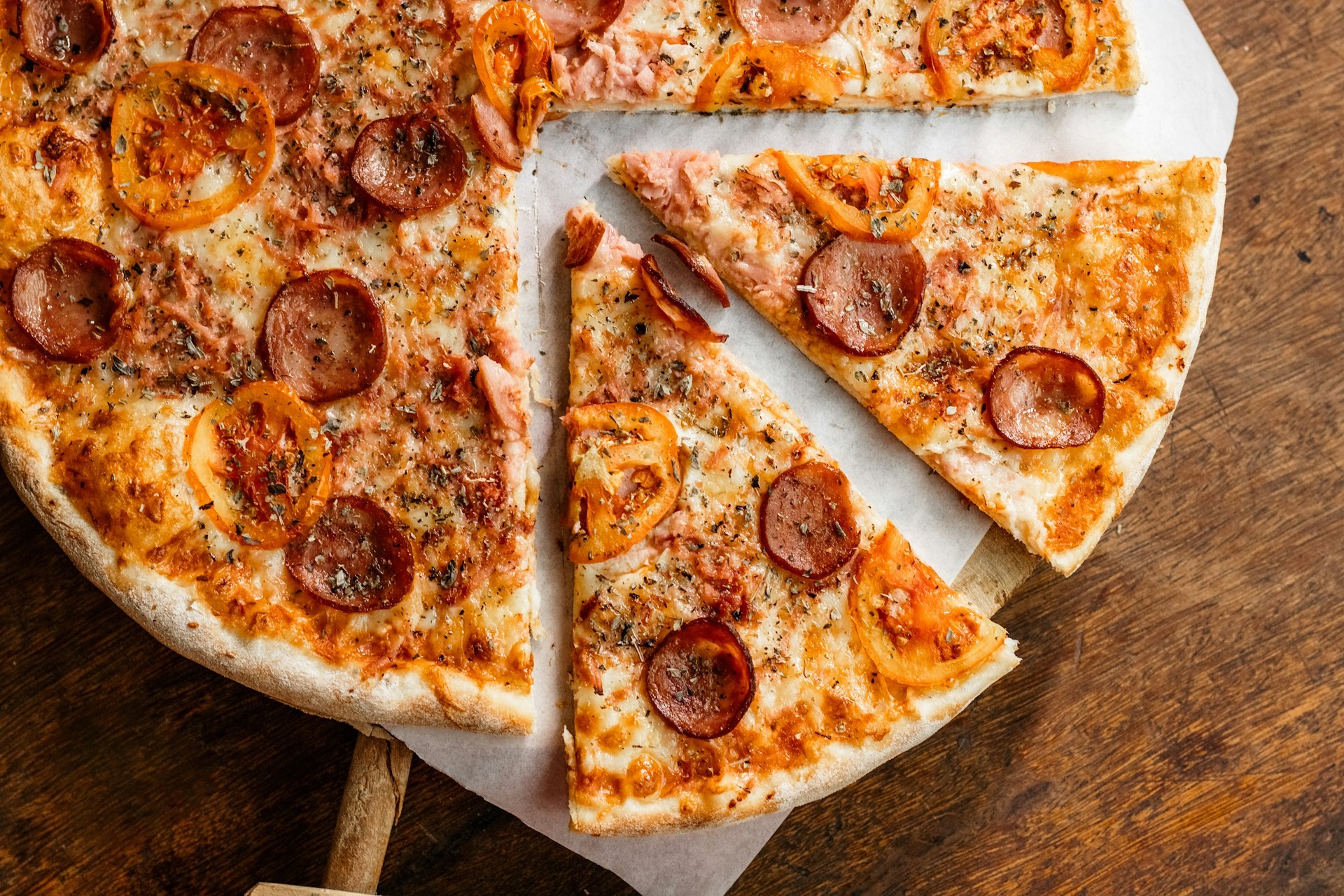
- Characteristics of New York Pizza
- The Ritual of Eating Pizza in New York
- The Best Pizzerias in New York
- New York Pizza in the Cultural Context
- 4. The New York Cheesecake: The Sweet Symbol of the Big Apple
- The Origins of New York Cheesecake
- Characteristics of New York Cheesecake
- The Preparation Process
- Variations of New York Cheesecake
- The Best Places to Taste Cheesecake in New York
- Cheesecake in New York Culture
- 5. New York Hot Dog: The Ultimate Street Food
- The Origins of the New York Hot Dog
- Characteristics of the New York Hot Dog
- How to Eat a Hot Dog in New York
- The Best Places to Enjoy a Hot Dog in New York
- The Hot Dog in New York’s Cultural Context
- Conclusion: New York, a Gastronomic Paradise to Explore
From the crowded streets of Manhattan to the most authentic neighborhoods of Brooklyn, every corner of New York hides a culinary treasure to discover. Whether it’s a succulent pastrami sandwich, a freshly baked bagel, or a crispy slice of pizza, every bite tells a story, every flavor is a piece of the cultural mosaic that makes New York so special.
Get ready for a gastronomic journey through the city’s most iconic flavors, from the specialties that made Jewish delis famous to the street food delicacies that have won the hearts (and stomachs) of millions of New Yorkers and tourists. We will uncover not only the dishes but also the best places to taste them, the secrets of their preparation, and the curiosities that make them so beloved.
Whether you are a hardcore foodie or simply curious about new culinary experiences, this journey through New York’s top 5 culinary specialties will make your mouth water and deepen your love for this extraordinary city. Buckle up and prepare for an unforgettable gastronomic adventure in the beating heart of the Big Apple!
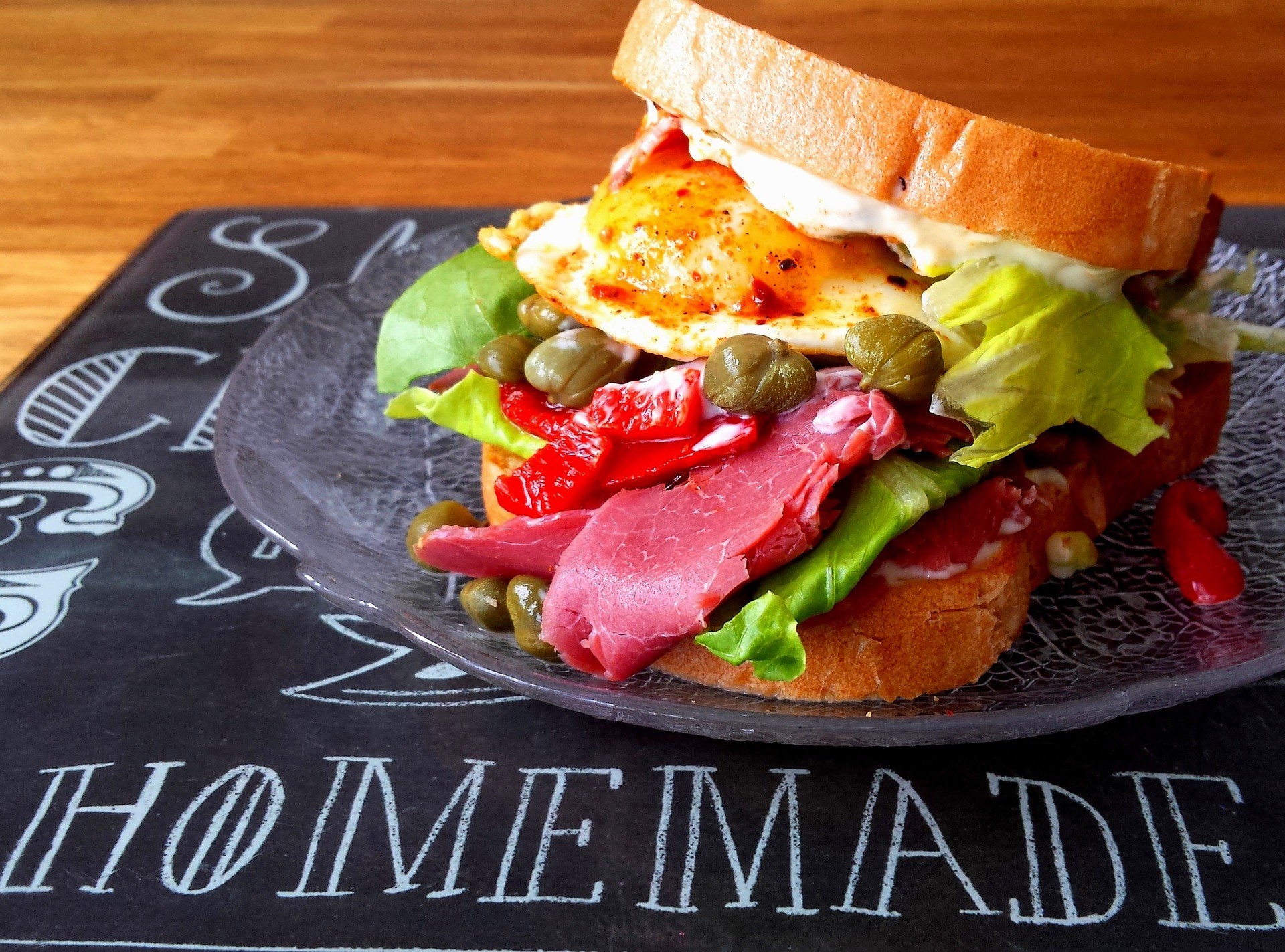
The pastrami sandwich is undoubtedly one of New York’s most iconic and beloved dishes. This succulent culinary masterpiece embodies the very essence of New York Jewish cuisine, representing a true culinary institution in the city.
The Origin of Pastrami
Pastrami has a fascinating history rooted in Eastern Europe. Originally, this meat preservation technique was developed by nomadic peoples to keep food during long journeys. The term “pastrami” probably comes from the Romanian word “pastrama“, which refers to a method of preserving meat by salting and smoking.
With the arrival of Jewish immigrants in New York between the late 19th and early 20th centuries, pastrami found a new home in the Big Apple. Here, the original recipe was perfected and adapted to local tastes, giving rise to the pastrami we know and love today.
The Preparation of Pastrami
The preparation of pastrami is an art that requires time, patience, and skill. The process starts with the selection of the cut of meat, usually beef brisket. The meat is then subjected to a long brining process, during which it absorbs salt and spices that enhance its flavor. After the brine, the meat is coated with a spice mix, including black pepper, coriander, garlic, and paprika. This spice crust not only gives pastrami its characteristic flavor but also creates a delicious crust during cooking.
The next step is smoking, which gives pastrami its unmistakable aroma. Finally, the meat is steamed until it reaches incredible tenderness, ready to be sliced and served.
The Perfect Sandwich
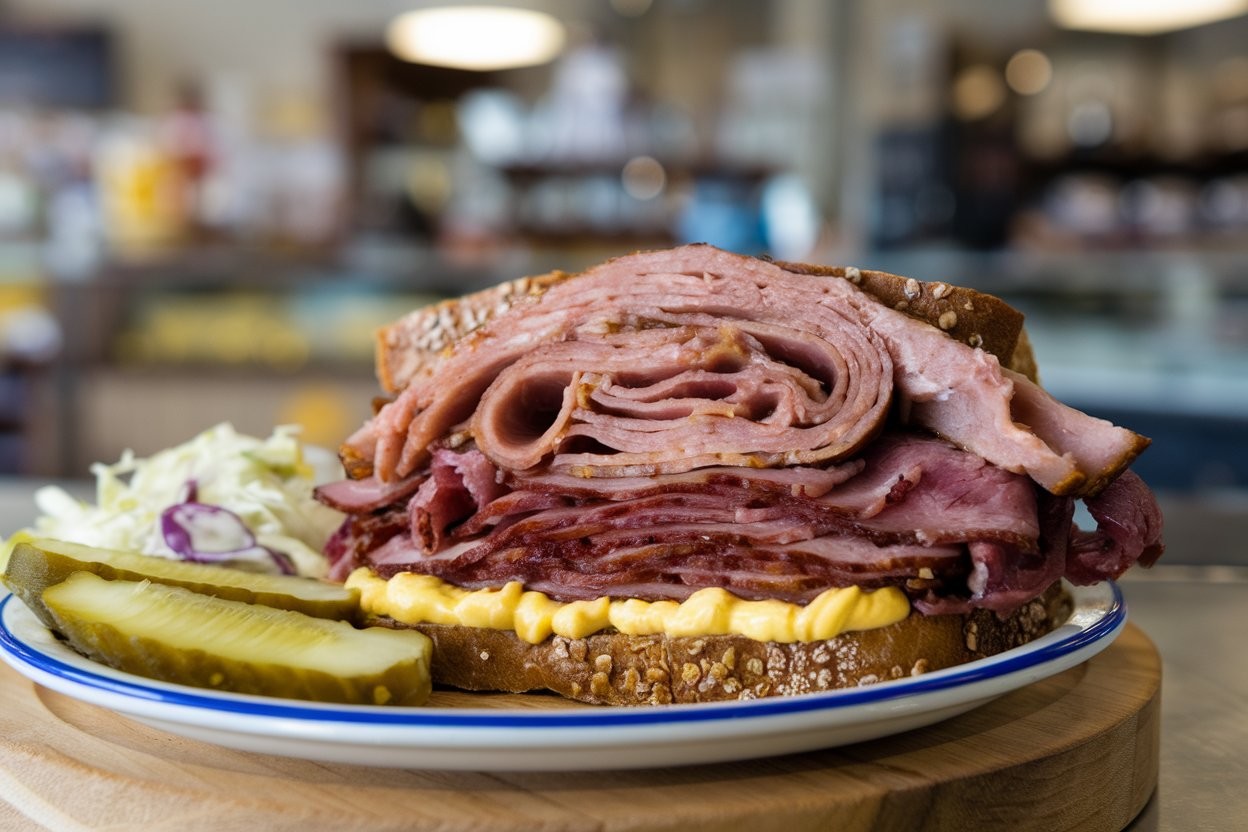
The true New York pastrami sandwich is a symphony of flavors and textures. The base is made of two slices of rye bread, preferably lightly toasted. The bread is then generously spread with spicy mustard, which perfectly balances the richness of the pastrami. The heart of the sandwich is, of course, the pastrami itself. The slices of meat, cut thin but not too thin, are piled generously on the bread. Quantity is key: a true pastrami sandwich must be abundant, almost challenging to eat.
Some purists argue that the sandwich should contain only pastrami, mustard, and bread. Others accept the addition of pickles or sauerkraut, which add a tart and crunchy note to the sandwich.
Where to Taste the Best Pastrami Sandwich in New York
New York is dotted with delis and restaurants serving pastrami sandwiches, but some places have become true legends:
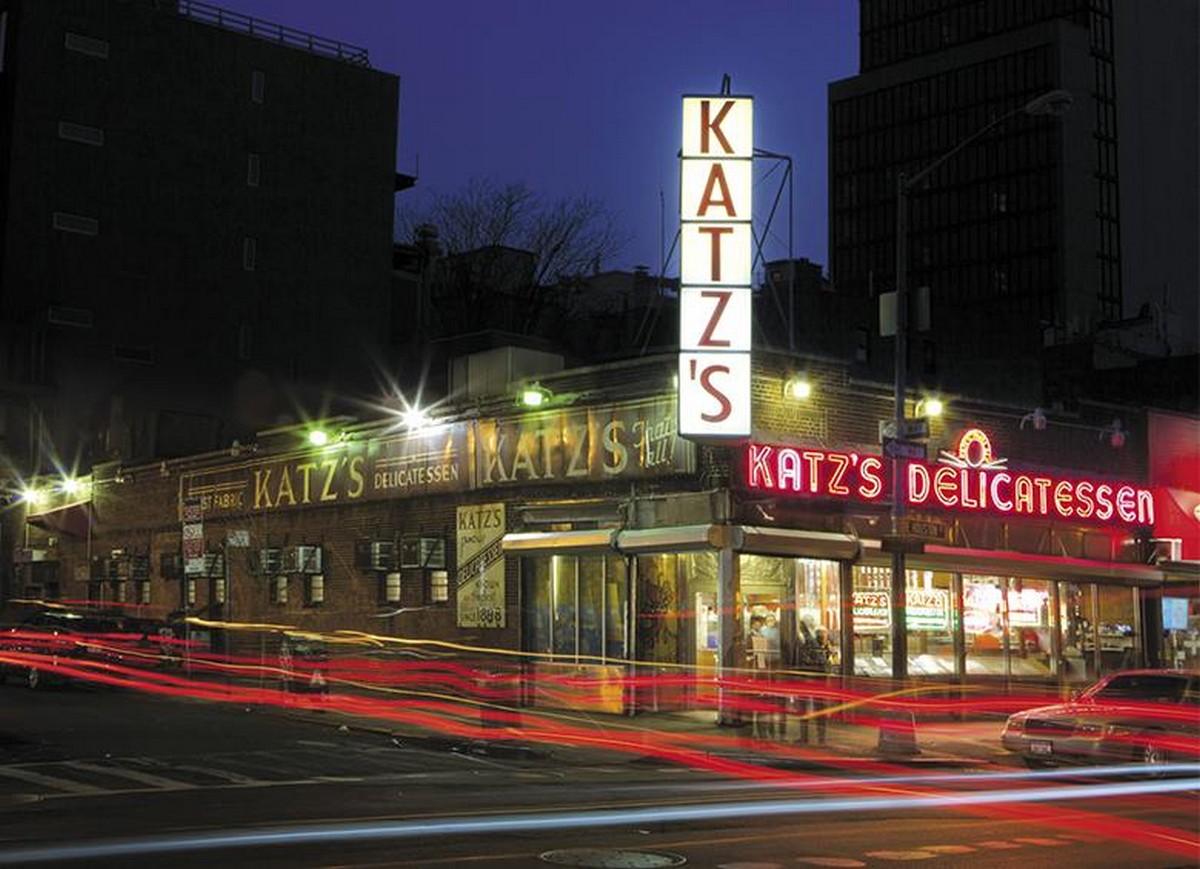
- Katz’s Delicatessen: located in the Lower East Side, Katz’s is probably the most famous deli in New York. Their pastrami sandwich is considered by many the best in the city.
- 2nd Avenue Deli: despite the name, this historic deli is now on 33rd Street. Their pastrami is prepared according to traditional recipes passed down for generations.
- Pastrami Queen: this small deli in the Upper East Side serves a pastrami sandwich that many consider on par with Katz’s.
- David’s Brisket House: located in Brooklyn, this deli offers an interesting fusion of Jewish tradition and Middle Eastern influences.
- Frankel’s Delicatessen: a newcomer on the New York deli scene, Frankel’s in Brooklyn is quickly gaining a reputation for its excellent pastrami.
The pastrami sandwich is much more than a simple dish: it is a culinary experience that tells the story of New York, its immigrant communities, and its ability to reinvent and perfect culinary traditions. Each bite is a dive into the city’s rich gastronomic history, a taste of its multicultural soul. There is no better way to start our journey through New York’s culinary specialties.
The bagel is perhaps one of New York’s most significant contributions to world gastronomy. This small ring of bread, with its characteristic dense texture and shiny surface, has become a culinary symbol of the city, loved by New Yorkers and tourists alike.
The Origins of the Bagel
The story of the bagel begins far from New York, in 16th century Eastern Europe. Legend has it that the bagel was created in Kraków, Poland, as a tribute to Polish King Jan Sobieski, who saved the city of Vienna from the Ottoman invasion. The circular shape of the bagel represented the king’s stirrup.
The bagel came to New York with Jewish immigrants from Eastern Europe at the end of the 19th century. Here it found fertile ground to evolve and become a culinary icon. New York’s Jewish bakers perfected the recipe, creating what is now known as the “New York style bagel.”
What Makes the New York Bagel Unique
The New York bagel stands out for several characteristics:
- Texture: a true New York bagel has a crispy and shiny crust, while the inside is dense and chewy.
- Flavor: the flavor is slightly sweet and malty, with complexity derived from the fermentation process.
- Size: New York bagels are generally larger than those found elsewhere in the world.
- Baking Method: the secret lies in boiling the dough before baking, which gives the bagel its characteristic texture and shine.

The Preparation Process
Making an authentic New York bagel is an art that requires time and skill:
- Dough: made with high-protein flour, yeast, salt, and malt. It is then left to rise slowly, often overnight.
- Shaping: the dough is divided into portions and shaped into the characteristic ring form.
- Boiling: the bagels are briefly immersed in boiling water, often with added malt or honey. This step is crucial for achieving the shiny crust.
- Baking: after boiling, the bagels are baked in the oven until perfectly golden.
How to Eat a Bagel in New York
The traditional way to enjoy a bagel in New York is “with schmear“, meaning generously spread with cream cheese. However, the options are endless:
- Lox and cream cheese: the classic of classics, with smoked salmon, cream cheese, red onion, and capers.
- Everything bagel: a bagel coated with sesame seeds, poppy seeds, garlic, and onion, often served with herb cream cheese.
- Egg and cheese: a popular breakfast option with scrambled eggs and melted cheese.
- Pastrami or roast beef: for a heartier meal, the bagel can be filled like a sandwich.
The Best Places to Taste a Bagel in New York
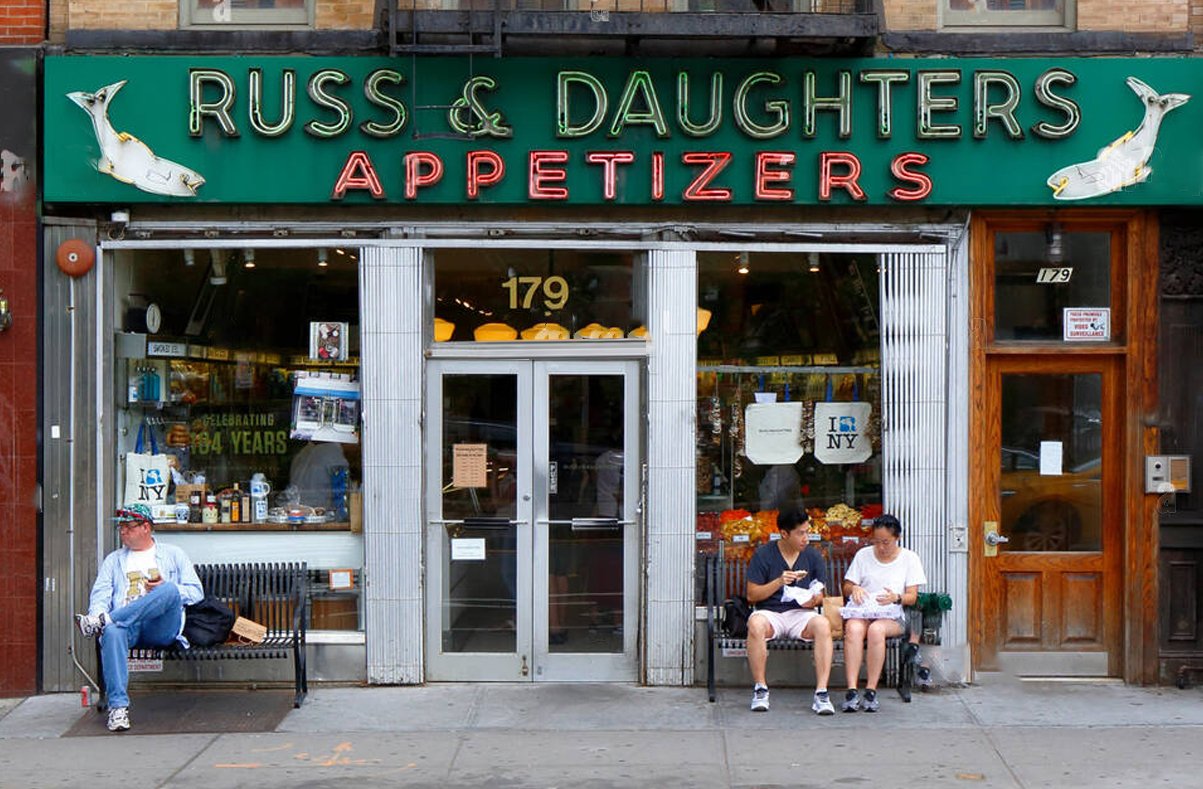
- Russ & Daughters: a Lower East Side institution famous for its bagels with lox.
- Ess-a-Bagel: with multiple locations in Manhattan, offering huge bagels and a wide choice of fillings.
- Absolute Bagels: located in the Upper West Side, considered by many to serve the best bagels in New York.
- Black Seed Bagels: a newcomer quickly gaining popularity, blending New York style with Montreal style.
- Tompkins Square Bagels: an East Village spot known for its artisanal bagels and creative fillings.
The New York bagel is much more than simple bread: it is a piece of culinary history, a symbol of the city’s Jewish heritage, and a perfect example of how New York can take something traditional and transform it into something unique and iconic. Whether enjoyed for breakfast, lunch, or as a snack at any time of day, the bagel remains one of the most authentic and delicious culinary experiences New York has to offer.
When you think of New York cuisine, pizza has to be mentioned. New York pizza, with its characteristic large, thin slice, has become a culinary icon not only of the city but all of America. This dish, brought by Italian immigrants and perfected in the streets of New York, embodies the very essence of the Big Apple’s food culture.
The Origins of New York Pizza
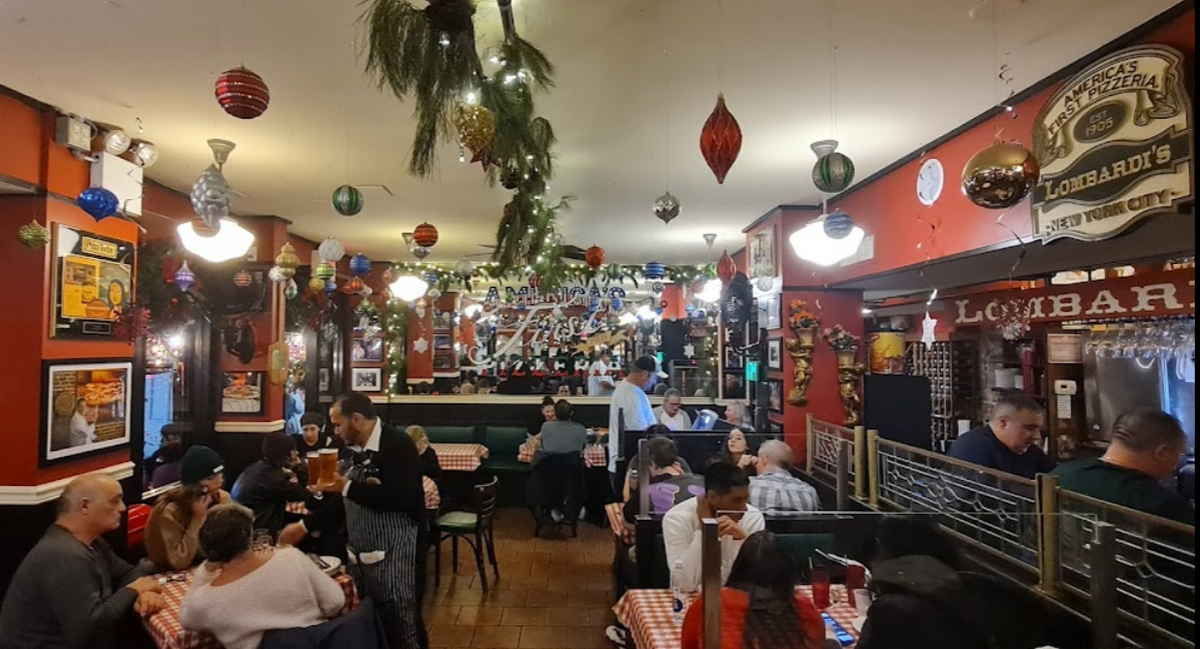
The history of pizza in New York begins in the late 19th century, with the arrival of a wave of Italian immigrants, mainly from Campania. These immigrants brought with them the traditional recipes of Neapolitan pizza but soon began adapting them to the tastes and needs of their new home. The first documented pizzeria in New York was Lombardi’s, opened in 1905 by Gennaro Lombardi in the Little Italy neighborhood of Manhattan. From that moment, pizza spread rapidly throughout the city, evolving into what we now know as the New York style.
Characteristics of New York Pizza
New York pizza stands out with several unique features:
- Size: the slices are large, often bigger than the plate they’re served on.
- Crust: thin and crispy but flexible enough to be folded in half for eating.
- Cheese: typically mozzarella, often blended with grated hard cheese.
- Sauce: a simple but flavorful tomato sauce, often seasoned with oregano and garlic.
- Baking: cooked in high-temperature gas ovens, giving the pizza its characteristic golden color.
The Ritual of Eating Pizza in New York
Eating a slice of pizza in New York is its own experience. Here are some key elements of the ritual:
- The fold: the technique of folding the slice lengthwise in half to eat it more easily (wallet style).
- Oil blotting: some New Yorkers blot pizza with a napkin to remove excess oil.
- Toppings: while the classic Margherita remains popular, New Yorkers love to experiment with various toppings.
- Pizza by the slice: the option to buy individual slices, perfect for a quick snack.
The Best Pizzerias in New York
- Lombardi’s: the oldest pizzeria in New York, still operating at its original location.
- Joe’s Pizza: a Greenwich Village institution famous for its pizza by the slice.
- Di Fara Pizza: located in Brooklyn, considered by many the best pizzeria in New York.
- Grimaldi’s: famous for its coal-fired pizzas with views of the Brooklyn Bridge.
- Patsy’s Pizzeria: open since 1933 in East Harlem, known for serving Frank Sinatra and other celebrities.
New York Pizza in the Cultural Context
New York pizza is much more than just food: it’s a cultural institution. It’s the quintessential fast meal, consumed by workers on lunch breaks, late-night students, curious tourists, and long-time residents alike. Its accessibility and versatility make it a democratic food, loved by people from all walks of life. Moreover, New York pizza has become a symbol of the city itself. It appears in countless films and TV shows set in New York, and it’s often one of the first things tourists want to try when visiting the Big Apple. New York pizza perfectly represents the city’s spirit: practical, straightforward, no-frills but incredibly satisfying. It’s a dish that combines Italian heritage with American innovation, creating something unique and unforgettable.
Whether eaten standing outside a slice shop, sitting in a historic pizzeria, or delivered to your home on a quiet evening, New York pizza remains one of the city’s most authentic and rewarding culinary experiences. It’s a piece of New York in every bite, a taste of the history and culture of this extraordinary metropolis.
Among the culinary specialties that made New York famous worldwide, cheesecake holds a place of honor. This creamy and velvety dessert, with its characteristic dense texture and rich flavor, has become an icon of New York pastry, loved by both locals and tourists.
The Origins of New York Cheesecake
Although the concept of cheese cake has existed for millennia (it’s said ancient Greeks prepared a version for Olympic athletes), the New York cheesecake as we know it today is relatively recent.
The birth of this dessert is attributed to Arnold Reuben, a German-American restaurateur who ran the famous Reuben’s Restaurant and Delicatessen in New York during the 1920s. According to legend, Reuben was invited to a dinner where a cheese cake was served. So impressed by the dessert, he began experimenting with the recipe, perfecting it until he created what is now known as New York cheesecake.
Characteristics of New York Cheesecake
What distinguishes New York cheesecake from other versions are several unique characteristics:
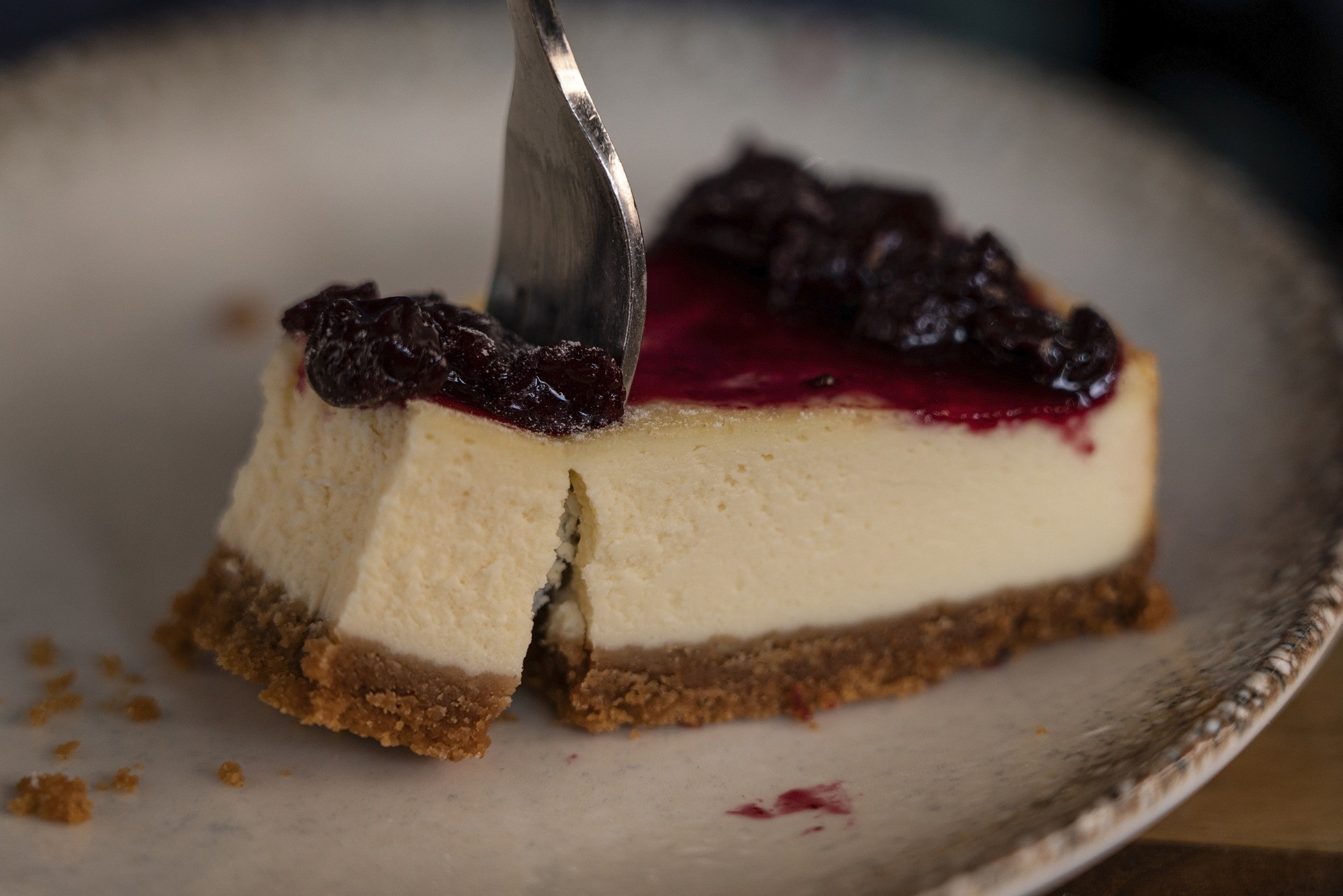
- Texture: very dense and creamy, almost like a flan.
- Ingredients: mainly cream cheese, often accompanied by eggs, sugar, cream, and a pinch of vanilla.
- Base: usually made with crushed graham crackers and butter.
- Baking: baked at low temperature, often using a water bath technique for even cooking.
- Finish: generally served plain or with a simple berry sauce.
The Preparation Process
Preparing an authentic New York cheesecake requires time and attention to detail:
- Base: graham crackers are crushed and mixed with melted butter, then pressed into the bottom of a springform pan.
- Filling: cream cheese is softened until smooth, then sugar, eggs, cream, and flavorings are added.
- Baking: cheesecake is baked at low temperature, often in a water bath, to prevent cracking on the surface.
- Cooling: after baking, cheesecake is slowly cooled in the off oven, then refrigerated for several hours or overnight.
Variations of New York Cheesecake
While the classic version remains most popular, several variations have emerged over the years:
- Berry cheesecake: topped with blueberry, strawberry, or raspberry sauce.
- Chocolate cheesecake: with added dark chocolate in the filling or as a glaze.
- Caramel cheesecake: with a layer of caramel on top or mixed into the batter.
- Pumpkin cheesecake: an autumn variation with added pumpkin puree and spices.
The Best Places to Taste Cheesecake in New York
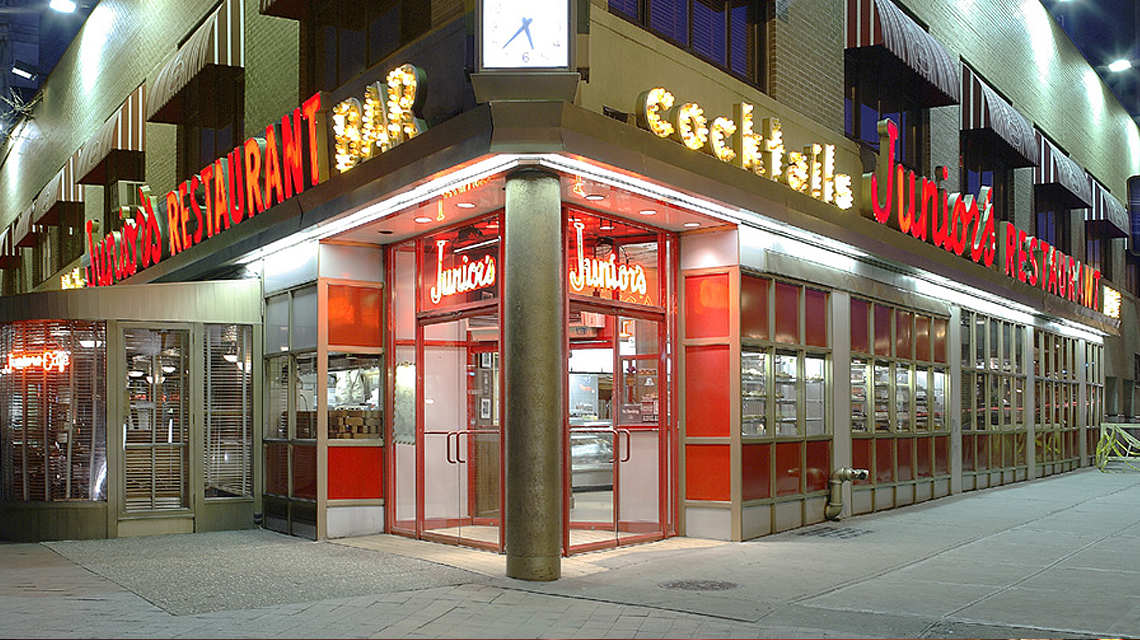
- Junior’s Restaurant: with several locations in New York, Junior’s is considered by many the king of New York cheesecake.
- Eileen’s Special Cheesecake: a small shop in SoHo serving handmade cheesecake since 1975.
- Two Little Red Hens: a bakery in the Upper East Side famous for its creamy cheesecake.
- Veniero’s Pasticceria & Caffe: an East Village institution since 1894, offering rich and traditional cheesecake.
- Lady M Cake Boutique: famous for its Japanese cheesecake, also offering a delicious New York style version.
Cheesecake in New York Culture
The New York cheesecake is much more than a simple dessert: it is a cultural icon of the city. It appears on the menus of almost every diner and restaurant in town and is often mentioned in films and TV shows set in New York as a symbol of local cuisine. Furthermore, cheesecake perfectly embodies New York’s spirit: rich, indulgent, and uncompromising. Like the city itself, it’s a mix of tradition (the basic recipe) and innovation (the many creative variations developed over the years). For many New Yorkers, cheesecake is a comfort food, a dessert evoking childhood memories and special moments. For tourists, it is often one of the must-try culinary experiences when visiting the Big Apple.
In conclusion, New York cheesecake is much more than a simple sweet treat: it is a piece of gastronomic history, a symbol of the city’s culinary creativity, and one of the most authentic tasting experiences New York has to offer. Whether enjoyed in a famous bakery or a small neighborhood diner, every bite of cheesecake is a taste of the very essence of New York.
When thinking of New York street food, the hot dog is probably the first thing that comes to mind. This simple yet iconic dish has become a symbol of the city’s culinary culture, as much as skyscrapers or yellow taxis. The New York hot dog is not just a quick meal, but a genuine institution, a piece of Big Apple history that can be enjoyed on every street corner.
The Origins of the New York Hot Dog
The history of the New York hot dog begins at the end of the 19th century with the arrival of German immigrants who brought with them their “Frankfurter sausages“. Legend has it that the term “hot dog” was coined in New York at the Polo Grounds, the baseball stadium of the New York Giants, where a sausage vendor shouted “Get your dachshund sausages while they’re red hot!”
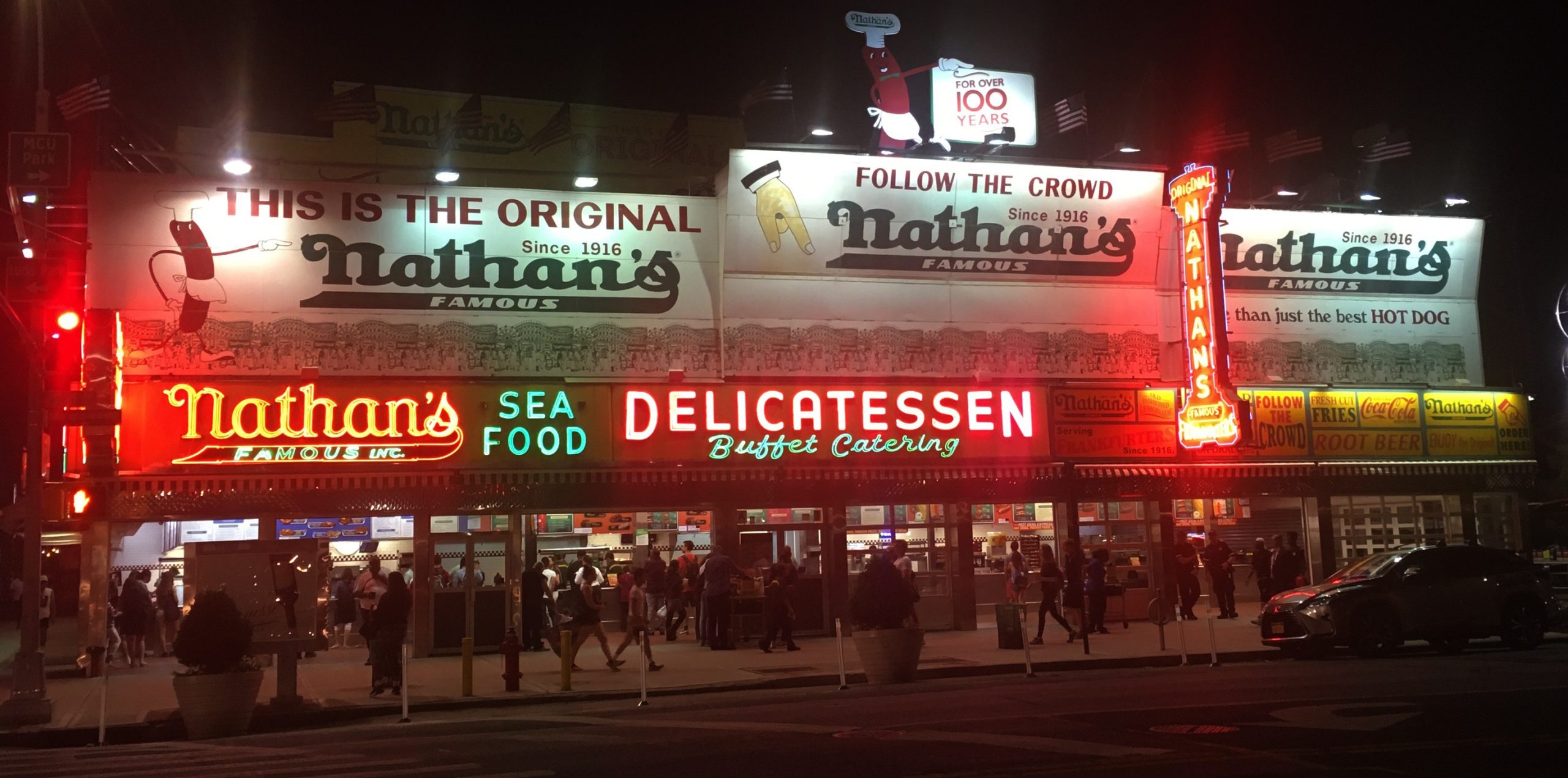
The real boom of the hot dog in New York came with the opening of the first Nathan’s Famous stand at Coney Island in 1916. Since then, the hot dog has become an icon of New York street food, spreading throughout the city via carts and stands.
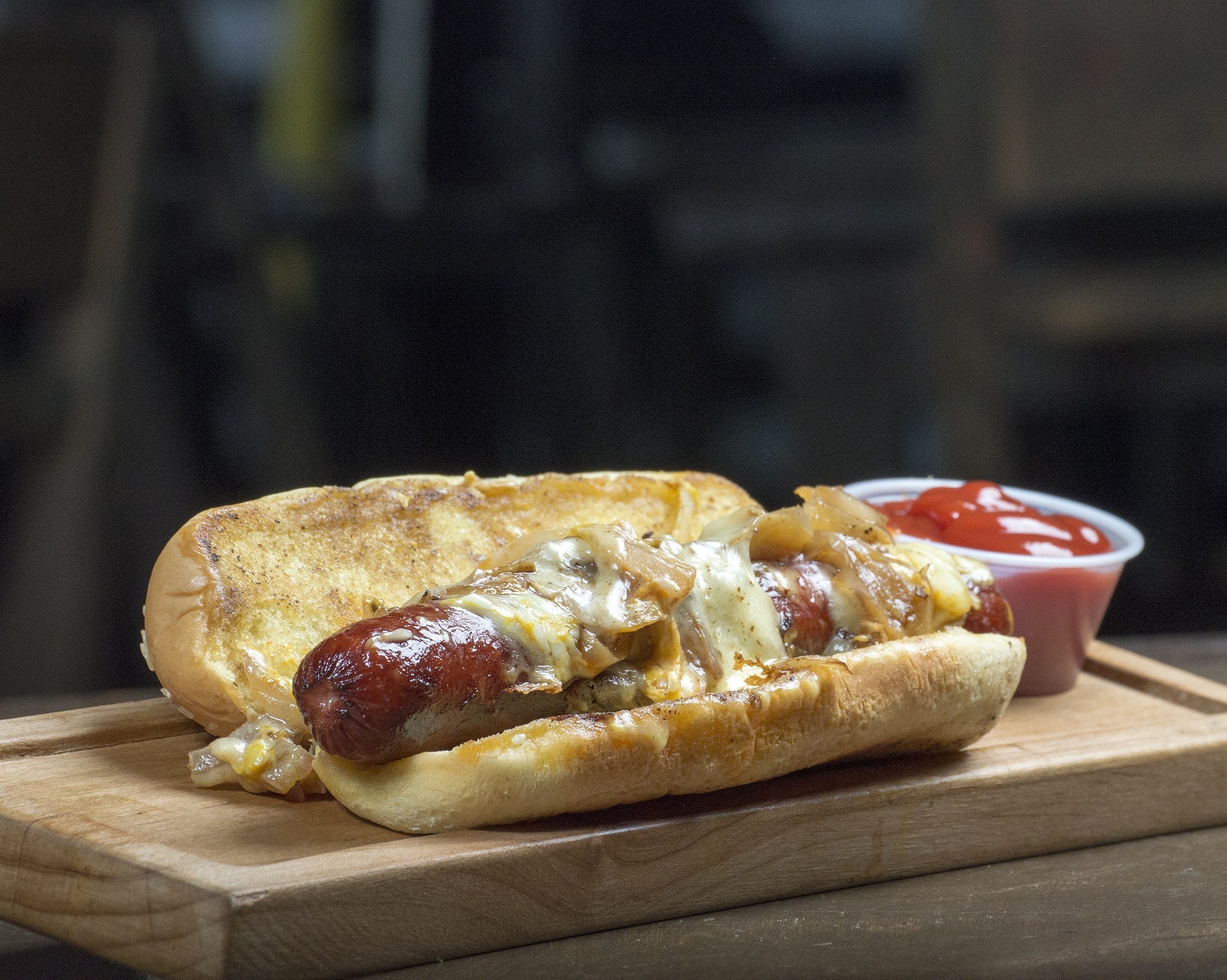
Characteristics of the New York Hot Dog
The New York hot dog is distinguished by several unique traits:
- Sausage: generally beef or a mix of beef and pork, smoked and spiced.
- Bun: a soft roll, often lightly toasted.
- Condiments: classics include mustard, sauerkraut, onion sauce, and chili sauce.
- Size: typically longer and thinner compared to other American variants.
- Cooking: often boiled or grilled, sometimes cooked on heated plates.
How to Eat a Hot Dog in New York
Eating a hot dog in New York is an experience in itself. Here are some key elements of the ritual:
- Standing up: often consumed standing near the cart or stand.
- Condiments: New Yorkers love to customize their hot dogs with various toppings.
- Speed: it’s fast food, perfect for a lunch break or on-the-go snack.
- Price: generally inexpensive, making it accessible to everyone.
The Best Places to Enjoy a Hot Dog in New York
- Nathan’s Famous: the original in Coney Island, an institution since 1916.
- Gray’s Papaya: famous for its “Recession Specials,” which include a hot dog and drink at a reduced price.
- Papaya King: another New York institution, famous for its unique combination of hot dogs and tropical juices.
- Crif Dogs: offers gourmet hot dogs with creative toppings.
- Feltman’s of Coney Island: recently reopened, considered the birthplace of the original hot dog.
The Hot Dog in New York’s Cultural Context
The hot dog is deeply rooted in New York culture. It’s the quintessential stadium food, eaten during Yankees or Mets games. It’s the quick lunch for workers, the budget meal for students, the hungry tourist’s go-to after a day of sightseeing. Moreover, the hot dog has become a symbol of New York’s culinary accessibility and democracy. It’s food that unites people from all social strata: from blue collars to white collars, everyone can enjoy a hot dog equally.
Hot dogs frequently appear in New York-set movies and TV series, often as background for everyday life scenes or as a symbol of the city’s street food culture. Nathan’s annual hot dog eating contest at Coney Island has become a national event, broadcast live on July 4th.
The New York hot dog perfectly embodies the city’s spirit: practical, no-frills, but incredibly satisfying. It’s a dish that combines immigrant heritage with American innovation, creating something unique and unforgettable. Whether eaten from a street cart, a famous stand, or during a stadium game, the hot dog remains one of New York’s most authentic and accessible culinary experiences. It’s a piece of New York in every bite, a taste of the history and culture of this remarkable metropolis.
Conclusion: New York, a Gastronomic Paradise to Explore
Our journey through New York’s top 5 culinary specialties has taken us beyond dishes to explore real pieces of the Big Apple’s history and culture. From the succulent pastrami sandwich to the crunchy bagel, from the thin crispy pizza to the creamy cheesecake, and finally to the classic street hot dog, each specialty tells a unique story of immigration, innovation, and adaptation that reflects New York’s very essence.
These dishes are much more than simple foods: they are living testimonies to New York’s extraordinary cultural diversity and its ability to absorb and transform influences from around the world. Each bite is a taste of the city’s history, a tribute to generations of immigrants who helped shape its unique culinary identity. New York cuisine perfectly mirrors the city itself: bold, diverse, constantly evolving, and accessible to all. Whether it’s a quick meal from a street cart or a gourmet experience in a renowned restaurant, New York offers endless opportunities to explore and enjoy.
What makes these specialties so special is not just their flavor but the context in which they are consumed. Eating in New York is an experience unto itself: the city’s frenetic energy, the mix of languages and cultures heard on the streets, the unique atmosphere of each neighborhood. It’s the ritual of folding a slice of pizza, biting a hot dog while walking through Times Square, or savoring cheesecake in a diner open all night. Moreover, these culinary specialties have become integral to New York’s identity, as much as its skyscrapers or parks. They appear in countless films and TV shows, spark passionate debates among locals on which is “the best,” and are often some of the first things tourists want to try when visiting the city.

But the gastronomic journey in New York doesn’t end here. The city is constantly evolving, with new culinary trends emerging influenced by recent waves of immigration and the latest gastronomic innovations. At the same time, there’s a growing appreciation for preserving culinary traditions, with many historic venues continuing to serve the original recipes that made them famous.
In conclusion, exploring New York’s culinary specialties is a fantastic way to get to know the city deeply. Every meal is an opportunity to immerse yourself in its rich history, appreciate its cultural diversity, and experience firsthand what makes New York one of the world’s gastronomic capitals. Whether you’re a longtime resident or a first-time visitor, there’s always something new to discover in New York’s culinary scene. So next time you find yourself in the Big Apple, don’t hesitate to embark on your personal gastronomic journey. Try a pastrami sandwich in a historic deli, enjoy a freshly baked bagel, fold a slice of New York pizza, treat yourself to a rich cheesecake.