
Instagram lands on Google, and for those working in tourism, everything changes: visibility, discoverability, and reputation will increasingly be linked to social content. Here's how this new scenario impacts travel marketing, between new opportunities and strategies to reconsider.
Add us to your preferred sources.

From a few weeks ago, Google has started displaying Instagram content previews directly in the SERP (Search Engine Results Page), even without the user accessing the social media. The images are visible in dynamic carousels, with direct links to profiles and – in some cases – to captions. This is a significant change, especially for the tourism sector, which has been investing in Instagram for years for visual promotion of destinations, hotels, and experiences.
Until yesterday, Instagram was a parallel channel to SEO; today, it fully enters the realm of AEO: the visual answers offered by Google also include social content, amplifying the reach of well-curated posts.
Summary
What does this mean for those working in tourism?
Presence on Instagram is no longer just about the social community. Visual content – if public and relevant – can now appear among search results. This entails at least three concrete effects:
- Increased organic visibility: an Instagram post can intercept users searching on Google, increasing discovery opportunities.
- Evergreen content: even an old post, if relevant, can become visible again and attract new clicks.
- Immediate reputation: someone searching for “romantic hotels in the Amalfi Coast” might find Instagram photos that immediately influence perception.
For tourist destinations and local operators, this is a new opportunity – but also a challenge. It is no longer enough to be present on Google with a website and reviews: visual reputation and content quality are now an integral part of SEO strategies.
SEO, AEO, and GEO: a new strategic triangle
Traditional SEO (based on website, links, and textual content) is no longer sufficient. With the growth of AEO (Answer Engine Optimization) and the integration of social media in the SERP, it is necessary to rethink digital strategies with an eye to:
- Visual Search: Googlerecognizes and positions images and videos in informational results.
- Search intent: if an Instagram content responds to the user’s intent, it can be rewarded.
- Smart geolocation: posts with geolocated tags (e.g., “Trentino Alto Adige”) become geographic responses in local searches.
Those managing territorial promotion (DMOs, consortia, ATL) must train operators and local ambassadors to create geo-referenced, relevant, and visual content.
Concrete examples for Italian destinations
Let’s look at some practical examples:
- Matera: an Instagram post with a suggestive photo of the Sassi at dawn, accompanied by an informative caption and tag “Matera, Basilicata,” can appear for those searching “things to see in Matera.”
- Ischia: a reel with a sea-view hotel and spa details can appear in searches like “romantic spa Ischia” or “relax weekend Campania.”
- Lake Como: an Instagram carousel published by a local influencer can rank in SERP for “Lake Como experiences.”
In all these cases, the synergy between visual content, technical SEO (tags and keywords in the caption), and geolocation allows for powerful organic exposure – even for small structures or local realities that do not invest in advertising.
Hotels and operators: what to do immediately
If you have a hotel, a farmhouse, a refuge, or manage experiences in the territory, here’s what you need to do now:
- Revise your Instagram profile: use a localized name (e.g., “Farmhouse Val d’Orcia”), active link, geotag, and optimized bio.
- Publish strategic content: high-quality photos, captions with keywords, useful information, and consistent hashtags.
- Encourage guest content: ask guests to tag your accommodation so you can reshare posts potentially visible on Google.
Attention: “beautiful but generic” content no longer works. You need useful, geo-referenced, and search-relevant content.
Destinations and DMO: a new phase of content strategy
Destinations with an existing social media marketing plan must integrate it with concrete actions to:
- Monitor geotagged visual content related to their area.
- Train operators and stakeholders on the conscious use of Instagram from an SEO and reputation perspective.
- Create official hashtags and encourage their consistent use.
The competition for local visibility now also plays out in images. “Visually silent” destinations risk being ignored.
Instagram on Google: risks and opportunities
Beyond benefits, there are also critical issues:
- Limited control: Google can display unofficial Instagram content, which may not always be positive.
- Dependence on third-party platforms: social content visibility can change based on algorithms.
For this reason, it is essential to complement social media efforts with a proprietary content marketing strategy based on a well-structured website, with localized pages and FAQ answers (AEO logic).
Do you want to be visible on Google even without advertising?
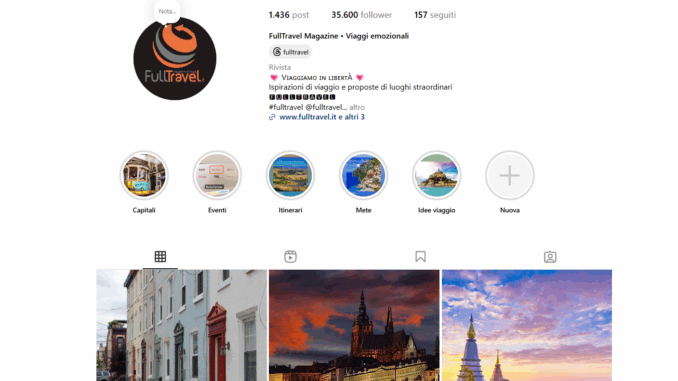
Today, it is no longer enough to publish: you need to do it in the right places. With FullTravel PRO, we bring your activity online through our social channels – already followed by over 100,000 people – now visible even in Google results.
No need for complicated sponsorships or generalist influencers: we work in a targeted, geo-localized manner with a journalistic approach. If you want to increase reservations, reputation, and discoverability online, discover how we can do it for you.
Discover the Social Marketing FullTravel PRO service and invest in concrete and strategic visibility. Your content deserves to be found. Even on Google.
Conclusion
Instagram has become an integral part of Google results, and for the travel marketing world, it’s an opportunity to seize now. SEO, AEO, and visual content integration will form the basis of new tourist discoverability. It’s no longer enough to be present: you must be relevant, geolocated, and recognizable. Those working in tourism, from small B&Bs to regional DMOs, now have a new path to be found. The question is: are you ready to truly showcase your reality?
Pubblicato in Digital Travel
Be the first to comment